As the year marches on inexorably, we already find ourselves at the end of March – which means it’s time for Shortcuts!
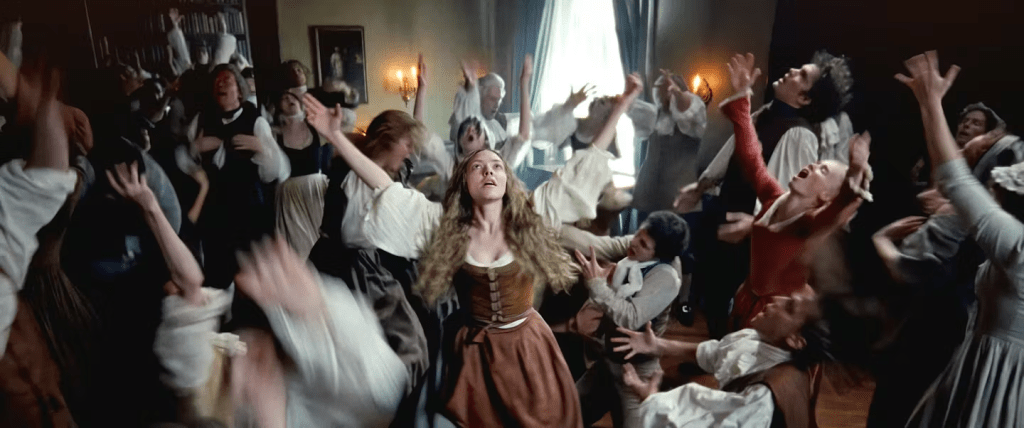
The Testament of Ann Lee (2025)
It’s unlikely you’ll see many stranger films coming out of Hollywood any time soon: The Testament of Ann Lee, directed by Mona Fastvold (who co-wrote the film with her partner and frequent collaborator Brady Corbet, of The Brutalist fame), is what Wikipedia calls an “epic historical musical drama film” – and this genre hybrid tells the story of Ann Lee, the founding leader of the Shakers, a millenarian Christian sect. It stars Amanda Seyfried, who I definitely didn’t have on my bingo card as an 18th century religious leader and who does a marvellous job of depicting Lee, even if Fastvold’s film doesn’t go for easy psychological explanations. Instead, The Testament of Ann Lee in all its idiosyncratic glory goes for an experiential approach, giving us a sense of the emotional landscape of Lee, her followers and religion in the late 1800s rather than trying to analyse them.
The musical format also works in the film’s favour – though don’t expect showstopping numbers: the music and songs (by Daniel Blumberg) are far from your standard musical fare, reflecting the strange, homespun metaphysical world of the Shakers. Where the film suffers a bit perhaps is in its plot, which largely avoids the usual, and usually simplistic, causality of narrative cinema: at times, it almost feels like a singing, dancing interpretation of a Wikipedia article in how it just puts one incident after another. But then, don’t watch The Testament of Ann Lee for its plot, but for its glimpse of a strange spiritual world that is compelling and confounding in equal measure
— Matt
Good Luck, Have Fun, Don’t Die (2025)
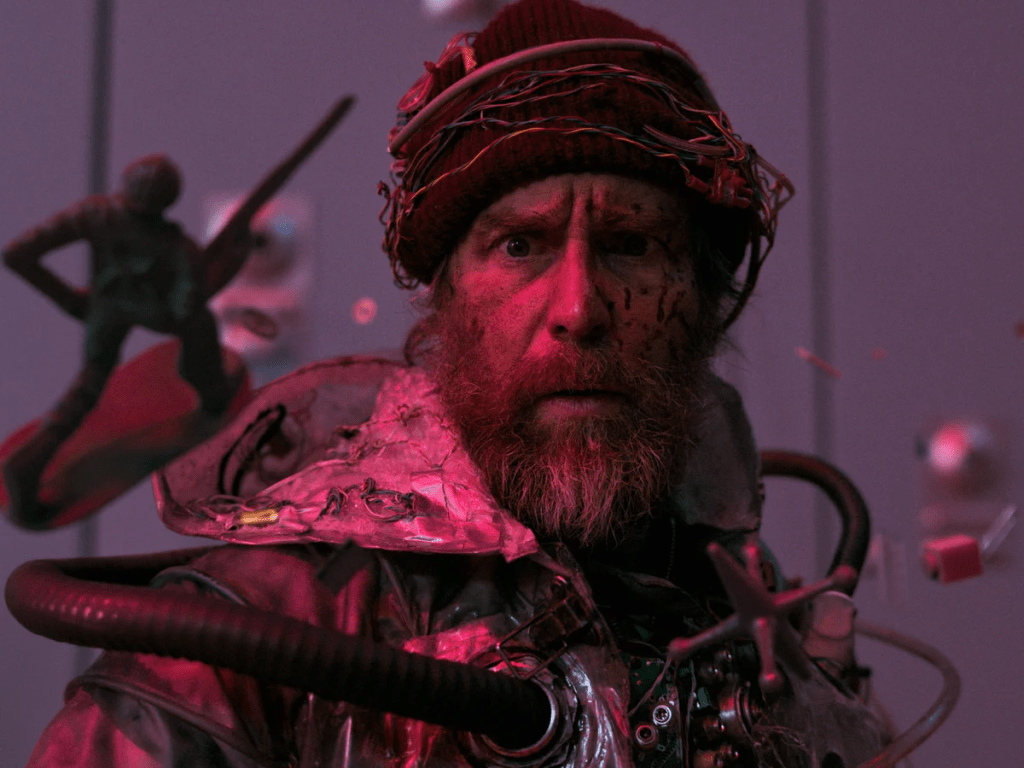
You do get the first impression watching Gore Verbinski’s Good Luck, Have Fun, Don’t Die that the director is having an Old Man Angry At The Modern World moment. When the (ever brilliant) Sam Rockwell appears in a roadside diner claiming to be from the future, the impending disaster is seemingly caused by all the ills of modern smart phones and internet doomscrolling. But none of this gets in the way of two hours of an entertaining science-fiction comedy. It’s definitely a film that throws every idea it has into the mix, whooshing around chaotically towards a fun finale. It’s probably best not to think too hard about the plot after seeing the film because I’m not quite sure it holds together – but the journey watching it, as insane visual crashes into crazy plot twist before returning to another completely different insane visual is definitely something I’d recommend.
— Alan
Vladimir (2026)
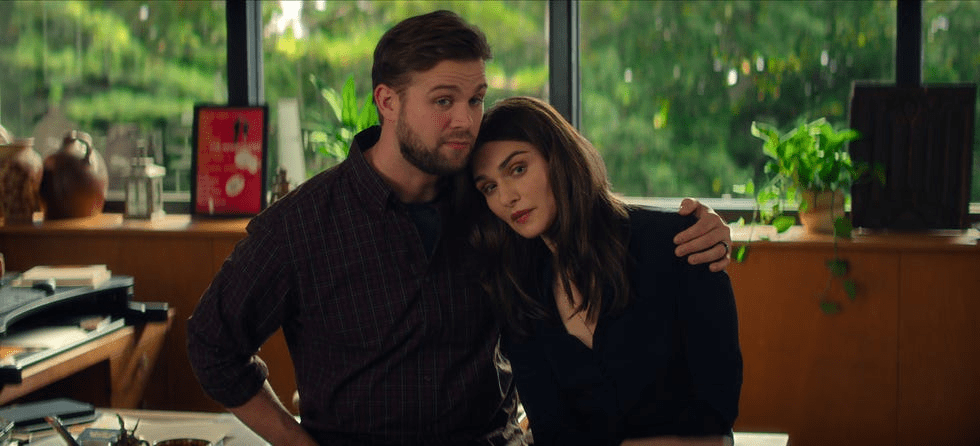
The Guardian‘s rave review of new Netflix mini-series Vladimir (yes, it’s a hint at Nabokov’s Lolita) is totally justified: Rachel Weisz is perfect casting as a middle-aged literary professor whose husband has been recently accused of sleeping with students years ago. Her unnamed protagonist (and fourth-wall-breaking narrator, to great effect) is extremely well played between loyalty to her husband, self-deception, manipulation and genuine erotic reawakening for her seemingly flirtatious new colleague (Leo Woodall, who needs to pay attention not to be pidgeon-holed too much into ‘hot yet goofy younger love interest’).
It’s joyful to watch this bestseller adaptation work so well in the mini series format and marvelling at just how good both Weisz and John Slattery as her problematic husband are (he also just keeps playing the same role – or is it the mean twist of the show that men are now playing the stereotypical roles?). Another scene-stealing performer is their daughter Sid played with gender role-effacing casualness by Ellen Robertson. Thoroughly enjoyable in its ambiguities and dark humour!
— Sam
Vermeer: A Life Lost And Found (2025)
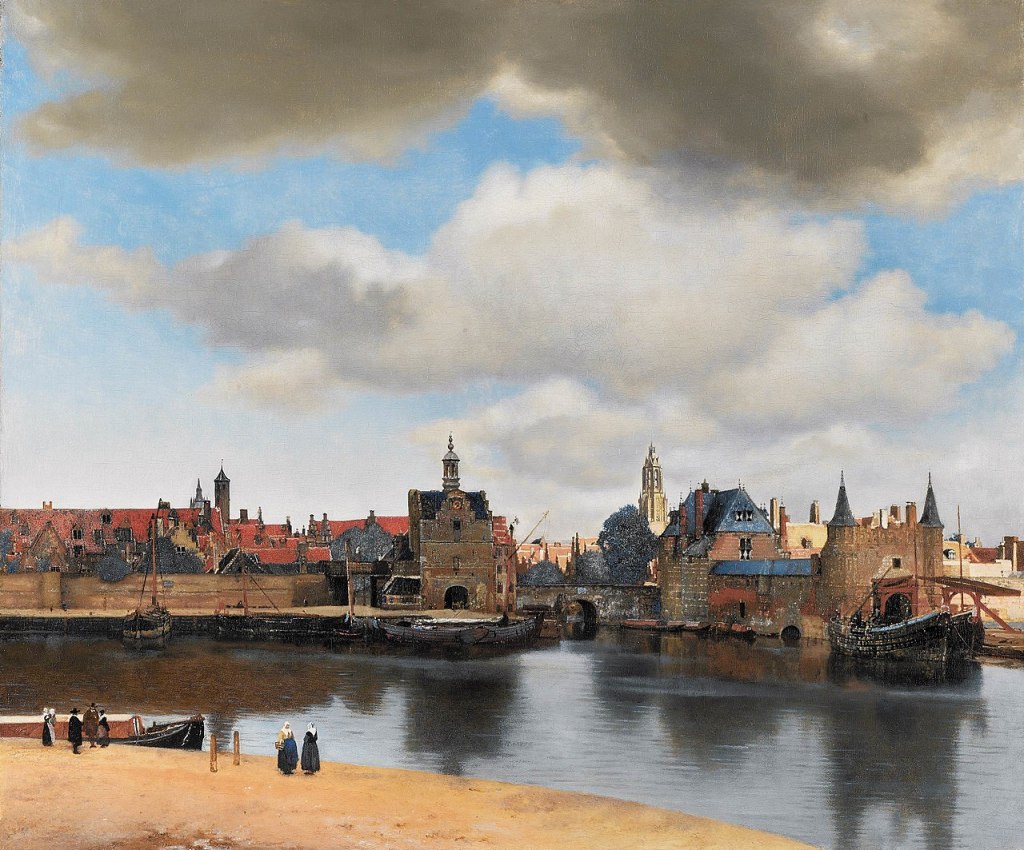
I won’t pretend that my knowledge of art history is anything greater than clumsy amateur, but I thoroughly enjoyed Andrew Graham-Dixon’s latest book on the artist Vermeer. He recontextualises the artist into the time he lived in and the social circle he moved in – arguing convincingly that this explains the power and beauty of his art.
What I particularly found interesting was the way the book drew him into the world of events in Europe at the time. In my recent glut of reading history books I read Peter H Wilson’s excellent history of the Thirty Years War “Europe’s Tragedy“. The sheer scale of the destruction of this period, alongside the Netherlands’ own Eighty Years War with Spain gives a new insight in the motives behind the art. The images of households and towns at peace are not just pleasant sideshows, but attempts to capture visually a powerful desire for peace, tolerance and the end of bloodshed. Now I just have to travel the world to see all these paintings for real.
— Alan
Dust Bunny (2025)
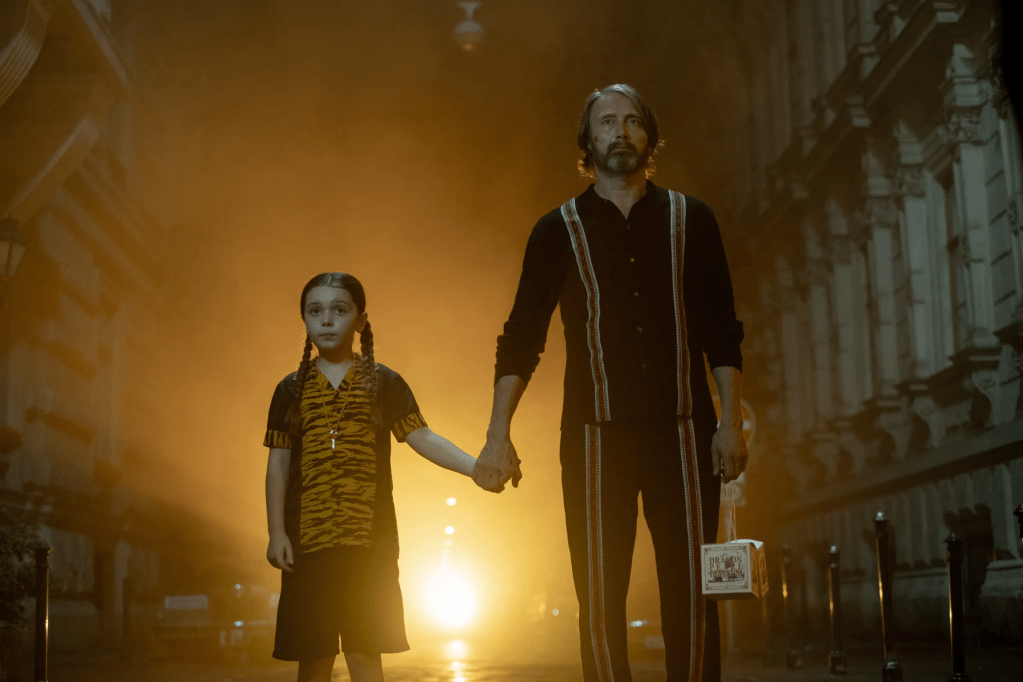
Bryan Fuller would have been a household name, if something like Hannibal (the television show) could be a welcome thing in every household. Still, that’s probably for the best: Hannibal was a dark, beautifully shot show that explored the grisly and charismatic in equal measure with an uncompromising artistic heft that remains singular to this day, and a neutered version would lose much of this brilliance. It is no surprise that Dust Bunny, Fuller’s directorial debut, features similar sensibilities, and one of its leads – Mads Mikkelsen, who played the titular doctor – as a co-star.
The movie features a girl with a monster under her bed, one that happens to eat every foster family she’s lived with so far. She then meets a neighbour, a mysterious man in apartment 5B, whom she discovers is an assassin. In short order, she hires him to protect her after her current family gets swallowed, and he unwillingly acquiesces as he realises her knowledge of his profession puts her in danger. What follows is a gorgeously shot and produced film, redolent of Wes Anderson in its rich palettes and set design, but with a keener and less subtle edge. Sigourney Weaver gets her licks in as 5B’s handler, and Sophie Sloan immediately wins you over with her measured wariness and determination as Aurora, a little girl who needs someone to look out for her. As it turns out, Dust Bunny is in fact a family film about finding family. The question isn’t about whether the monster under the bed is real; it’s about what the monster represents, and Dust Bunny is a quiet acknowledgment of why such a thing could grow in strength for the quiet, precocious kids whose imaginations empower them when the world does not.
Also, it’s rated R for a girl helping an assassin stuff body parts into a suitcase, but apart from that (sorry not sorry) I think it’s a case of overzealous rating; this isn’t Hannibal (pinky promise). Teens will most likely enjoy it just as much as some of us did with those 80s family classics we had growing up. And unsurprisingly, Mads manages to be both an assassin and a father figure to a little girl, which is the exact kind of dichotomy he’s perfect at playing.
— Eric
Without a Dawn (2025)
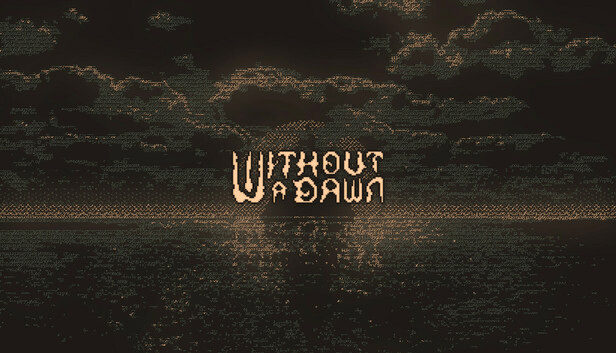
A visual novel with the illusion of choice is, mostly, a frustrating exercise unless the illusion is so adeptly executed that you don’t mind being misled, and can in fact admire the sleight of hand involved. Without a Dawn is not one of those games. It’s not interested in choices, and rather wants to illustrate what folding your options down to something inevitable could mean. Typically, I would be celebrating this approach as an iconoclastic deconstruction of a medium’s rules when done with skill. This time, however…
You play as a woman who’s retreated to an isolated cabin in the woods to get away from the world, a mental health break, the game implies. This proves to be a bad idea, of course, as the silence and loneliness end up amplifying her disquieting thoughts, and her dreams start bleeding into reality. The game basks in dark imagery, illustrated by lovely monotone ASCII art (where images are painted with coloured letters and symbols in lieu of a traditional art style); however, it also illustrates mental health issues as a self-reinforcing feedback loop – which they often can be – and implies that its protagonist’s deteriorating mental state is both unavoidable and inevitable. It does this by always giving you two immediate choices, but only one of them moving anything forward. This is slightly galling, as it’s clearly meant to show how strongly paranoia and depression can work together to fuel a sense of helplessness, but it refuses to go deeper into the kinds of circular reasoning that can lead to this. While it does attempt to reflect healthy ways for the protagonist to deal with her thoughts, in the end, the game depicts release as the way out – I won’t lob the word ‘irresponsible’ at this, as no doubt the entire thing stems from the author’s experiences, but it is too short an experience, and too nebulous a narrative, to carry the weight of what it’s trying to say with the nuance it deserves.
With mental health, this is sometimes how life goes on and goes out. Oftentimes, it is not. Our art should hold to exposing the deeper truths that lie behind both. Without a Dawn‘s creator tries, but in my estimate, does not have the measure of this yet.
— Eric
 A Damn Fine Cup of Culture