Welcome to One Best Picture After Another – where I attempt to watch all the winners of the Academy Award for Best Picture, starting at the very beginning. And attempt to answer two simple questions – is the film still actually any good? And why did it win?
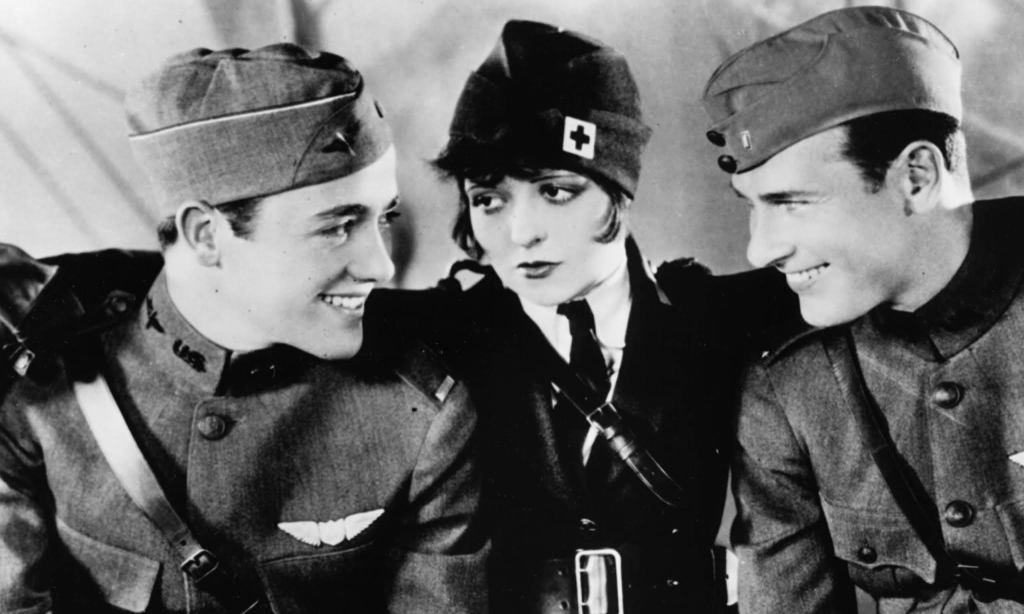
Many years ago a movie journalist gave me a very good insight into the type of films that win the Best Picture Oscar. The winner, they argued, will tend to be the film that best reflects the type of film Hollywood – at that time – wants to be making. Not necessarily the films that they know they need to make in order to bring in the money, nor the most technically adventurous or innovative. Nor even the most critically acclaimed. It’ll be the film that the Academy voters working in the industry look at and think: “Yes! That’s the type of film I wanted to make when I chose this career.”
Box office will often be a factor: nobody in Hollywood wants to make films that lose money. Critical acclaim also doesn’t hurt – because who doesn’t want to see their work praised in public? But, at heart, the Best Picture win reveals what Hollywood wishes it was doing. I’ll admit its a relatively vague insight, but I think it holds up. And perhaps no picture illustrates this better than the very first Academy award picture winner Wings.
At the time it was made, the Hollywood studio system was emerging from the early years of chaos, the many different movie-making outfits that had flooded Los Angeles to make a quick buck from the hot new Motion Picture industry were consolidating into the major key players. And the bosses of these studios aspired to move the media further away from the Nickelodeon and into the movie theatre. Redefine what had once been seen as a novelty and elevate it into an artform. This would be a Hollywood that would create films with something to say and something to show, with actors and actresses that the whole world would look to.
Wings manages all of this. It shows a Hollywood willing to spend money on spectacle, as well as telling a dramatic story that will move audiences. And, watched nearly a century later in 2026, it is still a fabulously entertaining epic. Even with all my 21st century cynicism I found myself caught up in the drama of it all, the emotion and the action.
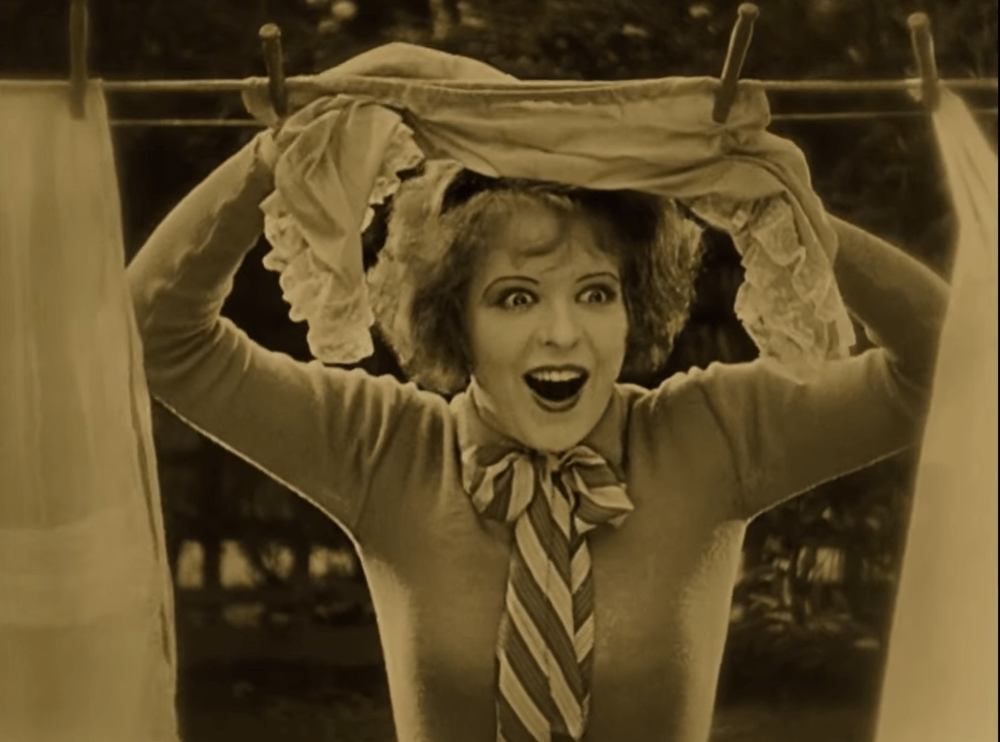
Clara Bow is wonderful in this, her exuberance seen on the big screen is infectious. When she leaps off the ground to cheer on an American plane in the sky as it attacked by the enemy, I could feel myself wanting to leap up too. I imagine that, in the packed cinemas of the time, people did. When she stares sadly into the camera – her heart broken by the boy she loves – it’s really hard to not be moved. She’s got a delightful gift for likeable comedy, presenting as the energetic, fun-filled underdog. It’s the performance of a star, and it’s an absolute highlight of the film.
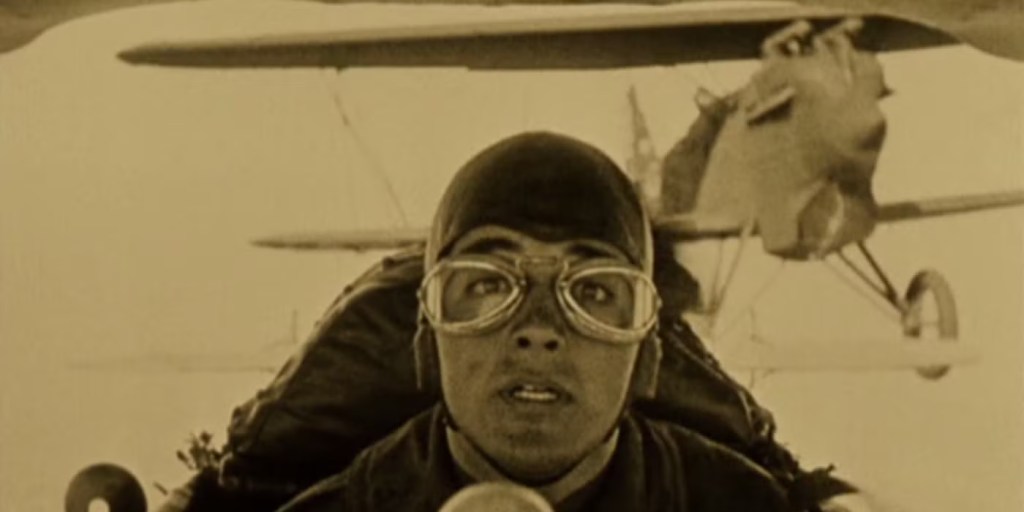
But it’s not the only one. I was really surprised by how much I enjoyed Charles “Buddy” Rogers as young pilot Jack Powell. He’s not an actor I knew about before watching this film – but he really sells the journey of the character from Boy Next Door to a veteran returning from a war. It’s simple visual storytelling, the way his hair goes grey and his eyes sadder, but it undeniably works. He’s also an impressively convincing drunk on screen, so I was not surprised to learn that this was achieved by getting actually drunk for the first time in his life on set. Excellent dedication to the method there, Buddy.
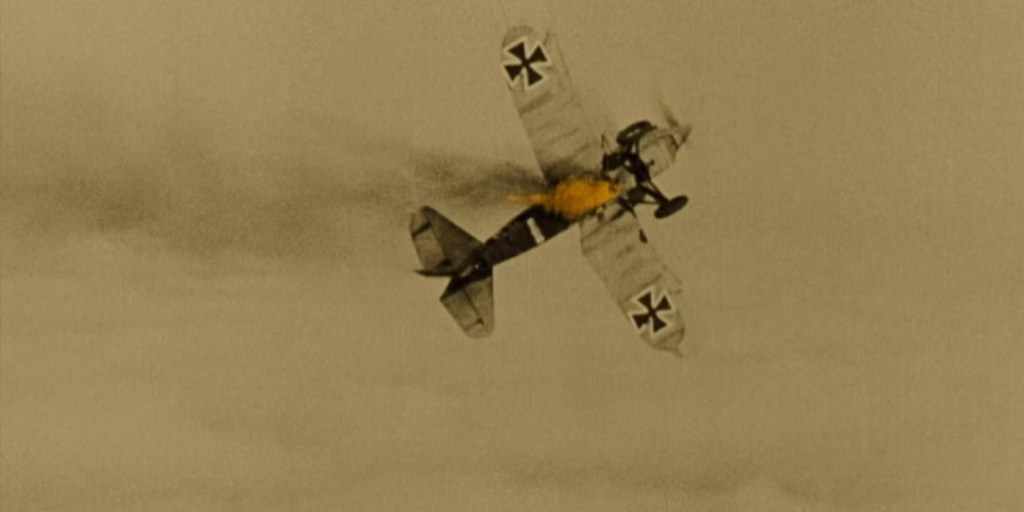
A further highlight are the aerial action sequences. At first I was genuinely worried that this film might not have aged well in this area. Shots of planes in the air might well have impressed audiences ninety-nine years ago – but that’s not going to cut it today. But as the film progressed it became clear that there was far more to these sequences than just “you will believe a plane can fly”. There’s a constant invention in these action scenes, both in the air and on the ground. The deaths often feel brutal and callous, while the peril is constantly being resolved in interesting ways. I was especially impressed by the use of a chemical colouring process to vividly bring to life the planes ablaze or the guns firing.
Clocking in at over two and a quarter hours, the real strength of the film is a screenplay and a director who never makes any of it feel like a chore. There’s a definite episodic feel to the storytelling, but this has the advantage that no scene or sequence drags on too long. Howard Hawks dismissed the storyline as “sudsy”, and – to be fair – it is incredibly melodramatic. But its a melodrama that, I think, earns the emotional reactions of the audience. Or at least it did for me.
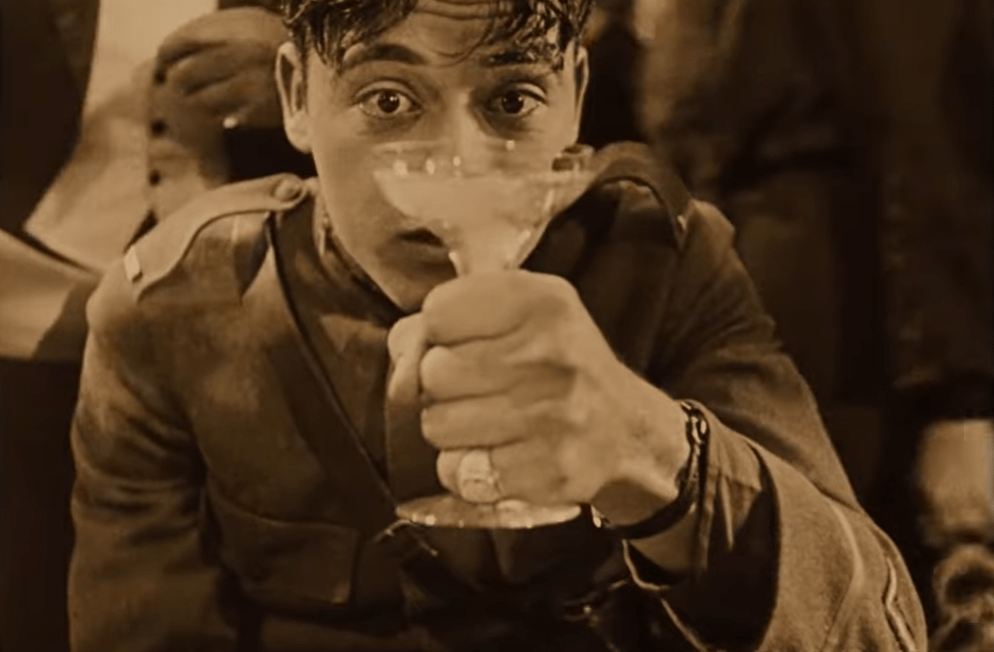
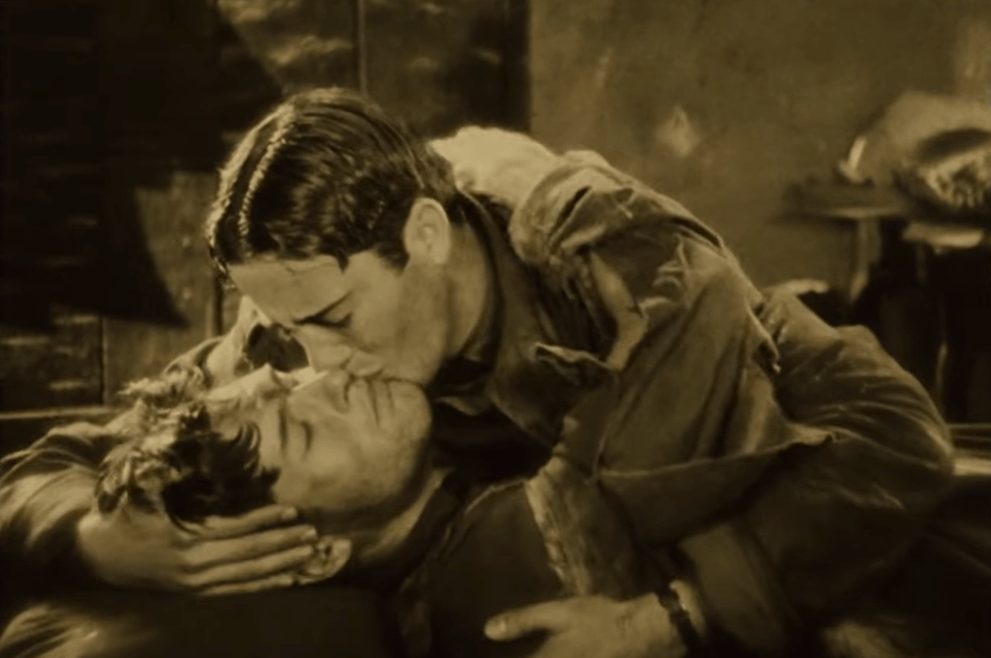
Yes, some of the storylines are tried-and-tested story arcs, but there’s also a level of unpredictability. I did not go into this expecting to see a sequence set in a drunk Paris nightclub, where animated bubbles dance across the screen. And this being 1927, years before the Hollywood Production Code imposed strict censorship on the industry, there’s (brief) nudity and (arguably) one of the earliest Big Screen gay kisses. I’ll be honest, the latter claim seems to be making too strong a case for a kiss between two dear friends – but it’s certainly the sort of thing that the censors aren’t going to allow at all in a few years time.
Wings is not only a great film – but it presents a formula that Hollywood would have wanted to make more of. It’s got a great studio star, its got an epic sense of scale and its a heart-warming story of love and patriotism. Which I think explains why it won the award for “Outstanding Picture”. But you’ll get no complaint from me on that score – its an excellent film and a fine piece of work to start on.
As a curious footnote, there were, in fact, two Awards given for the Best Picture that year. Alongside Wings winning for “Outstanding Picture”, F.W. Murnau’s Sunrise also won for “Best Unique And Artistic Picture”. That is also a brilliant film, and in many respects far more inventive and original. However, when the next Academy Awards came round in 1930, the organisers decided there should only be one Best Film winner. And when they determined this, they retroactively stated that of the two, Wings and Sunrise, it was the former that had truly won Best Picture. It’s an interesting decision – illustrating even back then a bias towards the more mainstream crowd pleaser. Never mind “right film got nominated, wrong film won”: back on May 16, 1929 at the very first Academy awards Sunrise “right film won the Best Picture award, just the wrong Best Picture award.”
 A Damn Fine Cup of Culture
One thought on “One Best Picture After Another #1: Wings (1927)”