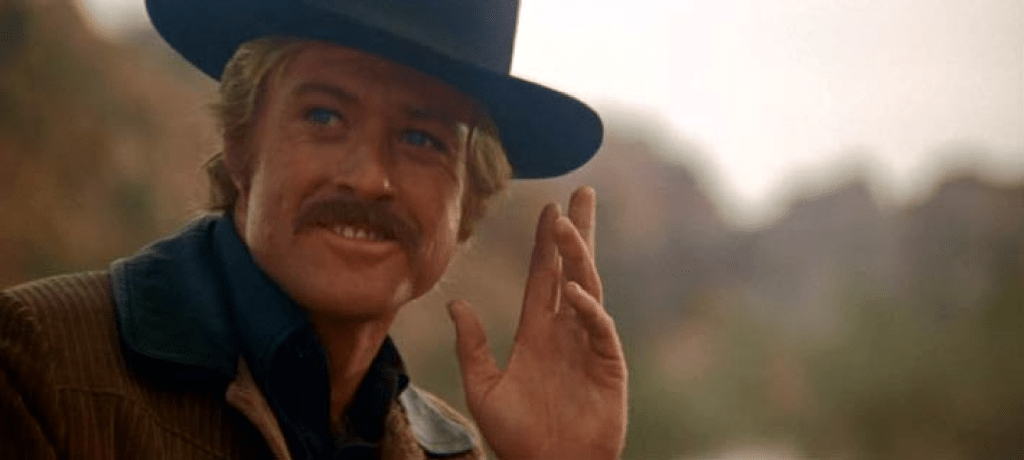
It’s Hollywood arithmetic at its finest, really: first, take one movie star with enough sex appeal and charisma to power the Eastern Seaboard, give him a lead role, and rake in the dough. Now, take two movie stars with sex appeal and charisma: 1 + 1 = 2. Two times the success and the dough. Or it may even be exponential, so you get the amount of dough squared.
And if this has worked once, what are you going to do? How about making another film with that duo of stars that has worked so well previously? You could even get back the director who helped make the first film a hit. What worked once is certain to work a second time.
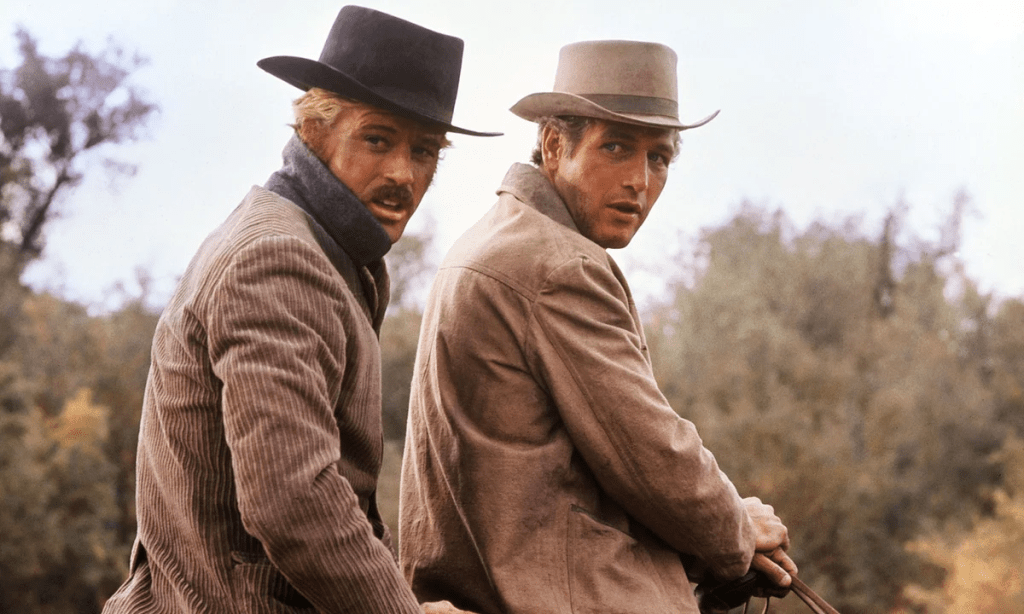
In 1969, Paul Newman and Robert Redford teamed up with director George Roy Hill for Butch Cassidy and the Sundance Kid (which I’ve written about earlier), with cinematography by the legendary Conrad Hall and a script by William Goldman (who’d written the earlier Newman hit Harper and would go on to write such classics as All the President’s Men, The Princess Bride and Misery). The film was a resounding success, so it’s no surprise that Hill, Redford and Newman would reunite in 1973 for The Sting, one of the greatest hits of the early 1970s and still high up on the list of the highest-grossing US hits (adjusted for inflation).
Now, as Mia Wallace famously said in a deleted scene of Pulp Fiction: “There’s only two kinds of people in the world: Beatles people and Elvis people. Now Beatles people can like Elvis, and Elvis people can like Beatles, but nobody likes them both equally.” Whether she was right or not about the Fab Four and the King of Rock and Roll: the sentiment itself is certainly true for Butch Cassidy and the Sundance Kid and The Sting, because while you’d think those two films would be very similar, with The Sting almost being something of a sequel in spirit, this isn’t altogether accurate: sure, both bank on the personalities of Newman and Redford and on their chemistry, but the two movies have surprisingly different vibes.
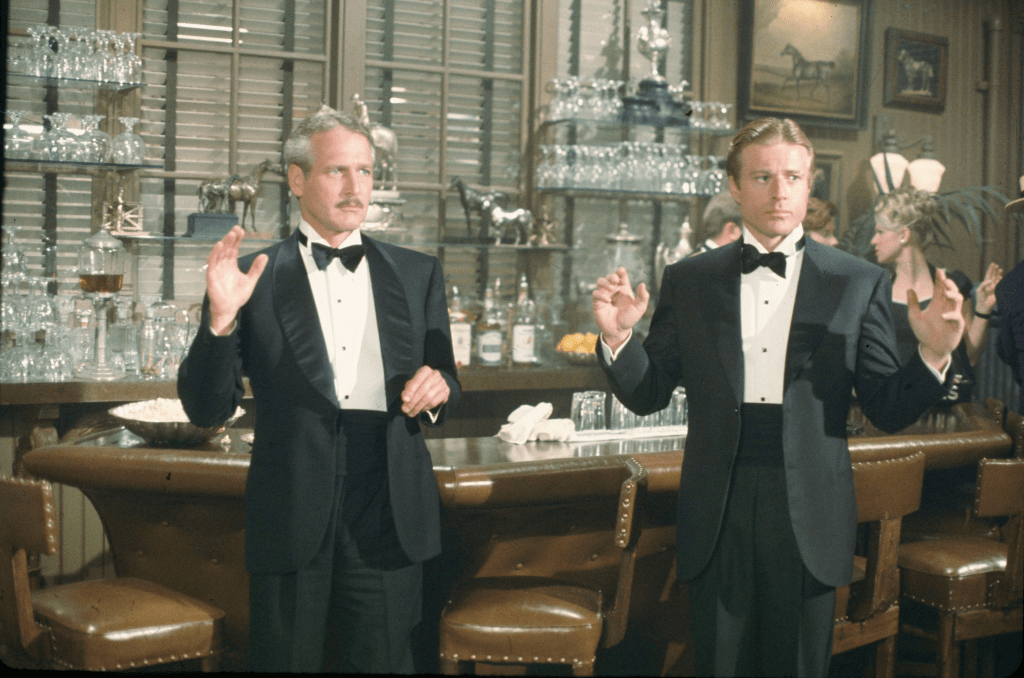
Having just rewatched both films (the silver lining to filmmakers dying is that you tend to get cinemas putting on series dedicated to their career) has confirmed that I’m firmly in Team Butch & Sundance. Don’t get me wrong: The Sting is a good film. It is fun and charming and very good at what it does. When it comes to movies about capers, cons and heists, you can’t do much better – not least because the prototypical con movie needs a cast of charming rogues, at least if it’s the kind of con movie that first and foremost wants to dazzle and entertain. And when it comes to charming rogues in the 1970s, you obviously couldn’t do much better than Redford and Newman. Where the film suffers a bit is that we’ve become overly familiar with the tropes of the genre: there have been many films where a crew of rogues sets out to trick their adversary since 1973, so most of us have watched dozens of cons, counter-cons, counter-counter-cons, meta cons and so on. We know the twists, we know the tells, and we go in expecting them – which makes it all the harder for The Sting to con a 2026 audience as well, even though the film still plays a good game of misdirection.
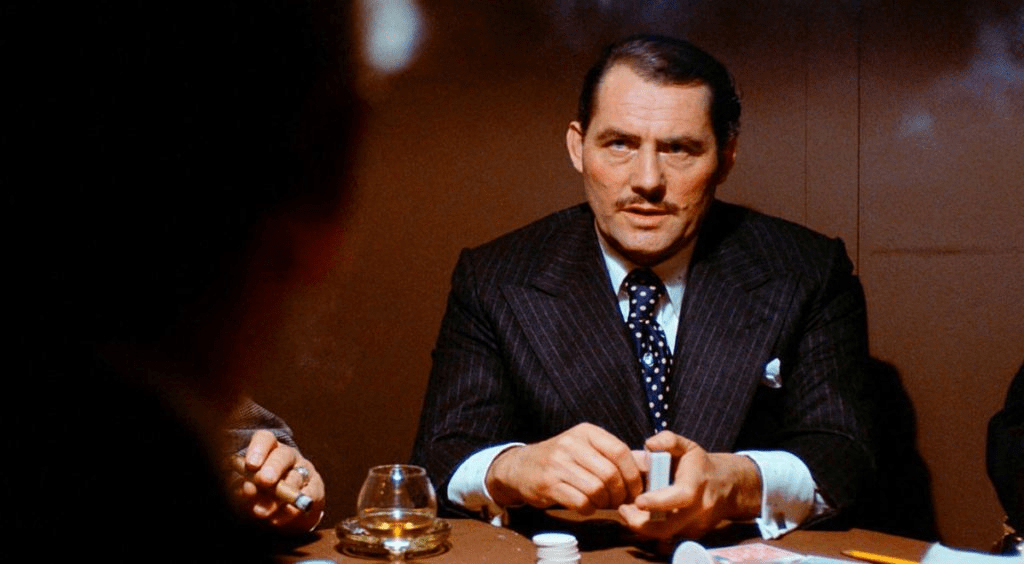
Where the film does fall a bit flat for me is this: Newman and Redford are great – but The Sting doesn’t give them all that much to work on together. Sure, they share scenes, but the film isn’t a double act nearly to the same extent as Butch Cassidy and the Sundance Kid. There is much less repartee, and what is there isn’t written nearly as well. To return to our mathematical intro: The Sting adds up the considerable assets that are Redford and Newman, but it doesn’t multiply them nearly as much as it could – perhaps also because the film brings in a third lead, in the villain of the piece. Robert Shaw as the crime boss Doyle Lonnegan is never not enjoyable to watch, but he also brings a very different energy to The Sting than Newman and Redford: they are the charmers, the twinkle-eyed rogues, but Shaw feels dangerous, and that changes the chemistry entirely.
Strangely, Butch Cassidy and the Sundance Kid doesn’t really give us a villain. There are antagonists, but they are remarkably abstract: throughout most of the movie, our protagonists are being pursued by a superposse sent after them by E.H. Harriman of The Union Pacific Railroad, but these are never close enough even to have faces. They are inexorable fate bearing down on the two outlaws – in fact, they’re oddly like the titular It from It Follows: Butch and Sundance zigzag, they play tricks on their pursuers, and they succeed at shaking them – for the briefest of times only, before the posse is back on track, coming closer and closer.
Where The Sting has a classical antagonist – Lonnegan is a scary bad guy you can root against -, the antagonist in Butch Cassidy and the Sundance Kid is of an entirely different kind altogether: it is death. Rewatching the first collaboration between the two Hollywood stars and their director, I was struck by how much the film and Goldman’s script, while filled with wit and irony and endlessly quotable one-liners and jokes, is deeply melancholy and how much its ending feels like it is written already from the very first scene we see. On the surface, we’re watching a fun romp where two loveable bandits outwit the law again and again, until their luck finally runs out – but, really, this story is about two characters whose choices have put them on a trajectory that, sooner rather than later, will intersect with death. It is Etta Place (Katharine Ross in a part that I appreciate more and more each time I watch the film) that seems to be most keenly aware of it: basically, Butch and Sundance choose death, their own death, because they’re not good at anything else. The film even inverts the old saw about history repeating itself, first as tragedy, second as farce: we have the iconic scene where the two, with the superposse closing in on them, resort to jumping off a cliff into a river (“I can’t swim!” “… are you crazy? The fall will probably kill ya.”), but throwing themselves off a cliff is really just the Looney Tunes-tinged foreshadowing of the ending, in which our duo throw themselves at the Bolivian army. This is where their path was going to end. The fall will probably kill them.
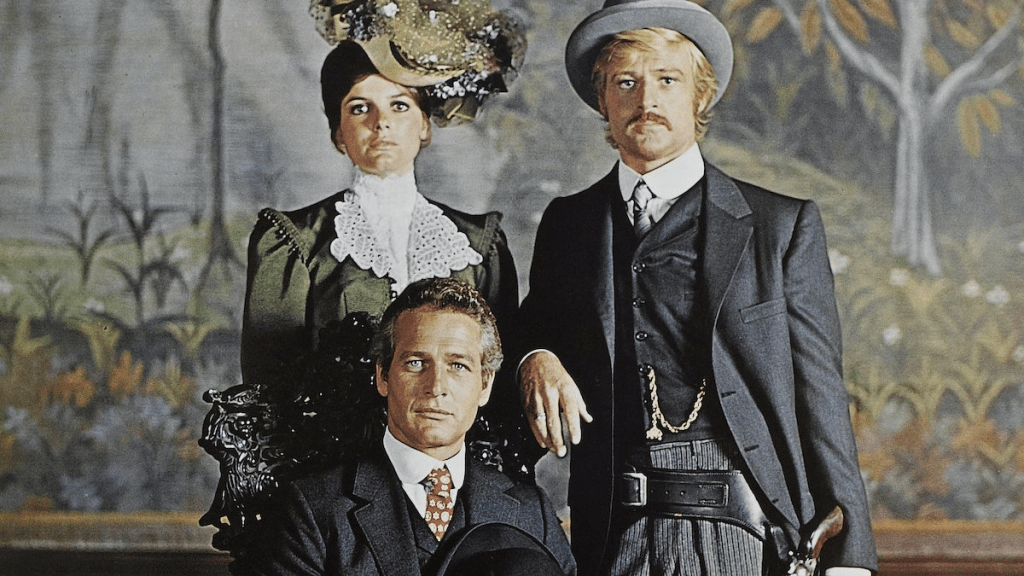
And yet, even with death being a constant on the horizon, getting nearer and nearer: there aren’t many films as warm and charming as Butch Cassidy and the Sundance Kid. You want to hang out with these guys forever. But it is exactly this tension at the heart of the film that, at least for me, gives it its potency: the movie is often laugh-out-loud funny, as much in its script as in the performances and the easy rapport between Newman and Redford, but it never loses sight of what awaits Butch and Sundance at the end. Was the freeze frame a fraction of a second before our heroes are inevitably shot to pieces (and we hear the Bolivian Army firing, again and again) a surprise to audiences in 1969? After Bonnie and Clyde just two years earlier, probably not so much. The vibe of Butch Cassidy and the Sundance Kid is a different one, but it very much feels like that ending is inscribed in the story from the beginning. The movie starts with a sepia-tinted silent film of Butch and Sundance’s Hole in the Wall Gang robbing a train, accompanied by a melancholy Burt Bacharach tune, but this is not the nostalgia of wanting the Good Old Times (that, more often than not, never existed) back, it is the sadness of knowing we’re watching a story that has already ended.
For a crowdpleaser starring two of the most charismatic, charming actors, not just of the 1960s and 1970s but arguably of all time, Butch Cassidy and the Sundance Kid‘s melancholy is striking, but the two reinforce one another. This is a deeply idiosyncratic, anachronistic film set in the past but entirely of its own time. The Sting is much more straightforward – well, as much as a good con can ever be before it’s no longer a good con -, but it is exactly this quality that makes the movie one that I like rather than love. For me, the main flaw of The Sting is this: whenever I watch it, I am keenly aware that I’d rather be watching Butch Cassidy and the Sundance Kid instead.