Each Friday we travel back in time, one year at a time, for a look at some of the cultural goodies that may appear closer than they really are in The Rear-View Mirror. Join us on our weekly journey into the past!

The first scene of Fernando Meirelles’ and Katia Lund’s City of God starts with a chicken trying to escape the frying pan, and it ends with the standoff between two warring drug gangs in Brazil’s Cidade de Deus, the poorest quarter of Rio, where the politicians put the lowest classes in the Sixties so the rich wouldn’t have to look at them. Cidade de Deus doesn’t have electricity nor water, and it’s almost impossible to get out, not geographically, but socially: if you are born there, you will most likely die there.

Six minutes into the movie, we already have to cope with three story strands. There is something of Melville in its structure: I want to tell you about Lil’ Zé, but in order to make you understand, I have to tell you about the Tender Trio, and so I have to start with how my brother… You get the idea. But City of God, based on a novel by Paulo Lins, sounds confusing, but it’s not. It’s fast-paced, but it’s never in a rush.
Continue reading We have been to the edge of the cinematic universe together more than once, haven’t we? We have pinched shut our noses against the stench and filth of Aleksey German’s Hard to be a God with its very own weird cinematic language and drab medieval sci-fi outlook on life. We have waded through the seven-hour long Satantango, Bela Tarr’s masterpiece, puzzled by the fact that we didn’t know what the hell was going on. Both movies might take huge liberties in storytelling: they seem to redefine or even abuse the notions we have of plot, story, or dialogue. German’s movies pretend that they have never heard of a reaction shot. There are whole takes that seem to go against anything that we seem to have learned about cinematic grammar, but no matter how shrewd or outlandish those movies might get, they still are – movies.
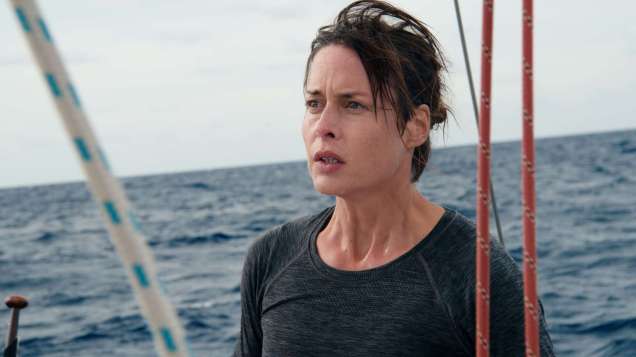 Rike (Susanne Wolff) is the medic of a German first-response team. She makes rational decisions within seconds, deciding over life and death of a car crash victim. She is good at her job. Firemen, policemen and civilians follow her orders while she deals with the dead and severely injured. She has seen a lot of human drama, so when she takes a holiday, it’s not surprising that she wants to go sailing on her own. Her destination is Ascension Island, right in the middle of the Atlantic, between Brasil and Angola. We see her load her sailboat, the Ava Gray, and start out from Gibraltar. She has radio contact with coast guards and other ships, she weathers a storm, she enjoys the journey, she likes the solitude, and then she encounters a boat overloaded with refugees.
 Gosh, there is no really bad Mission: Impossible movie, and no really good one, is there? Let me count the ways: the first one, Mission: Impossible (1996), has the courage to kill most of its illustrous cast quite early on, and it has that famous scene wherein a helicopter is chasing a high speed train through a tunnel. That sequence is so preposterously over the top that the rest of the movie sort feels muted in comparison. And if you can make sense of the plot, then you are a better person than me.
 Looks like A24, founded in 2012 and quickly becoming a major player in movie distribution, is pulling quality horror flicks out of a hat with disquieting regularity: they brought us
  A Damn Fine Cup of Culture