From Brighton to Croydon

Here’s a question for you: Do you think that movies can thrive on their limitations? I think they can. The series 24 takes place in real time – Jack Bauer is very aware of the tick-tock of the clock. The movie Buried is set entirely in a coffin. The movie Russian Ark consists of one single 99-minute shot. These limitations are technical, wilfully compressing their stories in temporal or spatial ways and also in the way they get made. It’s a risk: if you don’t like watching a man lying in a coffin for feature lenght, then you won’t like the whole movie. There is no B-story here.
locke1

Of course, there can also be dramatic limitations. The movie Compliance is about the staff of a fast-food restaurant where the shift manager gets a phone call from a cop who tells her to detain one of her employees because she might have stolen the purse of one of their patrons. The cop asks more and more of the manager, the employee keeps insisting that she is innocent. It’s basically two women in a backroom, one of them receiving orders over the phone. The movie loses all tension when the cop is made a visible character in the film.

Movies with such huis clos situations need perfect casting. Robert Redford is great in All is Lost. Jack Bauer is saving London, and it’s his ninth day. Buried is a good enough movie, but I don’t think Ryan Reynolds is the right choice for the role. Ann Dowd and Dreama Walker are fantastic in Compliance as long as the cop is only a voice over a phone.

Locke-Movie

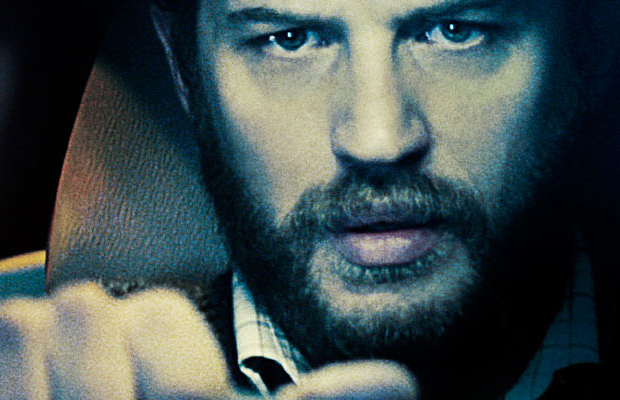
If you like Tom Hardy, then Locke might be a movie for you. It shows you a character by the name of Ivan Locke, probably named after the syndrome, because he is the only visible character you are going to see in the next 85 minutes. He is a construction manager, driving in his car from Brighton to Croydon. The only communication he has is over his carphone. On a very basic level, that is all that happens: a bloke driving and talking over the phone. It’s Tom Hardy’s acting that turns Locke into a really good movie.

Locke seems very detached at first, almost distant. He backs out of his job, takes care of the woman he got pregnant and then tells his wife about his affair. All in his car, all over the phone. It sounds pretentious, and in about 38 ways, it could all be handled the wrong way. Tom Hardy finds the right mood; I never got tired of looking at him or listening to the conversations he has. I wanted to know what he did next. Some people think that the plot is too thin and everyday. I disagree. The movie does not push your credibility, but it leaves you to think about what you would do were you behind the wheel.

locke-poster

There’s another thing Locke made me aware of. Going in, I knew that Olivia Colman would be one of the voices I was going to hear. I thought she would play Locke’s wife. I was wrong. I was also surprised by who played Katrina, Donal, and Gareth, and Eddie, and Cassidy. I only realized whose voice I had been listening to when I read their names in the end credits. Which just goes to show that we mostly rely on someone’s looks first, and their voice second.

If Locke has a flaw, it’s that it shows us slightly too many blurred traffic lights and half-lit cityscapes, but that’s a minor thing for a movie that decides to use very few resources and does a lot with it.

The Limits of Detection

This blog entry is partly a reply to Emily Nussbaum’s article Cool Story, Bro. The Shallow Deep Talk on True Detective, which appeared in the New Yorker on March 3, 2014. That artice can be found here: http://nyr.kr/1eosEyD

truedetective_010914_1600

I would really, really like to see a series that takes stuff from the film noir genre – the lies, the sex, the crimes, the shadows – and then casts two female detectives in the lead roles. It could be written and directed by women so we are spared the male gaze. That would be a new thing. If it already exists, then I don’t know about it. Maybe the second season of True Detective will bring us something like that. Jessica Chastain’s name is attached to the project, and I personally could see Michelle Forbes as the other lead.

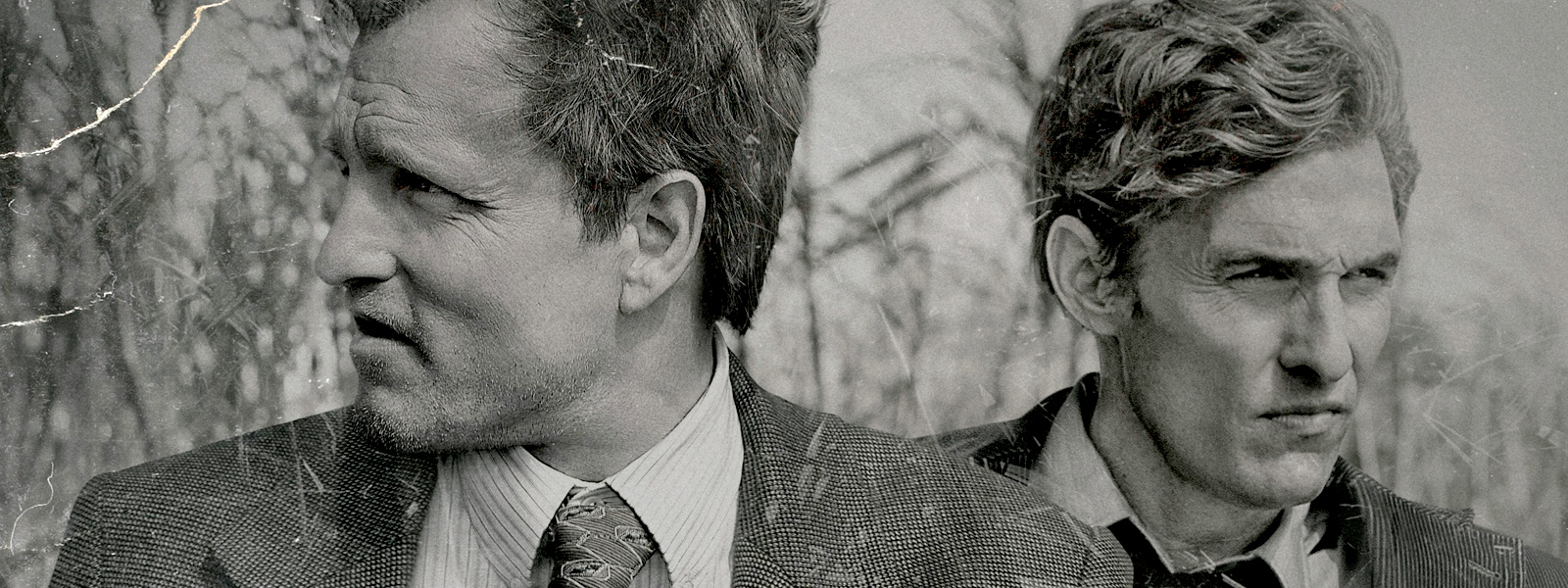
Meanwhile, we have the first season of True Detective to watch. To me, TD is not a police procedural or a whodunit, but a character study of Marty Hart (Woody Harrelson) and Rust Cohle (Matthew MacConaughey), two guys who might cross the street or the state line to avoid each other in everyday life. It took me half the series to see that it is not about the Yellow King or Carcosa, but about their relationship. If anyone keeps watching it as a whodunit, prepare for disappointment: the last episode is by far the weakest one. I restarted the series and watched all of it as the study of two very different guys. And while it won’t ever pass the Bechdel test, it worked very well. It’s certainly flawed , but there are only a couple of other series I liked better these last few months.

images

I disagree with Nussbaum’s label of the series as macho nonsense. Marty Hart has a strong tendency to rule over his family and often tells women what’s what. While that is certainly macho, he is also a horrible liar and a pathetic adulterer. He is weak, but instead of accepting his weakness, he pleads with his wife for more credibility, and as soon as he has it, he delves into that self-styled schizophrenia that lets him believe that if he lets off steam with some anonymous pussy, he can be much more caring and loving at home. For Marty, sublimation won’t work for much longer. His wife sees through him every time. To be clear: It’s the character that has macho tendencies, not the series.

Rust Cohle, on the other hand, is nowhere near a macho. He uses work as self-harm, and may be very close to do some real harm to himself. There is that nihilistic stuff he mutters forth, and these monologues are actually the highlight of the series for me. Unlike Marty, he does not have any defense mechanism. He knows exactly what is wrong with him, but he cannot climb out of his black hole, and so he blames the whole world. Those monologues are sometimes wafer-thin, but they often need to be. Can there be any grand-standing, any redeeming speech from a guy who could jump from a bridge at any moment? Rust doesn’t have to make sense because he doesn’t have to make sense to himself, either. It is to his credit that sometimes, he really does make sense, which renders his existence that much worse. With that guy, the wiring shows. As with Marty, life does not go on for much longer like this.

Rusty can come across as an arrogant asshole by the time Gilbough and Papania come around asking questions. That could be interpreted as macho, but to me, it is all self-protection. Rust the nihilist is still in there somewhere, preserved in a barrel of cheap beer.

reggieledoux

Yes, the victims in True Detective are all female. But they all die off-screen, and there is very little violence going on in real time. Compare that to The Fall, and then tell me that the latter series does not make you cringe for all the stuff done to women. (I can’t shake the impression that Helen Mirren referred to The Fall when she criticised the fact that most victims in film and TV these days are girls and women.) The Fall shows you women alive and well, then being assaulted, bound, gagged, raped, dying, dead, and disposed of. Repeatedly. And all is made well by that one phone call between that brilliant female police detective and the male killer in the very last minute of the last episode? Does Nussbaum really think that this is any consolation for those people in the audience who cannot take the immediate violence of the episodes before that last scene?

The women of True Detective are not paper-thin. It is true, however, that the most prominent woman, Maggie Hart (Michelle Monaghan) could be much better written, and given more of an active role to play. What I don’t get is that Nussbaum can say that the betrayal of Maggie sleeping with Rust has no weight. Rust is thrown off balance, while Maggie sees it as the mistake it is, but not entirely. There is something new about her afterwards, something empowering. Maybe it is not so much the sex, but the fact that she has slept with him, not him with her.

Michelle-Monaghan-True-Detective-Portable-355x285

The other women are far from thin, too. Marty’s fling Lisa (Alexandra Daddario) could bring down his marriage and his job with just two anonymous phone calls. For a long time, I thought that something like that has happened to Marty in the missing years. Lisa has legal training, so she is one of the best educated characters in the show. And those memorable scenes with Tess Harper? Ann Dowd? Come on. While the men are still trying to figure out stuff, the women already seem to know something.

What I don’t get is that Nussbaum can describe a series initially as stylish and complex and let some sort of reluctant admiration shine through, and then makes a U-turn and uses the rest of the article for telling us how it’s full of macho nonsense and that it’s really the female asses and the nice bouncy racks telling the real story. The whole season contains maybe four or five nude scenes, and brief ones at that. That may not even be average. So what is it going to be – deplorable macho nonsense or likeable lady parts? You can’t have both.

Mother knows best, but not everything

Joon-ho Bong’s Mother is a twofer. It’s inconsistent in tone and theme and wants to rush through a lot of plot in a short time. It contains scenes that are unclear and lead nowhere even on a second viewing. It seems to tell two stories at once, but never really manages to convince its audience that they should be in the same film.mother

The crucial story driving the plot is a murder whodunit. There is a teenage son who drinks half the night and then staggers back home at night. Suddenly there’s a young girl walking in front of him. He calls out to her, but she disappears into a dark, empty house. The son can’t figure out if she was really there and has all but forgotten about her in the morning. Then she turns up dead on the flat roof of the house she disappeared in. He is a suspect because, well, he’s been seen with the victim near the house.

The other story is his mother who is determined to do everything in her power to prove that her son is innocent. It doesn’t help that the boy is naïve, bordering on mental deficiency. Why else would he grin like a fool while he demonstrates to the police how he carried the girl up onto the roof? But I digress – it’s the mother who plays the biggest part in the film. She raises money for a lawyer who turns out to be useless. On a hunch, she goes to get evidence at the house of her son’s best friend, whom she considers bad company, and to her own surprise really finds a golf club with a blood smear on it. It’s bad luck that the friend comes home with his girlfriend, and so the mother hides behind the curtains, golf club in hand, while the couple is budy shagging. That scene is close to comedy, while the girl’s murder (which happens off-screen) is a scary bit of atmospheric horror.

best00madeo

There is a beautiful scene where the mother walks through a field of tall pale grass and then does a little dance. It’s a throwaway scene, and I am not sure what it means, but it pays homage to the actress, to Hie-ya Kim, who is said to be one of the most famous stage actresses in South Korea.

I think the scenes with the zealous mother work well, but are uneven – they venture from pathos to horror to farce and back. She is not an avenging angel, but cares for her only child because she is convinced that he is innocent. As a character study, the movie is admirable. The whodunit is less successful because there seem to be two or even three ways the crime could have been committed. I am not at all against open endings, but three possibilities seem a bit much for a movie that is plot-heavy and contains a fair number of red herrings.

Love, loss and Lauren Bacall

The beginning of Jonathan Glazer’s Birth is odd. There is a voice-over from a man, probably a scientific lecturer, who says he doesn’t believe in reincarnation. Then he goes for a run through Central Park during dusk. It’s winter. He stops, falls down, and dies. Then there’s a baby being born.

kidmanBirth

Ten years later, his widow Anna (Nicole Kidman) has an engagement party, because she finally said yes to Joseph (Danny Houston). They live next to Central Park, in a very expensive apartment. There is Anna’s mother, played by Lauren Bacall, and Anna’s pregnant sister Laura and her husband Bob (Alison Elliot and Arliss Howard). There are family friends, among them Clara and Clifford (Anne Heche and Peter Stormare).

And then there is that boy, played by Cameron Bright. He’s not cute, but there is an earnestness about him. He first follows Clara into the park and then turns up at the party, claiming that he is Anna’s dead husband Sean, and that he doesn’t want her to marry Joseph.

The party treats him as a joke, and Anna wants to send him away, but finds that she cannot bring herself to do that. The boy is adamant, unflinching, and although Anna tells him not to lie, she cannot forget his words, and the way he looks at her. Then he faints, and she sees it. There is a scene at the opera where the camera looks at Kidman’s face for several minutes, without interruption. I’m not sure about what happens to Anna, but some kind of realization seems to take place.

2004_birth_013

It doesn’t matter that part of Anna is convinced that Sean’s story is bogus. It only matters that what that boy tells her fills her longing to see Sean again. That the person making that impossible dream come true is a ten-year old is a small obstacle towards happiness that seemed out of reach for good.

The thing is that the boy is really called Sean. His parents tell him to stop hassling that nice lady. He tells his mother that he is no longer her stupid son. There is no telling what the heck is going on here. The movie treats the boy as a boy, and takes him seriously. The adults don’t panic, but try to cope with an impossible situation as best they can. Anna’s brother-in-law Bob questions the boy. Sean gives surprisingly intimate answers, and he knows stuff only Anna’s husband would know. He isn’t scary or spooky or a threat – he just insists that Anna is his wife. There are no guns, no blood, and no madness tucked away in a corner of someone’s mind.

cameron-bright

The movie consists of muted colors, lots of black and brown and grey. It tries very hard to feel black and white. The apartment and Nicole Kidman’s hairstyle bring to mind Rosemary’s Baby. Birth is a horror film, too, but it is scary because it treats its theme seriously. In movies, when we ask ourselves what the hell is going on, the explanation at the end is almost always a disappointment. The better the build-up, the bigger the jerk we get when the third act plants us firmly back on the solid ground of reality. The explanation is either too much, or not enough. Not here. There is a reason for all this, and it contains some sort of emotional logic.

Apparently, Jonathan Glazer is unable to make a boring film. He did Sexy Beast in 2000, then this one in 2004, and Under the Skin last year. He is the director of many TV ads and music videos. Everything he does is different from anything else. Watch his Levi’s ad featuring Nicholas Duvauchelle, using that famous Sarabande by Händel.

Anna desperately looks for ways to convince herself that this is not her dead husband. People tell her so, but to no avail. She is afraid that she might fall in love again. She cannot win: if the boy is her dead husband, she is still attached to him. If he isn’t, then how crushing can it be to lose your husband twice?

The road to hell is a circular track

Joon-ho Bong’s Snowpiercer is about a very long and seemingly unstoppable train running all over a post-apocalyptic snowscape. The movie based on the comic Transperceneige by Jacques Lob, Benjamin Legrand and Jean-Marc Rochette. Its passengers are the last survivers on Earth, and they must live in their own microcosmic class system inside that rattling ark. The wealthy ones live comfortably near the front, the lower classes live in squalor and poverty in the tail end. They only meet when the wealthy ones come and take another kid with them. Nobody knows where those kids end up.

Image

There are schools, prisons, food processors and water purifying systems on board. The best scenes of the movie contain Mason, played by Tilda Swinton, who speaks in the name of the creator of the train, a man called Wilford, who may or may not be along for the ride. Snowpiercer races on a gigantic circular track, so is a driver really necessary?

Mason declares the train’s engine to be sacred, and is absolutely clear about who belongs where. Her twisted explanations are the highlight of the movie. Her appearance reminded me of Maggie Thatcher, which cannot be a coincidence. There is a malignant glee in Swinton’s whole performance that saves a lot of scenes.

Image

There is unrest, led by Curtis (Chris Evans) and organized by an old man called Gilliam (John Hurt) who seems to know a lot about the front end. With them are a security expert (Kang-ho Song), who helped design the doors of the train, and his daughter (Ah-sung Ko). There are also a mother and a father of two of the missing kids (Octavia Spencer and Ewen Bremner), and a hothead named Edgar (Jamie Bell). They all fight for a just distribution of food, water and space and want to make their way to the front of the train so that all passengers can be made equal.

Fights ensue, as I guess they must, only they go on for too long and are too violent. The lower classes get decimated more and more, and it is only for a few chosen ones to reach the sacred engine. What happens there is not for me to reveal, but although the dialogue about the necessity of the class system is cruelly logical, that scene could have been handled a lot better.

Snowpiercer never quite finds its own rhythm. There should have been a breathtaking establishing shot of the train in its entirety, since that is what the movie is all about. Instead, there is a first shot of the tail end, then we are inside again. That’s a missed chance to wow us with the enormity of the vehicle, all the more because the few glimpses of the train we get throughout the movie are really convincing CGI. I have a suspicion that the movie got cut and re-cut until the pacing got screwed up.

Image

There are glimpses of greatness, though. I liked the scene where they find the showers and are able to wash properly after months, if not years. The first time they eat real food again. The moment they realize they are touched by the rays of the sun through a window, and they don’t know if the window or the natural light is the bigger miracle for them.

I especially liked that the apocalypse wasn’t anything to do with nuclear war, but was brought about by people who thought that they had the solution to global warming. They turned the environment in such a hostile place that those who tried to escape the train stand frozen in place as statues to their own stupidity and can be seen from the train as a reminder. And there is a morbidly cheerful performance by Alison Pill as the schoolteacher.

The ending is crap. It does not make much sense, and the movie cowardly abandons its characters. Instead of having a wide open ending, it ends with the beginning of another movie.

Vows and confessions

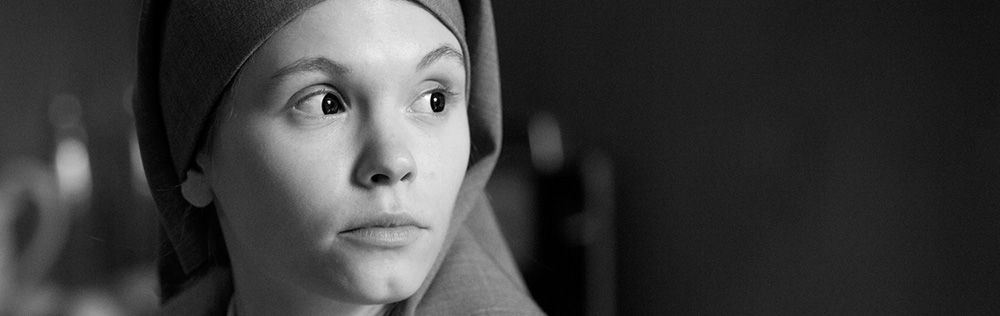
Pawel Pawlikowski’s Ida is one of the quietest, subtlest movies around. Anna, its heroine, looks out of a pair of the deepest, darkest eyes I have seen on screen lately. She is about to take her vows as a nun when the Mother Superior tells her that she should say goodbye to her relatives. Anna replies that she is an orphan, brought up in the convent. She learns that there is an aunt who knows of her existence. Anna goes and visits her.

Image

The movie takes most of its strength from the relationship between those two women. Anna wears her grey habit like armor. Aunt Wanda is a hard-drinking, chain-smoking Communist judge who doesn’t hide her one-night stands from Anna. It’s hard to imagine anyone more different from her niece. Wanda tells Anna that her real name is Ida and that she is Jewish. Anna/Ida just looks at her aunt with those eyes of hers. There is no telling what she is thinking. Agata Trzebuchowska, who plays Ida, is a newcomer, while Agata Kulesza must be one of Poland’s busiest actresses. Here, they are a match.

They go on a road trip to find the place where Ida’s parents and Wanda’s sister lived before the war. The scenes that follow are intriguing. They find the place, a farm. Other people live there now. This movie tells us in simple black and white pictures what has happened, to whom, and why. The movie doesn’t gasp, but it doesn’t flinch either. There are no flashbacks, but it’s clear all the same. There is unexpected humor and unexpected sadness in those scenes, both of which are somehow what is called for.

Image

There is a lot of tension in the fact that a Jewish female judge dished out death sentences in the name of a Communist government, so much so that she got the nickname Red Wanda. She has lived with her secret all her life, whereas for Ida, it’s a revelation. She must deal with the fact that she has a very different religious background. The question is what she will do with that information. I wish the movie would have told me more about Ida: How does she feel about it? Is becoming a bride of God still her lot? Is it a choice she makes, and is it an easy one at that? Is she able to forgive her aunt for what she has done? In a way, Ida should be forgiving because of her vocation.

Story-wise, these are two interesting characters in that they both lead impossible lives. I wanted some more answers, but instead, Ida embarks on a short affair with a saxophone player that is clearly not as interesting as her relationship with Wanda. This part of the movie feels like a cop-out.

At the same time, the movie is beautifully shot. It features the rare 1.37:1 format, turning a rectangular screen into more of a square one. It is shot entirely in black and white, and strictly chronological. Things happen at the edge of the frame, or in a corner. Some shots depend on mood, not plot. The lack of color could have turned it into a leaden exercise in sadness, but it’s Ida’s face and Wanda’s stubbornness that make it all worthwhile. I would have liked to know more of both of them.

Where’s a will, there’s a pill

Ron Woodroof, the protagonist of „Dallas Buyers Club,“ isn’t easy to like. He is a racist, a homophobe, a drug addict, a drunk and a thief. His one redeeming quality is that he does not give in when he learns that he has caught HIV, but tries to fight it – and he does not just fight the virus, he also fights a harmful anti-HIV drug called AZT, the FDA, the DEA and the DA.

Image

Woodroof is played by the ubiquitous Matthew McConaughey, and he takes on a lot of acronyms with the same down-to-earth earnestness and a stubborn logic. He travels to Mexico, Japan and elsewhere and brings back protein-based and/or natural drugs that will help him and many other AIDS patients to live a little longer and with less pain. He has moral standards: Every drug he distributes, he has tested on himself first. Since selling those drugs is illegal, he accepts paying members to his Dallas Buyers Club and then gives away the drugs they need. To him, it’s a ponzi scheme where no-one loses; to his customers, it’s like swinging yourself form one last straw to the next with a death sentence hanging over you. It’s 1985.

So there you have it: the protagonist is a bastard with some heart. He is gaunt, emaciated and sometimes collapses where he stands. Most of the time, he doesn’t even have enough strength for his escapades anymore. If you can bring yourself to like him, the movie works for you. There is a magnetic scene where Woodroof takes a leak on the Mexican side of the border, but is so weak that he has to clamp the IV drip with his teeth, while humming to himself and racking his brain how to bring a trunk full of medicine to the other side. Thirty years ago, the US had nothing up its sleeve to go to war against a virus.

Image

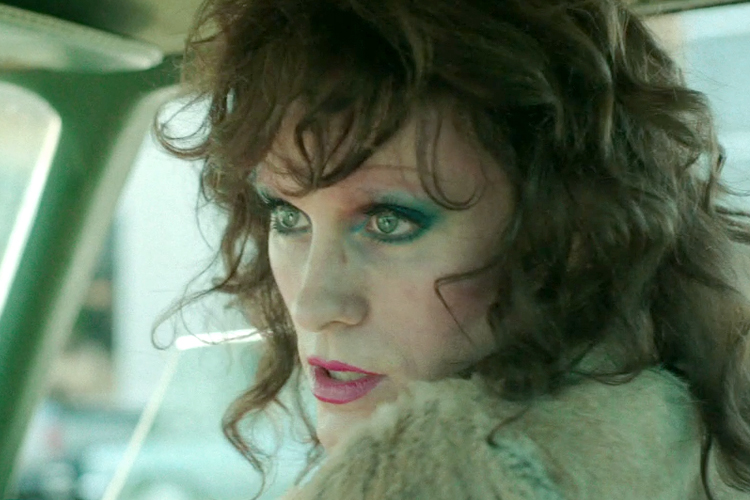
The movie has a lot of scenes and a lot of cuts; there are only a few takes that are over a minute, and yet it never feels in a hurry. It’s not a tear-jerker, but has a lot of humanity for its characters. If Woodroof is the point of entry into the movie, a transsexual called Rayon is its emotional center. Played by Jared Leto with exactly the right amount of courage, confidence and sensitivity, it’s a performance that’s a match for McConaughey’s. Rayon sees something in Woodroof he himself does not. There are no cheap solutions: Woodroof does not become a philanthrope or even Rayon’s lover. Neither does he fall for a doctor, played by Jennifer Garner, who helps him with his cause. Their fates lie elsewhere. It’s not an easy film, but it is surprisingly upbeat, considering.

An Alaskan nightmare

He picks them up in the streets of Anchorage, Alaska, some of them in broad daylight. He starts with local middle-class girls and women, then changes to hopeless drifters and whores because nobody is going to miss them. He rapes and tortures them for weeks in his flat. The less satisfying ones he shoots right there in his living-room where all the animal trophies with their dead eyes look upon the unspeakable acts he commits. The better ones he loads in his Piper plane, flies them to his lonely, wintry hunting grounds, where he sets them free and watches them stumble away through the crosshairs of his rifle. He lets them run until they think that there is the faintest sliver of an escape. Then he shoots them and watches the light die in their eyes.

You shouldn’t have to be told that “The Frozen Ground” is based on a true story. It’s a movie about the twelve-year killing spree of Robert Hansen, a well-liked baker in whose shop cops gather for coffee and doughnuts. He is played by John Cusack, and I’ve just realized that I don’t remember what his voice sounds like. It’s Cusack’s performance that stands out in an otherwise generic exercise. The Hansen in the movie is guarded, watchful, generally friendly. He is boring and can blend in. He is married and has two kids with his second wife. Some say he has a stammer, but how do you know if he says so little?

There is a cop who hunts him, called Halcombe, played by Nicholas Cage, an amalgamation of several real-life cops who were on the case. It’s a decent enough performance, but it’s one that Cage seems to have played at least three times before, and he does nothing with his role to elevate it to Cusack’s level.

There is one girl who gets away while Hansen prepares the Piper for take-off. This is Cindy Paulson. Halcombe must win her trust so she will testify; if she doesn’t, there is no way they can charge Hansen with anything. She is played by Vanessa Hudgens, who could be dismissed as some teenage bimbo from half-assed teenage movies. Not after this movie, she won’t. She plays Cindy as a damaged kid who is almost glad that, after Anchorage, there is nowhere left to run to. Hudgens doesn’t go for manipulative emotions, but for guarded mistrust and self-reliance. There are pieces missing with Cindy Paulson, and Hudgens manages to make us care about her, and so we tend to identify with Cindy, a teenage hooker who lies about her age. She is the entry-point for the movie. Halcombe is the motor for the plot, Hansen is the boogeyman.

The movie is flawed. Halcombe’s family is perfunctory and only there to remind him that they will move to brighter pastures in two weeks, while he cannot let go of the missing girls. Halcombe’s wife is played by Radha Mitchell, an actress who can improve any movie she is in. Not here: the screenplay makes her and Cage play out stuff from the stock cop plot shop. There are supporting roles that don’t lead anywhere, which is a shame when they’re played by actors such as Dean Norris. There is also a confusing scam between two pimps who quarrel about who owns the rights to Cindy. I also minded the prolonged scene where we get to see Vanessa Hudgens pole-dancing. I don’t much care if Hudgens is shapely and pretty; I get that she had to dance for money during in a brief scene; there is no need to film her body from all angles.

The ending is a shame. The Halcombe family, not moving after all, see Cindy off at the airport. That scene is just too fucking cute, Cindy leaving like that over a sickly-sweet soundtrack. I would like to have heard what she had to say to Halcombe.

His last scene with Hansen is weird, too: Halcombe gets a confession out of him by opening the door and letting Cindy take a look at him. That’s too easy and too fast, and a whole scene seems to be missing here. The movie is in a hurry to clean up.

Hansen was caught in 1983, and only after presented with overwhelming evidence did he admit to killing 17 women, but might be responsible for as many as 30. He got convicted for murdering four of them and for the rape and abduction of Cindy Paulson. In Hansen’s home, Halcombe found a map of an uninhabited area full of red crosses. The police went to those spots and dug. Some bodies could not be identified, some were already eaten by animals. Others have not been found, and they might still be lying there, freezing and thawing with the change of seasons, lying there for more years than they had living years on earth.

Paradise: Hope

The last movie in Ulrich Seidl’s Paradise trilogy, Paradise: Hope, has, at its centre, the relationship of a teenage girl with a doctor. She is about 17, he must be at the far end of forty. The girl is Melanie, and she is the daughter of Teresa from the first movie. Melanie is curious about her effect on boys; her bunkmate’s tales about blowjobs and shaved vaginas not only educate her, but seem to make her eager to go out and explore on her own.

Melanie is pretty. She is also overweight. The movie takes place at a camp for overweight teenagers. One of the saddest scenes I’ve seen lately is the one where the teenagers stand in line in the courtyard and have to sing: “If you’re happy and you know it, clap your fat.”

Melanie is aware of the camp’s doctor. He is a bit of a joker, not bad-looking, but far too chummy with Melanie. She fakes mysterious stomach aches in order to see him. There might also be moments where he engineers their encounters in the camp’s changing rooms. That guy is trouble of the creepy kind.

The camp is full of teenagers trapped in a loveless environment, dumped there by their parents. They sneak food, fags and booze into the camp. They get caught, and Melanie is mortified because the doctor tells her off like an unruly child.

There is an away day at a lakeshore. Melanie wanders off into the nearby woods, maybe hoping for the doctor to follow her. He does so. It’s a very uncomfortable scene, because Melanie is looking after company, a kind word, a connection, some appreciation. The doctor might hope for more. He follows her to a clearing, and she approaches him. Then she hugs him, which seems to come as a surprise to him. After some hesitation, he hugs her back. That must be enough. This time.

Later, he sneaks into her room and goes through her things. He lies in her bed, then leaves before she comes back. The same evening, she waits by his car until he appears. He tells her off – not because they are off limits to each other, but because he could be seen talking to her.

Melanie and her bunkmate escape to a local bar where they get picked up by two horny teenage boys. They slip something in her drink, and her friend takes off because Melanie gets all the attention. They feel her up while she tries to dance under the effect of the drug. Then she collapses and is saved by the barkeeper. This time.

The barkeeper calls the doctor to pick up the unconscious girl; he must have seen this kind of thing before. The doctor appears, and one danger of abuse is replaced by another. He drives into the woods and stays there with an unconscious Melanie until morning. He lays her down gently in a mossy clearing, lies down beside her and starts sniffing her. This time.

He brings her back to the camp and tells her that they cannot have any more contact. High time for that, but get this: He severs ties not because she is infatuated with him, but because he is afraid that he cannot handle her infatuation much longer.

I struggled a bit with the movie, because there seemed to be little hope: Does Melanie really still hope for good friends and acceptable partners? Maybe, but that would be against the odds. On the other hand, it must be an excellent kind of hope, with such a long shot.

One thing that still bugs me: In all three films, the women are somehow exploited by men, and they barely recover. Maybe it’s one of the formal points Seidl makes; maybe it’s also his way of finding out how his characters fare under pressure. But the coincidence haunts me, and it is only partly solved by the fact that he made all three protagonists women. There seemed to be so little joy in any of their lives. Teresa is still in Kenia at the end of the movie. Anna is whipping her savior, and Melanie is still at fat camp, having no clue how close she was to being raped. Neither of the three women has escaped their trap, but did anyone really think they would?

Or maybe Melanie is hard-wired like her mother and her aunt. They do what they must, and joy or relief doesn’t really have anything to do with it. Like Teresa, who will go on looking for love in dubious places. Maybe the paradise of the title is the one time where you really find what you are looking for. Like Anna, who might come to some kind of truce with her religion, which demands everything of her, whether she gives gladly or no. For Melanie, hope is the one red line going through her life. At least that. Living without it must be hell. There is no sure way to reach paradise, and most of us won’t reach it, but the movies seem to suggest that we must at least try, or we will fail miserably. It could be possible that some kind of truce is the best we get. Maybe hell isn’t other people; maybe hell is you, but it’s not your fault. It’s just the way you are.

Paradise: Faith

I’ve been in love a few times, and I imagine I’ve been loved a few times as well. Sometimes the feeling wasn’t mutual. That’s the way it is sometimes. With belief, it’s a different story: I am not really a religious person. The things I believe don’t believe back in me. This is a suspicion, not a complaint: Belief seems to be such a one-sided affair.

This explains already why I had more difficulty in understanding Ulrich Seidl’s Paradise: Faith, the middle film of his Paradise trilogy. There are other problems with this installment, but we’ll come to that eventually.

05

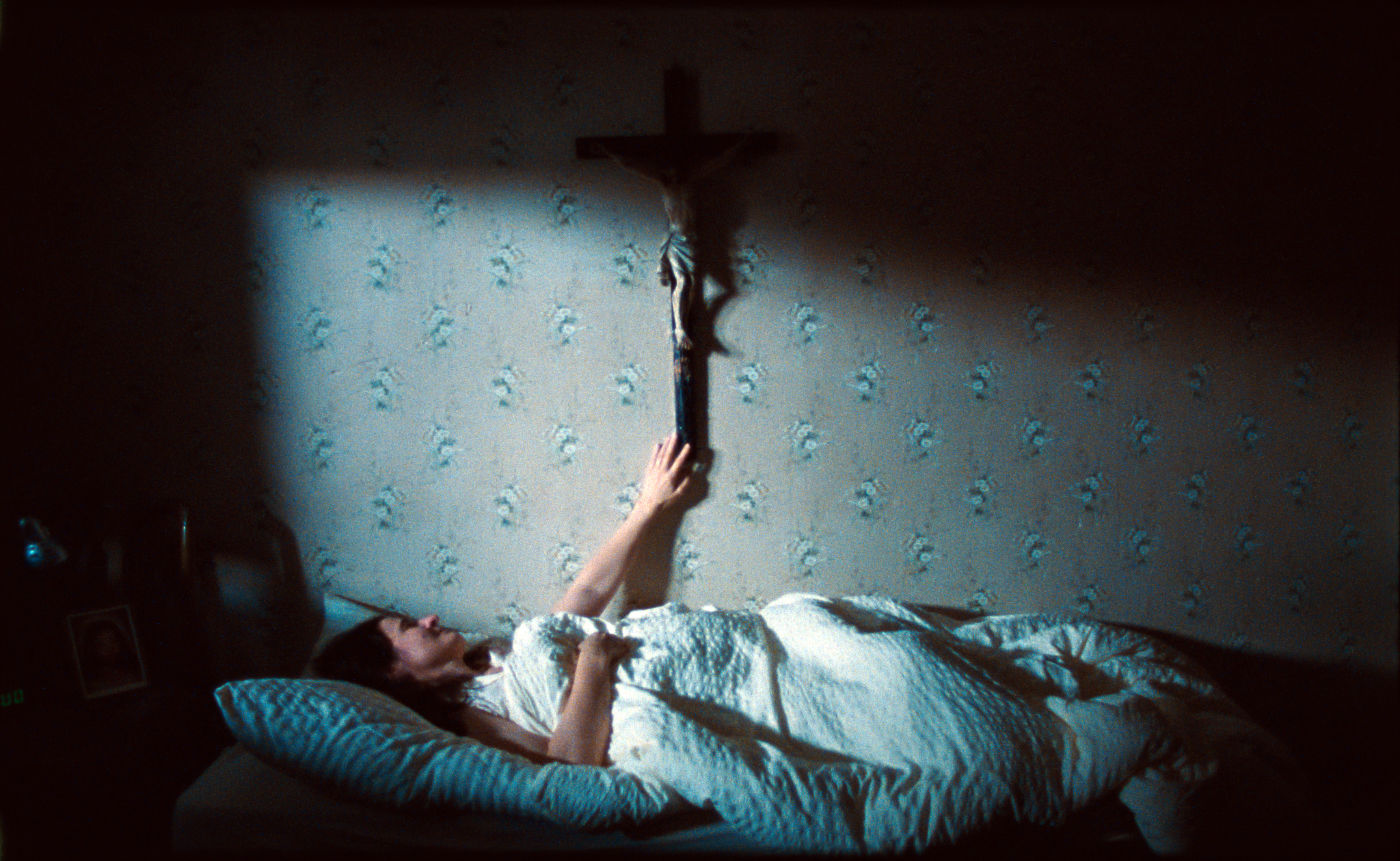
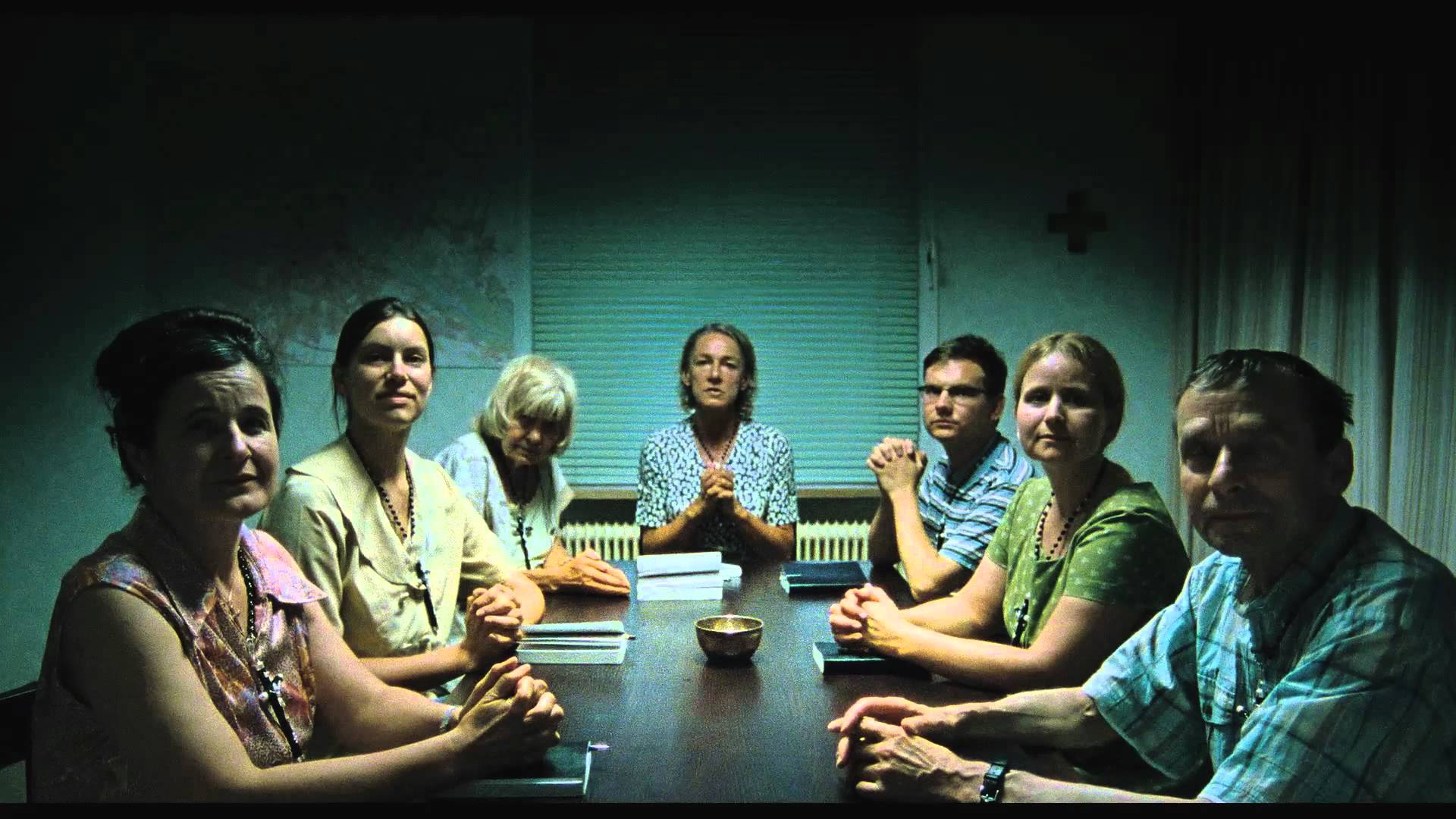
This film’s protagonist is Anna, Teresa’s sister. She is devoutly Catholic, and it is her and her bible group’s sworn objective to make Austria wholly Catholic again. Anna herself is convinced that the world is full of sex-obsessed people, and she asks that they be forgiven by whipping her own naked upper body with a whip while kneeling in front of her crucifix in a cheerless room in her house. Then she thanks her savior for the chastisement. Sometimes she goes as far as to tie a belt with iron thorns around her waist and make rounds through her flat on her knees while praying, and the kitchen timer telling her when to stop. She works as a radiologist’s assistant, but during her holiday, she goes from door to door in run-down apartment complexes and tries to convert people. She doesn’t stop at anything – there is a family of foreigners, non-Christians, of which only the eldest daughter speaks German. The whole family kneels in front of the Mother Mary statue. Anna can be very convincing.

One evening she comes home, and a Muslim is sitting on her living-room sofa. This is Nabil. They seem to know each other. It will later transpire that this is Anna’s husband. To Anna’s mind, this not at all a contradiction to her Catholic zeal – it is simply a test of her faith. She is happy to be married to her pet project, and she thinks it’s an excellent thing that two years ago, her husband had an accident and is now in a wheelchair – if only Nabil could see that true faith has entered her life that way.

Nabil, of course, is less delighted about his situation. He can no longer have sex with her, which is what Anna considers the right path: no sex, but a test of faith instead. Nabil thinks that a wife must serve her husband in all walks of life, and Anna agrees – except that Nabil asks for intimacy and a little more of her time. He is her project and is not supposed to develop human needs, and particularly not such disgusting ones like sex. Nabil’s every attempt is thwarted by Anna; although she can brush him off easily, she must bear his presence because her faith tells her to. Turn the other cheek. She politely refuses him at first, but when he insists, they trade blows. He wants sex he probably cannot have, she has a country to convert. This relationship will end badly.

maxresdefault

One night, again on her way home from trying to convert people, Anna’s greatest conviction seems to become real in her own neighbourhood. She walks past a public park and sees a dozen people involved in a gangbang. She knows she must interfere, but she cannot, and while not really consciously aroused, she must become aware of her own suppressed sexuality. Nabil asking her to sleep in the same bed and those gangbangers entail the same horror to Anna: the world is really only after one thing. It is here that Seidl’s strictly geometrical, static camera lets go and adopts Anna’s point of view. There is a possibility that Anna might only imagine the orgy. There is very subtle irony here: Anna is the one person who cannot tell whether she imagines the whole thing or not because for her, this was bound to happen. She staggers back home, utterly shocked, but proven right.

Anna’s zeal remained impenetrable to me. This movie must play like a horror flick to some Catholic audiences. To me, a former Protestant, Anna is very far from my own walk of life. That’s not to say that I don’t know about being passionate about something, way more passionate than is good for me. I understand obsession. I utterly empathize with trying to fulfill that passion, but I also empathize with the despair of not getting any rest about being passionate all of the time. I seem to be able to stop before I damage myself or others; for Anna, it’s all or nothing. She has subscribed to her faith, and if that involves more than she can take, so be it. It’s God’s will. She is so far out there that I can hardly see her. The actress playing her, Maria Hofstätter, disappears completely in her role. She is Austrian, friendly, with a quick smile. There is nothing in Anna of her.

Back at home, there is undeclared war. Nabil takes down her crucifixes, asks to watch TV, listens to Islamic prayer tapes and even puts a framed photograph of their wedding on her nightstand. He insults her faith and asks her, not to convert to Islam, but simply to find a better religion. He has a point, of course, although if you look past the object of her obsession, religion is not Anna’s problem. She enters a similar situation as her sister Teresa: She might still love Jesus, but there are moments when she despises her faith, but she cannot not believe. She is hard-wired that way, and there is no escape. The movie ends with Anna not whipping herself for a change, but whipping the crucifix on the wall.