Don’t take it personally, it just ain’t your story

I grew up roughly during the last dozen years of Apartheid, in a country that lived up to its tradition of supposed neutrality covering up business connections to an unsavoury regime. I faintly remember people boycotting Granny Smith apples and, somewhat less faintly, Eddy Grant’s song “Gimme Hope Jo’anna”. What I remember most from those times, though, is Cry Freedom, a 1987 film that zeroed in on the human cost of Apartheid: the exile of a liberal, middle-class white journalist and his family from their chosen home of South Africa.

Oh, and there was also something a corrupt, racist police apparatus torturing and killing the black activist and community leader Steve Biko.

Selma isn’t like that.

Selma

Continue reading

We are family

In the past I’ve called Hirokazu Koreeda’s films “gentle”, which is perhaps a misleading term. It makes the director and his works sound soft and pleasant and, well, sort of nothingy. Which is giving both them and the adjective short shrift – these days especially, both on and off the screen, we could do with more gentleness. It also suggests that it’s easy to underestimate Koreeda and his films, because doing what he does – and, more importantly, doing it well – is exceedingly challenging. Koreeda’s films have an uplifting humanity that is sadly rare, not just in cinema.

Our Little Sister

Continue reading

The one with the talking raccoon

Guardians of the Galaxy Vol. 2 is one of the most likeable films in recent years. It’s definitely the most purely fun film in the Marvel Cinematic Universe (MCU) since, well, Guardians of the Galaxy Vol. 1. It is funny, it has personality, and it is eminently quotable. Almost every scene has at least one great line, and that’s not even mentioning the visual humour the film excels at. It’s almost impossible not to like the movie.

Reader, I liked it – but I wanted to love it, and I didn’t.

Guardians of the Galaxy Vol. 2

Guardians Vol. 2 does so many things right. It takes the fun ensemble of the first film and builds on it – and this extends to some of the henchmen, sidekicks and minor characters from the first film. It avoids the mistake common to the MCU of generic villains who are uninteresting as characters and who don’t reveal anything about the protagonists either (even if Marvel does return to the well of daddy issues a bit too often, perhaps). Visually it continues the trend of Dr. Strange of making these films look good instead of mediocre and blandly competent, and there’s genuine wit to some of the film’s humour. Continue reading

Metafictional metaphysics and the art of puppetry

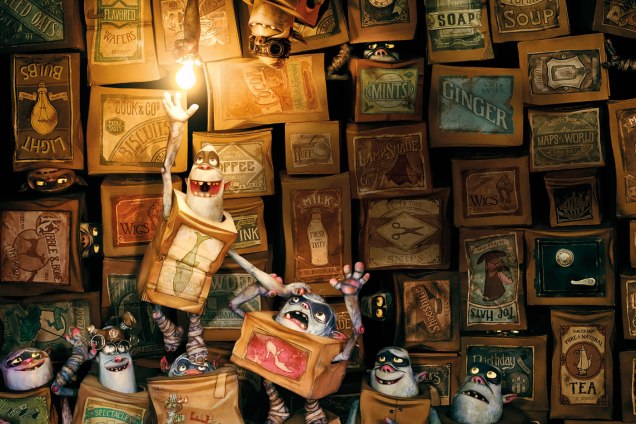
I’m a big fan of Laika. No, not the space-faring dog so much as the animation company responsible for Coraline, ParaNorman and, most recently, Kubo and the Two Strings, one of my favourite films of 2016. Their loving dedication to the art of stop-motion animation tends to combine with their ability as storytellers and their oddball imagination to strange and wonderful effects, making their films distinctly different from Pixar’s beautiful but more sentimental fare, and elevating them far beyond other contenders with their well-rehearsed snark and pop culture references. I’d avoided The Boxtrolls to date, mainly because I’d heard that it was distinctly lesser Laika – and now, having caught it on TV, I would probably agree that it’s nowhere near the top of my list of Laika favourites, but it is still a great example of the company’s craftsmanship. The film, loosely based on Alan Snow’s 2006 children’s book Here Be Monsters!, combines the early Victoriana of Charles Dickens’ novels with the dark and sometimes gleefully gruesome humour of Roald Dahl – and hinting at even darker and more surreal entertainments such as the films of Monty Python.

The Boxtrolls

Continue reading

This is a test – but for whom?

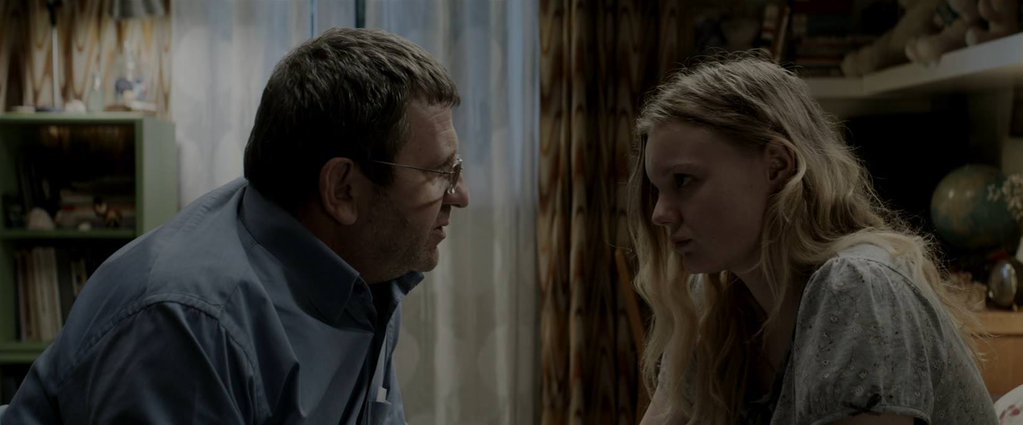
Cristian Mungiu’s Bacalaureat (2016) (or Graduation, as it is called in English-speaking countries) is firmly rooted in realism, but manages to turn some of its characters paranoid. Somewhere around the movie’s middle mark, I turned slightly paranoid, too. It’s entirely possible that this paranoia might be intentional, and that it might refer to the fact that this is a Romanian production, with its subtle hints to the Ceausescu regime which had the whole country in its grip until 1989, but it doesn’t have to be. We could also just witness a system that works with favoritism and secret handshakes, but the thing is: the favoritism in the movie, while not legitimate, does not increase the elite’s power, but helps single individuals overcome their problems. It’s a film about morals without wagging its finger at you. Continue reading

About two boys

Remember that film that followed a boy growing up in an economically precarious environment, that took us from the boy’s childhood through adolescence to early adulthood? The film about a boy whose father was (largely) absent and whose mother struggled with her situation, with getting older and feeling that she hadn’t done a good job of being a parent? That was told in relatively plot-free, naturalistic episodes that mostly began and ended in medias res? The film that most critics loved and that was nominated for most major awards?

In your mind, what colour was that boy?

Continue reading

Here comes the Train again

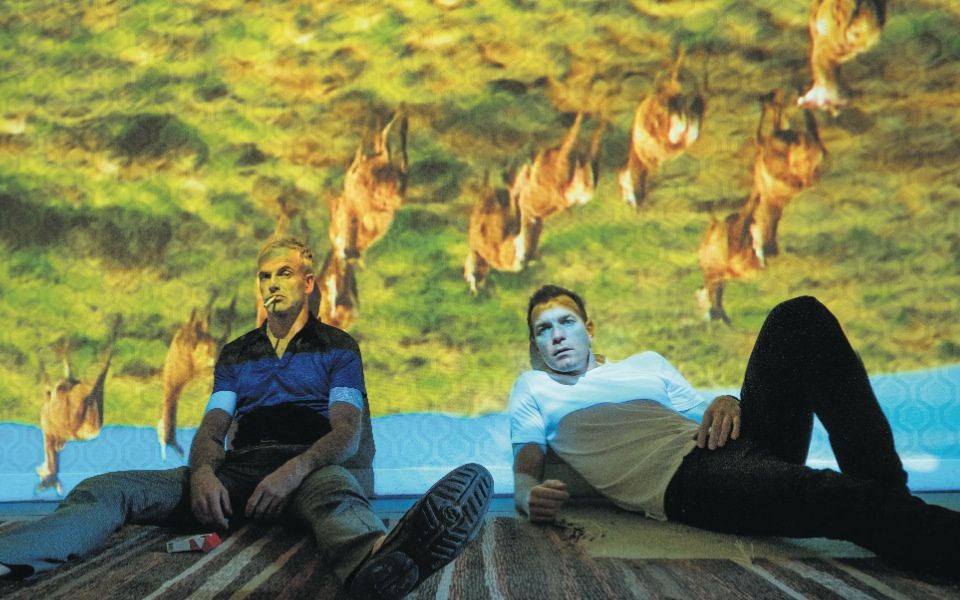
Why does Mark Renton return to Edinburgh 20 years later? I don’t know which reasons Irvine Welsh’s novels give, but Danny Boyle’s T2 Trainspotting lets us take our pick. I like that ambiguity – it keeps you guessing about the characters and about the story. Renton says he is here because his wife is going to divorce him. Could be, but we never see her. There is also the money he wants to give back to Sick Boy out of guilt. Sick Boy, still very blond, now runs his dead auntie’s run-down Leith pub and calls himself Simon. I have another theory: Renton simply remembers the best of times and the worst of times he had with Simon, Spud, Diane and maybe even Begbie, as depicted in the original Trainspotting (1996). Everything else since then wasn’t half as intense as those times 20 years ago, even if it almost killed him. Continue reading

One more last stand

logan14Old man Logan is weary and drunk and asleep in his car. He runs a one-car limousine service in New Mexico near the border, and some thugs are trying to steal his tyres. He gets out and shields his car with his body, using his precious faculties of self-healing for something as trivial as a limo. His suit is rumpled and dirty. He is one of the last mutants, and he lives in an abandoned factory in the desert and cares for a demented Professor Xavier who hides in a collapsed water tower nearby. Professor X is on heavy medication that makes him go woozy, but if he doesn’t take his pills, his brain, a weapon of mass destruction, will hurtle out of control eventually, and everyone around him gets paralyzed and can’t breathe. The professor is 90 years old. Logan is something like 220 years old. His wounds don’t heal as fast as they used to, and his scars don’t heal at all anymore. One of his blades doesn’t come out all the way, and he actually has to pull it out to the hilt with his other hand so that he can’t help but to cut himself in the process. Can you believe that? He suspects that the adamantium is slowly poisoning his body. Time is not on their side. Continue reading

The Sound of Silence

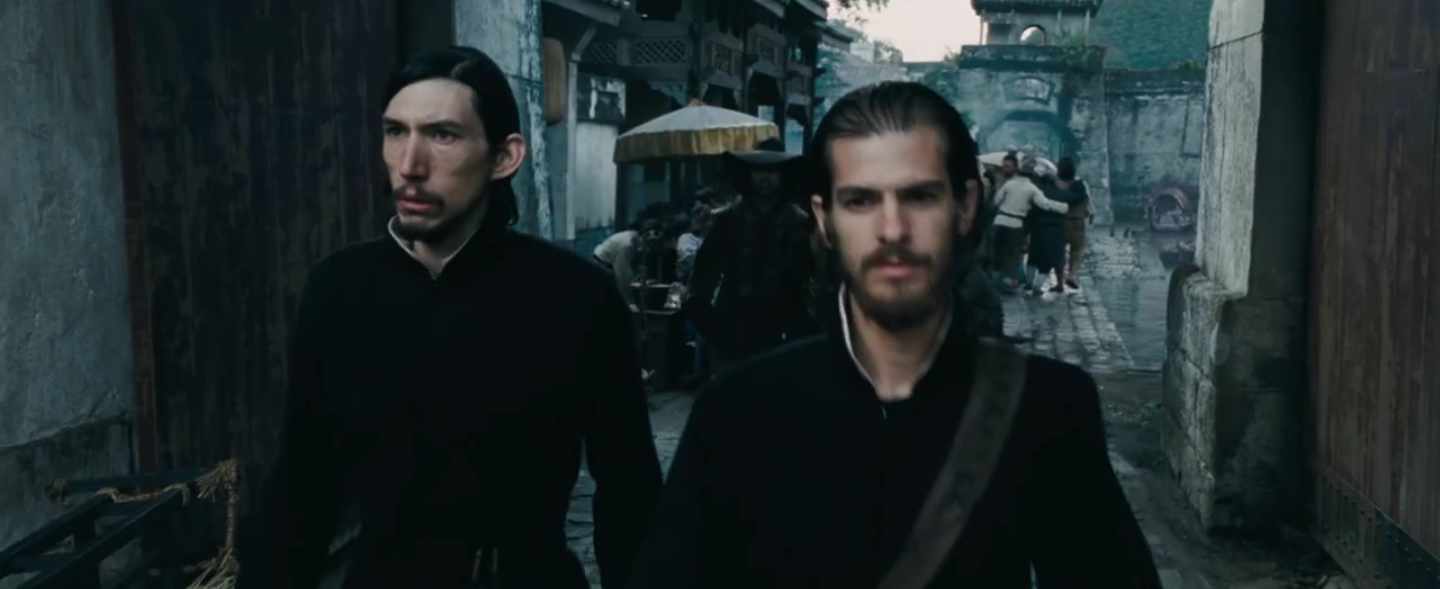
silence4Silence is almost not a Scorsese movie. His camera watches from the middle distance; it doesn’t cut away, but keeps watching, standing still, but far from unmoved. There are no extra-long scenes, no musical cues, no freeze frames, no siren call for a life of crime. Every movement has its reason. This is a mostly quiet film. Nature sounds can be heard – the waves, the wind, footsteps, fire burning. There is some voiceover narration, and there are dialogues, all of them necessary, but silence is the point. The louder the movie gets, the more disquieting things are going on. Silence is not entertaining in any superficial way, but it’s definitely intriguing. Continue reading

Every dog has its movie

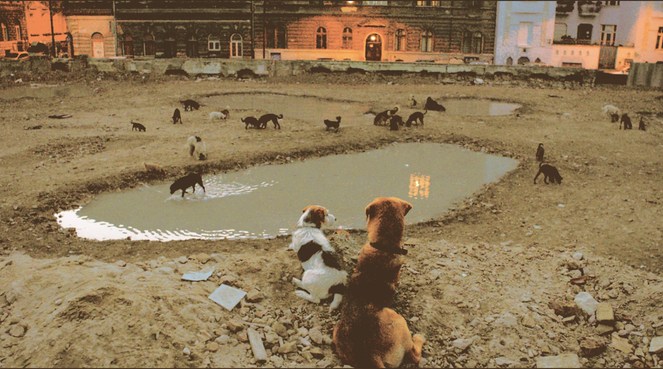
whitegod3White God is a good movie, but it’s unnerving to get glimpses of an even better movie in there. All the ingredients for a better story are there, but somehow it gets lost on the way, and then still finds some sort of ending all the same, like a dog on its long way home. This might explain why there was once so much talk about it, and then it never even made it to the cinemas, at least not near here. And please note: dogs will seriously be harmed in this movie. Humans, too. Continue reading