Welcome to Six Damn Fine Degrees. These instalments will be inspired by the idea of six degrees of separation in the loosest sense. The only rule: it connects – in some way – to the previous instalment. So come join us on our weekly foray into interconnectedness!
Everything is connected: somehow it seems like we only got started on our weekly exercise in free-fall association yesterday – but no, we’ve already arrived at the hundredth instalment of Six Damn Fine Degrees – and what better occasion than this to reflect on the feature and on cultural links of all sorts?
Welcome to Six Damn Fine Degrees. These instalments will be inspired by the idea of six degrees of separation in the loosest sense. The only rule: it connects – in some way – to the previous instalment. So come join us on our weekly foray into interconnectedness!
In last week’s Six Damn Fine Degrees post, Julie wrote about Shakespeare on film. In the post, she also talked about “less faithful adaptations”, which made me wonder: what do people generally consider a faithful adaptation of Shakespeare? Does faithful mean as close as possible to what those performances at the Rose Theatre or the Globe, back in the heady days around the turn of the century (16th to 17th, that is)? All in one location with minimal set changes, no artificial lighting, all female characters played by boys, that sort of thing? Because, most likely, that kind of stylised, formalised performance would be so alien to many people that they’d consider it downright avantgarde.
Welcome to Six Damn Fine Degrees. These instalments will be inspired by the idea of six degrees of separation in the loosest sense. The only rule: it connects – in some way – to the previous instalment. So come join us on our weekly foray into interconnectedness!
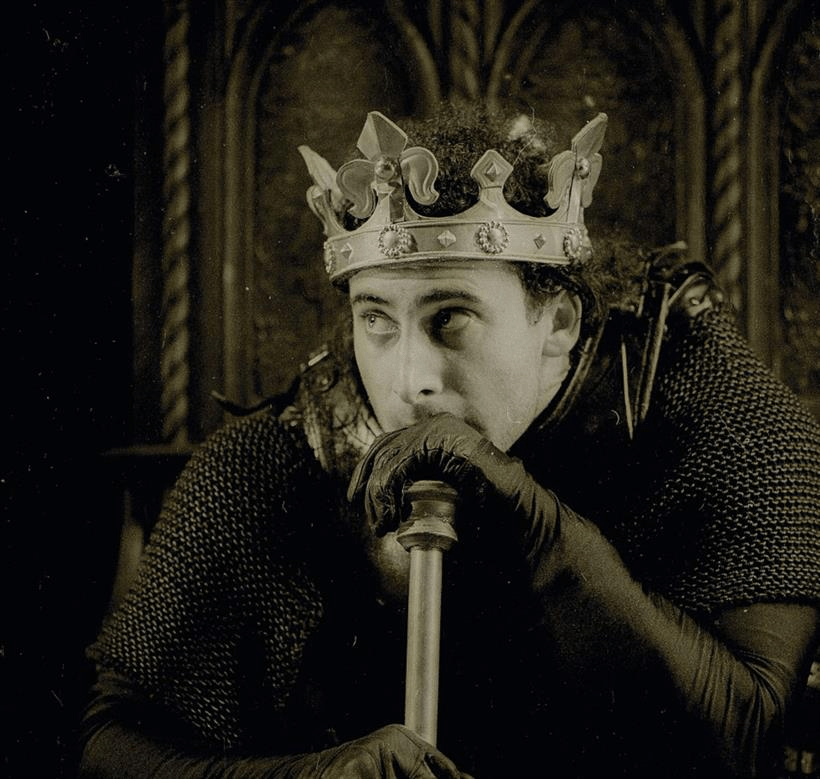
“My conscience hath a thousand several tongues, And every tongue brings in a several tale, And every tale condemns me for a villain.” ~ Richard III, Act V, Scene III
Welcome to Six Damn Fine Degrees. These instalments will be inspired by the idea of six degrees of separation in the loosest sense. The only rule: it connects – in some way – to the previous instalment. So come join us on our weekly foray into interconnectedness!
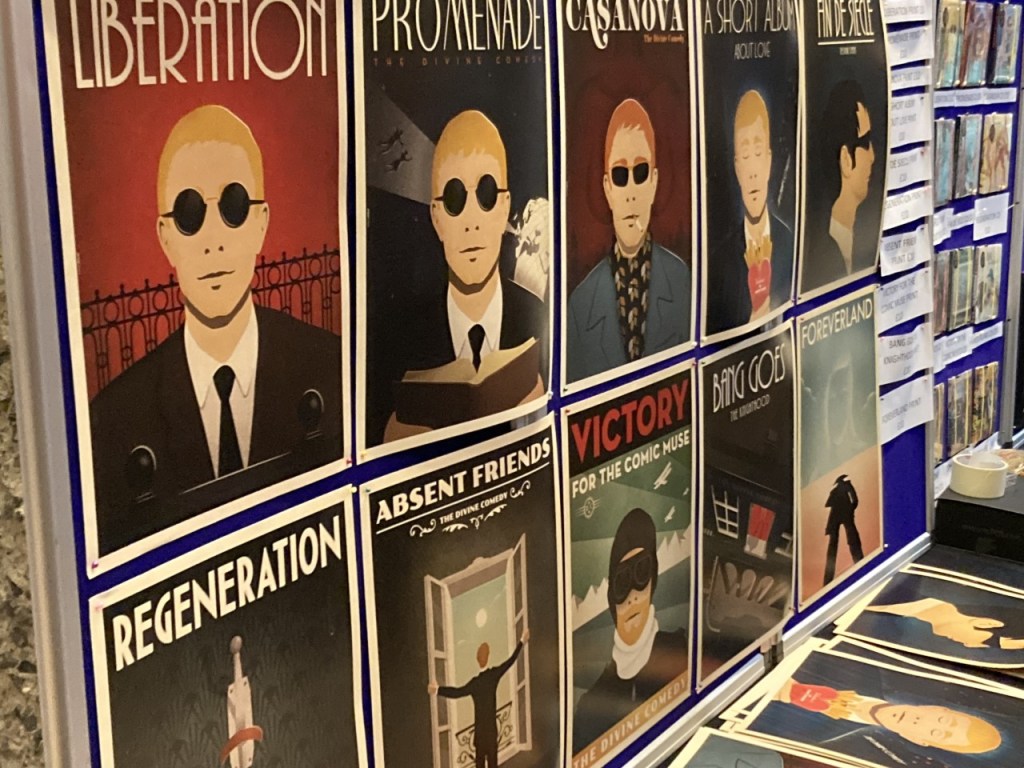
In 1993, The Divine Comedy released their album Liberation. While, technically speaking, not the first Divine Comedy album, it marked the first release where musician Neil Hannon effectively operated as the band. He wrote, arranged and performed all the songs, with the help of a handful of musicians providing percussion and strings, and William Wordsworth providing a lyrical assist on the album’s final track “Lucy”.
Welcome to Six Damn Fine Degrees. These instalments will be inspired by the idea of six degrees of separation in the loosest sense. The only rule: it connects – in some way – to the previous instalment. So come join us on our weekly foray into interconnectedness!
So there are these three Scotsmen who formed a band back in 1995, starting out with unruly punk rock under the equally unruly name of Biffy Clyro, the meaning of which now even escapes the musicians themselves. That doesn’t prevent them from making up stuff – they once claimed that Biffy Clyro was the name of the first Scotsman in space. So anyway – they have become one of the most versatile bands around. They still make a hell of a lot of noise, but they also have one soundtrack (Balance, Not Symmetry), several beautiful ballads (Machines, Opposite, God & Satan) and at least one disco hit (All Singing and All Dancing) under their belt. But their mastery lies in guitar-loaded pop rock with an edge. Listen to the slick mainstream radio tune “Black Chandelier”, or try to heat your flat with “A Hunger In Your Haunt” all turned up. They are highly precise musicians, but they refuse to slow down. If you need a challenge for your ears, listen to the headfuck called “Slurpy Slurpy Sleep Sleep”.
It’s the black oil zombie apocalypse, held in check by three fit young blokes with tats.
And so this guy here bought tickets for their March show a year ago, which got postponed because of some virus, and so finally, finally, they came round here in September. It was in a medium-sized concert hall, and that was part of the problem. The Biff played so loud that it was probably illegal for an indoors concert. My girlfriend, who is not one for earplugs, put them in after the first song (“DumDum”) made the hairs on her arm stand up. What helped her get through the gig was that, very early on, the three guys kept on rumbling half-naked. Not as tall as me, she tried to get glimpses of the trio who behaved like indefatigable Energizer bunnies on stage. She seemed cheerful. I love that woman to bits.
Welcome to Six Damn Fine Degrees. These instalments will be inspired by the idea of six degrees of separation in the loosest sense. The only rule: it connects – in some way – to the previous instalment. So come join us on our weekly foray into interconnectedness!
Piece of evidence #1: Orson Welles as a deceptive conjurer in the awful comedy version of Casino Royale (1967) – or just deceptively conjured up himself?
The train has left the station. The literal one, no metaphors, no fakes: The blissful travels of my current teacher timeout have brought me across Spain all the way to Portugal within the past ten days. As I’m leaving Porto Campaña station en route to Lisbon, I marvel at Matt’s shocking revelation from last week about the impossibility of Orson Welles‘ existence. Could it really be true that one of the most famous directors was just a figment of our imagination, an image of one towering director to deceive us all?
Welcome to Six Damn Fine Degrees. These instalments will be inspired by the idea of six degrees of separation in the loosest sense. The only rule: it connects – in some way – to the previous instalment. So come join us on our weekly foray into interconnectedness!
Hollywood. The Dream Factory. And what is a dream but a story that never happened? (Or, if you believe in the MCU, things that happen in alternate universes – which means that these alternate universes have a hell of a lot of lectures and speeches made, and lessons taught, by people who suddenly find that they’re actually naked.)
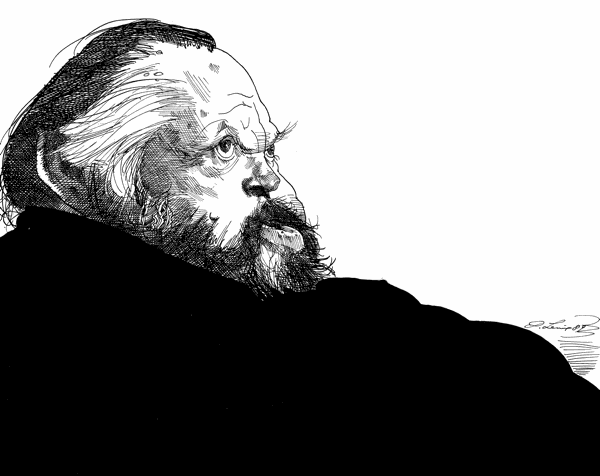
One of the greatest such ‘dreams’ brought forth by Hollywood – or, to be more frank and forthright, one of its greatest lies – is that of Orson Welles: director, actor, writer, and, if we are to believe IMDB, also Editor, Costume Designer, Script and Continuity Department, and (ironically) Self. In short, a Hollywood wunderkind supreme.
How ironic, then, that Orson Welles… play the ominous dun-dun! sound… never actually existed.
Welcome to Six Damn Fine Degrees. These instalments will be inspired by the idea of six degrees of separation in the loosest sense. The only rule: it connects – in some way – to the previous instalment. So come join us on our weekly foray into interconnectedness!
Welcome to Six Damn Fine Degrees. These instalments will be inspired by the idea of six degrees of separation in the loosest sense. The only rule: it connects – in some way – to the previous instalment. So come join us on our weekly foray into interconnectedness!
Donovan’s Hurdy Gurdy Man (1968) is one creepy trip of a song. Judging only from the lyrics, the hurdy gurdy man should bring solace and tranquility to the suffering of all mankind by simply playing his instrument and softly singing his monotonous, hypnotising hurdy gurdy lyrics. Of course, on some level, it is a drug-addled tune, but the words point to an agreeable nirvana of semi-consciousness. The hurdy gurdy player seems to be some godlike being whose superpower is to reign benign over all of us.
Welcome to Six Damn Fine Degrees. These instalments will be inspired by the idea of six degrees of separation in the loosest sense. The only rule: it connects – in some way – to the previous instalment. So come join us on our weekly foray into interconnectedness!
The sausage that was too much: Just like this moment from Torn Curtain (1966), many fascinating Hitchcock ideas, scenes and projects were cut.
I must admit I have not (yet) become as much of a connoisseur of the Coen Brothers’ oeuvre as Matt has revealed himself to be in last week’s insightful poston a number of standout scenes from their lesser-liked films. However, I immediately thought of directors I know somewhat better, particularly how Hitchcock’s over fifty feature films would lend themselves to a ranking of standout scenes of even his less-appreciated films. Beyond obvious scenes in showers, on top of towers and gazing out rear windows, one could probably run a blog or a series of podcasts just on the one standout scene from every one of his movies. After all, Hitchcock was particularly masterful at making scenes, even single objects stand out and in creating masterful compositions, but also making them so memorable as unique scenes that work outside of the film itself.




 A Damn Fine Cup of Culture