The Rear-View Mirror: T.S. Eliot, “The Love Song of J. Alfred Prufrock” (1915)

Each Friday we travel back in time, one year at a time, for a look at some of the cultural goodies that may appear closer than they really are in The Rear-View Mirror. Join us on our weekly journey into the past!

And would it have been worth it, after all,
After the cups, the marmalade, the tea,
Among the porcelain, among some talk of you and me,
Would it have been worth while,
To have bitten off the matter with a smile,
To have squeezed the universe into a ball
To roll it towards some overwhelming question,
To say: “I am Lazarus, come from the dead,
Come back to tell you all, I shall tell you all”—
If one, settling a pillow by her head
       Should say: “That is not what I meant at all;
       That is not it, at all.”
Continue reading

The Rear-View Mirror: Spontaneous Combustion, Frances Marion and Mary Pickford (1917)

Each Friday we travel back in time, one year at a time, for a look at some of the cultural goodies that may appear closer than they really are in The Rear-View Mirror. Join us on our weekly journey into the past!

Frances Marion and Mary Pickford

When Mary Pickford and Frances Marion met in 1914, Marion may well have believed that fate was playing a hand in her favour. Not long before she had met and befriended Marie Dressler, the famous vaudevillian. Marion was then a cub reporter for William Randolph Hearst’s newspaper. The interview was probably a joke at Marion’s expense: Dressler despised Hearst and everything connected to him. Marion, however, pleaded with Dressler, “I will lose my job!”, she insisted. “Is that what those bastards told you?!” replied Dressler, and granted Marion the interview. Marion would never forget the kindness, the women became lifelong friends, and much later she would return the favour. And now she had an opportunity to meet a rising star, whose quality films already stood out for Marion, Mary Pickford.

Continue reading

The Rear-View Mirror: W.B. Yeats, “The Second Coming” (1919)

Each Friday we travel back in time, one year at a time, for a look at some of the cultural goodies that may appear closer than they really are in The Rear-View Mirror. Join us on our weekly journey into the past!

Things fall apart; the centre cannot hold;
Mere anarchy is loosed upon the world…

Continue reading

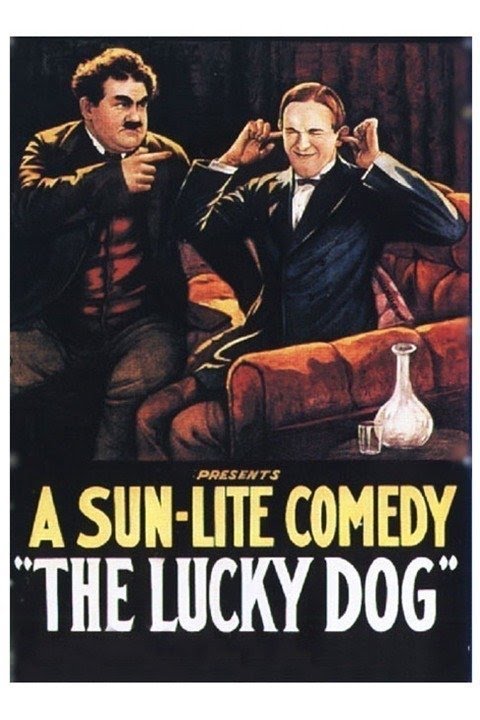
The Rear-View Mirror: The Lucky Dog (1921)

Each Friday we travel back in time, one year at a time, for a look at some of the cultural goodies that may appear closer than they really are in The Rear-View Mirror. Join us on our weekly journey into the past!

Four and a half minutes into 1921’s “The Lucky Dog” comedy short, cinematic history is made. The film’s hero – a penniless young man with a surprisingly emo take on eye make-up – is chasing the eponymous lucky dog when he embroils himself in a mugging. As this is the knockabout world of early film comedy, the hold-up does not go according to plan, and the intended victim ends up racing off with more money than when he started, the oversized brute (do brutes come in any other size?) in hot pursuit.

What makes this particular moment historic is the identity of both mugger and muggee. The former is played by Oliver “Babe” Hardy, already a veteran with over a hundred comedy shorts under his belt. His intended victim, a relative newbie to Hollywood but already in leading roles, is Stan Laurel.

Continue reading

The Rear-View Mirror: Häxan (1922)

Each Friday we travel back in time, one year at a time, for a look at some of the cultural goodies that may appear closer than they really are in The Rear-View Mirror. Join us on our weekly journey into the past!

Häxan, a Swedish-Danish silent film from 1922, is a fascinating cultural artifact in so many ways, even before you get to the bit where witches kiss the devil’s behind. Historically, culturally and cinematically, it constitutes a trip to a very different time and place – both in terms of its depiction of medieval Europe and of when and where it was made. There is a strangeness to the film that is intriguing, but at the same time its format is oddly familiar – more so now, perhaps, than it would have been ten, twenty years ago. Because, essentially, Häxan is an extended video essay.

Continue reading

The Rear-View Mirror: Benny Hill (1924)

Each Friday we travel back in time, one year at a time, for a look at some of the cultural goodies that may appear closer than they really are in The Rear-View Mirror. Join us on our weekly journey into the past!

1924 was a good year in culture. James Baldwin was born, author of the novel Go Tell It on the Mountain (1953), the collection of essays Notes of a Native Son and If Beale Street Could Talk, which Barry Jenkins adapted into a beautiful movie in 2018, and much, much more. So was Marcello Mastroianni, the archetype of the disaffected Italian playboy, and Hollywood icon Lauren Bacall. The composer Gabriel Fauré died (you’ve certainly heard the sublime “In Paradisum” from his Requiem), as did Franz Kafka – and indeed Vladimir Ilyich Ulyanov, better known as Lenin. Thomas Mann’s novel Der Zauberberg (The Magic Mountain) was published, as well as E.M. Forster’s A Passage to India.

In other words, there would be a lot to write about with respect to 1924, so honestly, there is little excuse for… this.

Continue reading

The Rear-View Mirror: The Passion of Joan of Arc (1928)

Each Friday we travel back in time, one year at a time, for a look at some of the cultural goodies that may appear closer than they really are in The Rear-View Mirror. Join us on our weekly journey into the past!

There has rarely been a story as good at portraying the conflict between belief and organised religion as that of Joan of Arc, the Maid of Orléans, the peasant girl that believed to have seen archangels and saints and whose fight for her king and her god finally led her to a martyr’s death at the stake.

And while I haven’t seen any of the more recent cinematic takes on the story, I doubt that any of them are as harrowing as Carl Theodor Dreyer’s The Passion of Joan of Arc.

Continue reading

The Rear-View Mirror: Un Chien Andalou (1929)

Each Friday we travel back in time, one year at a time, for a look at some of the cultural goodies that may appear closer than they really are in The Rear-View Mirror. Join us on our weekly journey into the past!

It still gets me, that scene. I think I must have been ten or so, and there was nothing to prepare me for what would come on the telly. No-one in my family was any kind of art-house movie nut, so it must have been a coincidence that Buñuel’s short Un Chien Andalou was on. And then that razor cuts through the woman’s eye. It took me days to recover. Not many other movie moments have stayed with me because of their violence, and none as long as this one. Continue reading
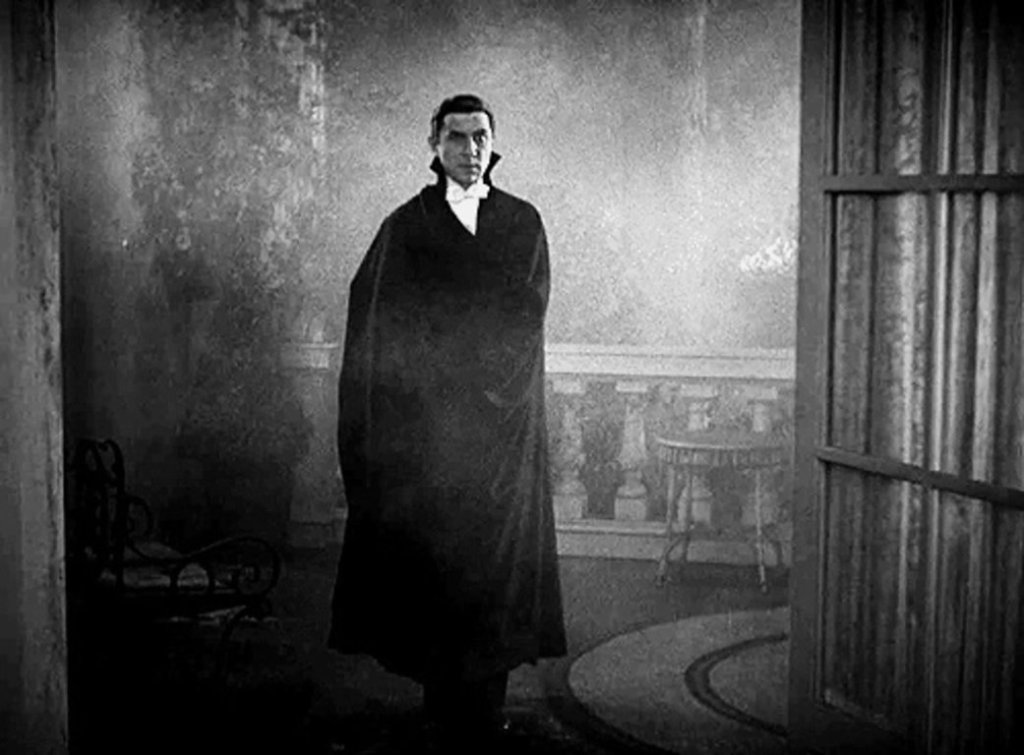
The Rear-View Mirror: Dracula (1931)

Each Friday we travel back in time, one year at a time, for a look at some of the cultural goodies that may appear closer than they really are in The Rear-View Mirror. Join us on our weekly journey into the past!

I am entirely the wrong person to write this entry. It should be Julie. It should be anyone other than me, really. Because I’ve tried, I really have. I went and got the Universal Monster Box set of Blu-rays. I don’t have any problems with black and white. I don’t mind melodrama or cheese. Horror doesn’t have to be gory for me. Vampires haven’t altogether lost their glitter, as far as I’m concerned.

Continue reading