It seems there is just as much finger pointing at movie remakes as there is in this memorable image from Hitchcock’s original The Man Who Knew Too Much. Pointing out strengths and weaknesses of originals and remakes and debating the actual point (if any) of why movies need to be remade, apart from obvious box office profit, is a staple among film enthusiasts and general audiences alike. In our four-part Summer of Remakes podcast series, we tried to dig a little deeper into the question of what remakes can and should be.
Join us every week for a trip into the weird and wonderful world of trailers. Whether it’s the first teaser for the latest instalment in your favourite franchise, an obscure preview for a strange indie darling, whether it’s good, bad, ugly or just plain weird – your favourite pop culture baristas are there to tell you what they think.
Our Summer of Remakes is coming to an end, with a conversation about not one, two, three or four films, but a whopping five, starting with What Price Hollywood? (1932), which was adapted in 1937 into A Star Is Born – and again in 1954, starring Judy Garland and James Mason. Then, in 1976, the story got the Streisand treatment, and in 2018 we got Bradley Cooper’s version, starring himself and Lady Gaga. Join Julie, Sam and Alan as they talk about the remake extravaganza. What is it about the material that makes it so enduring? How do the films tell their story differently? And, if A Star Is Born, is such an enduring tale, what would our cultural baristas expect from a near-future remake, should one be forthcoming?
Welcome to Six Damn Fine Degrees. These instalments will be inspired by the idea of six degrees of separation in the loosest sense. The only rule: it connects – in some way – to the previous instalment. So come join us on our weekly foray into interconnectedness!
Choice is a blessing. I grew up in a place and at a time when only a handful of TV channels were available, and you were at the mercy of an antediluvian evil called the “TV programme”. You were bored on a Wednesday afternoon after school? Well, though, there’s nothing on. Wait an hour and you might get some anime adaptation of a European kids’ classic, with a black-haired moppet running around the Swiss Alps – and that’s if you were lucky. As a child, I watched a lot of TV, and usually not what I wanted to watch but what was available – so I’d will myself, not always very successfully, into thinking that what was available was also what I wanted to watch. And sure, as I grew older, my choices grew alongside me: more TV channels, plus there were the video tapes sent to us by my uncle in the UK – but especially TV remained this wasteland of non-choices: it’s Friday evening, the parents are out, I can watch whatever I want… as long as it’s a stupid Italian action comedy, or a French film about a couple of parents whose child dies, or perhaps, if I’m lucky, Ghostbusters or Raiders of the Lost Ark… dubbed into German. And that was one of the good evenings!
These days, TV channels still exist, but do people still watch them? Do they still follow the TV programme, and go, “Oh, look, The Godfather Part III is on, let’s watch that – or would you rather see that movie in which Idris Elba and his daughter are stalked by a lion they’re showing on Film Four right now?” More likely, people grab the device of their choice and go, “Hmm… Is it a Netflix evening or a Disney+ one?” And there, at their fingertips, are hundreds of films and TV series, and these days even games, that all come with the subscription to the streaming channels. All that choice – and it’s a curse. When you can pick from a hundred things what to watch, how can you pick? It’s a miracle that more people aren’t found dead in front of the streaming device of their choice, their finger forever poised to scroll further down on the feed.
Join us every week for a trip into the weird and wonderful world of trailers. Whether it’s the first teaser for the latest instalment in your favourite franchise, an obscure preview for a strange indie darling, whether it’s good, bad, ugly or just plain weird – your favourite pop culture baristas are there to tell you what they think.
For this week’s Six Damn Fine Degrees, Mege wrote about The Umbrella Academy. What’s this: a Netflix series that is actually allowed to run until the end?
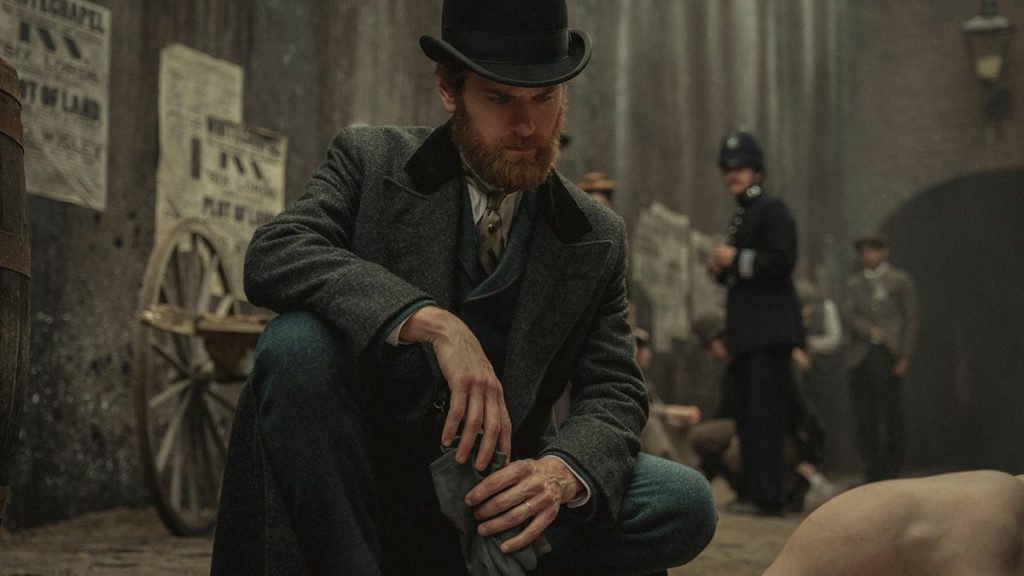
Imagine: a body is found in a London alley in 1890. The man is naked, and it looks like he was killed by a gunshot to the head – or, more accurately, to the left eye. He also has what seems to be a strange tattoo on his left wrist. But that’s not all: the same body is found in the same place… in 1941. And, again, in 2023. In 2053, the man is found, but he isn’t dead yet – he’s clinging on to life. And four detectives from the Metropolitan Police investigate the mystery in four eras.
Sound intriguing, if perhaps in a somewhat mystery-boxy way?
Now imagine: you’ve got an engaging hook, with lots of pulp sci-fi potential – only to squander it away in a story that rehearses the same old tropes of time loop narratives and dystopian fiction, with characters that are either drab or clichéd or both, and a script that could have been written by generative AI. And the cinematography is as dreary and flat as the writing. And, in case you haven’t guessed: yup, it’s a Netflix production.
Welcome to Six Damn Fine Degrees. These instalments will be inspired by the idea of six degrees of separation in the loosest sense. The only rule: it connects – in some way – to the previous instalment. So come join us on our weekly foray into interconnectedness!
Warning: There be spoilers.
I haven’t read the comics, but have every intention to do so, but I don’t know why I haven’t praised the many great aspects of The Umbrella Academy (2019-2024). I have insomnia these days (or nights, rather), and so it takes something stronger to keep me watching attentively during the small hours. That bunch of ever-bickering unrelated siblings is a treat with comedy, drama, weirdness, psychological depth and the fear of the end of the world (more than once, hehe).
Join us every week for a trip into the weird and wonderful world of trailers. Whether it’s the first teaser for the latest instalment in your favourite franchise, an obscure preview for a strange indie darling, whether it’s good, bad, ugly or just plain weird – your favourite pop culture baristas are there to tell you what they think.
Welcome to Six Damn Fine Degrees. These instalments will be inspired by the idea of six degrees of separation in the loosest sense. The only rule: it connects – in some way – to the previous instalment. So come join us on our weekly foray into interconnectedness!
“She could reveal to an audience the tragedy of the human condition and do it by being a supreme comedienne” ~ Paddy Chayefsky on Thelma Ritter.
The term ‘character actor’, when applied to women, too often only implies a woman of a certain age. The one who doesn’t get to be the lead, who doesn’t get her own movie romance. If, that is, there are even any parts for her at all. The one who is ‘just’ there for support. But these actors not only have to hold their own against the lead every moment they are on screen, they need to knock it out of the park on every single take. And Thelma Ritter is the real deal. Instantly recognisable with her looks, and the way she sounds: instead of having herself made over to be more palatable for the public, she embraced these things to great effect. Every scene she was in, even her uncredited early roles, however brief, are memorable.
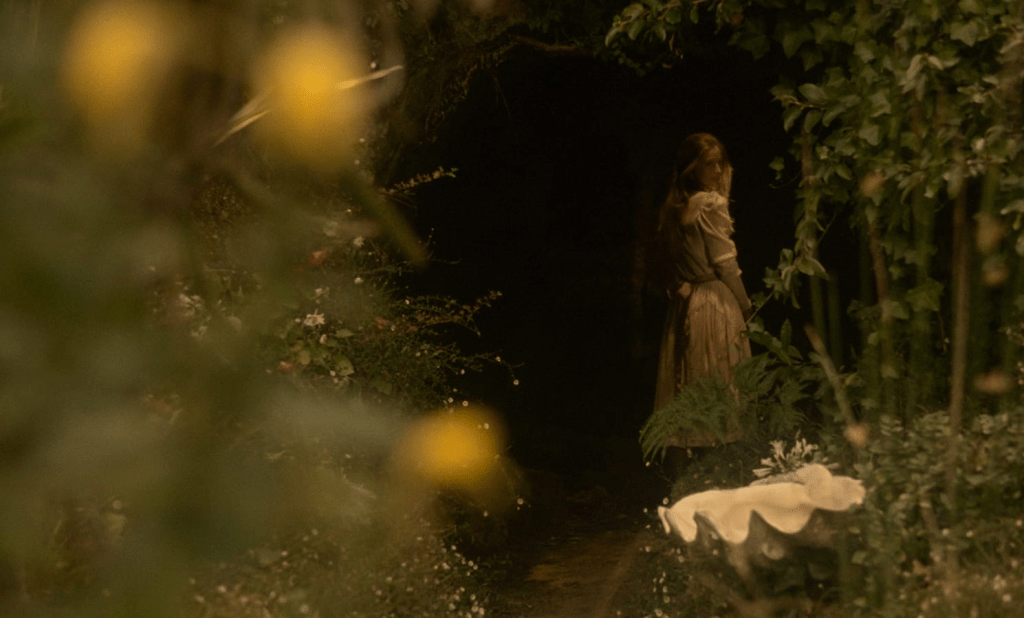
Stop me if you’ve heard this one before: pupils from a girls’ school in Australia go on an outing to a nearby geological formation. Some of the girls go to explore the area – and disappear. One turns up later, with no memories of what happened. The others remain gone. No traces are found, no blood, no bodies. Nothing.
The mystery is never solved. And it is this, not knowing what happened, that begins to corrode the lives of those left behind.



 A Damn Fine Cup of Culture