Six Damn Fine Degrees #252: Lombard & Hitchcock’s Mr. and Mrs. Smith

Welcome to Six Damn Fine Degrees. These instalments will be inspired by the idea of six degrees of separation in the loosest sense. The only rule: it connects – in some way – to the previous instalment. So come join us on our weekly foray into interconnectedness!

Carole Lombard’s unique status as the lady of screwball comedy, as well as her unexpectedly salty sense of humour and use of language, were at the centre of last week’s post. It reminded me, of course, that the final comedic performance released during her lifetime – before it was tragically cut short by the infamous Nevada plane crash in 1941 – was Mr. and Mrs. Smith, Alfred Hitchcock’s one and only pure foray into pure American screwball (and now annoyingly mixed up with the 2005 Brangelina flick of the same name). Even though Lombard’s penultimate performance is easily eclipsed by her last role in Lubitsch’s To Be or Not to Be, I thought that reevaluating her Hitchcock role was certainly worth my while, especially since it’s one of the most overlooked and most easily criticised Hitchcock entries.

Continue reading
I’ll be in my trailer… watching trailers: Walk the line

Join us every week for a trip into the weird and wonderful world of trailers. Whether it’s the first teaser for the latest instalment in your favourite franchise, an obscure preview for a strange indie darling, whether it’s good, bad, ugly or just plain weird – your favourite pop culture baristas are there to tell you what they think.

This week, Sam reminisced about the animated line art of his childhood – or, more precisely, he wrote about his memories of the Italian cartoon La Linea, which featured a little man made up of a single line and his ongoing fight against the vicissitudes of life… and the whims of his animator. No trailer this time; instead you’re getting an entire La Linea cartoon (and the accompanying doo-bee-doo 1970s soundtrack), courtesy of YouTube.

Continue reading

A Damn Fine Cup of Culture Podcast #89: Second Chances (feat. Shirley MacLaine)

It’s that time of the year again, when we look at films we didn’t enjoy originally and give them another chance. This time it’s Sam and Alan having another look at movies they’d previously bounced off of, and both films feature Shirley MacLaine: Billy Wilder’s The Apartment (1960) (yes, Alan hasn’t been a big fan of the film to date!) and MacLaine’s first film, The Trouble with Harry (1955), her first feature appearance and one of the movies generally considered to be lesser Hitchcock. Will our intrepid two come away with a new appreciation of these films, or will their original opinions be reinforced?

Continue reading

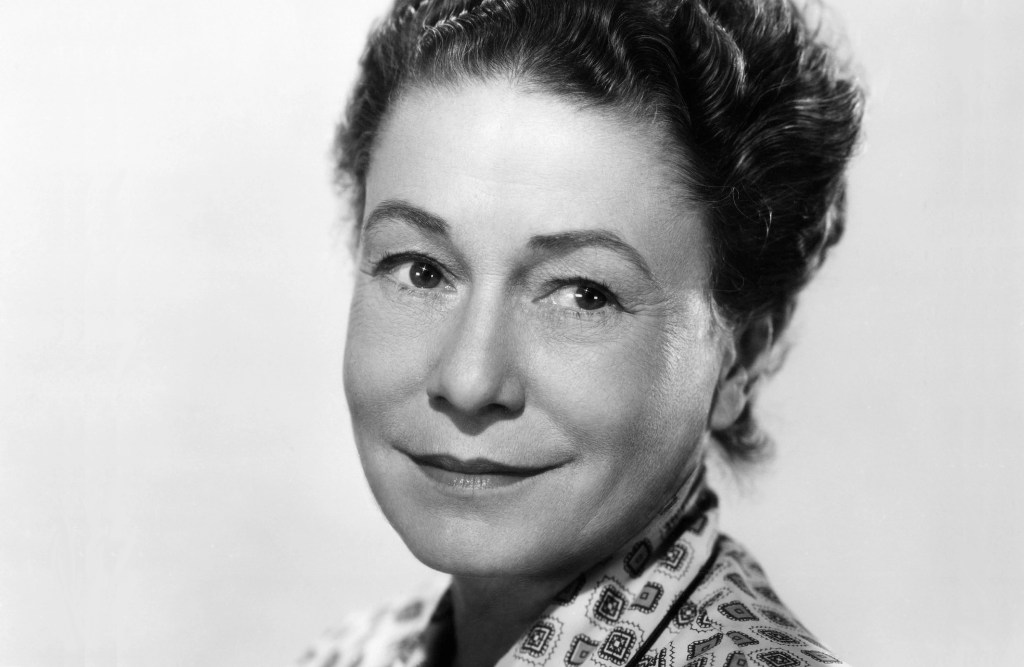
Six Damn Fine Degrees #196: Thelma Ritter

Welcome to Six Damn Fine Degrees. These instalments will be inspired by the idea of six degrees of separation in the loosest sense. The only rule: it connects – in some way – to the previous instalment. So come join us on our weekly foray into interconnectedness!

“She could reveal to an audience the tragedy of the human condition and do it by being a supreme comedienne” ~ Paddy Chayefsky on Thelma Ritter.

The term ‘character actor’, when applied to women, too often only implies a woman of a certain age. The one who doesn’t get to be the lead, who doesn’t get her own movie romance. If, that is, there are even any parts for her at all. The one who is ‘just’ there for support. But these actors not only have to hold their own against the lead every moment they are on screen, they need to knock it out of the park on every single take. And Thelma Ritter is the real deal. Instantly recognisable with her looks, and the way she sounds: instead of having herself made over to be more palatable for the public, she embraced these things to great effect. Every scene she was in, even her uncredited early roles, however brief, are memorable.

Continue reading

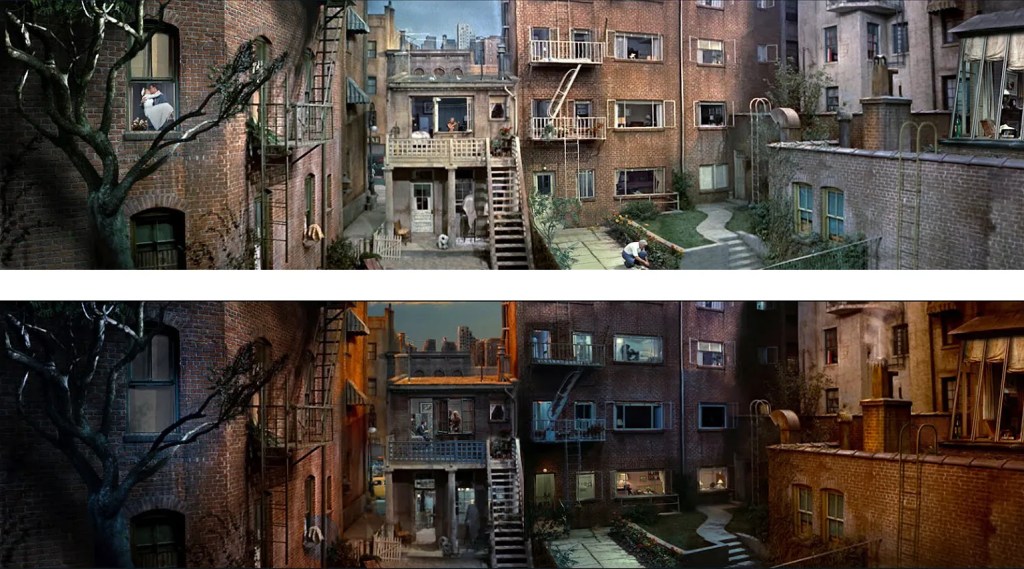
Six Damn Fine Degrees #195: Rear Window as my ultimate cinematic experience

Welcome to Six Damn Fine Degrees. These instalments will be inspired by the idea of six degrees of separation in the loosest sense. The only rule: it connects – in some way – to the previous instalment. So come join us on our weekly foray into interconnectedness!

As Alan describes so well in last week’s post on seeing Memories of Murder as his perfect post-pandemic return to the cinema, the question about what we love most about movies can reveal itself within just one such film: a fantastically involving plot, equal levels of suspense and amusement, inspiring visuals and soundscapes, carefully fleshed-out characters and themes, as well as a totally satisfying ending. With a different film at hand, I just felt the same again with Hitchcock’s Rear Window, the film I always describe as probably the best cinematic experience ever made.

Continue reading

A Damn Fine Cup of Culture Podcast #81: Summer of Remakes – The Man Who Knew Too Much

It’s that time of the year again: A Damn Fine Cup of Culture is dedicating its next four main episodes to a single theme. After 2022’s Summer of Directors and last year’s Summer of Collaborations, this year’s hot months are dedicated to remakes. And yes, remakes tend to get a bad rap from film fans, but there’s enough there that is interesting, fascinating and worth watching – and, yes, in many cases worth criticising. We think we’ve picked an interesting bunch of films and remakes, and we’re starting with a special case of one of the greats of Hollywood cinema remaking one of his own films: Alfred Hitchcock and The Man Who Knew Too Much. First in 1934, in one of his British films, and then again in 1956, Hitchcock told the same overall story of a couple whose child is kidnapped because of a secret plot they’ve uncovered by accident – but while a lot is the same, from the basic setup to the climax at the Royal Albert Hall, these are still two very different flavours of Hitchcock. Join Sam and his co-baristas Julie and Matt as they discuss multiple men who knew too much. What does each version bring to the table? Which did we prefer? If we had to choose, what would we go for: Peter Lorre’s pitch-perfect baddie or Doris Day belting “Que Sera, Sera”?

For further listening on Alfred Hitchcock, make sure to check out our earlier episodes, “The Good, the Bad and Alfred Hitchcock” (#33) and last month’s “Swan Song” (#80), in which Alan and Sam talked about the final films of Hitchcock and Billy Wilder.

Continue reading

A Damn Fine Cup of Culture Podcast #80: Swan song

We often talk about the films directed by the big names at A Damn Fine Cup of Culture – but the films we end up talking about are rarely the final works of these directors. Enter Alan and Sam, who in our latest podcast episode discuss the directorial swan songs of two of the most famous Hollywood directors of all time: Alfred Hitchcock and Billy Wilder. Why do people rarely talk about Family Plot, Hitchcock’s black comedy thriller of 1976, or about Wilder’s comedy Buddy Buddy (1981), in which Walter Matthau plays a professional hitman and Jack Lemmon the suicidal husband whose attempts at taking his life foil Matthau’s plans? Where were Hitchcock and Wilder in their careers at the time when they made these films, and how do they fit into the directors’ oeuvres? Is either film a diamond in the rough, or are they clearly lesser works?

For further damn fine reading and listening material on the two directors, make sure to check out Six Damn Fine Degrees #129: All About Fedora (by Sam) and Six Damn Fine Degrees #130: Sunset Fedora (by Alan), as well as A Damn Fine Cup of Culture Podcast #33: The Good, the Bad and Alfred Hitchcock, Sam’s first podcast appearance (still as a guest at the time).

Continue reading

Six Damn Fine Degrees #155: Best fiends and purely professional relationships

Welcome to Six Damn Fine Degrees. These instalments will be inspired by the idea of six degrees of separation in the loosest sense. The only rule: it connects – in some way – to the previous instalment. So come join us on our weekly foray into interconnectedness!

So, apparently Alfred Hitchcock wasn’t a huge fan of Ivor Novello? One wonders what Novello thought of Hitchcock. It’s not exactly a secret that Hitch wasn’t always the easiest director to work with. He famously said that all actors should be treated like cattle, and when he said that he was correcting an allegation that he’d supposedly said that actors are cattle. Arguably, his correction didn’t exactly do much to make him look any better. Of course, being treated like cattle might still have been the better deal compared to other ways in which Hitchcock behaved towards his actors – and particularly his actresses. (It’s no accident that one of the sections in the Wikipedia entry on Tippi Hedren’s is titled “Allegations of sexual harrassment”.)

Continue reading

I’ll be in my trailer… watching trailers: This one begins and ends with Japan

Join us every week for a trip into the weird and wonderful world of trailers. Whether it’s the first teaser for the latest instalment in your favourite franchise, an obscure preview for a strange indie darling, whether it’s good, bad, ugly or just plain weird – your favourite pop culture baristas are there to tell you what they think.

Sometimes it’s hard to top our first experience with an actor, a director, a writer, isn’t it? Matt’s first Kore-eda film was After Life, and he’ll gladly admit that he will use any opportunity to talk about the director’s beautiful take on what happens after we die. Watching the Criterion release of After Life let him indulge in two of his loves.

Continue reading

Six Damn Fine Degrees #154: Ivor Novello – All Downhill From Here?

Welcome to Six Damn Fine Degrees. These instalments will be inspired by the idea of six degrees of separation in the loosest sense. The only rule: it connects – in some way – to the previous instalment. So come join us on our weekly foray into interconnectedness!

Julie’s wonderful reminder of silent film star Ivor Novello, whose most lasting screen appearance must indeed be Hitchcock’s The Lodger, but whose popular legacy was assured thanks to Robert Altman’s inclusion among the Gosford Park kaleidoscope of characters, reminded me of that other Hitchcock he made – and that’s why for my follow up post, it’s all Downhill from here!

Continue reading