Criterion Corner: Japan Edition

Readers may have noticed a certain pattern over the last couple of Criterion Corner instalments, including the recent not-quite-Criterion Corner post: Japanese ghosts and ghouls in search of revenge and out for ears, farting Japanese pre-teens on a silence strike courtesy of Yasujiro Ozu, the precariousness of the relationship between human beings and nature in a Japanese mountain village. Obviously the main reason for me watching and writing about these was that they’re all good, interesting films – but there was another reason too: we’d been planning to visit Japan for a while, and that visit finally happened over the last few weeks, so in addition to rigorous training at the Duolingo dojo (I can now say that Ken is cool and Naomi is cute in Japanese!), we’ve also been going through some of the Japanese films on my DVD and Blu-ray shelf, including a number of Criterion releases, though barely scratching the surface, and ordering a few additional movies in the process. I.e. while this post is dedicated to a few Japanese films (each treated in shorter format than is usually the case with my Criterion Corner posts), it is likely that a few of the future posts in this series will also be Japan-bound, though probably not all of them in sequence. Already as it is, my Letterboxd account is likely to tell me at the end of the year that a remarkably large percentage of the films I’ll have watched in 2025 will have been Japanese.

So, without much further ado:

Continue reading

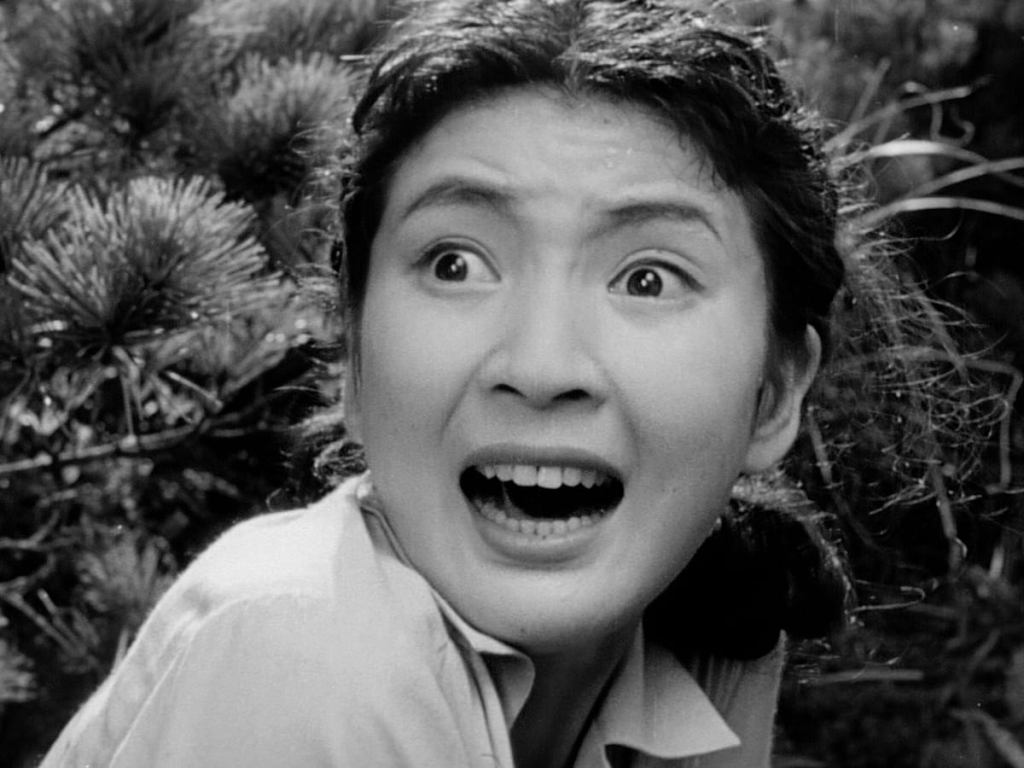
Criterion Corner: Kwaidan (#90)

Ghosts, demons, spirits: who doesn’t like them and the ways they make life more interesting? Kwaidan is full of them, in various shapes: supernaturally-propelled hair taking revenge on a bad husband, an ice spirit taking on human shape and marrying a human woodcutter until he breaks a promise, nobility and soldiers killed in a long-ago war employing a blind monk for his storytelling skills, and ghostly visitors taking umbrage at being drunk by a samurai when they appear to him in a cup of tea.

Continue reading

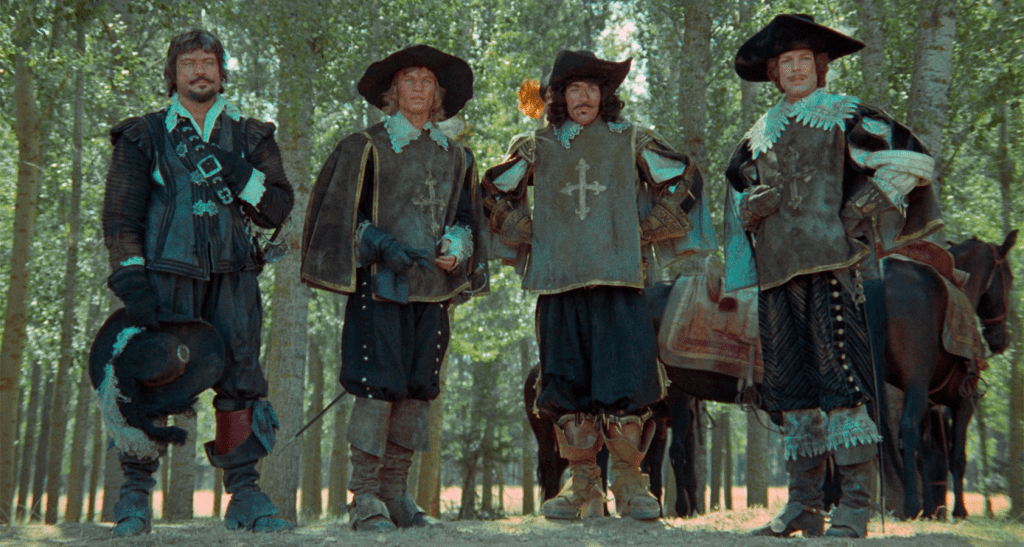
Criterion Corner: The Three Musketeers / The Four Musketeers (#1263)

Every now and then I’m amazed at how pop culture doesn’t actually require you to have seen, read, heard or played something for you to have, or at least think you have, a fairly clear idea what it is. I’m sure I’ve seen snippets of versions of Alexandre Dumas’ Musketeers stories, but I don’t think I’d seen an entire Musketeers film – let alone watched a series or read any of the original novels – until a few weeks ago. (Not even Douglas Fairbanks’ silent-era original.) Nonetheless, I had quite a concrete image in my head: four friends in dashing 17th century outfits, wielding swords (but not muskets – go figure) and getting into swashbuckling adventures, rescuing damsels and foiling the wicked plans of scheming authority figures.

What I didn’t expect: that the three Musketeers (feat. D’Artagnan) would basically turn out to be The Beatles from A Hard Day’s Night… in dashing 17th century outfits, wielding swords (but not muskets – go figure) and getting into swashbuckling adventures, rescuing damsels and foiling the wicked plans of scheming authority figures.

Continue reading

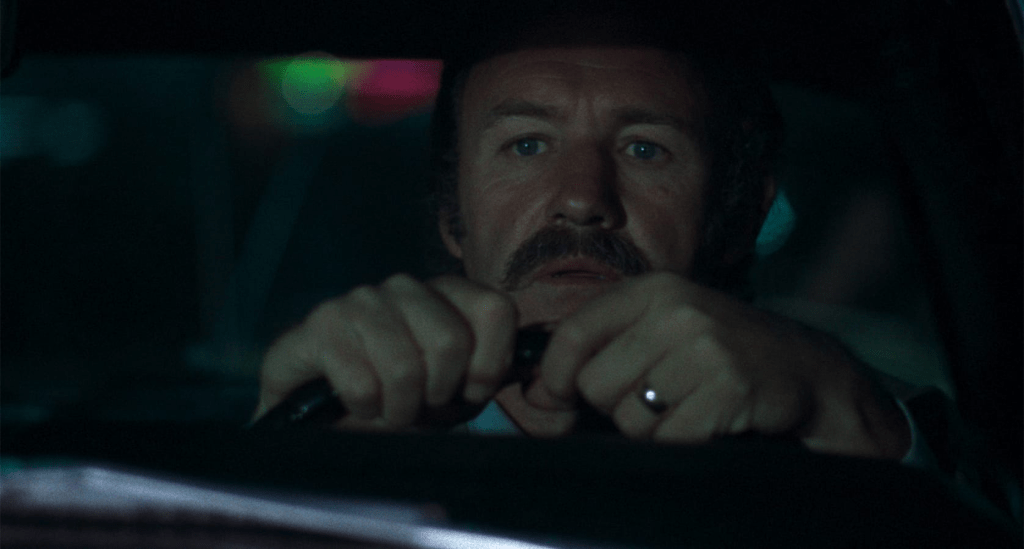
Criterion Corner: Night Moves (#1255)

When you think of Gene Hackman and neo-noir, what comes to mind? For most people – including me -, the answer is simple: The Conversation. And obviously there’s absolutely nothing wrong with that choice: Francis Ford Coppola’s 1974 film is unarguably one of the best, most iconic paranoia thrillers of the 1970s and a great showcase of Hackman’s talents. But sometimes a film’s reputation can be so enormous, it eclipses other films that are also deserving of recognition.

Arguably, Night Moves (1975) is one of those films.

Continue reading

Forever Fellini: Intervista (1987)

And there we are: the final film on Criterion’s Essential Fellini box set, Intervista. It’s not Fellini’s final film: the director would go on to make The Voice of the Moon, released in 1990 and starring Marmitey Italian comedian Roberto Benigni, but even if the decision not to include that one was down to rights issues, Intervista feels like the right end point, seeing how it is about filmmaking, memory and finding that decades have passed and all of a sudden you’re an old man.

Also, quite literally and more than any other film by the director, Intervista is about the man himself: Federico Fellini.

Continue reading

Forever Fellini: And the Ship Sails On (1983)

It’s a conundrum: this late in Criterion’s Essential Fellini box set, I didn’t expect to find a film I’d like as much as And the Ship Sails On – but at the same time, I ended up finding it more frustrating than many of the films I liked considerably less. There is a lot I love about And the Ship Sails On – but it feels like by the time Fellini made it, he had mellowed with age, and in this case I wish he hadn’t. The film is too loving and mild as satire, when the themes it addresses would have required a sharper sensitivity, one that isn’t averse to drawing blood… and this shortcoming is much more obvious in 2025 than in 1983.

Continue reading

Criterion Corner: Something Wild (#563)

Stop me if you’ve heard this one before: a conventional yuppie who, if you look at him from the right angle, reveals a streak of disaffection with his life bumps into a free-spirited young woman. She introduces him to the wild side of life, and they embark on a whirlwind romance. All together now: can you say “Manic Pixie Dream Girl”?

If you rolled your eyes at this, rest assured: that was pretty much my first reaction to Jonathan Demme’s Something Wild – so much so that after about half an hour I ejected the Blu-ray and watched something else instead. For those first 20-30 minutes, I felt more and more that I really didn’t need yet another take on that particular well-worn cliché. Charlie Driggs (Jeff Daniels) and Lulu (Melanie Griffith), as she calls herself to begin with, weren’t endearing to me: I found them and their idea of what breaking free from convention looked like grating. It’s one thing to watch teenagers who believe they’re the first ever to break free from the bonds of social mores; it’s quite another to watch two supposedly grown-up people behaving like those teenagers. There’s something to it that is smug and self-satisfied and, frankly, a bit boring.

Continue reading

Forever Fellini: Fellini’s Casanova (1976)

Giacomo Casanova: a man of many talents (allegedly). Check out his Wikipedia entry – which he would have probably loved doing! – and you’ll find that he “was, by vocation and avocation, a lawyer, clergyman, military officer, violinist, con man, pimp, gourmand, dancer, businessman, diplomat, spy, politician, medic, mathematician, social philosopher, cabalist, playwright, and writer”. (Wikipedia’s “citation needed” never seemed more apt.)

Yet, ask anyone what they know about Casanova, and they’ll tell you one thing: he was the lady’s man, a playboy extraordinaire, a big hit between the sheets. No one remembers the diplomacy, the philosophy, the writing. He might as well have been little more than a walking phallus, a sex toy with aristocratic aspirations.

Continue reading