I was originally going to write about Michael Haneke’s Amour here, a film that I wouldn’t hesitate to call one of the best I’ve seen this year, but I think I may need to think a bit more about Haneke’s latest and how I feel about it. So, to play for time and keep my fingers warm in the meantime, here’s a Variety Pack to go with the bookbag I posted recently.
Stalag 17
I wouldn’t say I’m an expert on Billy Wilder by any means, but I definitely appreciate the man’s work – although if there is something to that deleted scene from Pulp Fiction, if there are Some Like It Hot people and The Apartment people, I belong firmly in the latter group. There are a number of Wilder films I’ve never seen, though, in spite of hearing a lot about them, one being his DDR comedy (that oldest of genre chestnuts!) One, Two, Three, the other Stalag 17. (Perhaps it’s a case of The Great Escape having taken up the slot of POW camp film in the DVD collection in my heart.) However, while One, Two, Three still remains unseen by me, I’ve now filled in that other gap in my Wilderography.
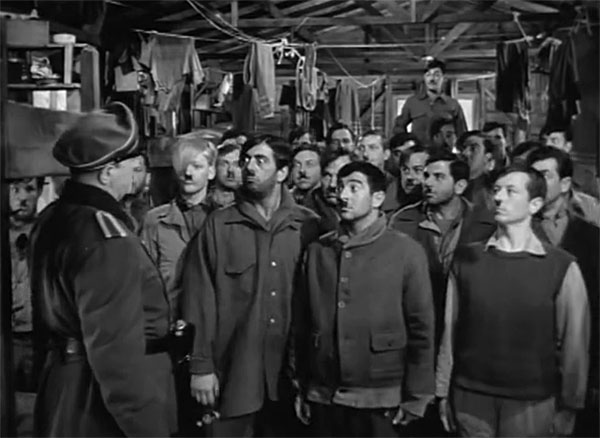 The film’s an odd one, especially in terms of tone. Wilder often mixed comedy and drama, and to great effect – The Apartment is sweet and funny, but one of its central plot points is a suicide attempt, and Some Like It Hot begins with a Valentine’s Day Massacre-inspired scene that gets the film’s story started. Similarly, Stalag 17 begins with a doomed escape attempt that sees two American prisoners of war shot by the German camp guards – but differently from several other films by the director, I don’t think this one is as successful at blending different tones. It’s especially the characters, several of which are too broadly drawn and too cartoony to evoke much empathy, something that distinguishes the Wilder films I like best. Yes, they’re cynical, and yes, they use moments of slapstick and broad comedy, but the characters are usually still human, even the most excessive ones such as Norma Desmond. There are a handful of such characters in Stalag 17, but the film spends most (and, in my view, too much) of its time with the clownish comic relief characters, to the extent where it feels more like the meat of the plot is the dramatic relief from POW clownery. William Holden is great, both his character and the acting, and there are some beautiful, witty scenes (one involving more Hitler moustaches than you can shave your whiskers at), but the writing on the whole is uneven, making the film feel like lesser Wilder to me. But then, as mentioned, perhaps that’s just because the place in my heart reserved for POW camp movies was taken decades ago by The Great Escape.
Belle de Jour
For being a film nerd with a certified diagnosis of Criterion Addiction Syndrome, there are a number of notable gaps in my library, such as Pasolini… and Buñuel. I’m not 100% certain, but I think I’ve even avoided Un Chien Andalou, although it is just about possible that I saw it when I was an insomniac teenager and they were showing it on some forlorn TV channel at 2am and I’ve been repressing the memory ever since.
So, when Criterion brought out Belle de Jour on Blu-ray, I pounced. A satire of the bourgeoisie, repressed sexual fantasies coming to life, Catherine Deneuve… what’s not to like?
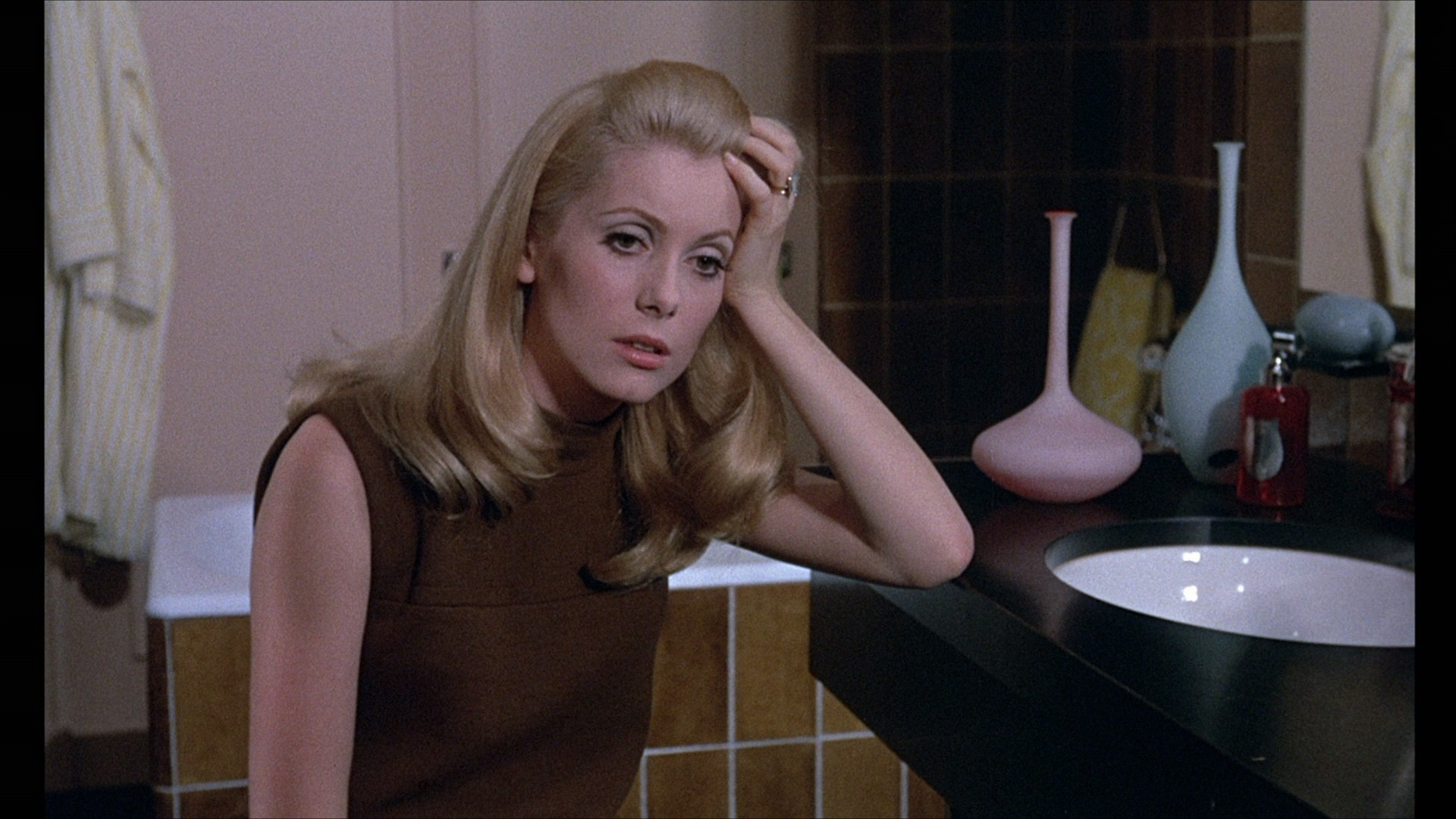
One Blu-ray later, colour me disappointed. The film is interesting, it’s well shot, it’s got actors that are worth watching – but why oh why does it feel so tame? Why do Deneuve’s character and her sexual explorations seem so trite? I expected a film with the power to shock, but apart from being moderately intriguing Belle de Jour didn’t shock me – nor was I sure it was trying to. If the film’s satire intends to make fun of even the most repressed sexual fantasies of bourgeois housewives being fairly banal, it succeeded – perhaps you need to be a member of the ’70s bourgeoisie to be shocked by the film.
It’s still an interesting work and has some effectively surreal moments, not least in the dreams that the protagonist has, whose weirdness is amplified by their deadpan presentation. But trés choquant? Pas vraiment.
Bonjour Tristesse
How’s this for bookending this blog post: Otto Preminger plays the camp Kommandant (ooh-er, missus!) in Stalag 17 and he directed the third movie in this variety pack. It’s almost like I have a plan here! (Briefly ponders renaming this blog “Cylons on Pogo Sticks”…)
Bonjour Tristesse is an odd duck in one particular way: all the characters are supposed to be French, yet the main characters, the aging Lothario dad and his precocious teen daughter, are played by Brit David Niven and American Jean Seberg, neither of which sounds in the least French – though the French people surrounding them for the most part have French accents. What is strange, though, is that after the initial irritation this works fairly well: the two characters are so much in a world of their own creation, in which they are somehow the only real people… or, by the end of the film, the only ones as thin and flimsy as paper.
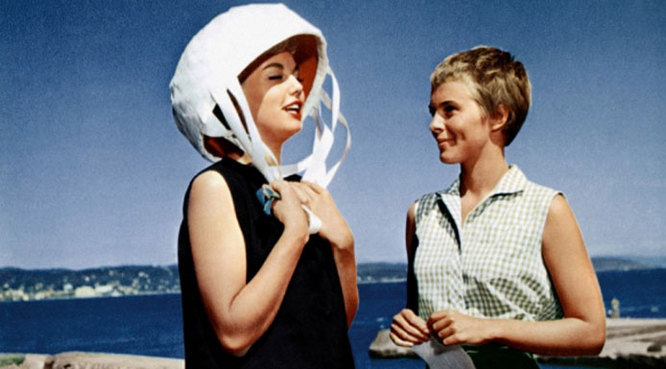
Perhaps it’s because this is an American film and doesn’t come with the same sort of baggage as Buñuel’s Belle de Jour, but I found Bonjour Tristesse more, well, not shocking so much as simply able to make me think, feel and have some sort of reaction beyond being mildly intrigued by its treatment of sexual themes, even though the film is much more overtly tame. It also manages a fairly difficult trick, namely making the audience care about selfish, callow characters who use others unthinkingly and whose charm is shown to be increasingly threadbare.
Another effect the film had on me: I now want to rewatch A Bout de Souffle, Goddard’s turn at being infatuated with Seberg. I didn’t particularly like Goddard’s film when I first watched it, but he said himself that A Bout de Souffle can be seen as a quasi-sequel to Bonjour Tristesse. Perhaps the earlier film will make me appreciate the later one more by tickling my intertextual taste buds! If it does, I’ll make sure to let you know.



 A Damn Fine Cup of Culture