Welcome to Six Damn Fine Degrees. These instalments will be inspired by the idea of six degrees of separation in the loosest sense. The only rule: it connects – in some way – to the previous instalment. So come join us on our weekly foray into interconnectedness!
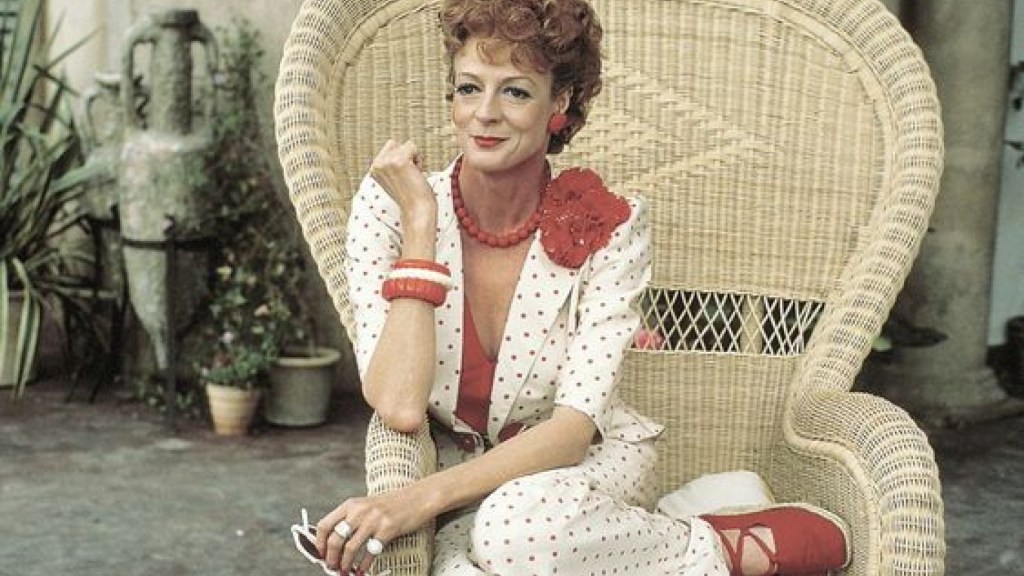
The passing of Dame Maggie Smith in late September has caused an outpouring of appreciation and love by film critics, movie buffs and the stage aficionados alike. Rarely has there been in the loss of an actress such a display of a wide-ranging fan base, from the Harry Potter kids to the Downton Abbey addicts and from silver-age Hollywood connoisseurs to the West End audiences and independent cinemagoers, everybody seems to have harboured a deep respect and admiration for her unique talent. Channels and feeds were crammed full of shorts and reels for days, with no real end in sight.
To me, if I tried to sum up my own love for Maggie Smith, I would recommend to anyone to simply focus on two roles she played in the late ’70s and early ’80s, both coincidentally in adaptations of Agatha Christie‘s novels (discussed in a different context in last week’s post) featuring Belgian master detective Hercule Poirot: Death on the Nile (1978) and Evil Under the Sun (1982) They are simply the purest display of the talent and range of Maggie Smith in a nutshell.

Death on the Nile was John Guillermin’s foray into murder mystery. The director most known for his disaster movies (Towering Inferno in particular) took a page out of this playbook and crammed a boat with movie stars to head down the river Nile, with at least one murderer on the loose. Peter Ustinov starred for the first time as master detective Hercule Poirot (after Albert Finney had left such a controversial impression in 1974’s Murder on the Orient Express), and his fellow travellers included classic film stars (David Niven, Bette Davis, George Kennedy and Jack Warden) and the hottest names of the moment (Mia Farrow, Jane Birkin, Olivia Hussey or Jon Finch). And even though it was Lois Chiles and Simon MacCorkindale’s tragic love story that propels the murder mystery plot forward, the standout performances were left particularly to the great Angela Lansbury as a flamboyant and intoxicated pulp author by the name of Salome Otterbourne – and to Maggie Smith.
She is Bowers, a type of travelling assistant to Bette Davis’ wealthy Mrs. Van Schuyler and their prickly relationship is clearly one of the great highlights of the film. Smith plays Bowers with such dry wit and prim demeanour, while at the same time standing her ground against the domineering ageing Davis, calling her at one point a “bloody old fossil”. There is great slapstick comedy too, for example when Bowers is forced to ride a camel to the pyramids, but Smith manages to strike such a delicate balance between inspiring schadenfreude and sympathy for a character so clearly out of her comfort zone. To me, one of the great assets of her acting talents always was the initial comedy and camp of her roles while at the same time hinting at deeper layers of her characters. Bowers is noticeably dressed and coiffed in masculine fashion in the Oscar-winning designs of Anthony Powell, but Smith only gives her a touch of butch and a mere pinch of old spinster to hint at other avenues of how we could read Bowers.

Only four years later, the roaring success of the gloriously star-studded and old-fashioned Hercule Poirot adventures found their next entry with Evil Under the Sun. Bond director Guy Hamilton (Goldfinger, Live And Let Die) directed another Anthony Schaffer script. While slightly smaller in scale, the cast featured a deliciously over-the-top Diana Rigg as a spoilt gold digger everyone seems to want to murder: James Mason, Roddy Macdowell, Colin Blakely, Sylvia Miles and, again, Jane Birkin and Maggie Smith from the previous film (though playing a different character). Set on and around Mallorca, the tone here is much lighter, with Cole Porter tunes and songs lightening the mood and turning the film into a sunny, often campy trade of jabs that Poirot and we observe with much amusement. It’s only when murder strikes Diana Rigg’s character Arlena Marshall that the bright island turns into a much darker place.
Maggie Smith here is feisty and cheeky as Daphne Castle, owner of the quaint hotel the illustrious guests stay at and hostess of the numerous gatherings and receptions during their vacation. She too has a history with Arlena, and their first encounter makes for one of the most delicious exchanges of the film: “Arlena and I were in the chorus of a show together, not that I could ever compete. Even in those days, she could always throw her legs up in the air higher than any of us… and wider.” Later on, while Arlena is purring Porter’s “You’re the Top” to her young lover Patrick (Nicholas Clay) while everybody looks on in quiet anger, jealousy or fake enthusiasm, Daphne simply cuts into the scene, disturbs and interrupts Arlena’s performance and suggest she have something to eat: “Have a sausage. You must be starving, having to wait all that time in your room.” It’s that wonderful dynamic between Smith and Rigg that makes the film an unabashed camp fest, and many a drag queen must have taken a page out of their relationship since.
It was never really the murder mysteries that made these entries into the large canon of Agatha Christie adaptations so successful: It was their sheer extravagance and delightful dabble in cinematic expenses. Their star budget was certainly their biggest asset but it was also the wonderful sense of humour that set them apart from others. Ustinov would return to another outing in Appointment with Death (1988), and its cast (Lauren Bacall, John Gielgud, Carrie Fisher, Piper Laurie) was admirable, but the sparkle and fun were mostly gone, and so was the extravagance.
What Maggie Smith brought to the table in these two and so many other of her roles, was her perfect sense of when to sparkle and when to simmer, of being hilarious and pitiable, of fighting back and living out loud, and (sometimes within just two roles) show off all the chops she had. With her gone now from any new material, there is a wealth of roles and films yet to discover for me, but Bowers and Daphne will always loom large among my fondest Memories of Maggie.

 A Damn Fine Cup of Culture
5 thoughts on “Six Damn Fine Degrees #204: The Best of Maggie Smith in two Christies”