Ever since the pandemic, time feels like it’s been broken. Looking back at the films and TV series I’ve watched this year, the games I’ve played, and whatever else I did over the last 12 months, my most frequent reaction is “That happened this year?!” The temporal shape of things has been out of whack for a while, and it sometimes feels like this is getting worse – like we’re all stuck in one of the trippier episodes of Star Trek. Though I think it’s time to be honest about this: in part that’s also because I am approaching the big Five-Oh (and no, I’m not talking about Hawaii). This is my last New Year’s post before finishing my half-century, and that is a pretty freaky thought.

But let’s not focus too much on 2024 breaking time that teensy bit more (so much so that I feel we’re looping back by eight years): I distinctly remember watching (and playing) the following over the last year. Were they the best that 2024 had to offer? Who knows, but they were definitely among the most memorable parts of the year in good ways:
Several of us here at A Damn Fine Cup of Culture have a soft spot for Hirokazu Kore-eda, so much so that we dedicated this year’s June espresso podcast to him. His film Monster came out in 2023, but I only saw it this year, first in February and then for a second time in May. While I love the director’s work in general, I’ve found that I like the films of his better that are more about characters and vibes than about plot, and when he does go for more complicated plots, the films can sometimes lose their footing. The Third Murder was fascinating, but it engaged my brain much more than my heart. Monster changes this: its three-part structure risks pulling the story out of shape in that it wilfully leaves you confused at first, but that confusion pays off as you begin to realise what story Kore-eda is telling, and it’s exactly because of the journey that the film takes you in that it hits so hard in the end. Does it top my own personal favourite After Life? Let’s put it like this: the two films (the first of his I’d ever seen and his latest) now share the top spot of my Kore-eda list, and I suspect they shall remain there for a long time.

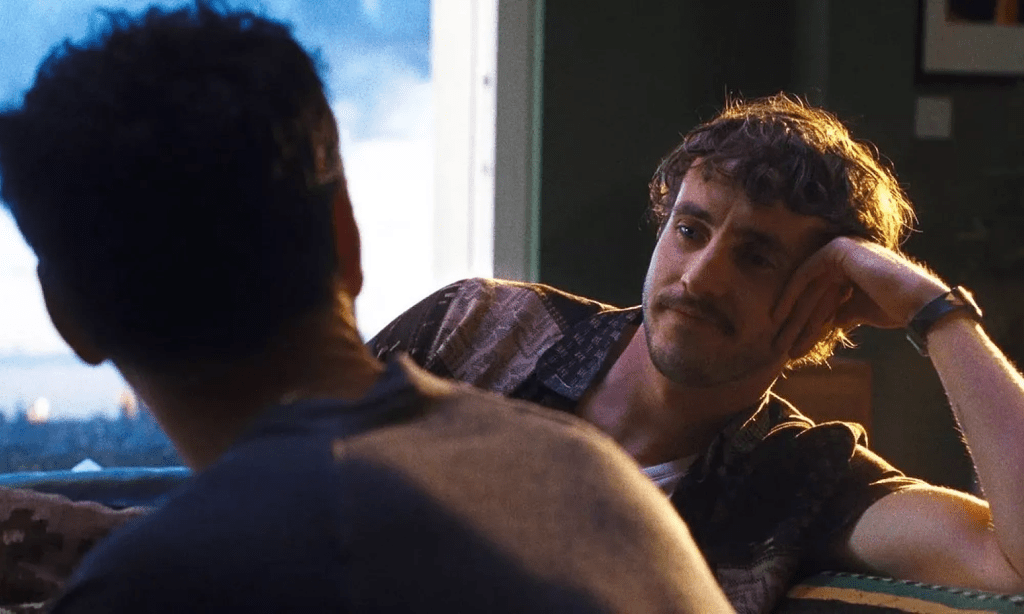
Andrew Haigh’s All of Us Strangers is a bit similar in that respect: it, too, is a film that engages us on a character level, but it also keeps us at a distance through its central conceit, which makes us question what level Haigh’s film is operating on. Is it supernatural? Is it magic realism? Or does it simply literalise what the main character is experiencing emotionally? For the longest time, these questions are there, but they don’t matter, because Haigh and his impeccable cast – Andrew Scott, Paul Mescal, Claire Foy, Jamie Bell – achieve a fragile, immensely touching balance. For me, the film falters in its conclusion, which sadly soured me a bit on All of Us Strangers, but I would still say that its first two thirds are among my favourite hour or so of this year’s cinema
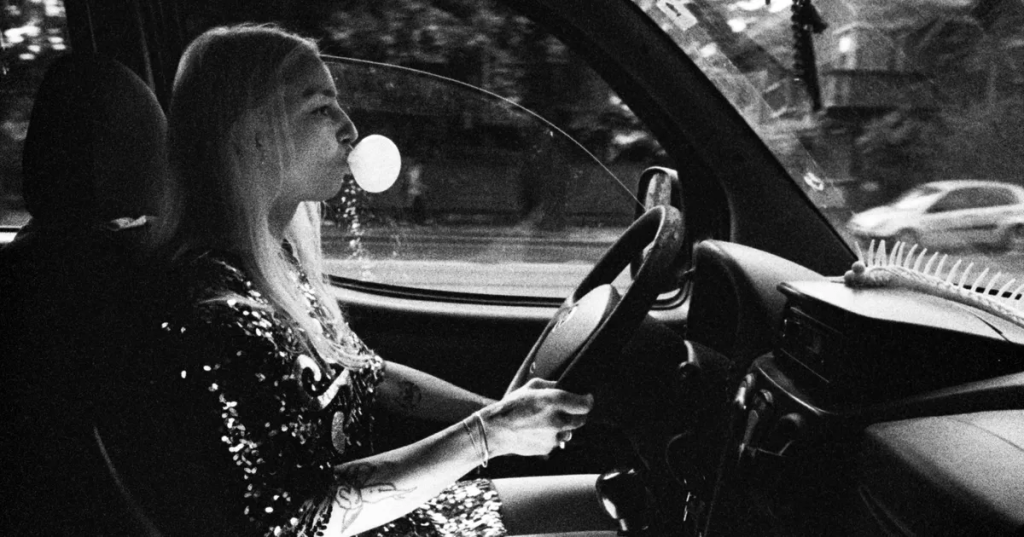
In February and March 2024, my favourite cinema in the world showed a series of films by the Romanian director Radu Jude, who made a splash with his caustic, and startlingly sexually explicit, Bad Luck Banging or Loony Porn. While I wouldn’t say I loved all of the films (and I’m not sure ‘love’ is what Jude wants from his audience to begin with), his voice as a storyteller and satirist cuts to the quick. His (at that point) latest film, Do Not Expect Too Much from the End of the World, is a fascinating black comedy that doesn’t hold any of its punches – but it also does a lot of strange, entrancing things, such as blending its story of Angela, a casting scout who makes Tiktok videos where she plays the most foul-mouthed Andrew Tate parody imaginable, with a real 1981 film about a taxi driver called Angela navigating ’80s Bucharest. And what was better even than the Radu Jude films I liked best: a live Q&A with the director himself, which I may have enjoyed more than any director’s Q&A I’ve ever had the pleasure to attend. Jude, a smart, erudite, funny director, made it clear that he doesn’t come at his material from a position of superiority: his films hurt because they express his own hurt at the state of his world.
I grew up during the heyday of TV miniseries, and one of the series I remember best from my childhood was Shogun. We rewatched it a few years ago, and while it is still tremendously entertaining, it is very dated. This year’s FX adaptation of James Clavell’s novel is not just a remake with better, or at least more current, production values: it addresses the Orientalist clichés of the ’80s adaptation head-on, giving its Japanese characters much more of a voice and agency in their own story, so that Shogun is no longer the story of a white man in a strange, foreign world first and foremost: it’s the intertwined stories of Lord Toranaga (Hiroyuki Sanada), the translator Toda Mariko (Anna Sawai) and Kashigi Yabushige (Tadanobu Asano), with the English pilot John Blackthorne (Cosmo Jarvis) simply being one central character of many. Shogun doesn’t necessarily have the layers of some of my favourite series, but it is a great yarn, told tremendously well – and while I have some reservations regarding their decision to continue the series beyond the material written by Clavell, the existing series can stand on its own.

I didn’t much play any new game releases this year, but I did finally come around to playing one of the big fan mods of last year: Thief: The Black Parade, which takes the 1998 classic Thief: The Dark Project, makes some major adjustments under the hood and delivers a fantastic ten-mission campaign that contains some of the most atmospheric stealth gameplay I’ve ever played. What is especially fascinating about The Black Parade is how it adopts the low-poly aesthetic of the original games, but it uses its technical updates to create a world that is more akin to the City we remember/imagine than the one we actually played in the late ’90s. The old-school look and feel of the game never comes across as a limitation but as a creative choice, and it is one that works tremendously well: The Black Parade can stand shoulder to shoulder with the original Thief games and with pretty much any stealth game that has come out since.

And finally: I’ve not seen all that many animated films in 2024, but the one I did see, only a few weeks ago, is a wonder: Flow by the Latvian filmmaker Gints Zilbalodis, which tells the story of a cat trying to survive in a flooded post-human world. The film has a visual style that is worlds apart from the aesthetics of Pixar or Dreamworks, one that sometimes reminds of video games – but not in a bad way. There is a fluidity to the camera work that is tremendously immersive. What is more striking, though, is the extent to which Zilbalodis’ film refuses to anthropomorphize its feline lead and its other characters: the cat behaves like a cat, the dogs and birds and capybaras behave like the animals they are, and accordingly, this is a film without dialogue, at least in any human language. Flow isn’t perfect: its refusal to turn its characters into four-legged, furry human beings falters somewhat towards the end, and the film’s engagingly elliptic storytelling does feel a bit shapeless in some of its final third, with one scene especially feeling like it should either end the tale or at least shift it onto a different level altogether but failing to do either, but Flow is nonetheless intriguing and melancholy and just so damn gorgeous. Definitely one to see on the biggest screen you can find!

And that’s pretty much it for 2024. Can’t say I’m immediately excited for 2025, in so many ways, but I nonetheless hope for some good films and series and books and games – some to escape this reality, some to bring it into sharper focus and to help us navigate it better. Wishing all our readers and listeners all the very best for the last two days of this year, and a 2025 that, I hope, will turn out better than what we fear. Have a Happy New Year, and see you again very soon!
 A Damn Fine Cup of Culture
Nice post 🌅🌅