Welcome to Six Damn Fine Degrees. These instalments will be inspired by the idea of six degrees of separation in the loosest sense. The only rule: it connects – in some way – to the previous instalment. So come join us on our weekly foray into interconnectedness!

ELSTER
And she wanders. God knows where she wanders. I followed her one day.

SCOTTIE
Where'd she go?

Elster almost ignores the question as he looks back to the day.

ELSTER
Watched her come out of the apartment, someone I didn't know... walking in a different way... holding her head in a way I didn't know; and get into her car, and drive out to...
(He smiles grimly)
Golden Gate Park. Five miles. She sat on a bench at the edge of the lake and stared across the water to the old pillars that stand an the far shore, the Portals of the Past.
Sat there a long time, not moving... and I had to leave, to got to the office. That evening, when I came home, I asked what she'd done all day. She said she'd driven to Golden Gate Park and sat by the lake. That's all.
In arguably my favourite film of all time, Hitchcock’s Vertigo, this bit of dialogue establishes our two protagonists’ predicament in just one evocative image: Kim Novak’s Madeleine Elster being engulfed by her yearning for the past and the increasing fascination of Scotty Ferguson (James Stewart) with the subject of his investigative gaze. The locations of her descent into absent-mindedness are, of course, San Francisco’s landmarks and particularly the parks and forests leading to and overlooking the Pacific Ocean and the Bay, into which she will throw herself soon after in an apparent suicide attempt.
The Portals of the Past mentioned here are located somewhere in the middle of the eternally stretching Golden Gate Park, an inconspicuous spot on the shore of Lloyd Lake, its white marble columns offering “a regal touch” and “dreamy visions of a waterfall setting the mood of a walk down the aisle surrounded by the thickness of enchanting greenery”, according to the San Francisco Recreation and Park Department, who nowadays advertises the area as a perfect wedding venue. In Vertigo, this offers a mysterious spot for Madeleine to get lost in thoughts for hours, sitting there “for a long time, not moving”, according to her seemingly worried husband Gavin Elster.
We never actually see her sitting there in the film, despite Scottie’s lengthy drives all over the city to understand her journey, but the image and this particular line of dialogue has always had a particular spell on me, and I’ve sought out the spot numerous times during my many visits to the city. Just like Madeleine, the idea that particular gateways to the past could exist and that we preserve with them some sort of comfort of being able to step back in time, was always fascinating concept to me.
Matt’s lovely piece on libraries as portals to other worlds obviously also reminded me that vast collections of books and their stories can hold a similar fascination and endless possibilities to get lost in fictional worlds and literary creations, no matter the genre or our own age. As he describes so perfectly, we seem to lose some of that ability to find such refuge in our busy everyday lives at times, but reminding ourselves of our ability to do so might put us back to the threshold of such portals, be it public libraries or archives, museum exhibitions or our own basements with their possibly eclectic collections.
My parents’ attic comes to mind here, where my mother had already established a system of bookshelves, closets and boxes collecting key pieces of memories, from items of clothing and shoes worn as toddlers to my sister and my school notebooks. As a teenager, I simply carried on her tradition, stacking up music cassettes, video tapes, books and our own writing and drawing. My collected notes from university are still stacked up there and I sometimes dread having to go through all this and letting them go at one point.
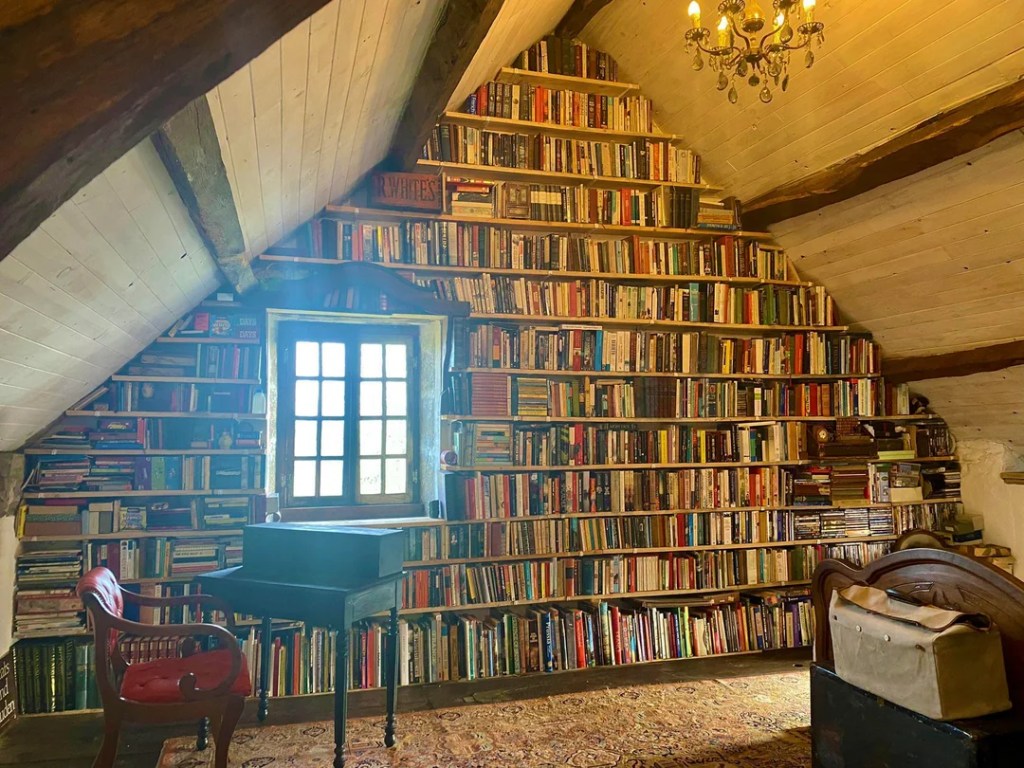
Among these books especially, portals to other worlds feature prominently, be it Bastian’s pathway to Phantàsia by reading The Neverending Story, the closet to Narnia, Dorothy’s path into Oz or Alice’s fall into Wonderland. Beyond that, however, the collected presence of texts, drawings, music and toys offers a similar step back in time, a refuge where one could sit for hours travelling down past avenues.
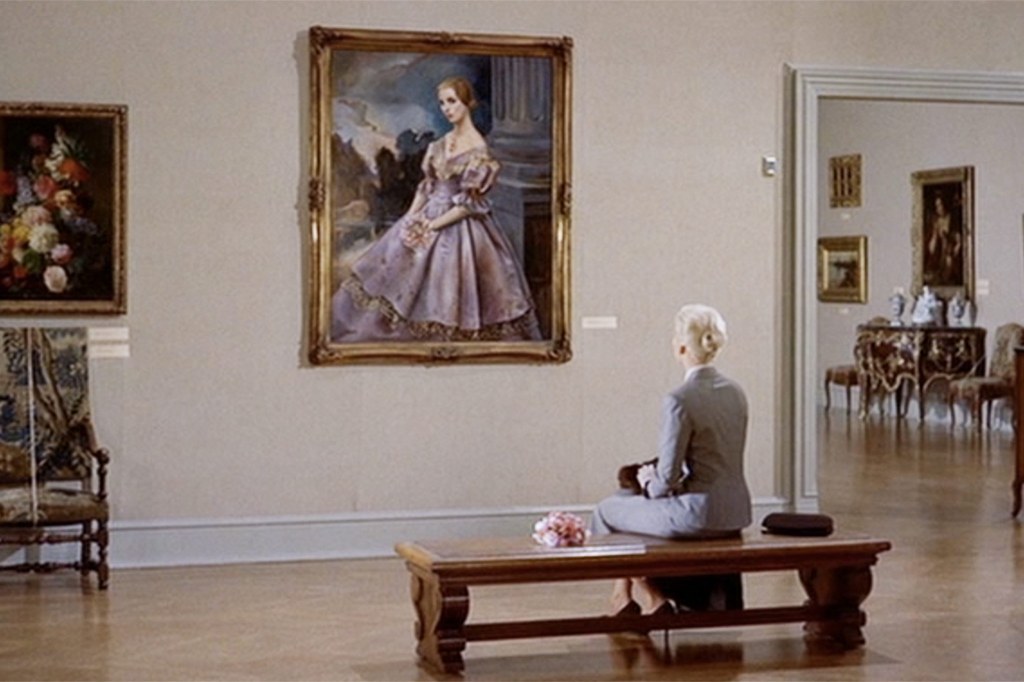
Neither am I as obsessed with some suicidal ancestor as Madeleine is with Carlotta Valdes’s portrait at the Legion of Honor museum, nor do I sit in our attic staring for hours, but I’ve come to realise that such portals are important places of reflection and that they might not be permanently there. Holding on to too many places and things might also be an unhealthy obsession and letting go is an essential ability in life. I’ve also come to realise that people are vastly different in how important collecting and remembering is and that at times, my archivist streak might stand in the way of focusing on present or future challenges.
However, my own Portals to the Past – be it classic movies, literature, music or my own collections and objects – from the attic to my everyday surroundings, also make up a strong and stabilising mental universe by which I look at the world at large. Sitting and staring there also means watching and listening closely, reflecting and hopefully having fascinating and essential insights.
Of course, knowing Vertigo (spoiler alert!), the image of suicidal Madeleine being haunted by the past is all just part of an elaborate plot to deceive Scotty halfway through the film. So maybe holding on to fakely nostalgic pasts might be doubly deceitful (think of the current political implications of that), but in times of a sense of non-permanency in our world, time spent at our portals to other worlds might be more essential than ever.
 A Damn Fine Cup of Culture