Welcome to Six Damn Fine Degrees. These instalments will be inspired by the idea of six degrees of separation in the loosest sense. The only rule: it connects – in some way – to the previous instalment. So come join us on our weekly foray into interconnectedness!
Wilkie Collins’ 1849/50 doorstopper of a novel, The Woman in White, has to count as one of the quintessential Victorian mystery novels. And, as such, it has been endlessly adapted, for better or worse, for film as well as for the stage.
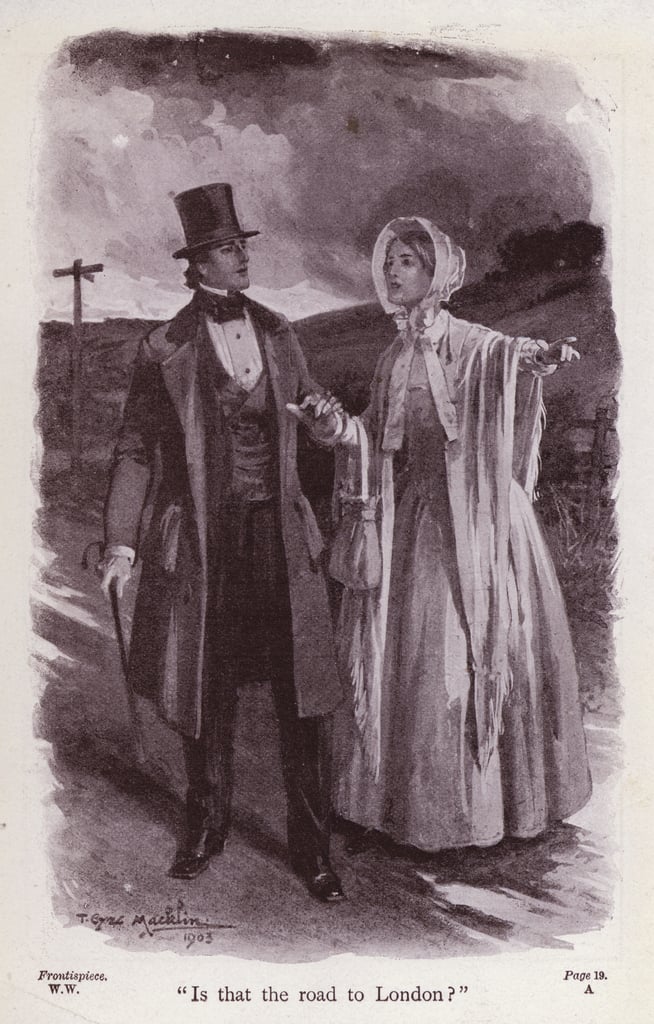
Its story, as it is with the seminal The Moonstone, is told by different people and from different perspectives. The first narrator, the character who introduces us to the eponymous Woman in White, is Walter Hartwright, a drawing master (art teacher) who via his friend Pesca has landed a job teaching two young women at Limmeridge House in Cumberland. On his way home, late one night, he meets a rather frightened woman , dressed all in white, who asks him for directions. She clearly has some mild mental issues, though she is a gentle creature – and certainly “sober” as Walter puts it. She entreats Walter to not interfere with her: “to let me leave you, when and how I please”, to which he agrees. She appears initially troubled when she inquires of him whether he might not be “a baronet” and, when she is told he certainly is not, not even gentry, she vaguely alludes to her familiarity with Cumberland and Limmeridge House. Walter finds her a cab, and she disappears into the darkness. When two gentlemen in a carriage, about 10 minutes later, ask after her, he decides to keep her secret and tells them nothing.
After he’s wrapped up his last business in London, he embarks on the trip to Cumberland. And when he finally arrives at Limmeridge House, he meets one of the more compelling female characters in Victorian fiction: Marian Halcombe. Here is how she is introduced to us:
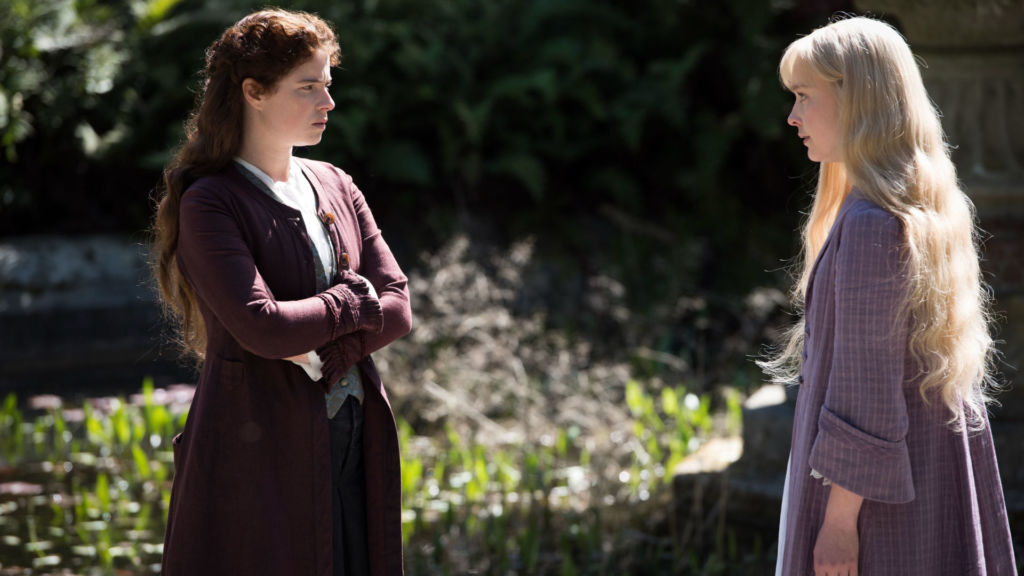
“The easy elegance of every movement of her limbs and body as soon as she began to advance from the far end of the room, set me in a flutter of expectation to see her face clearly. She left the window—and I said to myself, The lady is dark. She moved forward a few steps—and I said to myself, The lady is young. She approached nearer—and I said to myself (with a sense of surprise which words fail me to express), The lady is ugly!”
How’s that for being instantly friend-zoned? Marian proves to be charming and charmingly forthright. Her half-sister Laura Fairly, she explains, is an angel. And the two, for all their differences, are completely inseparable. And imagine Walter’s surprise when he finally meets Laura, and she is the spitting image of the Woman in White! Gasp! Hartwright (predictably) proceeds to fall in love with the beautiful Laura and, Victorian young gentleman that he is, he broods. He does very little about his infatuation, the novel – as Victorian fiction often is – is more interested in interiority: and thus it focuses mainly on his internal struggle with his feelings. But Marian, of course, notices. She tells him, forthrightly as always and not unkindly, that Laura has been “promised” (to be married off, that is) to the baronet Sir Percival Glyde: and even the very microscopic chance, considering the differences in class between the two, that the matter might go any further is cut off entirely. While the Woman in White and her warnings about “baronets” disquiets Walter, and there is a mysterious letter forewarning Laura of a threat to her safety should she marry Glyde, there is nothing that can be done. Laura is married off, and Walter has to ultimately leave Limmeridge.
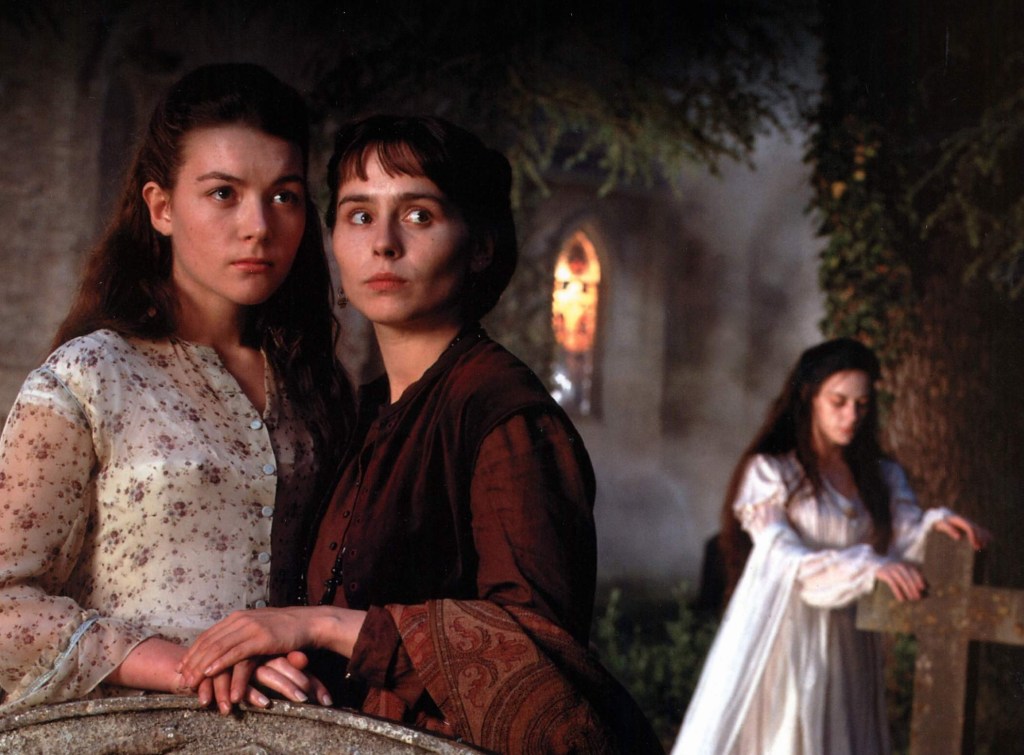
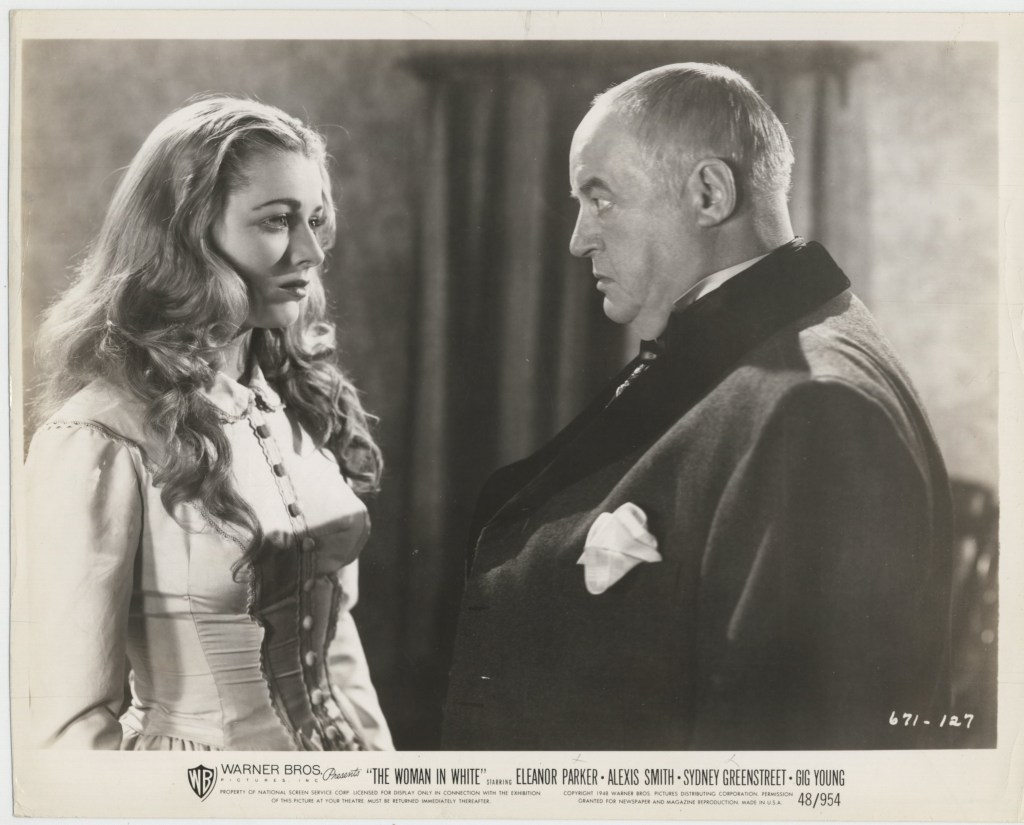
As I touched on, in the beginning of this Six Degrees, there are many, many adaptations of this famous story. The 1948 film version firmly puts all the agency in the hands of Walter (Gig Young), as a kind of action hero, completely neuters the character of Marian (Alexis Smith), and ends up being a tepid “damsel in distress” rigmarole that even the ever charismatic Sidney Greenstreet (as the manipulative Count Foscoe) cannot quite redeem. The 1997 film at least deserves kudos for putting the agency back into the hands of the women, or rather Marian (Tara Fitzgerald), where it rightly belongs: but apart from the actors being very charming – the very sinister Count Foscoe is portrayed to chilling effect by Simon Callow -, and it being a pacy little period drama, it has little else to recommend it as an adaptation: as it not only abridges the plot, but changes it in certain very key ways. And then there is the 2018 series with a really striking performance by Jessie Buckley (as Marian), who is beyond fab. And if you weren’t familiar with the pitiless description from the novel, you’d be forgiven for wondering why on earth Walter (Ben Hardy) falls for the rather limp Laura (Olivia Vinall in an admirably dexterous dual performance), instead of her. It has the benefit of having a much more modern structure: the flashbacks and flash forwards do keep our attention rather better than a ponderous chronological account would have. This structuring also enables director Fiona Seres to partly retain the original conceit by Collins, to have characters tell their account themselves, and in their own words. Charles Dance, as the ineffectual hypochondriac uncle, is delicious, and Dougray Scott manages to give off Glyde’s total-creep vibes in interesting ways. All in all, it is properly gothic, and certainly entertaining.
The novel still does it best, of course. Its many characters so lovingly sketched in their details and quirks cannot within reason all make their way to the screen unedited. But as much as I love and heartily recommend just reading the original, it is not hard to empathize with modern audiences, who might balk at sitting down with this tome of more than one and a half centuries old. If so, it is at least worth looking into watching an adaptation that does it justice, as there are way too many that very decidedly do not. For people who do find themselves attracted by the original material: my unabridged audio is narrated by the inimitable Ian Holm. And bar actually propping up Collins’ foundational thriller by the fireside of a gothic mansion in the wind-swept British countryside, it has to count as the absolute next best thing.