Welcome to Six Damn Fine Degrees. These instalments will be inspired by the idea of six degrees of separation in the loosest sense. The only rule: it connects – in some way – to the previous instalment. So come join us on our weekly foray into interconnectedness!
I think many people remember the first time that they discovered music that really fired the imagination. Music that wasn’t just the signature to a tale, but an integral part of the experience. If you wanted to imagine the other worlds of a tale – just a few bars of a theme and your mind begins to inhabit a whole new universe.
For me, that first time was BBC Radio’s adaptation of The Lord Of The Rings. I’ve written two previous Six Damn Fine posts on this already – one focusing on its incredible cast, another one on the smart way it was adapted. But the music is such a part of my experience of the story, and of my first journey to Middle Earth, that I felt it really needed its own piece: on how wonderful and engaging I still find the music, and my own little mini-quest to find more about it.
A story that I’ll take on track by track, and for this I’m indebted to Bruce Hunter for capturing all these tracks on YouTube, as well as taking the time to add lyrics and interesting details from the album sleeve.
Track One: The Lord Of The Rings
This one piece of music, more than anything, is my Middle Earth. The moment the track begins in its distinct, building style I already feel like I’m about to enter another world. On its own, it still evokes the excitement of my childhood books of Tolkien art, it all seems to be here – vast mountains and forest – and tiny paths snaking their way on an adventure, with giant castles and magical creatures encountered on the way.
Indeed, such was the influence of this drama on my childhood, I associated this track with the story before I had even read the book. The iconic stylised images that covered the books in the late seventies and early eighties are now linked forever with this piece of music. In the original broadcast episodes, the radio narrator speaks over this music to read all the credits. I think I can now do this narration by heart. That’s putting brain space to great use.
Track Two: O Elbereth Gilthoniel
An interesting decision that the BBC adaptation makes is that there isn’t really a musical soundtrack for much of the early stages of the story set in the Shire. The ambience in these sections is created by realistic sounds of countryside. While the Peter Jackson trilogy had Howard Shore’s jaunty Celtic-influenced folk tune to help define the Shire for audiences, this adaptation prefers to stick with creating a realistic environment of background sounds. Maybe this was a deliberate choice given the intended Radio4 audience: that perhaps they didn’t want to shock them too much too early with lots of Hobbit-y folk tunes.
It’s a choice that then pays dividends when the adaptation plunges the listener into the world of the Elves. Suddenly their different nature is captured by the change in style. We’re presented with beautiful, ethereal music – and, like the hobbits themselves, we’re transported from the natural background noises of the Shire Kitchen Sink to somewhere different. A realm of magic and Spenserian Elves.
Track Three: The Road Goes Ever On
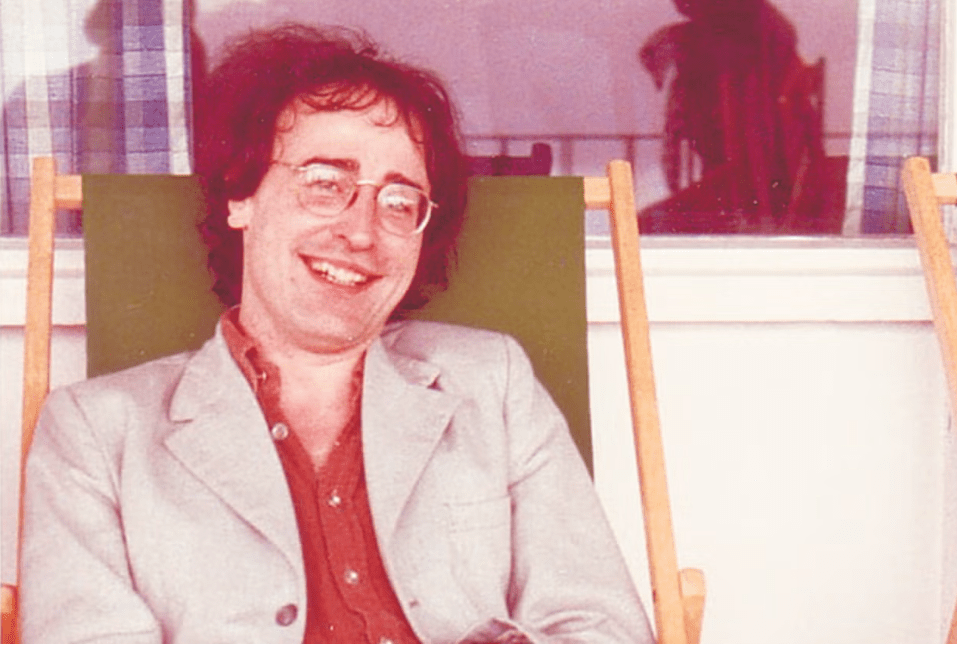
Thanks to listening to these episodes a lot as a kid I know all the names in the closing credits by heart. And one of those is Stephen Oliver, the composer of all this music. It was a name that did not mean anything to me beyond this music, and in those pre-internet days it was near impossible to find out anything about him.
However I kept listening to and enjoying this music. When the BBC released the series on CD, it came with a bonus CD of just the music, effectively reissuing a vinyl LP release of the early ’80s. Such was my interest in this music that when, a few years later, the internet finally arrived, I resolved find and listen to more of his work. This ended up becoming quite a little quest. Not being immersed in the world of classical music, all I had was a name and the search bar – and without any understanding of how the man looked, or how old he was, it was incredibly hard to know for sure when I found a Stephen Oliver whether it was in fact the Stephen Oliver. At the time Wikipedia was no help. For young me, the fact he had composed the music for this radio play should have been sufficient enough for a vast page there, covering in incredible detail the thought processes on each track. But nothing.
Musical streaming services weren’t much help either. I found a strange oddity of song and storytelling that turned out to come from a very different Stephen Oliver based in New Zealand. Listened to that quite a few times trying to convince myself it was the same guy, but I remained far too sceptical.
A chance mention on Radio 4 was to prove my salvation. Not to the Lord Of The Rings, but to an eight-and-a-half hour production The Life And Adventures Of Nicholas Nickleby that he had been composer and writer on. A huge critical success in its day – and played out over two days, the article talked about the man who had worked on this project. It all connected, the road had led me to the composer.
Track Four: In Western Lands Beneath The Sun
Another aspect of this adaptation that I adore is the time and respect it has for Tolkien’s songs. Often considered a part of the epic that readers tend to skip over, Tolkien at his most indulgent, Stephen Oliver takes them seriously, with the musical compositions often incorporating them, sung by the characters. Their melancholy quality makes them memorable and they’ve completely taken over how I read the songs in the book.
I think the main reason for that is that I have so little musical talent myself, that the songs present quite a challenge. It’s a chunk of lyrics and my brain is not in the least bit capable of actually composing a tune for this. Which is a shame because imagine the reality of everything that is taking place in the story is part of the fun.
And now I have a way of doing it. The small voice of a hobbit, or the massed choir of men now have a reality to them. And when it comes to the songs in the book that Oliver didn’t compose a tune for, I still feel he gave me a feeling for how they could work: the tools to engage with this and make the music real.
Track Five: Seek For The Sword That Was Broken
Having successfully found out who Stephen Oliver was, I quickly learnt a few details. including that he had been a frequent contributor to Radio4’s Stop The Week. Which, given my parents’ radio listening habits when I was growing up, almost certain meant I had heard him back then. I just didn’t realise it at the time.
But discovering the man didn’t make discovering the music much earlier. In the days before streaming, locating music meant taking a gamble on CD purchases. And even then, much of his music was no longer being released commercially. I learnt the name of his major works. He’d broken out as a major talent while still at Oxford University through writing a three act opera based on The Duchess Of Malfi. He’d written the soundtrack to the adaptation of Nicholas Nickleby that I mentioned above, as well as collaborating with Tim Rice on a musical, Blondel.
Worst of all there were no comprehensive lists available of all his other work – one-off operas produced for festivals and venues, other incidental music work for radio and theatre. I kept finding references to each of these as individual events, but no actual overview of work or where to find it. It just became maddening that the internet was able to tantalise with what was out there – but was completely broken when it came to listening to it.
Track Six: Shadowfax
I’m not really going to compare this soundtrack to the one Howard Shore composed for Peter Jackson’s film trilogy. That score has its own fabulous moments, and works incredibly well for the big screen. But I think this track is indicative of why I personally prefer the Stephen Oliver track. Being written for the radio, I find it has an energy that comes from having to work in a medium without visuals.
So Shadowfax gets this delightful tune: capturing in music a fleet-footed horse both frolicking but then in an epic gallop across leagues of Middle Earth. It’s a tune I would love to see performed live one day.
Track Seven: O Lorien
One of the things that I adore about Tolkien’s work is that it is – as the academic Tom Shippey put it – “steeped in death”. Not just of certain characters, but across all his mythology, it is about the passing of a whole age. Great places and great peoples are passing out the world, and into memory.
Set against that death and decay is the immortality of the Elves. In this song, Galadriel is mourning the passing of her realm in Middle Earth and her yearning for the Undying Lands of the West. A place that Elves seek to travel to, to live in a place designed for their immortality, spared death and decay in the mortal realm.
It is something that has always resonated with me in Tolkien’s work that, as a devout Christian, he creates what feels like a very heavenly realm. A place without suffering or loss where an individual could live forever, pursuing whatever arts or talents they wished to for as long as they wanted to. And yet he also understands the weakness in such a place. Ultimately the passage of time will create a beautiful melancholy: even in an undying land, there is a sense of loss.
As a kid, getting to understand that concept that wonderful people and places do pass on in this way is difficult – and I think music really helps with that. The sadness in the vocal here is really beautiful, while the music evokes a pastoral twilight, all of which moved me when listening to it late in the evening as a kid. Up until that point, the voice of a choirboy was a figure of fun – an Aled Jones-shaped punchline on boring grown-up music. But this showed me how moving it could be.
Track Eight: Forth Rode The King
While this soundtrack album is great for the songs on the adaptation, it only partly captures the genius of the incidental music and how sounds are used to evoke very different moods for different situations. The Battle of Helms Deep is a great example of how all these elements work together in the adaptation to produce a genuinely tense experience. The tension builds as the fighting gets closer then when the chaos of battle breaks out, music and performance really captures our heroes dealing with a crisis.
During the battle, the vocals on this song narrates some of the action but it is interspersed with bursts from the actors in desperate situations. I really like the way this allows a radio to present the Great Epic element of the war with appropriate music, but alongside that individual characters struggling in the fight, the boots on the ground in trouble.
Having composed this number – and especially the ending of it – for the epic charge of the Rohirrim and their newly restored King Theoden, the dramatists realised that this final movement would do very nicely for the theme of the whole drama. So it was slightly reworked and rerecorded for the opening of the saga – becoming, for me at least, the signature tune for all of Tolkien’s work.
Finally as an aside, finally owning this record on vinyl revealed two surprises to me. The heavenly voice that sings on Tracks 5 and 18 turns out to be have been BBC Radio 2’s Jeremy Vine, while the baritone on this song and tracks 4 and 10 was TV wine expert Oz Clarke.
Track Nine: The March Of The Ents
It’s really hard to walk through thick woodland without thinking of Ents. Trees in their size and stillness seem to possess a power that is hard to put into words, something that feels ancient and magical. Tolkien once described trees as “God’s thoughts”, and there is definitely something in that as they slowly, wonderfully wind their way up to the Heavens.
When the Ents are roused in the story, it somehow captures that power. And this tune in turn captures that. I still hear it when entranced by a tree in a forest, imagining what it would be like if all that power was awakened and took action against its enemies.
Tolkien once wrote that the power of the Ents was akin to that of trees over time. When you see a sturdy wall being slowly wrecked by a tree root, or a large branch crushing its way into an abandoned building, you are seeing what they do. Trees take many years to do it, but Ents can do it in real time. When all the works of Saruman are torn apart, I like to imagine it as an incredibly potent timelapse of the sheer force of nature crumbling away the greatest buildings Men could manage. As well as soundtracked by this male voice choir!
Track Ten: The Battle Of Pelennor Fields
Obviously the best way to make a soundtrack to a battle is to go big and bombastic, you would think. But I think Oliver captures something in this sad lament that Tolkien would approve of. The true legacy of battles isn’t pomp, it’s loss.
The adaptation is also a great example of not repeating itself. Unlike the focussed tension of Helms Deep, the Battle of the Pelennor Fields juggles the various storylines brilliantly – giving each one the tone it deserves and creating quite an epic montage of fantastical moments. It always makes me wish I could draw and paint. Because this is the stuff I would want to visualise, trying to capture in an enchanting image how this drama makes me feel.
Track Eleven: Lament Of The Fallen
Stephen Oliver died in 1992 when he was just 42 years old. It was not long after this that I first started looking for information about him, and struggled to learn much. But as the years have gone on, his presence on the internet has grown, and so every so often when I went to look for information about him – there’d be a bit more online. He acquired a Wikipedia page in 2009, and some of his music started to be found on YouTube.
Then, in 2010, an event was held in his memory. To celebrate what would have been his sixtieth birthday, a concert was held at the Norwich Playhouse. His friend, the actor Simon Callow, performed spoken word pieces alongside a full evening of his music. I remain gutted I did not realise this event existed until long after it had happened, but you can still find this wonderful piece by Simon Callow that gives even more information about the man and his life.
Accompanying the event was a book, put together by his family, that was to celebrate the many achievements in his life. Alongside tributes written by many people who knew him, its a comprehensive overview of his work. I also only discovered it a few years after it was published but I ended up getting a copy. It was fascinating, tales from so many people all about the man and so much of his talented work. It doesn’t even mention his work on The Lord Of The Rings but instead covers so much else in his life: successes in a world I know next to nothing about, but was fascinated by. Reading the book, and listening to the accompanying CD, did feel like my quest had come to an end. From an unknown name in the end credits of a radio play to an appreciation of his life, and the beginning of an understanding of his many achievements.
Track Twelve: Gil-Galad Was An Elven King
Another aspect of The Lord Of The Rings that the BBC radio adaptation gets right is to capture the way a vast history lies behind the story being told. Sauron was once but a servant of an earlier evil. Gondor is a remnant of a once great mortal realm. It feels like you’re taken to this amazing world, and if you were to ask a question about anything you found there, Tolkien would have an answer. And if that answer just triggered more questions, there would be more answers ready for you.
The BBC Radio adaptation doesn’t dwell on the lore – it just delivers intriguing hints. Which worked on me enough to take me to the book, and from there into Tolkien’s wider lore. I’m a huge fan of The Silmarillion, and I think that’s because I came to it as a possible source of answers to all these questions I had about the world of Middle Earth, rather than hoping it would be another rollicking fantasy adventure.
Part of me would love BBC Radio to have a stab at turning this book into a series of radio dramas. It would be an incredibly difficult task: it is not something written in a way that would make dramatising easy. But there’d also be tremendous scope to create scenes for characters as interesting as Feanor or Beren, or even Melkor. And, crucially, to compose music that would fit into Oliver’s style. There’s a lot more potential opera in the tale of the Silmarils.
Track Thirteen: In Caras Galdhon
Lothlórien is beautifully captured in this track – and I think it manages something wonderful about the conceptualisation of the Elves. Tolkien’s work was to inspire a whole genre of fantasy – one in which Elves are a staple. But in all there retellings across Dungeons and Dragons, countless doorstop fantasy trilogies or Warhammer miniatures, these Elves have lost something of their origins.
Because Tolkien’s Elves are drawn from real folklore. They are the magical faeries in the woods of Northern Europe. Tales were individuals enter the woods, and join the Fae for an evening of feasting and singing, only to return after a night and discover decades have passed in the real world.
Tolkien set out to create a past for these mythical folk. A past where they were truly great – before they mostly left, leaving just a few to haunt the few wild forests left in the world. There is something perilous in these midnight folk, and the baroque world they inhabit untroubled by the needs of ordinary folk. This music captures that: it is a place where Lord Celeborn and Lady Galadriel reside, a fancy court. There is a formality to this music, but also a feeling of twilight. A calm and beautiful world – but not one where mortals should linger. So this music helps link it to the world of Spenser, or even Fae as they appear in Shakespeare.
Track Fourteen: The Tree-Lords
It probably says a lot about quite how much I adore this soundtrack that I own a copy of the original BBC Records release of this on vinyl – despite the fact that I do not actually own a vinyl player. It’s just a thing of beauty: a glorious front cover by the artist Eric Fraser.
And this highlights another peril with the BBC Radio adaptation. It inspires so many rabbit holes. Stephen Oliver is one but the list is huge. Eric Fraser worked on many covers for the BBC listings magazine Radio Times as well as on art in deluxe editions of Tolkien’s books.
He not only drew the cover art on the vinyl record but thirteen individual pictures to promote their original broadcast, all of which I suggest you go on a little internet search for. If I try and talk about it here, this post will end up longer than Unfinished Tales.
The art related to The Lord of the Rings has, in recent years, crystallised around the look of the film and the art of Alan Lee and John Naismith that inspired it. I’m a fan of it all, but I do miss the striking, stylised art to do with the fantasy tale. And Eric Fraser fits into that nicely.
Track Fifteen: Gwaihir’s Song
Also known as the crazy one!
There’s something mad and unexpected when you’re listening to the BBC adaptation when you get to the moment where Sauron is defeated and the Eagles arrive and crashing into the dramatic performances comes the Contralto excesses of Gwaihir.
I love the ambition here. There are such established conventions when it comes to fantasy, a world of folk or Wagnerian bombast. And yet chucks that all aside. It’s an opera composer asking himself: if an eagle could sing, what would it sound like? How can I create a fanfare fitting for the truly insane concept of a talking eagle swooping down to save Frodo and declare the defeat of the enemy?
I know the obvious ways this might be done. Orchestral swoops worthy of John Williams for the flying eagles. With the singing avoided all together, because fantasy has conventions now and this is too silly.
I will admit it took me a while to learn to love this track. I think it was when listening to the soundtrack album, free from the way it jarringly swoops into the drama, and seeing it as one of Tolkien’s songs realised musically in an inventive way.
Track Sixteen: Long Live The Halflings
So what is the situation if you want to hear more of Stephen Oliver’s music? Well, sadly, it isn’t great but it’s better than when I started. His soundtrack to The Life and Adventures of Nicolas Nickleby can be found to stream online, although annoyingly not listed in his name. Despite composing the music and lyrics, it tends to be saved as performed by the Orchestra of Nicholas Nickleby or some other generic name that isn’t his. I enjoyed it tremendously, it has elements that remind me of the Lord Of The Rings score but also goes off in all sorts of other directions.
The musical he created with Tim Rice, Blondel, was reissued a few years back, and although it hasn’t really hit streaming services yet is relatively easy to get a copy of. I will admit this was much less my cup of tea, probably because it really needs to be enjoyed as part of a stage-performed musical, rather than as a recording. It still has its moments though.
When it comes to his operas – the genre he really made his name in and was mostly revered for – it is still tricky to listen to them. They can be bought as sheet music, but that is well beyond my limited talents to get much out of. Samples of his TV show “Understanding Opera” can be found on YouTube, clearly uploaded from worn VHS copies, and lacking the full series it’s another interesting watch for an Opera Ignoramus like myself. I still hope to one day see one of his operas on stage.
Track Seventeen: The Healing Of The Shire
It’s a well known fact about Tolkien that he fought in World War One, and was present at the battle of the Somme. Having lived through the horrors of trench warfare, I think it all leaves an indelible mark on his work. Arguably The Lord Of The Rings – although written in part during the Second World War – is fundamentally a product of the Great War.
One of the best illustrations of this is in the fate of Frodo. He returns home to the Shire at the end but is so changed by the experiences of the War of the Ring that he cannot settle at home. Many survivors of World War One were unable to enjoy the peace they fought for. The genius in Tolkien’s writing is that he doesn’t just return the hobbits to some idyll preserved in aspic from the opening of the novel. The characters return, save their homes and rebuilt it anew. Better than it was before. And yet, despite all this, Frodo cannot return to life in the Shire.
The more the text makes the life back in the Shire more deserved and realistically idyllic, the sadder the tragedy of Frodo becomes. And in the radio production, this is achieved by a beautiful, tranquil peace of music. Listening to this, the pastoral sound of a land slowly becoming healed makes the realisation that Frodo cannot be part of it all the more heartbreaking.
Track Eighteen: Bilbo’s Last Song
And so we get to the big tearjerking finale – the end of Elvendom on Earth, and the passing of the Ring bearers into the West. The final track on a soundtrack album that is rather wonderful, even if the drama itself wants us to believe that it is John Le Mesurier singing here. In fact, it’s a reminder that there is a music in the BBC adaptation not on this soundtrack album and, sadly, the masters of all the musical recording has been lost, so the chances of a remastered, expanded edition are gone. Unless, of course, the BBC were to put lots of money into a full orchestra recording? A fan can dream, I suppose.
It also marks the end of this trilogy of Damn Fine posts celebrating the truly fabulous BBC Radio Adaptation of The Lord Of The Rings. It – and its music – have been part of my life for as long as I can remember, and I’m still not even remotely bored of it. It gets an annual relisten from me, and I’ll drop into it every now and then when I need a comfort listen. Recreating the experience of listening under the duvet as a child to an episode my parents had recorded off the radio, a cassette player set to lowest possible volume held next to my ear.
it’s been tremendous fun to write these posts and share my love for this production. I hope folk have found them an interesting read. If I’ve tempted you to give the adaptation a try. And if it’s made you want to listen to it again, then I will likely very soon be joining you…
CUE MUSIC: Long years ago, in the Second age of Middle Earth….

