Oh boy… I’ve not posted one of these in a while – not because I haven’t been watching any Criterion releases, but because… I don’t honestly know. Most likely, it’s just this: sometimes the working week, and whatever else is happening in my life, leaves me with little time and/or energy to sit down and write a post, even if it’s one I’ve been wanting to write. And then a week passes, two weeks, a month, another one – and I’ve missed the moment.
But: while I cannot do these two films justice in full-length posts, I still remember enough about my reactions to them that I can give you my impressions. And if these make you curious, all the better!
In fact, both of these films are backlog entries in more than one way: my favourite cinema showed them over the last year, but in neither case did I manageto catch them on the big screen – so Criterion it is.
Il sorpasso (#707)
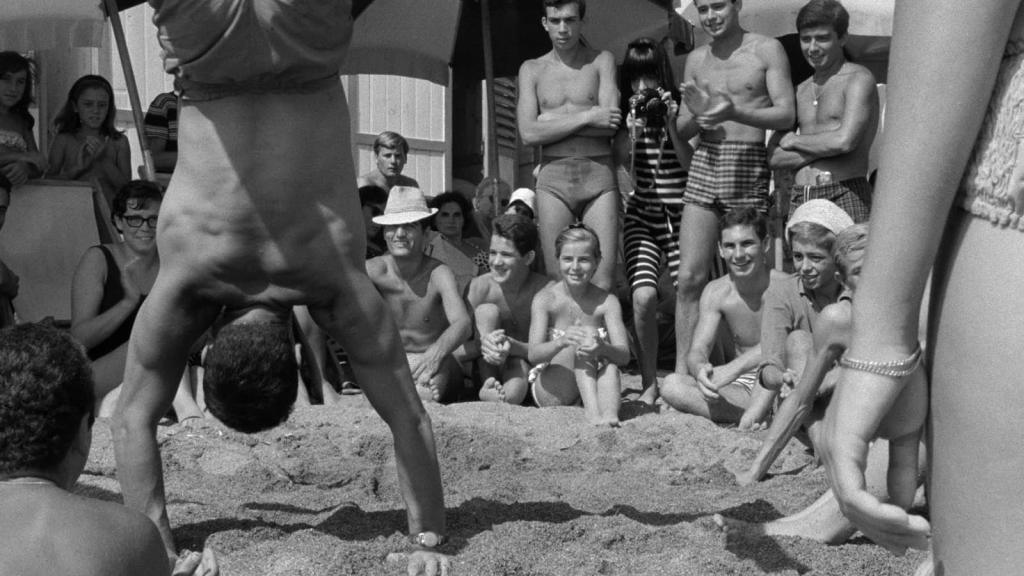
Dino Risi’s 1962 movie was shown as the Cinema REX’s summer open-air programme themed “On the Road”. Wikipedia describes it as an “Italian road comedy-drama film”. I was curious because it was included in the REX programme and because Criterion had released it, but I was also wary: an Italian comedy? See, when I grew up, Italian comedy meant: loud men, big-breasted women, lots of casual sexism (and you were lucky if that was the only -ism to be seen). These films were the result of an unholy union between farce and slapstick, and they largely starred Adriano Celentano. (I’ve been told by people in the know that Celentano was actually talented and smart, that he was a superstar in Italy for good reason, but what I’ve seen didn’t make me want to give him enough of a chance to prove this right.)
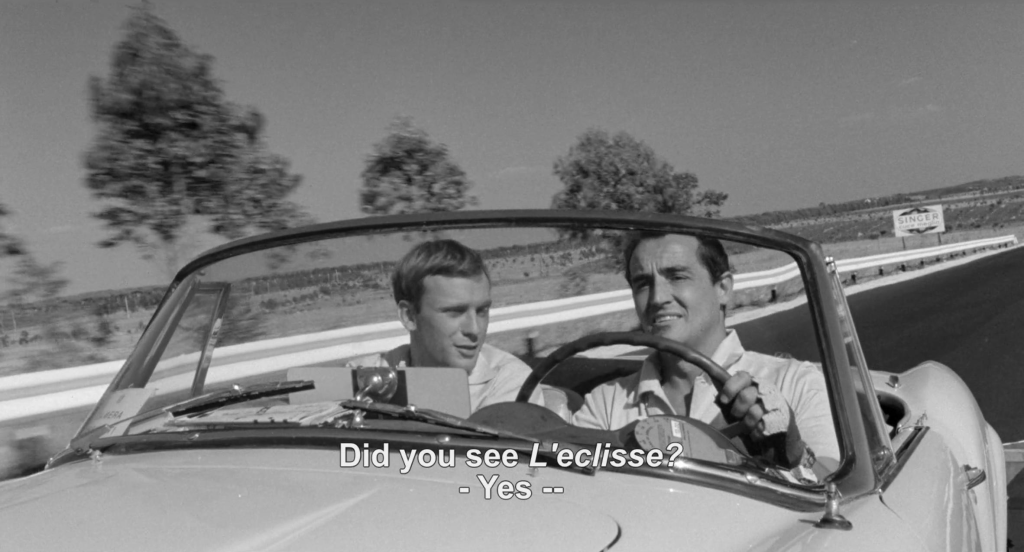
The thing with Il sorpasso is this: you can see how it fits into this genre, but it does so with a lot more wit and nuance and skill. It stars Vittorio Gassman as Bruno, a loud, reckless goof who seems to live in order to indulge his lust for life – that is, for food, women and fast cars. He meets the timid, straightlaced student Roberto (played by Jean-Louis Trintignant) and makes the man his mission: Roberto must be shown the joys that a public holiday weekend in and around Rome affords.
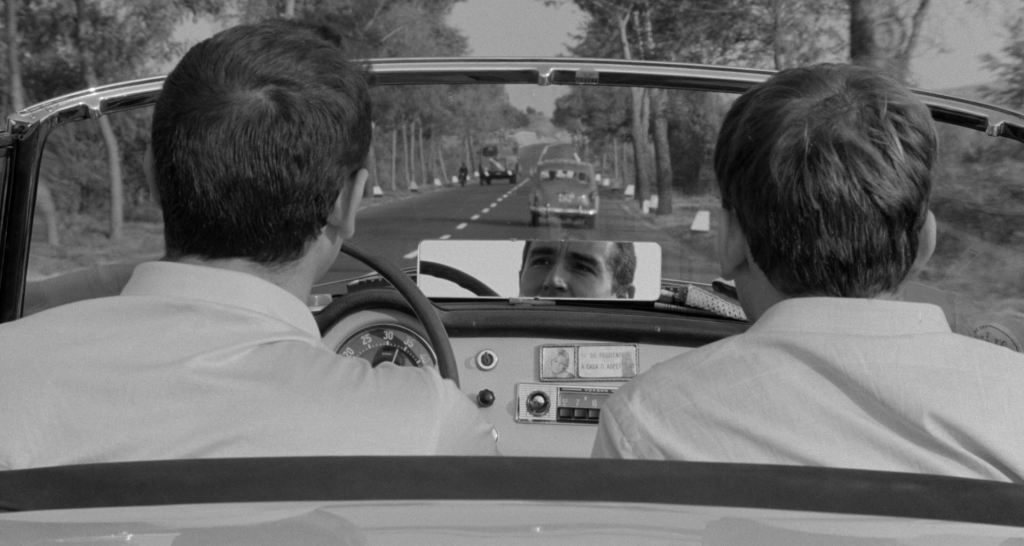
The film is basically a classic Odd Couple setup: Bruno is loud and crass, but he’s perceptive and certainly has street smarts. Roberto is uptight and afraid, he cringes at Bruno’s larger-than-life persona – but he also wishes more and more that he could be even the slightest bit like him. Bruno isn’t afraid of making a fool for himself, so if one of the women he tries to flirt with rebuffs him, what of it? You never succeed if you don’t try.
Yet, as the road trip goes on, we see there’s more going on with Bruno than is apparent at first – and these are the things that Roberto doesn’t want to acknowledge. He wants to keep Bruno as an idealised creature of pure id: the thing he himself is lacking.
Verdict: I’d be lying if I said that I didn’t find Bruno grating at least some of the time. But Risi’s script is smart with how it uses its archetypes, and Gassman and Trintignant are perfectly suited to making their characters more than the clichés they could have been. Over its runtime, the film goes to some surprising places, acknowledging the things that often went unaddressed in post-war Italy, and while Risi and his star Gassman did poke fun at the director’s contemporary, the iconic modernist writer-director Michelangelo Antonioni, there is more than a streak of the existentialism of Italian arthouse cinema in this comedy.
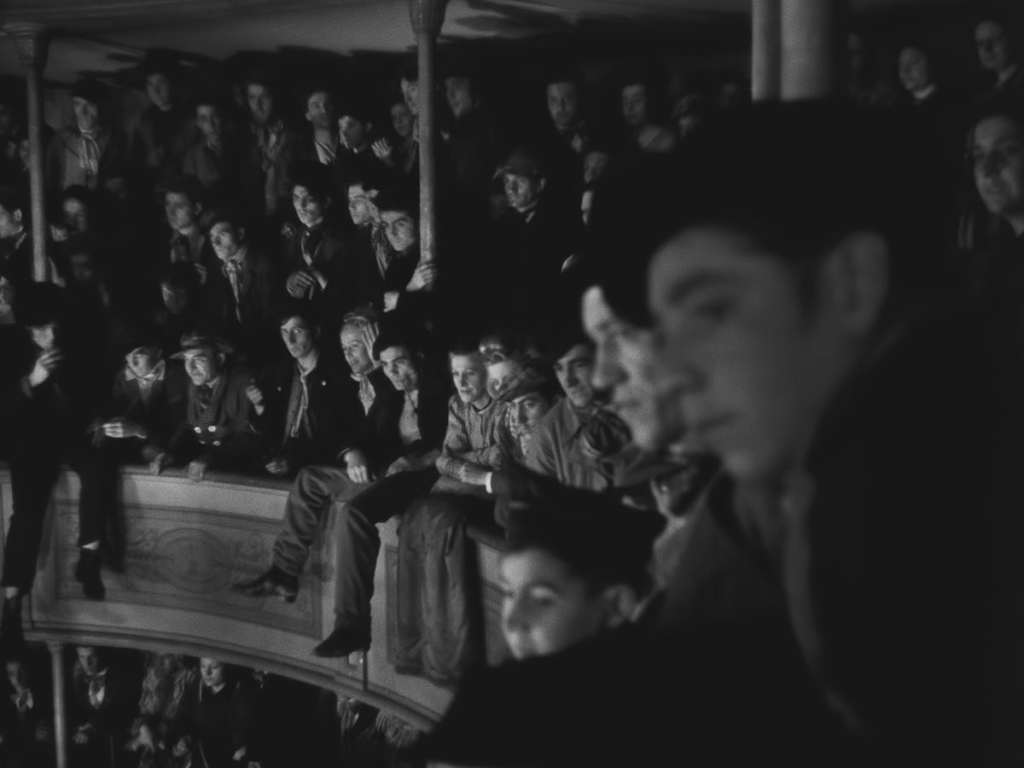
Children of Paradise (#141)
There are works of art that create a whole world: the audience feels that, outside what they’re seeing of the plot, the world doesn’t just end and characters don’t just turn into actors who are ready to have a break. Michel Carné’s Children of Paradise, made in France under Nazi occupation from 1943 to 1945, is very much such a work. While we only see the surroundings of the Funambules theatre on the Boulevard du Temple in 19th century Paris (an establishment staging the more crowd-pleasing genres, comedy and pantomime, for an audience that cuts across the classes), that ‘only’ is already such a rich tapestry, and Carné’s film creates it with loving detail. But geography is only one piece: another reason why Children of Paradise evokes an entire world is that it is centred on the Funambules theatre.
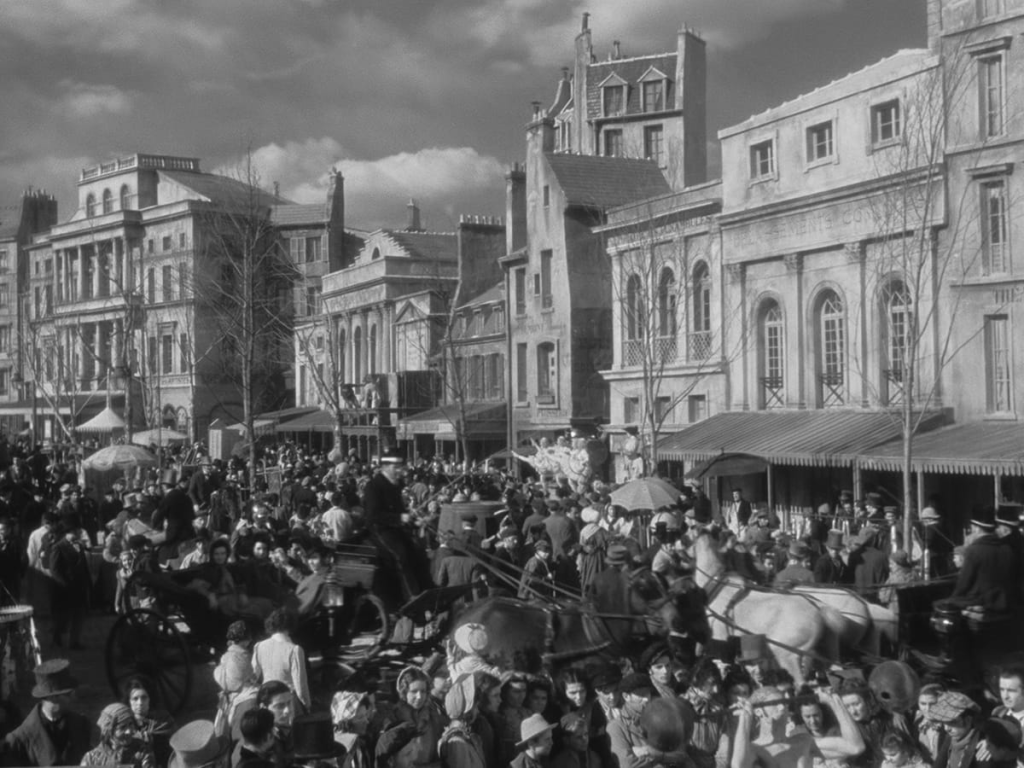
But while the film is certainly in love with the world of the stage, its sense of romance does not mean that it is blue-eyed when it comes to theatre or to those who work there. In fact, the most romantic character of Children of Paradise, the master mime Baptiste Debureau (Jean-Louis Barrault), is perhaps also the one the film is the most ambivalent about: Baptiste, who is in love with the courtesan Garance (played by Arletty), is a dreamer who puts his propensity for love in his performances, but he is also needy, petty and endlessly jealous.
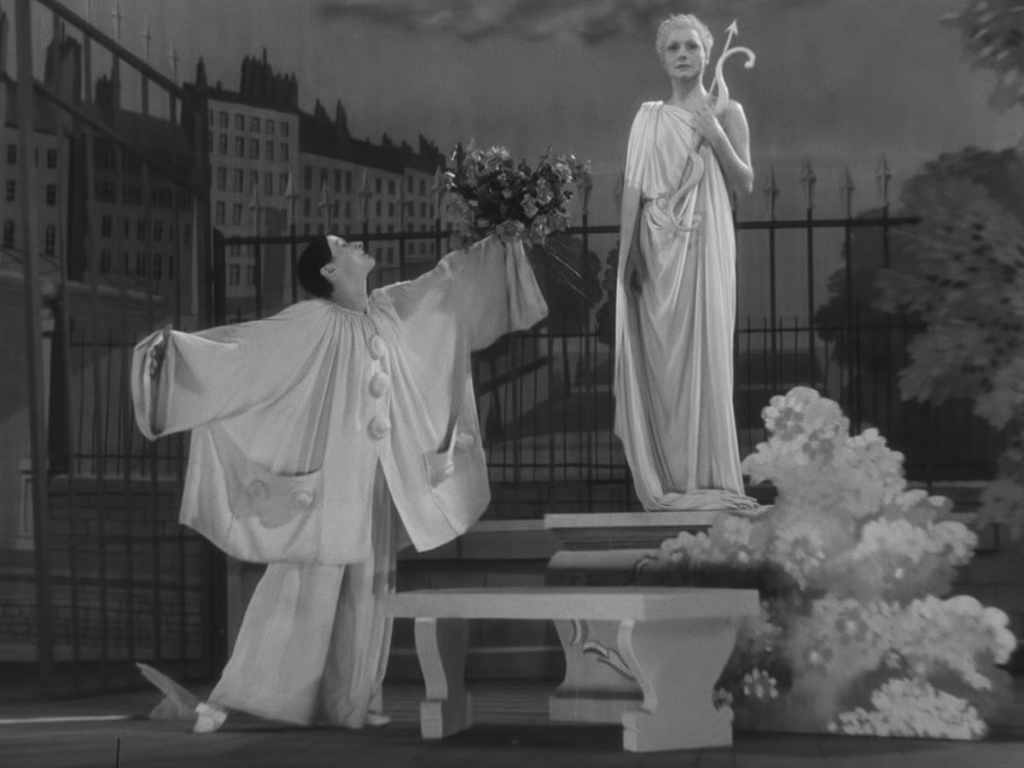
Verdict: Most of the characters of Children of Paradise are larger than life in one way or another, but they are also deeply human, and when the film finished – after 190 minutes, in a surprisingly abrupt fashion that made me wonder if there was a second disk hidden away in the Criterion case that I’d missed – I was sad to leave this world behind, but I also felt that the world would continue without me. There is such a wit, a warmth and a rich sense of life to the film, I would have been happy to follow the lives of these characters for another three hours.