And already we’re almost at the halfway point of the year. What have we watched, read and enjoyed recently? (Hint: For most of us, it’s not the heat.)
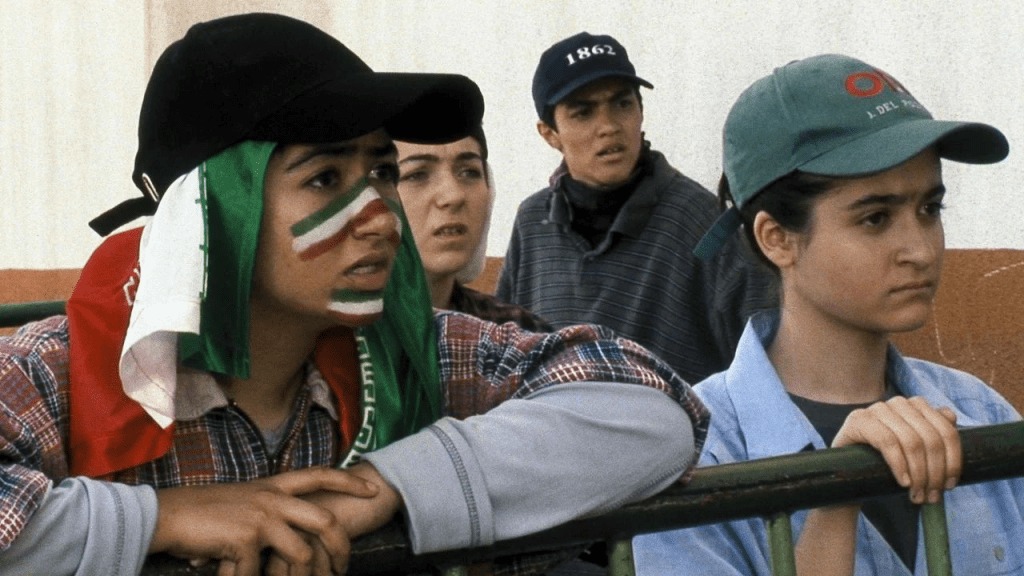
Offside (2006)
Once a year, the best cinema in the world (in Bern) hosts Match Cut, a local festival on football and film. While I’m not really into football, I was nonetheless very interesting in one film they showed this year: Offside by the Iranian director/dissident Jafar Panahi. I only got into Panahi a few years ago, with Taxi and then especially with No Bears, and I liked last year’s It Was Just an Accident a lot, so I was curious to see this relatively early film.
Offside would be a charmer even without its political/historical context. The film is about a group of young women who tried to sneak into the World Cup 2006 match between Iran and Bahrain – but female fans aren’t allowed to enter football stadiums in Iran. The film stays with the women, who are put in a makeshift holding pen on the outside wall of the stadium, while the match goes on in the background (we mainly hear the reactions of the tens of thousands of male fans inside the stadium, and once or twice we catch a brief, incomplete glimpse of the game). As mentioned, I have little to no interest in football, but it doesn’t matter: the match itself is tangential to the film, but it is essential to its characters, and they are tremendously engaging. I bought into their passion for the game 100% – but in a deceptively light manner, Panahi’s film grows into something bigger than a dramedy about a bunch of young women who are frustrated that they can’t watch a football match. The director doesn’t need to over-emphasise the worst aspects of the reality the film is concerned with: even if in the foreground it plays in largely comedic ways, the oppression of the regime is there, providing a background roar for the lives of these women (much like the match itself). By the time we get to the stirring ending sequence, filmed live during the public celebrations after the match, we recognise the contradictions at the heart of the life these women are living: their love and hope for their country in the face of a regime that denies their place in it.
— Matt
Hoppers (2026)
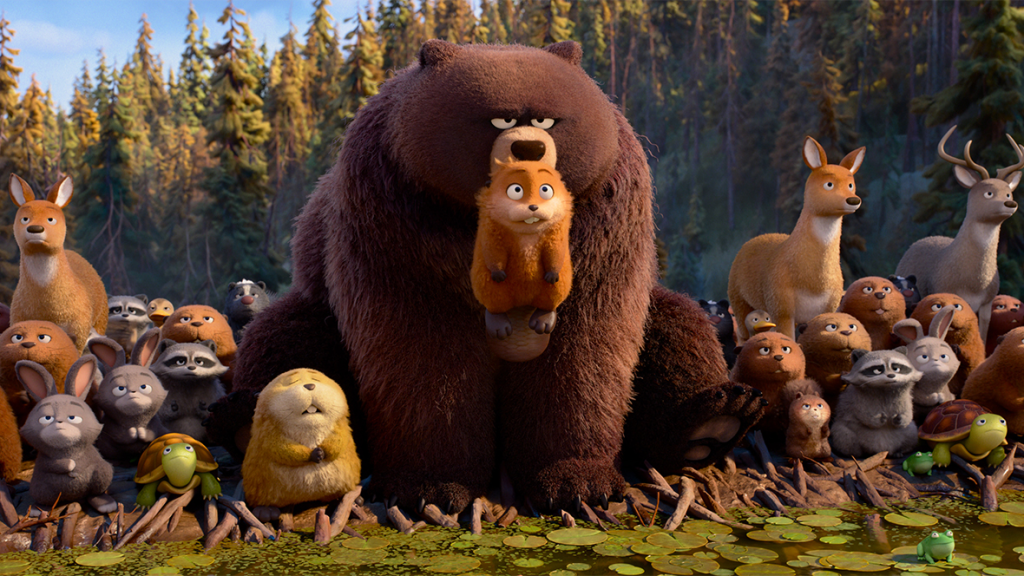
There was a time when I was excited to hear about a new Pixar film, but that time has long passed. The studio’s still puts out beautifully crafted films, but these days it feels like their craft all too often goes into stories that no one is really all that interested in telling – which is most evident in their sequel output.
Hoppers isn’t a return to the films that originally made Pixar what it was at its best: it is too messy, too much like one or two revisions away from its best version. The ideas are there, definitely, but the plot and themes don’t quite cohere into something that is as strong as, say, the original Inside Out or WALL-E. But the film’s messiness also lifts it above the studio’s more recent output and especially its sequels, which can feel like the result of a committee coming together to decide what story will tick the most boxes and which IP will generate the most nostalgia. Hoppers is better in its many, often chaotic, goofy and weird ideas, that may not quite add up to a whole that will prove a classic, but the resulting movie a rough-around-the-edges energy. It’s definitely the best time I’ve had with a Pixar film in a good long while.
— Matt
Mark Kermode’s Surround Sound (2025)
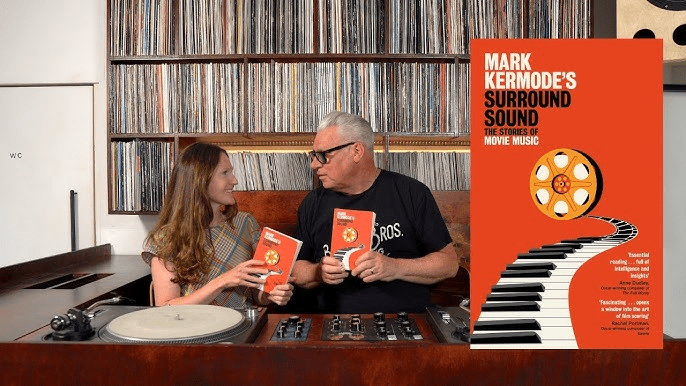
Appreciating British uber-film critic Mark Kermode’s yearlong dedication to reviewing new and classic films in all kinds of different forms (long-running radio shows, YouTube channels and documentaries) is one thing. Finding out about his intense love for and knowledge of film music was quite something else. His 2025 quasi-memoir of his favourite music for film and a full-fledged guide for the novice as well as the aficionado, Surround Sound: The Stories of Film Music is both entertainingly episodic and personal, as well as a broad introduction into everything (more) you need to know about soundtracks.
As a fellow collector, I really appreciated the sometimes unusual recommendations of favourite scores, as well as the way he characterises music for particular genres or of lesser-known origin. His focus is on lifting up the greats of film scoring throughout movie history as well as championing female composers from around the world, in particular. Everyone who knows Kermode has heard of his love for The Exoricist, for example, but reading his in-depth review of this score in the context of horror film music was more than insightful. It’s possibly a bit too fluffy and all over the place to become a classic, but it’s certainly worth putting your best earphones on for it and just dive in.
— Sam
Rabbit Trap (2025)
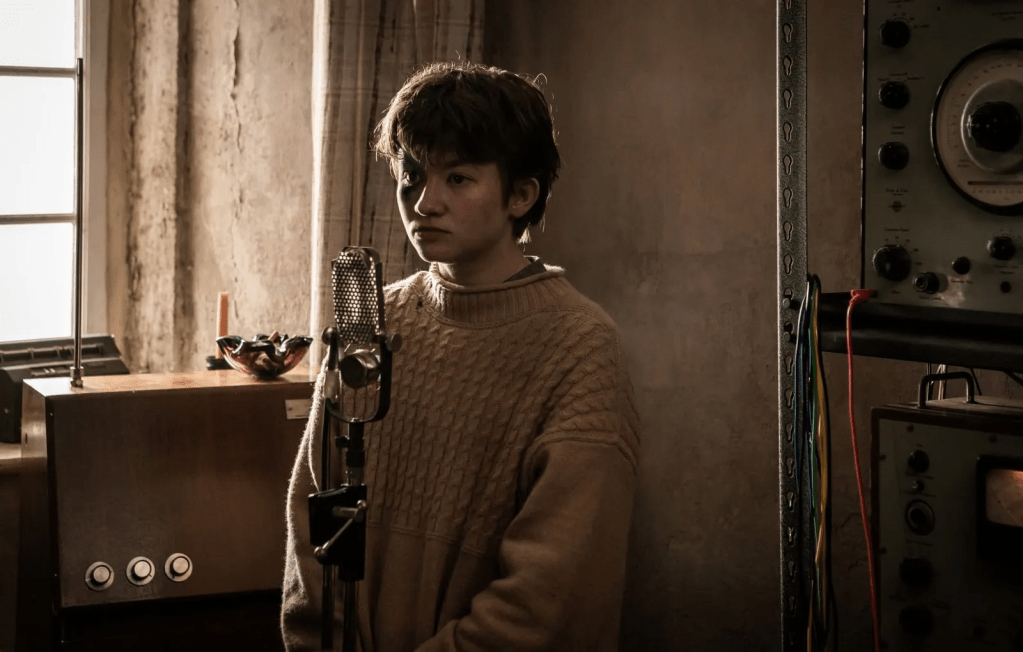
There’s a clear love of sound running through the entirety of Rabbit Trap. It makes this evident through its little monologues on the nature of sound, and having its principals entranced with audio – a couple, Daphne who’s a recording artist, and Darcy, who spends his days out in the Welsh countryside field recording everything. The movie’s soundtrack is at times a thrumming analogue beast that comes alive when the uncanny takes hold on the screen, but, more often than not, it is a tapestry of words and foley that creates a beguiling universe the visuals are situated within.
At its heart, Rabbit Trap is a story about buried trauma wrapped in folk horror, and how the supernatural often is a conduit to an awakening of truths lying within. It’s a little too arthouse to be lovable, a little too in love with the allusive to be relatable. But it contains three great performances, the most intense and uncomfortable by a young boy who inserts himself into the lives of the couple. Played by 20-something actress Jade Croot, there’s more to the boy than is immediately apparent, and he nurses a hurt of his own. Darcy, sensing how deep the damage goes, tries to help: “You know, when we’re very little, it’s hard to understand difficult things that happen to us. So, um, our brains create stories to make sense of them. But they’re just stories. And we need to learn to let go of them.” The rich irony is that Darcy has said exactly what he needs to do for himself; all he needed was someone else – something else, perhaps a darkling visitor from beyond the veil – to let him hear it spoken out aloud.
— Eric
Together (2025)
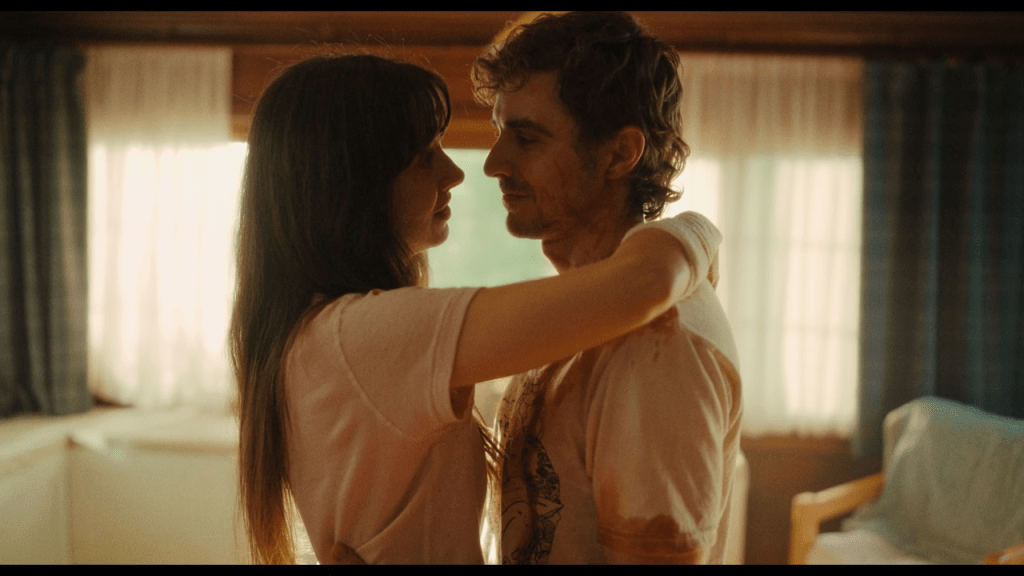
I’ve been a fan of Alison Brie since Community, and while she was excellent as Trudy in Mad Men, for me she came into her own as Diane in BoJack Horseman. Since then, I’ve been wondering where she could go, and while Evil-Lyn in Masters of the Universe wasn’t quite on my bingo card, I’m enjoying seeing her test her range. Together is a horror movie starring Brie and her real-life partner Dave Franco as a couple facing a romantic crisis – rich and difficult territory to mine, given its personal ambit. There’s a genuinely awkward beginning where a surprise proposal is met by prolonged and strained hesitation, which fractures the relationship like a fault line across a pristine landscape. From there, the couple moves into a new home far away from their old, and the relative isolation turns up the volume on their problems.
The trailers for Together have made a meal of its ick – the melding of skin, the entangling of flesh, the grossness of the idea of inseparable physical union. The movie does this to contrast what individuals in a relationship want vs. what the couple needs, and while the plot justifies this with a cult and Greek mythology, in the end this is mostly a contrivance for the relatable worries at its core. The horror, it posits, is in surrendering individual agency to something else when two people are in a relationship, and like all good horror, it cannily casts that idea into a violent, reified tangibility that’s easy to fear because here it is, folding your body like a fleshy lawn chair. The movie’s also pretty funny in its gross-outs when it wants to be; if my description of the body horror from the trailers has reminded you about sex, well, the movie knows what to do with that, too.
Don’t take your kids to see this one.
— Eric
Obsession (2025)
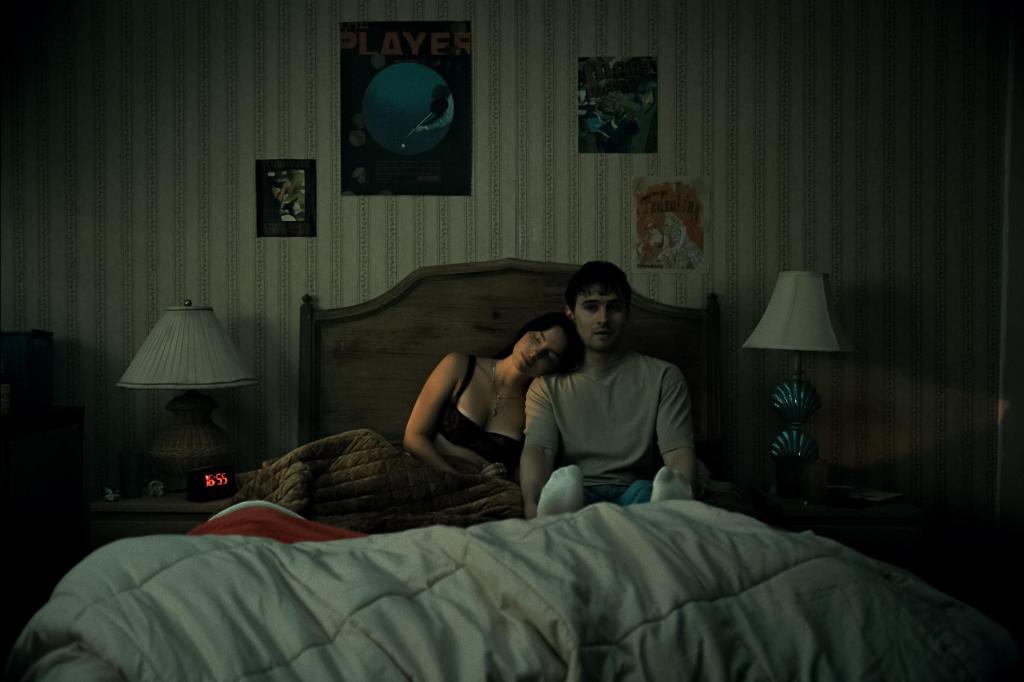
This is turning into quite a horror-themed Shortcuts, and it’s not even Halloween. Although I’ve always liked the fact that, in Japan, ghost stories are seen as tales to be told in the heat of summer, so that the chill of terror takes the edge off of the heat. But when I thought about what I wanted to write as a shortcut, my first thought was Obsession – possibly one of my favourite films I’ve seen so far this year (and, for what it’s worth, Rabbit Trap that Eric wrote about above is also on that list).
Obsession has successfully lingered after I watched it. It manages to take a basic high concept horror idea – that of a wish gone wrong – and tell a darkly engaging tale of abuse and twisted self-justification. The acting is excellent, but there is one point I especially wanted to make. For a cheap film, it looks fantastic. The way scenes are lit and then shot helps create a brilliantly uncanny and creepy feeling. In an age of streaming, where the big players demand endless brightly-lit small screen-friendly content, it’s great to see a production take the time needed to frame the darkness and turn simple scenes of two people talking into the stuff of nightmares.
— Alan

