Probably like so many Gen X film geeks, I first found out about Sullivan’s Travels without even knowing that I had, back in 2000 when I watched a film by the Coen Brothers about three convicts – one of them a Dapper Dan man – who escape a Mississippi chain gang. That film was called O Brother, Where Art Thou? – which happens to be the title of the novel that John L. Sullivan, director of hits such as Ants in Your Plants (or, more precisely, Ants in Your Plants of 1939, suggesting that there was an entire hit series of movies about ants in plants) and Hey, Hey in the Hayloft, wishes to adapt. He’s tired of making shallow comedies, wanting instead to depict the truth on the screen – and the truth, as he sees it, is that the world is in a bad place: “I want this picture to be a commentary on modern conditions. Stark realism. The problems that confront the average man!”
“But with a little sex,” one of the studio bosses he’s trying to convince pipes up.
Sullivan concedes the teensiest bit: “A little, but I don’t wanna stress it. I want this picture to be a document. I wanna hold a mirror up to life. I want this to be a picture of dignity! A true canvas of the suffering of humanity!”
The other studio boss knows exactly what this project needs: “How ’bout a nice musical?”
Preston Sturges’ Sullivan’s Travels (1941) certainly knows the minds of Hollywood studio heads: of course, the money men would think that O Brother, Where Art Thou? is a bad idea, because they’re thinking of the bottom line: call your film a “document”, and you’re unlikely to make a big buck. Start talking about “a true canvas of the suffering of humanity”? That’s not what people go to the movies to! They want to see ants, in plants! They want sexy people having sexy fun in sexy haylofts (though obviously not too sexy, because these are the days of the Hays Code). Others, such as Sullivan’s butler, have different objections: they find the project exploitative, in particular when initiated by a privileged, if well-meaning, rich kid: “The poor know all about poverty, and only the morbid rich would find the topic glamorous.”
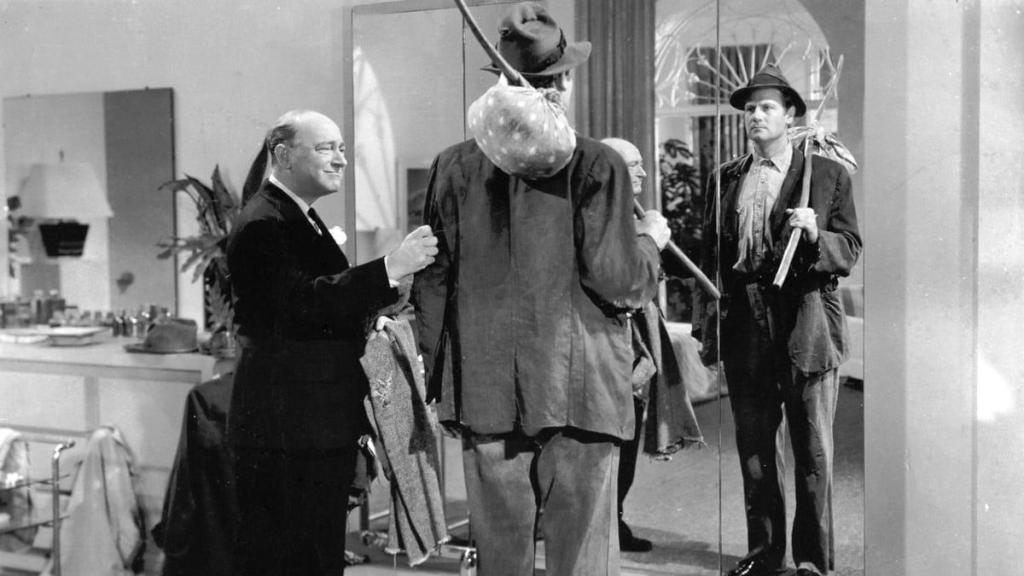
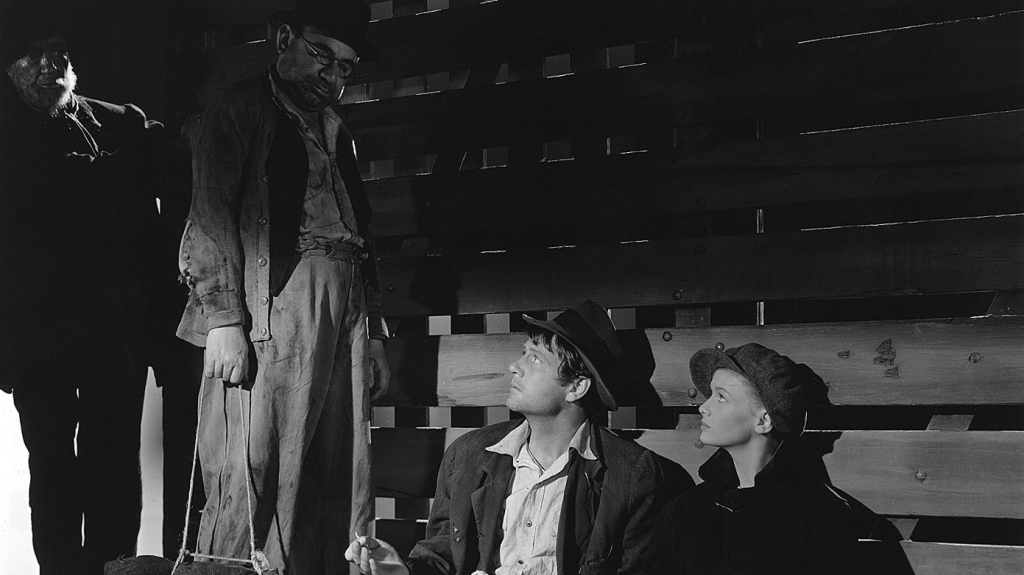
But, like the man on a mission that Sullivan believes himself to be, he won’t be dissuaded. He wants to make a socially conscious film, and so he does what any sensible person would do: dress up as a hobo and take to the road, followed by a bus of people sent by the studio to follow Sullivan around, for his own safety. Even if Sullivan soon succeeds at losing his entourage, he finds that experiencing the life of the poor and destitute isn’t easily had for someone like him. But he doesn’t give up and finally succeeds in experiencing, at first hand, the day-to-day existence of the unemployed and homeless, eating in soup kitchens and sleeping in homeless shelters. Eventually, after more misadventures, he ends up in a work camp sentenced to six years of hard labour, unrecognised and unable to convince anyone that he’s John L. Sullivan, the director of hit comedies.
Of course, Sullivan’s Travels doesn’t end here: it is at least as much a comedy as it is a drama, and while Sullivan’s travels do become surprisingly harrowing, the movie still finds its way to a happy ending. More than that, it ends with the title character having learnt his lesson: “There’s a lot to be said for making people laugh. Did you know that’s all some people have? It isn’t much, but it’s better than nothing in this cockeyed caravan.”
The end. And we take away from this that Sullivan’s plans, while well-meaning, were the silly pipe dream of a naive do-gooder. Want to help people? Make ’em laugh. People go to the cinema to be entertained, not to see what’s depicted on the “true canvas of the suffering of humanity”.
Since I started with the Coens, let me quote another one of their films: Would that it were so simple.
Verdict: When I first watched Preston Sturges’ classic, I liked much of it, but there was also something about the film that irritated me. Obviously there are elements here that are dated: to begin with, it’s difficult not to cringe at the jokes at the expense of the Black cook that travels with the bus following Sullivan, to begin with. And while Veronica Lake delivers a strong, funny performance, working well with the screwball lines she’s given, she’s not really much of a character beyond the charisma Lake brings to the role – it’s telling that while the studio bosses have names, Lake’s character is simply called “The Girl”. Maybe she’s a slyly meta comment on that “But with a little sex” line, but even then, that could have been done while also giving her a tad more than one dimension and perhaps the barest hint of a second one.
However, what generated more friction than the film’s 1940s-isms was that ending. At a glance, it could be understood as glib or defeatist: don’t ask Hollywood to produce films that are socially aware, because those aren’t the kind of stories Hollywood can tell. Instead, it should stick to what it’s good at: escapism. It’s not that Sturges doesn’t make a case for the power of laughter and the need for people to escape their lives every now and then, but surely the issue is more nuanced than that? And, thinking of the people in Tinseltown who, half a dozen years later, would lose their careers and, in some cases, go to prison because they too agreed with the aims of pre-travels Sullivan, the categorical note the story seems to end on can rankle.
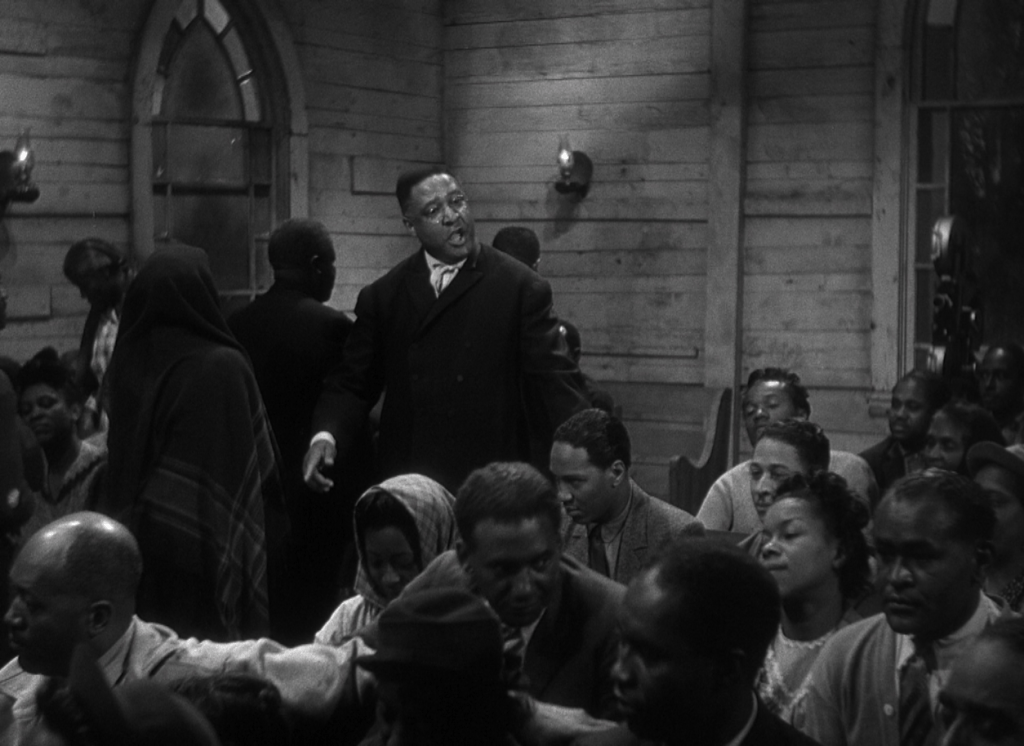
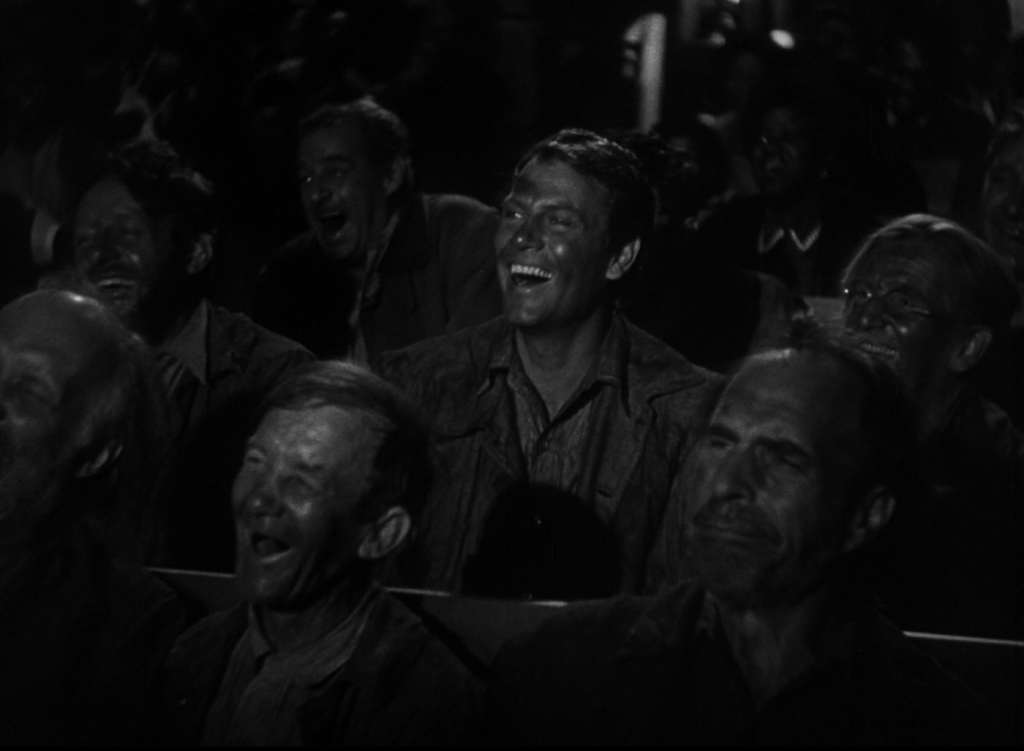
That irritation is still there at a rewatch of Sullivan’s Travels, but so is a sense that it really isn’t that simple. Yes, the scene best remembered from Sturges’ film may be the one where the inmates in the work camp get an evening off from their misery: they’re taken to a Black church, where they, together with the parishioners, get to watch the Disney cartoon “Playful Pluto”, and Sullivan is struck by the joy the animated short brings to the men. But the scene doesn’t make the case that all these men need is a little comedy: when the film is over, they return to the misery of the work camp. Seeing Pluto’s slapstick misadventures may make them forget their sad lot for a few minutes, but it doesn’t erase the memory of the earlier scenes: the sadism of the guards at the camp, the brutality of the railroad guards, the miserable poverty of the homeless and the destitute Sullivan comes across.
Sturges may serious when he pokes fun of Sullivan’s do-gooder naivety – but Sullivan’s Travels is O Brother, Where Art Thou? at least as much as it is Hey, Hey in the Hayloft (there is indeed a comical scene where Sullivan and the girl find themselves in a train cart transporting both hay and cattle). The pat ending of Sullivan’s Travels is deceptive, because obviously Sturges isn’t arguing that the entire middle third of his film, which depicts the desperate poverty of the time in ways that are just as striking as the much-cited church sequence, is misguided. Sullivan’s Travels doesn’t make an either/or proposition arguing that cinema’s only purpose is to make ’em laugh. It isn’t ignorant of the purpose of humour and laughter, but neither is it blind to the power of cinema, in particular a cinema as popular (and populist) as that of Hollywood, to shed light on things that many, not least the studio heads, would have preferred to keep off the screen. In making Sullivan’s Travels, Sturges didn’t choose between commenting on the modern condition and Ants in Your Plants: he chose to do both.