Welcome to One Best Picture After Another – where I attempt to watch all the winners of the Academy Award for Best Picture, starting at the very beginning. And attempt to answer two simple questions – is the film still actually any good? And why did it win?
4/10
One of the key years in Hollywood was 1934. That was the year that film censorship became enforced, and all studios agreed to produce movies that would follow the conservative precepts of the Production Code. Its purpose was to impose a strict moral system on the stories coming out of Tinseltown. This was to stop powerful organisations like The Catholic League of Decency from protesting at the release of new films, or attempting to shut down cinemas.
The big deal in all this was all the types of stories it killed off. No longer could Hollywood explore or celebrate ambiguous criminal figures. Nor could it deal with adult relationships, as any sexual content was strictly forbidden. This all begs the question: if these protestors didn’t want those sorts of films – what sort of films did they want? Well, sitting through Going My Way, I think I got a good insight into the Hollywood these conservatives wanted. And, dear Lord, it’s pretty dull.
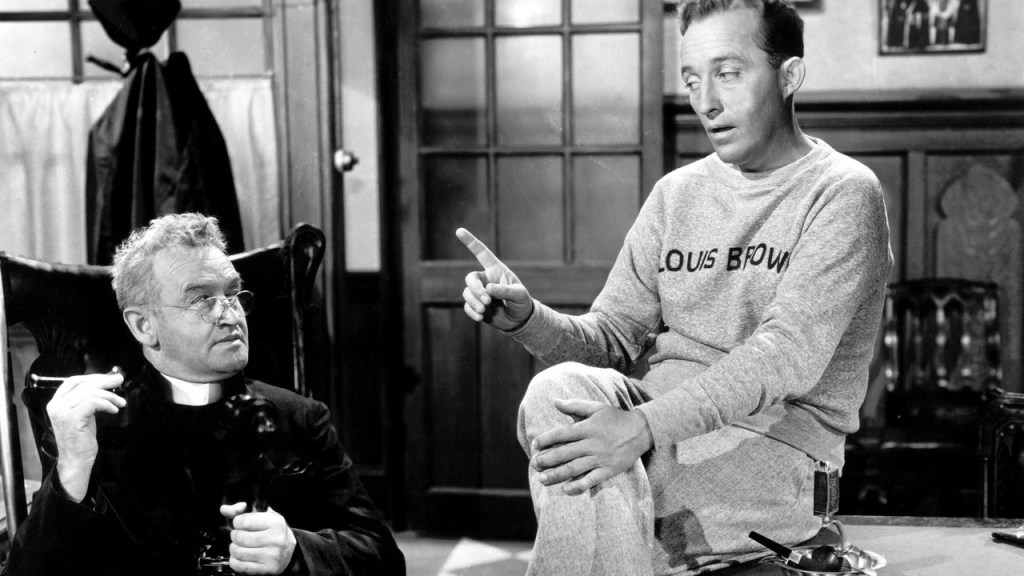
The basic set-up here is Bing Crosby playing Father “Chuck” O’Malley, a Catholic priest who is sent to help out at the struggling St. Dominic’s Catholic church. And, after a series of events devoid of any real peril or anything dangerously close to being interesting, he succeeds. That’s pretty much it. And its all played out within the best possible confines of good taste and fine, upstanding morality. There’s one hundred and twenty six minutes of this stuff, too, so this slight plot is being stretched out over an insanely long runtime.
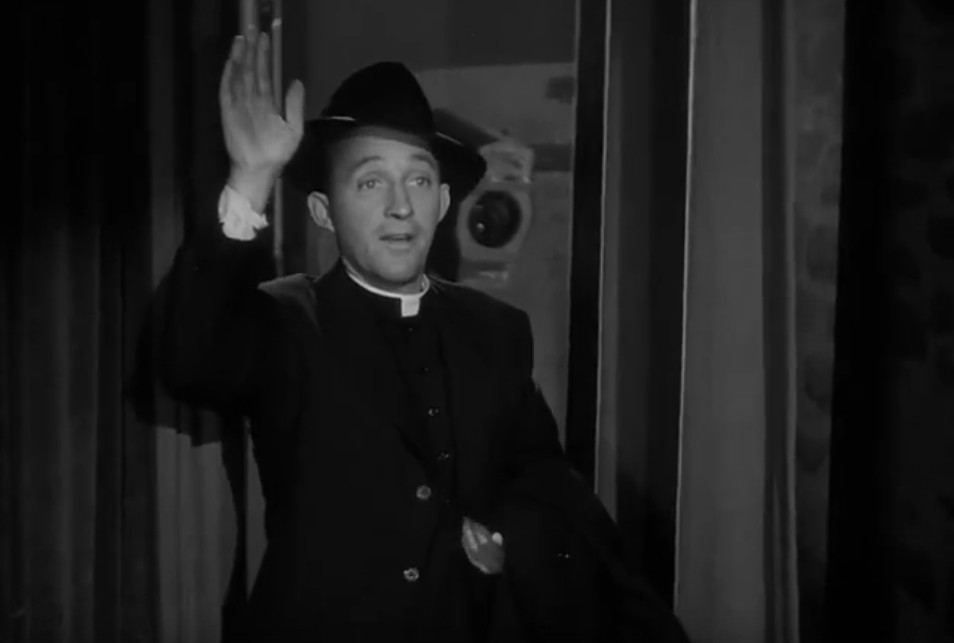
That said I think the extent to which you might be able to take this will depend entirely on how much time you have for Bing Crosby. His laidback style sets him up as not some square old doddery priest, but a new one who loves baseball and crooning. It feels like such a desperate attempt by the squarest people you could imagine to devise a character to tell the audience “Hey, you might think that priests weren’t hip, but this one is super cool, daddio.”
How do you do, Fellow Kids
It’s actually testament to Crosby’s innate charm that I think he comes pretty close to pulling this off. Watched so soon after Casablanca, it’s possible to see how movies in this period are moving to focussing on homegrown, manly leading men that – in very different ways – feel utterly contemporary and American. And while I much prefer Bogart, I can still see the appeal of Crosby as the leading man here.
He is charming and laidback, while taking the story as seriously as it needs. It’s just the story doesn’t really do anything interesting with the character, doesn’t give him any sort of antagonist that might make things more engaging and even when he’s called upon to croon – the songs just aren’t that memorable. Only “Too-Ra-Loo-Ra-Loo-Ra” is rather wonderful, and its barely in the film.
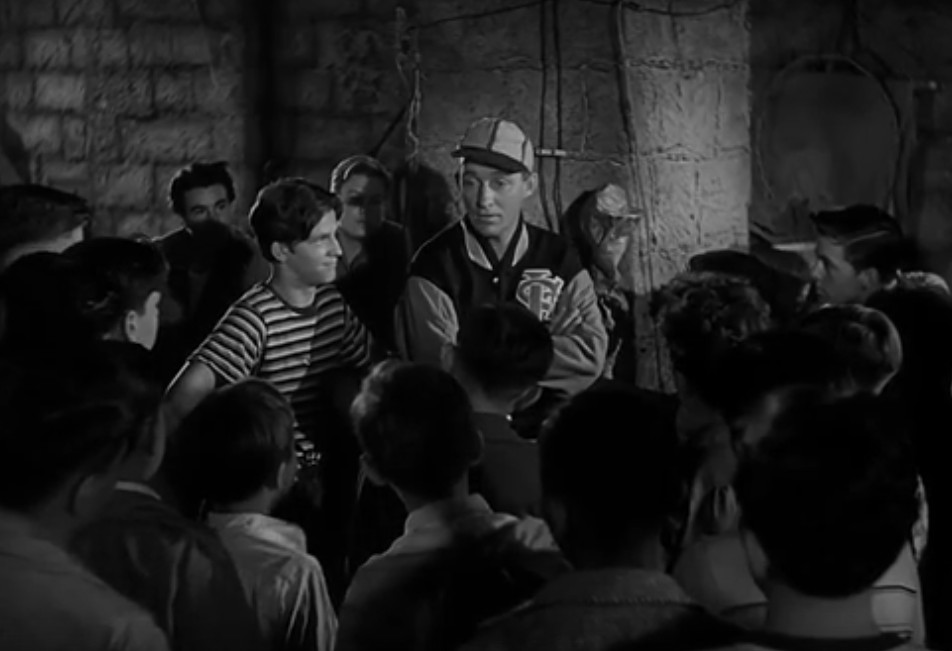
The story also puts Crosby’s priest in situations that just feel comical today. The local area has a problem with rough street kids. But, don’t worry, middle-aged Father Chuck is so hip, he can speak the language of the street and helps turn them around. How? By making them realise just how cool singing in a choir is. This whole sequence is as cringe as that sounds, and none of it feels real. But even by its own cartoon standards, it’s surprisingly undramatic. There aren’t really any scenes where there’s tension between him and the gang. He turns up, and they instantly like him and immediately realise that working together to sing vocal harmony is so much cooler than teaming up to commit street crimes.
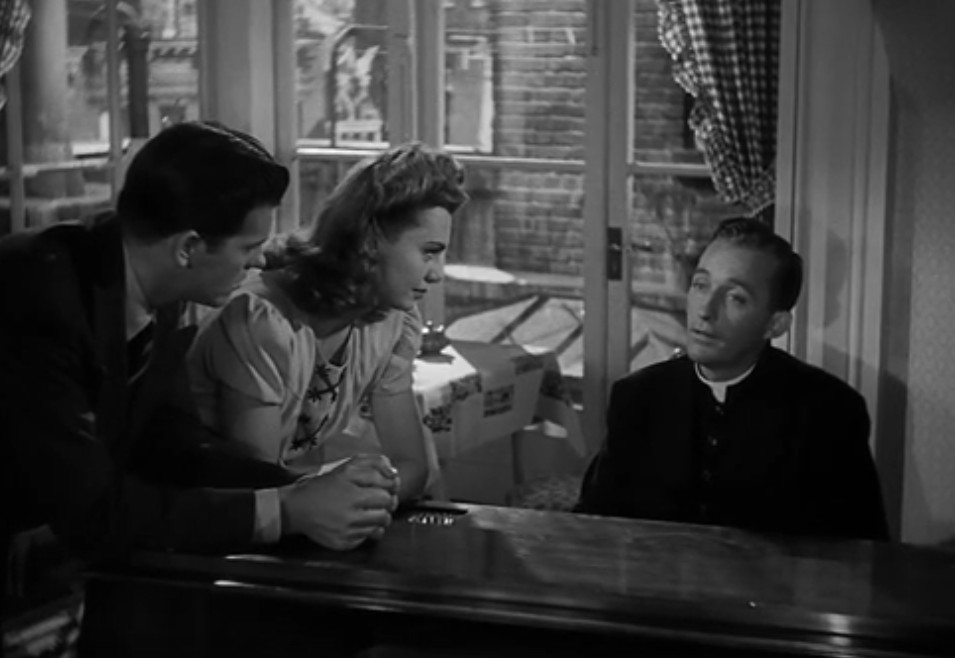
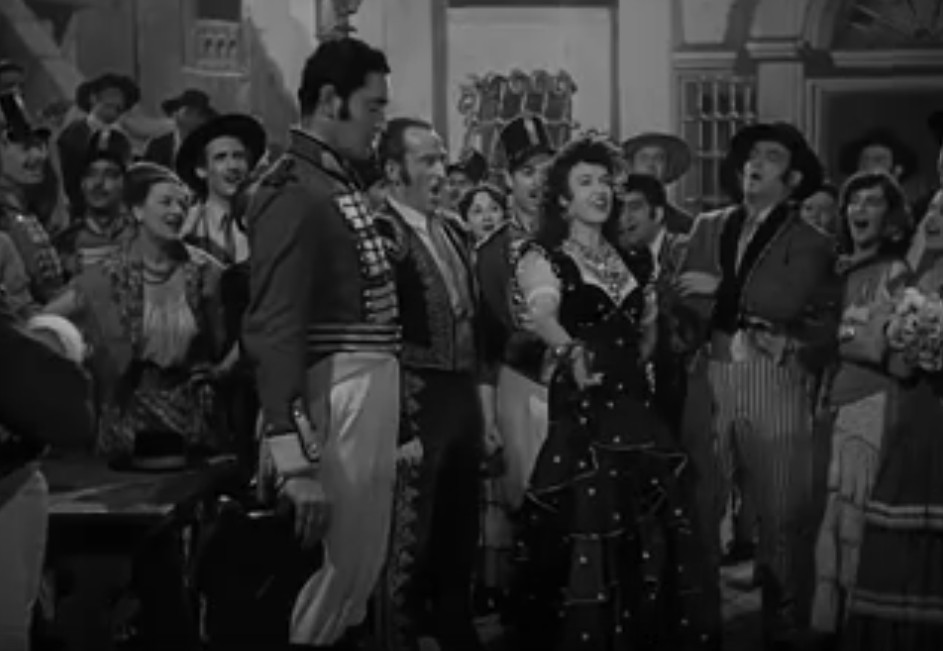
The whole thing has the vibe of an evening out for conservative America that isn’t in the least bit threatening but feels vaguely cultural. On top of Crosby’s crooner, the story also reveals that an old girlfriend of his has now become an internationally celebrated opera singer. Which means we get her perform an excerpt from Carmen in a lavish stage production. Actually, for all my moaning about this film lacking any sort of edge, I did like the fact that when O’Malley rediscovers his old flame there isn’t any sexual tension, or dark past explored or hint at broken hearts. They’re just instantly friends, and incredibly likeable friends. An unexpected but rather lovely element to the film.
Father O’Malley has to deal with the existing church hierarchy not liking him for his modern ways – which he does by being nice, and so they get to like him. He has to deal with a young couple who might be living in sin – which he does by the fact that they’re not, they get married, and the young man joins the army. He has to deal with the church struggling for funds – which he does by revealing a great song that he wrote ages ago. A song that music publishers will suddenly buy off him for loads of money. I don’t mind sentimentality in a film, and all of these storylines could have been presented with an element of drama about them, where how they get to the resolution feels earned, and consequently interesting to watch. But none of them do – and being resolved in such trite ways, the whole thing feels utterly saccharine and undemanding.
And maybe, with the charms of Crosby and a fine performance from How Green Was My Valley‘s Barry Fitzgerald (alongside some amiable opera action with Risë Stevens) I could have been fine with this as an eighty-minute sharp little sweet comedy. But instead it drags everything out, has dull songs, clunky dialogue, and I ended up finding it an unenjoyable experience.
But what do I know? This wasn’t how audiences at the time found it: they made it the biggest-grossing film in America that year. Which probably explains the Best Picture award, alongside it sending a pretty big message to all the Conservative pressure groups that movies could be for them after all. An equally huge sequel followed the next year, but not for me – I’ve got the next Oscar winner to watch…

