End of November already? Where does time go? Well, obviously, it goes into watching films and series, reading books, and writing posts about how time keeps on slippin’, slippin’, slippin’. And who better to accompany us as we’re hurtling into the future?
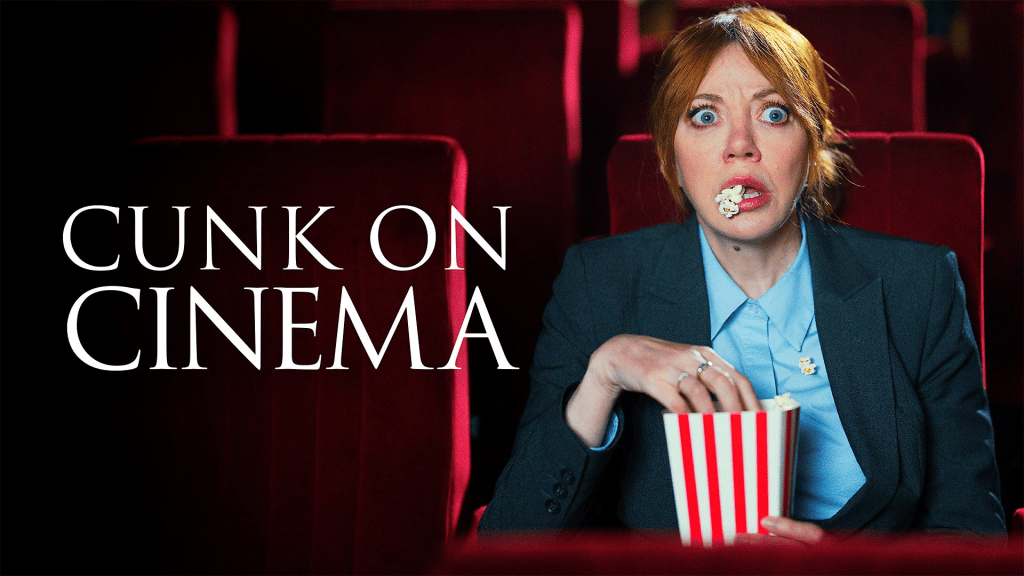
Cunk on Cinema (2026)
For fans of Philomena Cunk, hilariously stoic creation by comedienne Diane Morgan, it was a worthwhile wait since her last outings in Cunk on Britain (2018) and Cunk on Earth (2022): the mockumentaries hosted by the completely ignorant yet supremely confident Cunk had so many social media-tailored interview moments with real experts in each field that the show became a massive success for the BBC. Her insistence on half-knowledge (and lack even thereof) was so stupefying that professors, authors and commentators also flocked to the new series on cinema just to be baffled by her questions.
The new six-part series is a surprising mix between an actually solid overview of cinematic history and an eclectic carousel of experts in the field (from action director Michael Bay, actor Benedict Cumberbatch to film critic Mark Kermode), who all do their best to look serious and not crack (up) under Morgan’s insistent stupidity. Among the most amusing bits are Kermode turning her questions back on Cunk herself, as well as film analyst Mark Cousins, himself the creator of a lauded (if lengthy and slightly pompous) history of cinema (The Story of Film, 2011), who isn’t quite sure if he’s having an encounter of the third kind with the gobsmacking Philomena Cunk.
— Sam
What’s with Baum (Woody Allen, 2025)
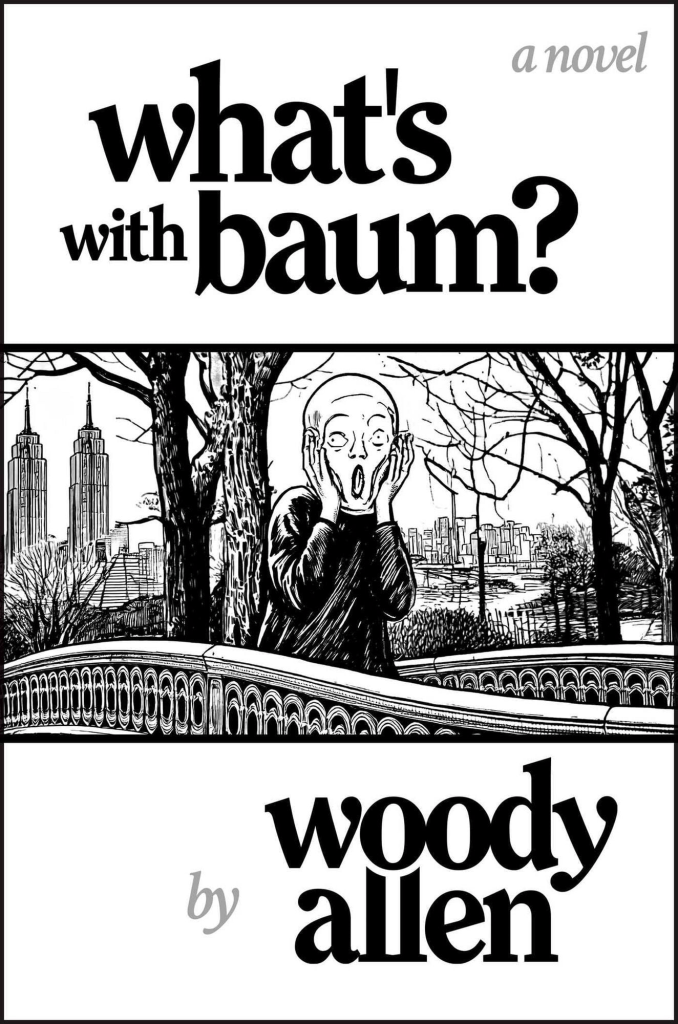
I hesitated when I picked up director Woody Allen’s first proper novel What’s with Baum? earlier this year. Then again, as a long-time fan of his cinematic output and a regular observer of the debate raging about his person, life and legacy (recently recounted in Patrick McGilligan’s riveting biography), I was at least interested what he’s been up to in terms of creative output. Despite the scandals since his breakup with actress Mia Farrow, his marriage to her adopted daughter and the resurfacing accusations of child abuse by Farrow’s other daughter, as well as more recently, his ties to the Epstein case, Allen at 91 seems to show no signs of slowing down, with his most recent film wrapping location shooting in Madrid just days ago.
What’s with Baum? is, unfortunately, mostly a collection of his classic tropes of a neurotic ageing author in trouble with his current partner Connie (and her annoying but successful son Thane), who isn’t only sinking deeper into depression and talking to himself but who falls head-over-heels for Thane’s young new girlfriend, who eerily reminds him of his first love. Despite atmospheric descriptions of New York City and a great panache for witty descriptions and dialogue, these greatest hits play particularly questionable, knowing Allen’s own story. The book feels like a thinly veiled coming to terms with his faible for very young women and his troubled relationship with his ex-wives and their children. Despite his literary talent and sense of humour, Allen can’t quite shake either his image or his own grievances and obsessions. What made for fabulous comedy in the past now feels like a tiresome routine and a burden, even if I remain mildly curious to see what that next movie will be like!
— Sam
The End of Oak Street (2026)
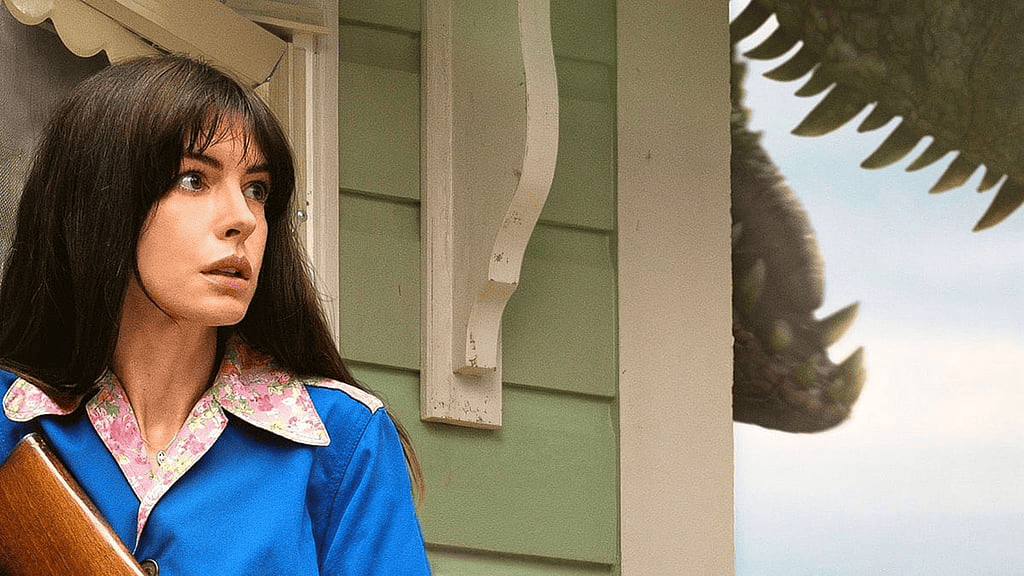
Generally, when a movie namedrops Carl Sagan, it has my attention. The End of Oak Street starts promisingly, showcasing idyllic suburban life roiling with turbulence just beneath its sunny surface. A couple going through a rough patch and their two kids negotiating childhood with its own tribulations is a premise rich with symbolism and emotional dynamics to mine. The usual playbook here with sci-fi, or horror, or action-adventure – or in this case all three at once – is to transplant these characters into an extreme situation that makes all their strengths and flaws rise to the fore, and has them undertake a journey that transforms them into the best versions of themselves… if they survive.
It is something of a disappointment, then, that Oak Street never really sets its characters up with anything more than stock plot beats and clichés before it decides to test them. The inciting incident is a sudden space-time transposition of a patch of suburban America to 200 million years in the past – aliens are implicated, and wormholes, and both have the tensile strength of wet tissue paper when it comes to plausibility. Carl Sagan would have generously waved this aside to focus on the characters and adventure, and there is some profit to be had there. The premise allows dinosaurs to generate much of this movie’s tension and adrenaline spikes. It is shot with a palette that evokes the Spielbergian/Amblinian, but subverts that tone by dropping in techniques from horror movies that director David Robert Mitchell is intimately familiar with: slow zooms that ratchet up the dread, and tense shots where the audio drops out while something is about to terrorise our heroes. These are effectively done, with neat creature design, and the audio is a good exercise in testing the low end of your audio system. But the mark of a well-made movie is that the shocks and scares make you feel for its characters even in the middle of all their foibles, and Oak Street simply doesn’t have a handle on that kind of depth, not making its protagonists interesting or human enough to care about beyond an ambient sense of concern for their wellbeing during most of its runtime. The ending is something of a head-scratcher that raises more questions than it answers, but ties up the theme of marital distress with a resolution that rings as hollow as the setup. As a creature feature, this is a solid 7.5/10. As a fun action-adventure charged with the human complexities that motor people through extreme and/or ludicrous situations, Spielberg’s oeuvre remains unchallenged.
— Eric
Spaceman 3 “Recurring” (1991)
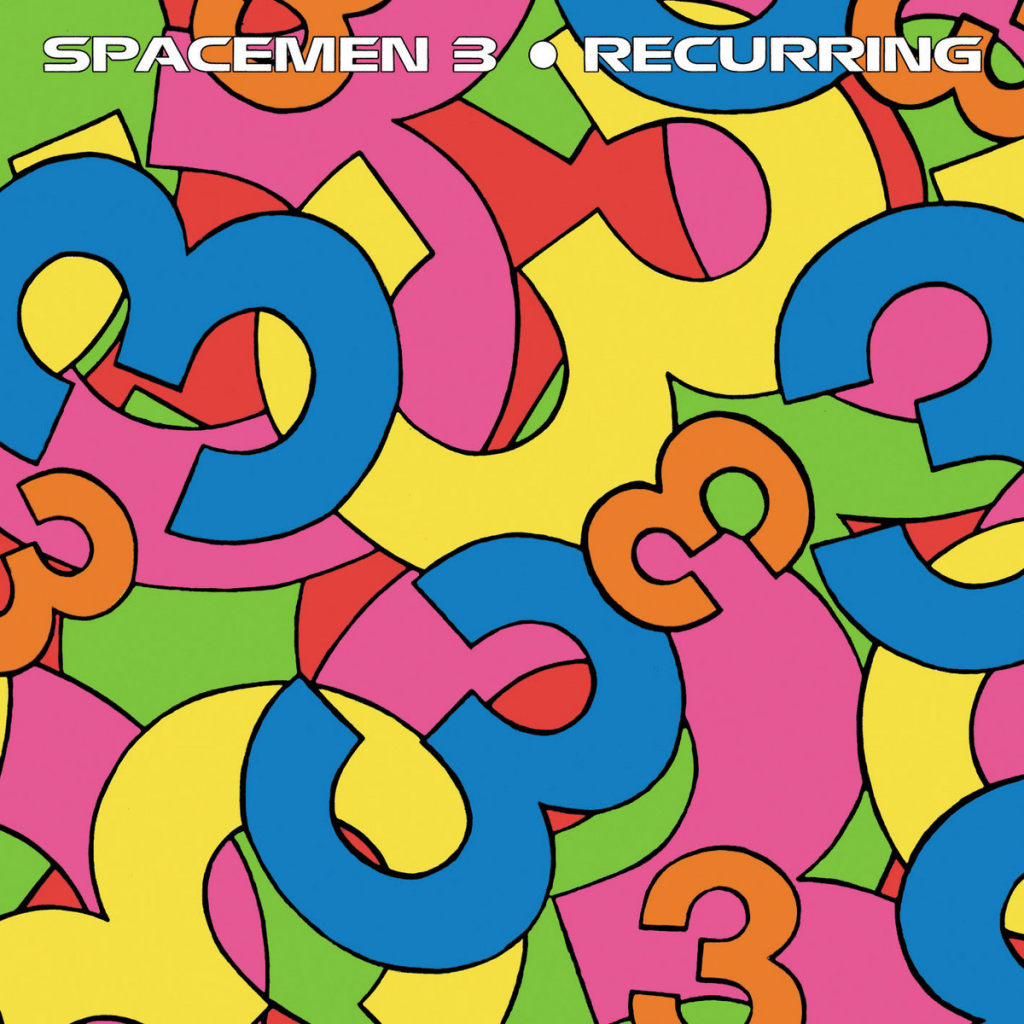
On the nineteenth of November 1965 two babies were born in the same hospital in Rugby, England. Sixteen years later the two were to meet and become friends at Rugby Art College and not long after they went on to form a band. After a few name changes, they settled on the name Spaceman 3 and in the mid to late eighties the band enjoyed increasing critical acclaim. The music drew heavily on drone rock and simple harmonies, influenced by both garage rock and minimalism. But as their success grew, the two became estranged – seemingly for the usual rock and roll reasons – artistic differences, drug abuse, personality clashes in the studio and so by their final album the only way the band could meet their contractual obligation to produce the record was to record one side each.
This makes Recurring quite a curious record – two halves of an album effectively serving as the launching pad for two musicians future careers now that they could not longer stand each other enough to work together. And yet, personal antipathy aside, they both remain passionate about the same musical influences and still seem to possess similar aspirations for what music they should make. The result is an album that, despite its awkward origins, feels surprisingly coherent. Which side I prefer changes with the seasons – both possess the experimentation, the roughness and the beauty I love the band for.
Decades later both these two kids have continued – separately – making interesting music with new collaborators. And yet for their fans the nineteenth of November is a time to go back and celebrate the records they made together. This year I dug out Recurring, and I enjoyed the listen. It seems appropriate that my two favourite tracks on the album: “Big City (Everybody I Know Can Be Found Here)” and “Drive/Feel So Sad” are one each from the two musicians. Two very different tunes, yet somehow brilliantly reflecting a shared band ethos.
— Alan
The films of Céline Sciamma (2007 -)
In 2019, Céline Sciamma made a huge, and deserved, splash with Portrait of a Lady on Fire – and it is still perhaps the film that she is most famous for. Our favourite, and best, local cinema is currently showing all of her feature films, as well as the short films Sciamma has directed – and it’s a great reminder that, as good as Portrait is, people are missing out if they don’t check out the rest of her oeuvre. From Water Lilies (which has the much stronger, funnier original title Naissance des Pieuvres, which translates to Birth of the Octopuses) in 2007 to Petite Maman in 2021, Sciamma’s films show her striking talent for telling stories about gender, sexual identity and female desire.
It is noteworthy that the writer-director has recently made new edits of her early films Tomboy and Girlhood, removing a couple of minutes of the first and half an hour of the later. While I did not get to see the new version of Girlhood, Tomboy‘s changes seem small, but they give this story of a 10-year-old gender non-conforming child a very different impetus. I wasn’t aware of the changes beforehand and had never seen the original edit, but reading about it, Sciamma’s new version seems smart, sensitive and well worth watching even, and especially, for those who saw the original release.
Meanwhile, Sciamma’s short films that she has made since Petite Maman, “This Is How a Child Becomes a Poet” and “Tutti Frutti”, are poetic, visually striking and often intriguing, but they are also considerably more abstract and non-narrative than her feature films. Especially “Tutti Frutti”, which is a sort of diary-essay commissioned by the Centre Pompidou in Paris, does at times feel more like a piece of video art to be seen at a gallery than what most of us are used to seeing at a cinema – and I could imagine that people more versed with feminist and queer video art and discourses may find it easier to find an in. But the point remains: there is so much to Sciamma beyond Portrait of a Lady on Fire, and the films are well worth seeking out.
— Matt

