 If I had known Adam McKay was the idea man, writer and director behind Will Ferrell vehicles such as the Anchorman movies or Step Brothers or Talladega Nights, or even the writer of Ant-Man, I might have avoided The Big Short. I’m glad I saw it, not least because it covers similar territory as Margin Call. The Big Short is McKay’s first movie as a director without Ferrell, and maybe more serious than his previous work. It’s about the credit and housing finance collapse in 2007. Yes, it’s a comedy about greed, cluelessness, unemployment, financial ruin, indifference and death. It’s not flawless, but it’s witty and fast-paced, and it has an ensemble cast that speaks for itself.
Author: Mege
Carol for Christmas
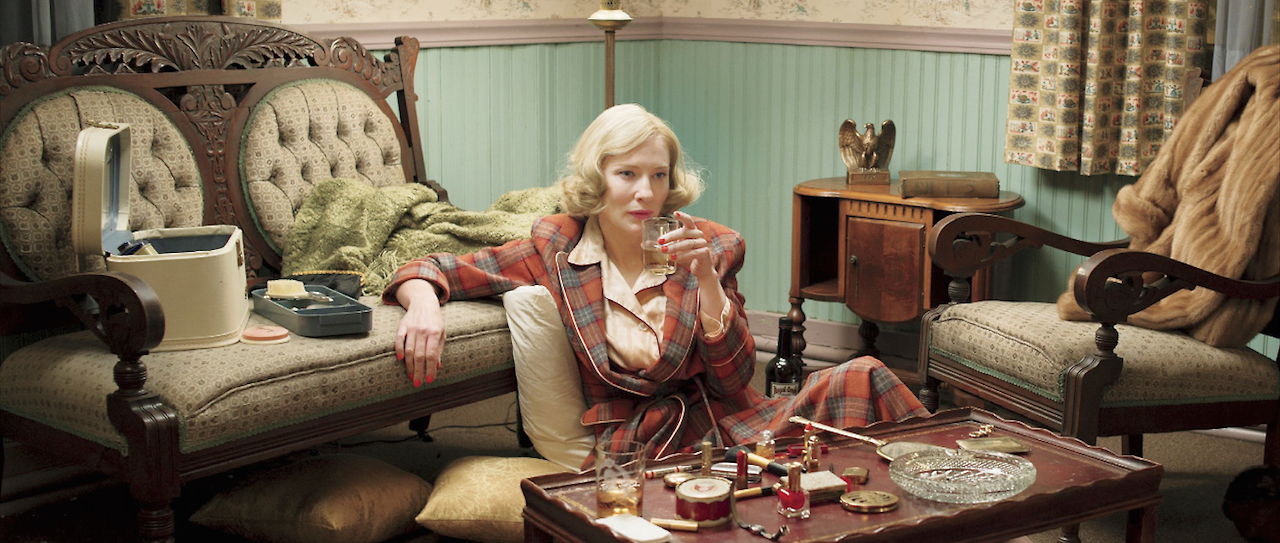
Todd Haynes’ Carol is a great way to end your movie year, or to start the new one. The movie works well on many levels, the most noteworthy of which is that Cate Blanchett’s role as the title character seems to have been written for her. It wasn’t – the movie is based on Patricia Highsmith’s novel The Price of Salt from 1952, but I couldn’t see anybody else in that role.
iMac billionaire
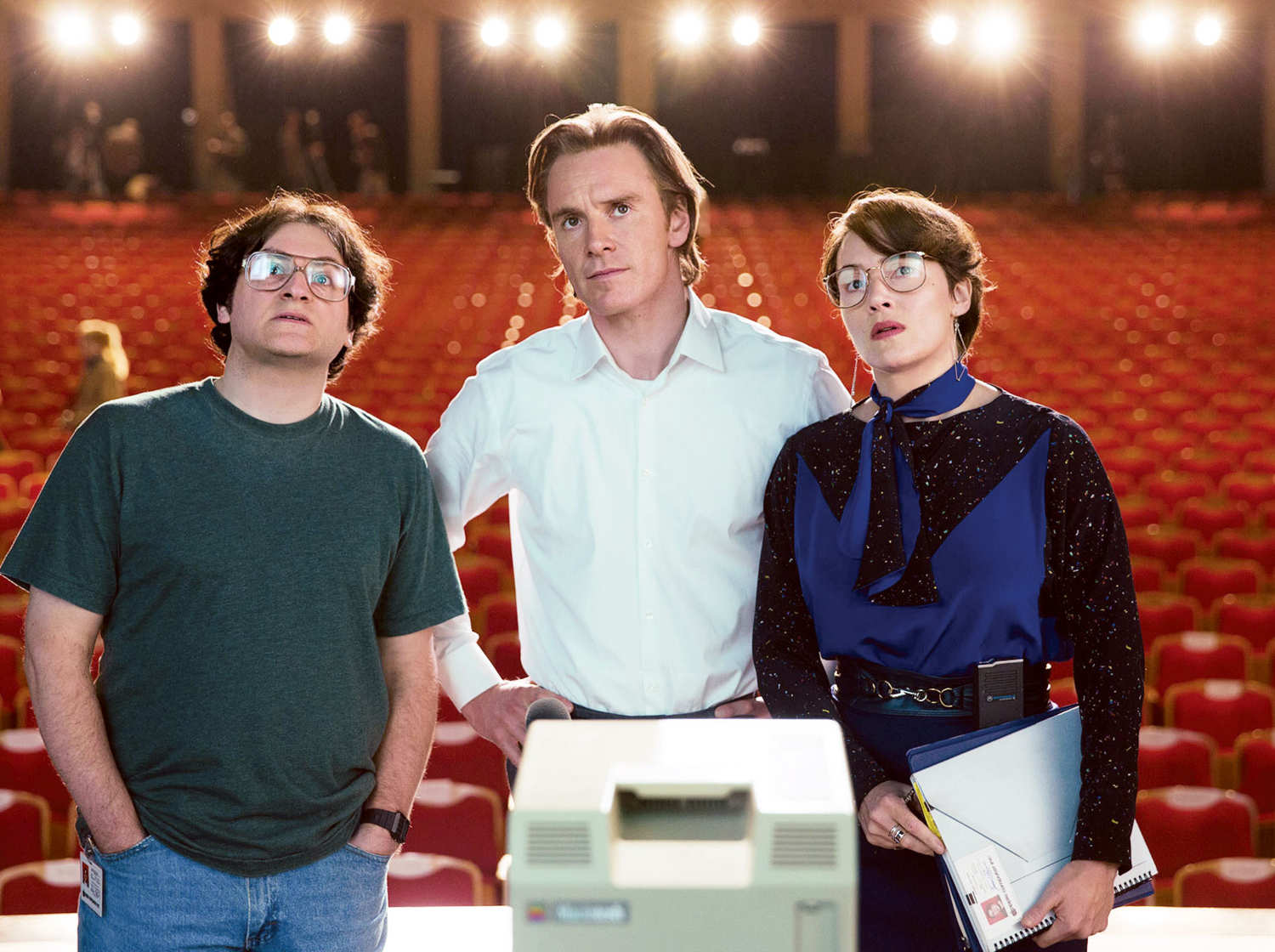
It’s rather surprising to realize that Steve Jobs is a Danny Boyle movie. Boyle’s trademark is kinetic energy – his camera wants to move, to jump, pan and zoom and sometimes go wild (remember how Trainspotting hit the ground running all those years ago?). His biopic Steve Jobs, however, shows you two hours’ worth of talking heads. That is what you get when the screenplay is by Aaron Sorkin.
A lot of war, a little love
Jacques Audiard’s Dheepan starts with a Liberation Tigers of Tamil Eelam soldier igniting the funeral pyre of his dead comrades. Then the soldier takes off his uniform and tosses it into the flames. He has lost everything – his family, his war. He just wants to get out of the country. So does a woman called Yalini. Because she knows that families have a much better chance of getting out, she is looking for a spare child, preferably an orphan, who will pretend that they are mother and daughter. She finds a nine year-old girl called Illayaal who has lost her family, too. They meet the soldier. The fake family is complete.

How to die
The Farewell Party, or Mita Tova, its original title, is a small miracle. It takes place at a retirement home in Jerusalem, but could happen in many other places. It is about death and euthanasia, but is not a downer. It contains many heartfelt moments, but is often very funny as well. It even has the courage to feature a musical number.
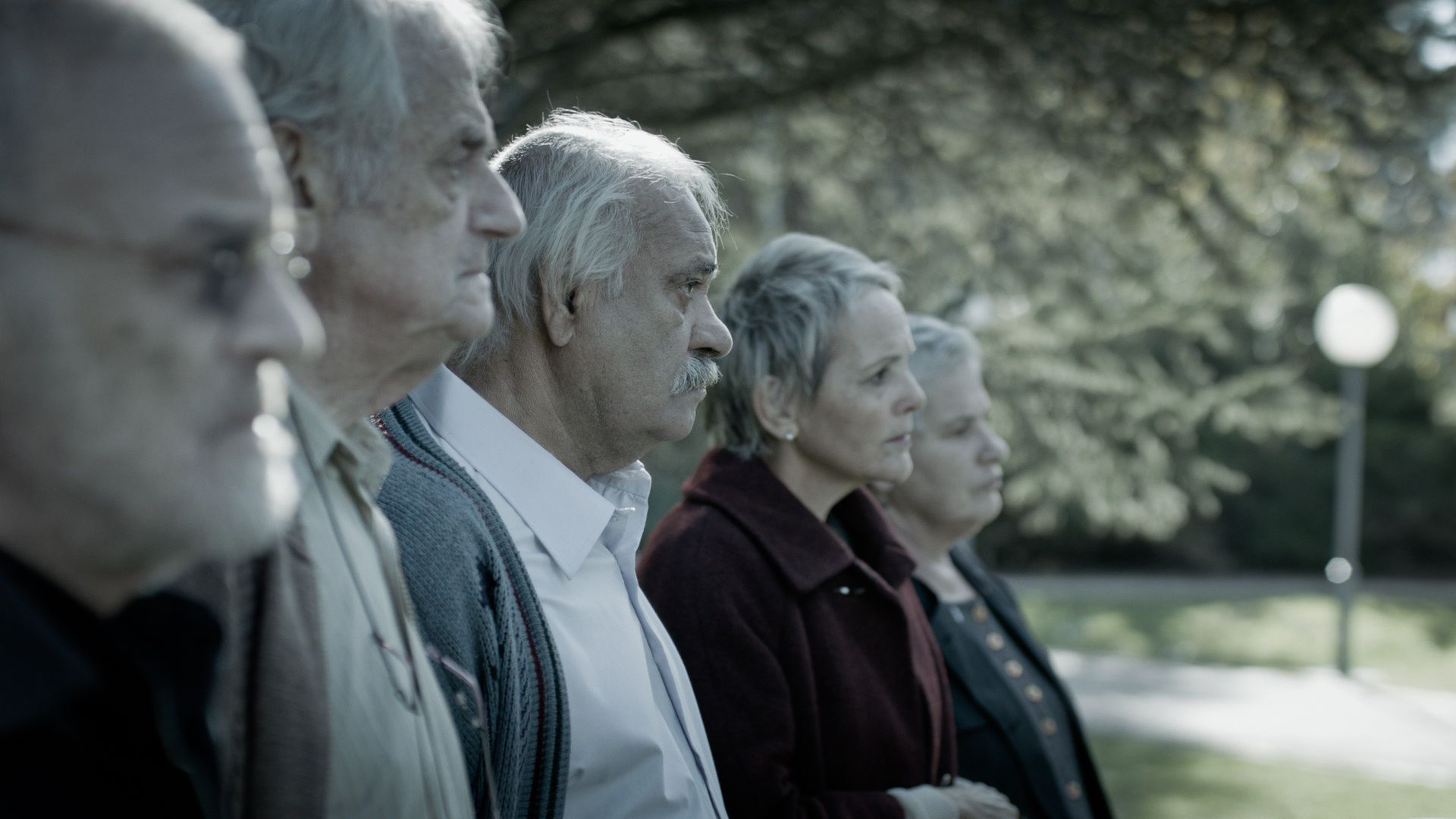
The movie works because none of the cast are over-playing their scenes, and none of the scenes stray too far away from the main story. It starts with Max, who is so ill and in pain that he wants to die. His wife Yana wants his suffering to end. Yehezkel, a friend of theirs, is a bit of an inventor; he invents a small machine out of spare parts like a bicycle chain and a digital readout. Daniel, a former veterinarian, provides the medication. Max presses a button, and within a minute, he is asleep. He won’t wake again.
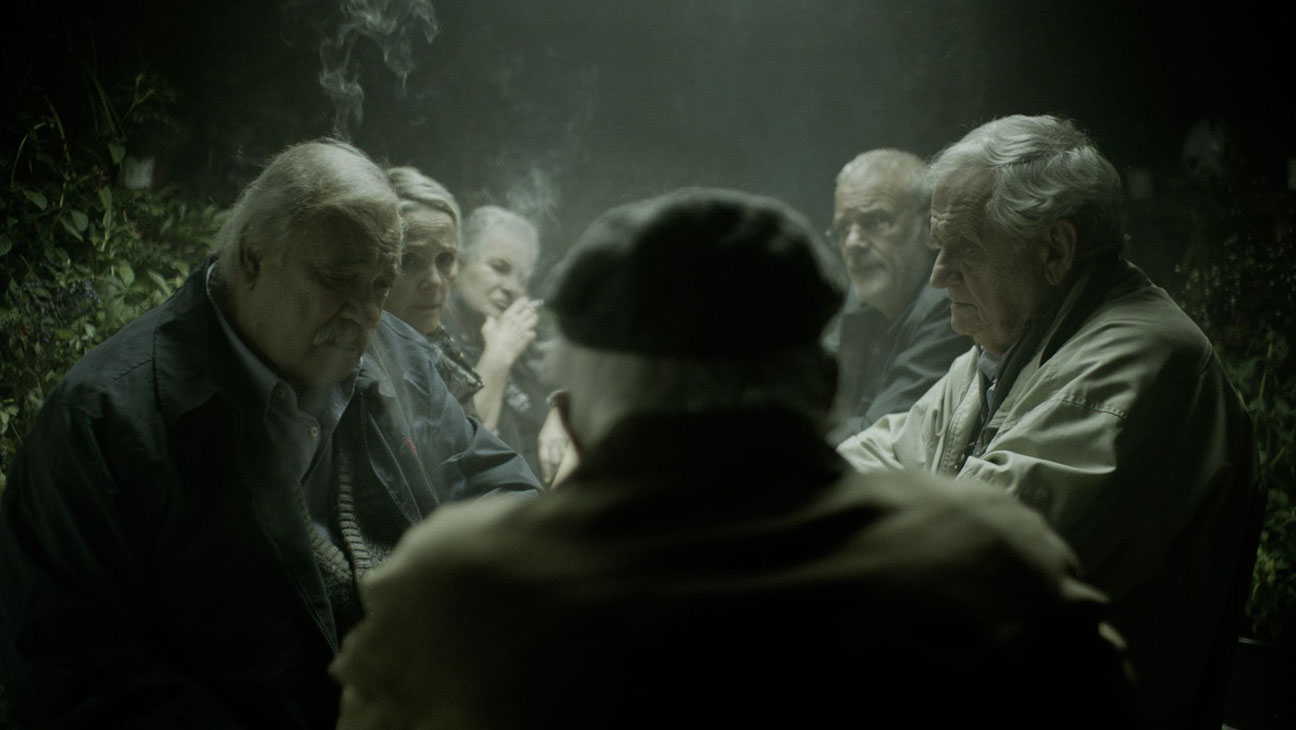
Yehezkel’s wife Levana is strictly against euthanasia, on moral principles, but also because it’s her husband supervising the procedure. Yehezkel, Yana and Daniel want to keep their machine a secret, but Levana finds out. So do others: they are approached by an old man at Max’ funeral. His wife is very sick, and would they please consider helping her? The movie tackles a few questions with great grace: to what degree is euthanasia moral – or immoral? How much self-determination is there in a dying person’s decision? How about the law? How about Elohim?
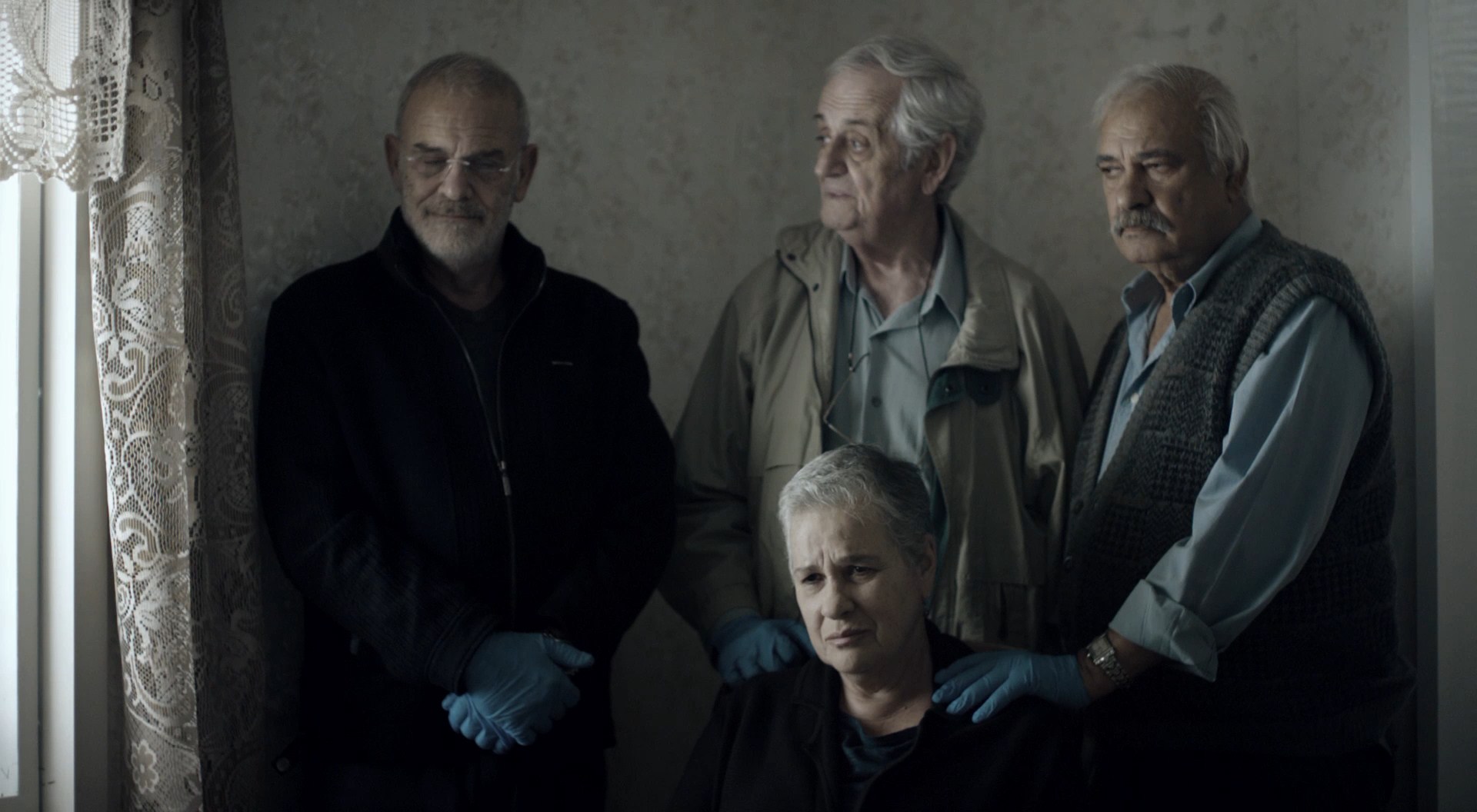
The most powerful image is the gang standing in the corner, wearing blue rubber gloves, watching someone press the button. On the other hand, there is gentle fun in some of the scenes. The gang is meeting in the greenhouse at night, chain-smoking and discussing the loved ones they lost to cancer. Their car is stopped by a policeman who wants to book them for speeding, but has to deal with five maudlin and tearful senior citizens all at once. He thinks they just want to avoid the ticket.
The secret of the movie is in its cast: they stay themselves during the death scenes as well as the comedy. It’s refreshing to know that the end of our days can be a comfort. Mita Tova seems to claim that euthanasia is the right thing to do if it is an option at the right time. It’s up to you to determine when and if the right time has come, but think about how it affects others. In both senses of the term, you are not alone. That is a comfort as well as a responsibility.
More attitude, yo.
I wanted to like Straight Outta Compton, but the movie made it hard for me. When the credits rolled, I asked myself why I didn’t like it more. The answer: it’s not angry enough.

To be clear: it’s angry when it absolutely needs to be. There is a scene where a young, disappointed Ice Cube is smashing the gold records and glass furniture of his white record company connection. There are three or even four scenes where the Compton police cuff each and every black guy they see standing on the sidewalk just because they are black and therefore suspicious. The concerts are atmospheric and dense; you don’t need to know any N.W.A. song to realize that these are angry young men. But the rest of the movie is steeped in mild nostalgia instead of a stubborn feeling of resistance or… well, attitude.
Hip-Hop is essentially hate music, in the best sense of the word. It’s about how badly black neighbourhoods are treated, and how that can piss off men who are not musicians, but find a way to play their stuff, which in turn is powered by their anger. It’s smarter and more nuanced than most of heavy metal. Hip-Hop is also hate music in the worst sense of the word because of its rampant sexism. If you think young black males in Compton had it bad, you may be right, but there are always young black females who had it worse. And they didn’t even have a voice until later.
The movie gets the casting right. Ice Cube (O’Shea Jackson Jr., playing his real-life dad) and Eazy-E (Jason Mitchell) are immediately recognizable; same goes for Snoop Dogg and Tupac, both in minor roles. Dr. Dre (Corey Hawkins) less so; I kept confusing him with the actor playing MC Ren (Aldis Hodge). No matter – the acting is spot-on.
But there are unexplained lapses, mostly due to the screenplay. Consider the scene where Dr. Dre learns that his younger brother Tyree has died. The tour bus stops, and the group gets out onto the sidewalk to mourn his death. It’s a heartfelt scene, but nobody mentions how Tyree has died. Was he killed? What happened? Is that a piece of N.W.A. lore that everybody knows anyway?
On the other hand, if you know a lot about N.W.A., you might get confused during the very first scene where Eazy-E wants to sell his drugs. There is a woman called Tomica pointing a shotgun at him. Tomica is also the name of Eazy-E’s widow. They didn’t have their meet cute on opposite ends of a gun barrel, did they?

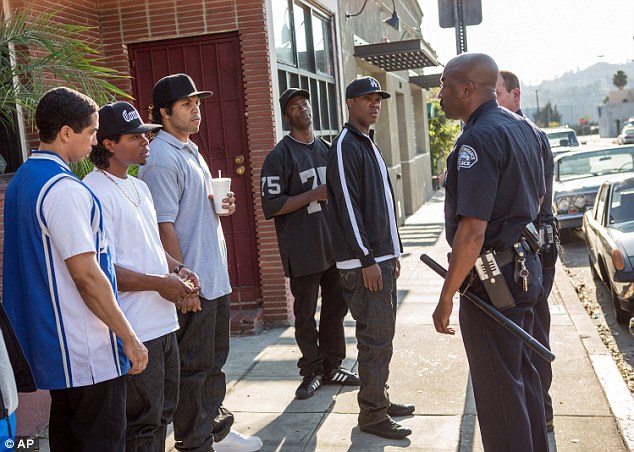
There are scenes of undisputed power, too. N.W.A. take a break from recording their debut album and are standing on the sidewalk, eating and talking. Police cruisers pull up and start insulting and harrassing them, forcing them to lie down (note that the officer telling them to do so is black). They don’t get arrested, but return to the studio and write Fuck Tha Police, their most famous track. If it’s not true, then it’s very well invented.
I accept that N.W.A. started a rap band, not a social movement, but some scenes are tinged with an atmosphere of those good old times that jar with the concert clips or the moments when Suge Knight takes his security job way too seriously. Why does their white manager (Paul Giamatti) start to cry when confronted with syphoning off money? Why isn’t mysogyny adressed properly? Eazy-E died of Aids, after all, caused by his womanizing. If you’re doing a biopic of the most dangerous group in the world, you need to go out there and let at least some of that shine through.
Don’t let it follow you
It Follows is a very effective horror flick because it follows (ha!) an old tradition that has been set up by classic flicks such as Halloween and Friday the 13th. All of them tell a story of sexual guilt. If you are a virgin, you survive; if you have sex, you die. Like Halloween, it is set mainly in suburbia. It Follows has found a new way to scare the hell out of sexually active teenagers.
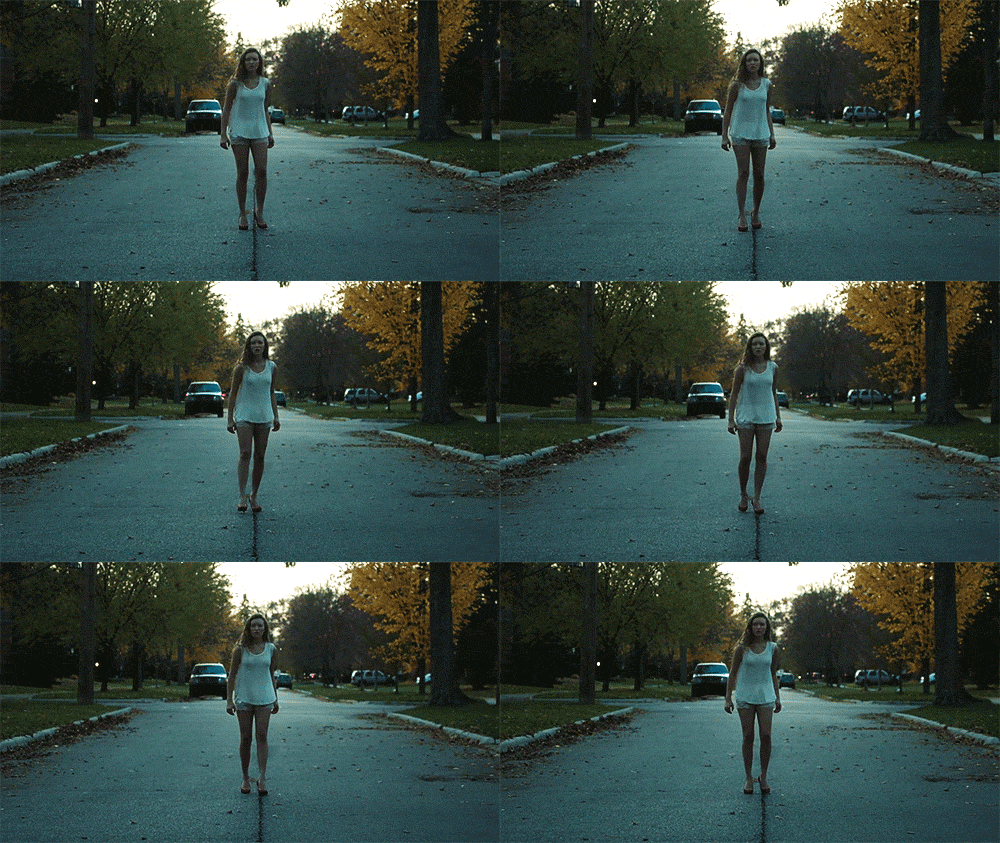
Whereas the older two classics were whodunits, It Follows shows us teenagers who are being followed by an evil force inhabiting seemingly random persons. That evil force is passed on by intercourse. Jay, the female protagonist, makes the mistake of sleeping with Hugh, who is being followed, and now Jay is being followed by random persons, too. See how the title is one huge spoiler?

Those random persons can be complete strangers, but sometimes they are someone close to you. Just watch out for persons walking straight towards you, oblivious to their surroundings. Only Jay can see them. There are only two ways of escape: you either move faster than them, which means being on the road most of the time for the rest of your life, or you can sleep with someone and pass on the curse. Not really much of a choice. Imagine you’re a teenager: what would you do?
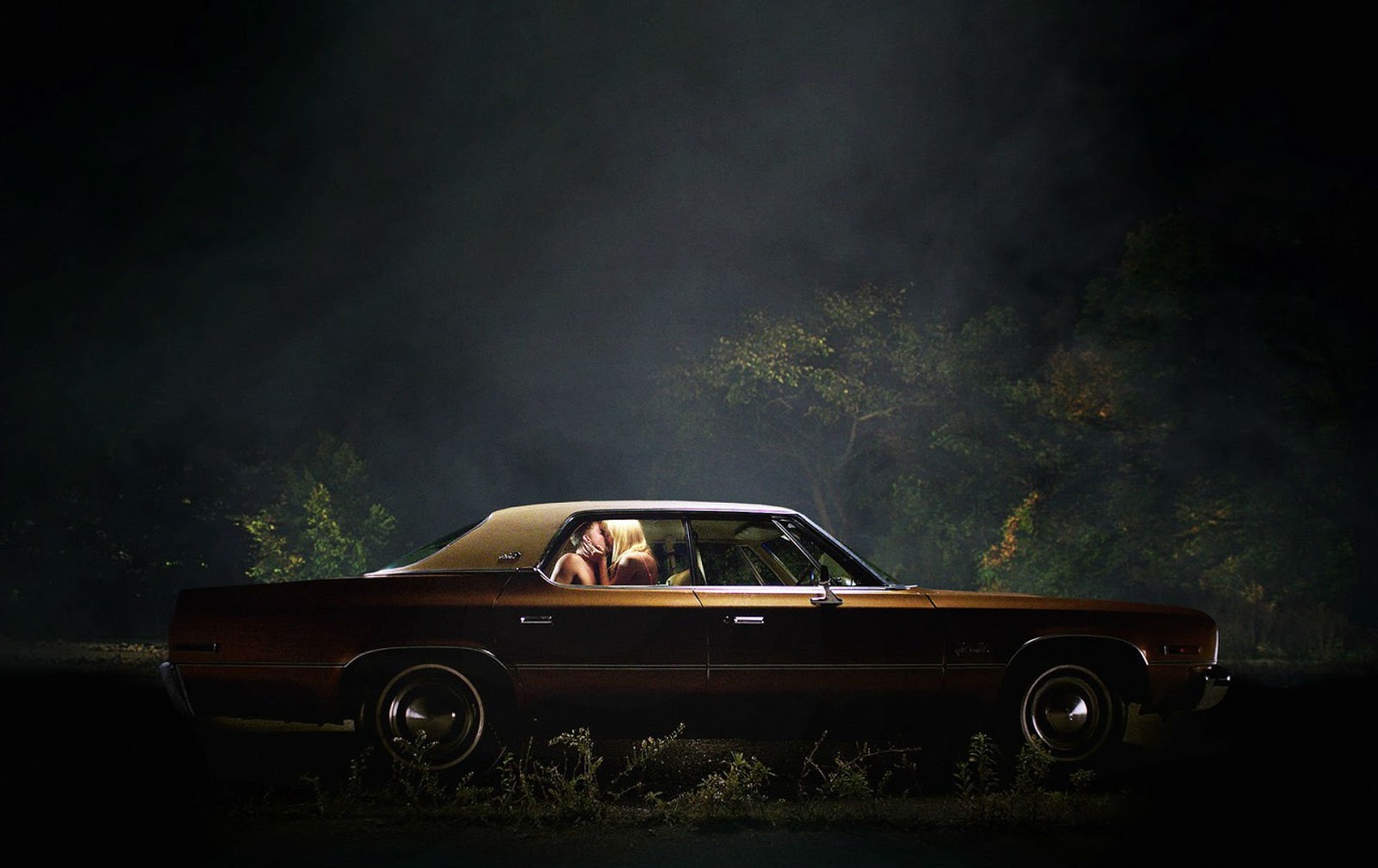
I rented this flick because I was looking for a good horror movie, pissed off that The Babadook only played in synchronized German around here, and because I missed Goodbye Mommy at the theatres. It Follows is not at all a bad substitute. Jay’s sister and friends are smart about her dilemma, and instead of going off alone into the woods with a broken flashlight, they stay together and try to figure out the phenomenon and devise a solution. They quote Dostoevsky and T. S. Eliot. Jay consults Hugh for finding a way out instead of yelling at him. There are no boo moments where someone or something jumps into the frame for a cheap scare. The followers mostly appear from quite a long way away, and that is scarier than it actually sounds here.
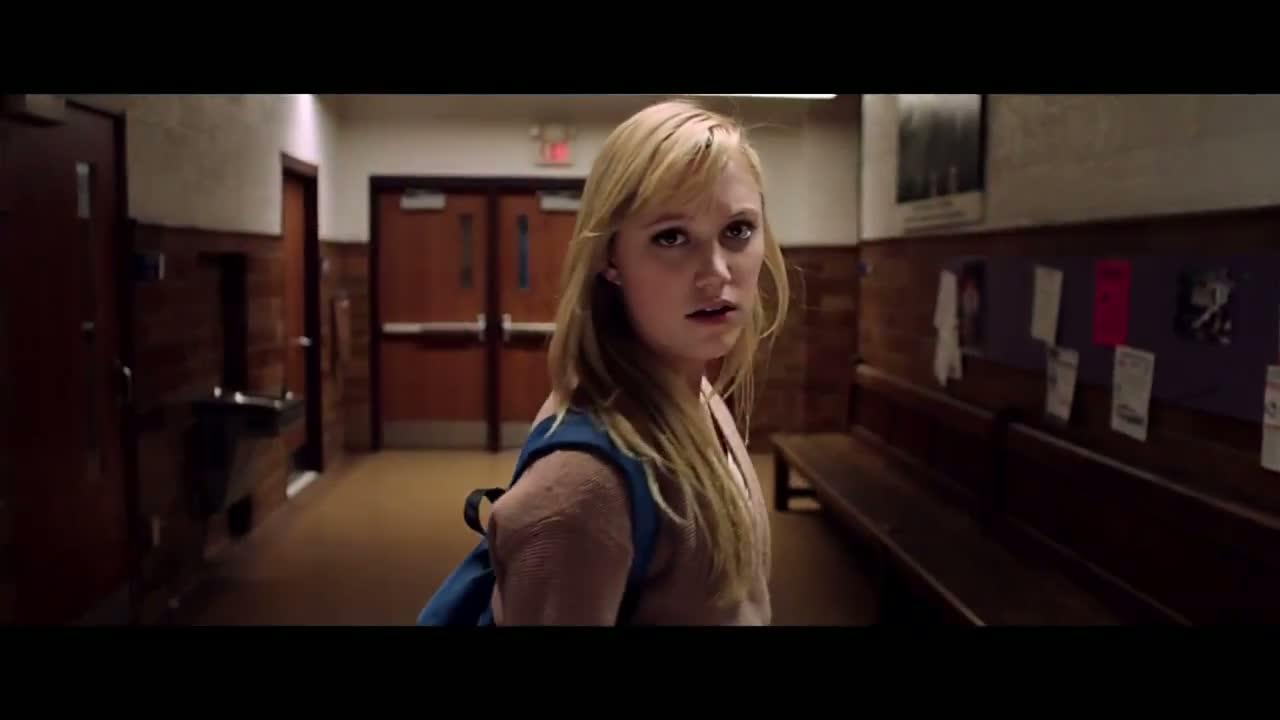
The faces are new and fresh, and they all can act. It Follows takes teenagers seriously. David Robert Mitchell, the director, also made The Myth of the American Sleepover, not a horror movie, but a drama, that also knows a lot about teenagers. He tells his story in a straightforward manner. It Follows refuses to be a CGI fest with shadows and spectres; instead, it opens with a scene that hooks you by its weirdness, but makes perfect sense later. There is only some gore. The horror is in the fact that only Jay can see the followers, whereas her friends cannot. They stick with her all the same. That makes the horror survivable. How many times have you yelled at the screen for the group of friends to stick together and don’t split up and don’t ever, ever go into the basement? This time around, the characters in the movie are smarter than the average audience.
Why did the chicken go down into the basement?
Men & Chicken is a bit of a letdown. It has good things in it, but on the whole, it’s not as good as Adam’s Apples, the 2005 film by the same Danish director Anders Thomas Jensen. I had high hopes for this one: it is the fourth collaboration between Jensen and Mads Mikkelsen. Jensen also has written the brilliant After the Wedding, Wilbur Wants to Kill Himself (both movies also starring Mikkelsen, but not directed by Jensen), and Red Road. Continue reading
Making love out of thin air
Love Island wants to entertain in the best way it knows how. It’s at times clumsy and hackneyed, with a very short attention span, but it is sweet, goofy and sensuous, and it is hard to dislike it. Reader, I was entertained. It consists of standard scenes making up a flimsy summer comedy about a love triangle in a holiday resort under the Croatian sun called… well, Love Island. It’s a movie like filo pastry: you like it, sometimes you crave it, but it’s not anybody’s favorite food. There’s Liliane (Ariane Labed), beautiful and pregnant, and her husband Grebo (Ermin Bravo), a lovable dork. Liliane and Grebo seem to look forward to being parents. But there is Flora (Ada Condeescu), who works at the resort as a diving instructor and animator, and she and Liliane were a couple once. Continue reading
Strong Woman vs. Gruff Man
For more than an hour, The Homesman is one of the best-told films I can remember. It is directed by, and starring, Tommy Lee Jones, based on a screenplay co-written by him. The secret prime mover, however, is a woman named Mary Bee Cuddy, played to perfection by Hilary Swank. Miss Cuddy, unmarried, devout and outspoken, lives on her own farm on the Nebraska Territory. The year is 1837, and this is the frontier. If you go West, you will find disease, hunger, isolation and hostile Indians. There is nothing but flat grassland as far as the eye can see. No villages, just huddled groups of little colorful houses crouching under an overwhelming sky.

 A Damn Fine Cup of Culture