Welcome to Six Damn Fine Degrees. These instalments will be inspired by the idea of six degrees of separation in the loosest sense. The only rule: it connects – in some way – to the previous instalment. So come join us on our weekly foray into interconnectedness!
I have nothing against the Peter Jackson The Lord Of The Rings films. They’re fine. Not damning with faint praise fine. Actually fine. Brilliantly constructed blockbusters that deliver on pretty much every front. But one thing they are not is a dramatised realisation of my Middle Earth. Because another adaptation got there first, and filled up my headspace with performances and music that will forever be entwined with my love for this story.
Welcome to Six Damn Fine Degrees. These instalments will be inspired by the idea of six degrees of separation in the loosest sense. The only rule: it connects – in some way – to the previous instalment. So come join us on our weekly foray into interconnectedness!
Director Curtis Hanson with Kevin Spacey. Image copyright Warner Bros.
Although I try to avoid plot spoilers, for those who have never seen L.A. Confidential: skip this article and see the film first. It’s worth it, and inevitably there will be minor spoilers ahead.
Welcome to Six Damn Fine Degrees. These instalments will be inspired by the idea of six degrees of separation in the loosest sense. The only rule: it connects – in some way – to the previous instalment. So come join us on our weekly foray into interconnectedness!
Like Sam, I was a big fan of The Little Vampire as a kid – though, unlike him, I was a Book Firster. I loved the books by Angela Sommer-Bodenburg (at least as far as I read them, stopping somewhere around the fourth or fifth volume), and I think I may have had something of a kid crush on the vampire girl the main character fell in love with, but I couldn’t abide what I saw of the TV series. I’d been looking forward to watching the adaptation, but to me at the age of 10 or 11 it felt deeply silly. To be fair to the series, though, perhaps it was simply that I was growing out of the books at the time, and maybe I minded what I saw as the series’ silliness because it highlighted to me the ways in which The Little Vampire was, first and foremost, a series of children’s books. Not YA, not “for all ages”, but kids’ books. Which doesn’t mean that you’re magically too old for such fare at the age of 10, nor that such books cannot be enjoyable as you get older – but, for me, The Little Vampire stopped being as enjoyable as it had been originally. And, having loved the books dearly until then, perhaps that’s why I pretty much stopped reading them from one day to the next.
Welcome to Six Damn Fine Degrees. These instalments will be inspired by the idea of six degrees of separation in the loosest sense. The only rule: it connects – in some way – to the previous instalment. So come join us on our weekly foray into interconnectedness!
In 2002 the UK TV Channel ITV announced that it was to begin producing an all new adaptation of Agatha Christie‘s Miss Marple novels. These would be big-budget, high-production-value affairs, with an eye on the global TV market.
Welcome to Six Damn Fine Degrees. These instalments will be inspired by the idea of six degrees of separation in the loosest sense. The only rule: it connects – in some way – to the previous instalment. So come join us on our weekly foray into interconnectedness!
Warning: There be spoilers.
I haven’t read the comics, but have every intention to do so, but I don’t know why I haven’t praised the many great aspects of The Umbrella Academy (2019-2024). I have insomnia these days (or nights, rather), and so it takes something stronger to keep me watching attentively during the small hours. That bunch of ever-bickering unrelated siblings is a treat with comedy, drama, weirdness, psychological depth and the fear of the end of the world (more than once, hehe).
Welcome to Six Damn Fine Degrees. These instalments will be inspired by the idea of six degrees of separation in the loosest sense. The only rule: it connects – in some way – to the previous instalment. So come join us on our weekly foray into interconnectedness!
To me, The Lord of the Rings is unreadable. Not because the writing is bad; it’s not. And not because I am not into fantasy; while it’s not my favourite genre, I don’t run for the hills if someone suggests a good fantasy novel to me. I have not yet read a bad China Miéville novel, if that is anything to go on. I am also not afraid of super-long novels, either – behold, I am the guy who read Infinite Jest and loved it. It’s just that investing myself in a heavy brick of a novel, there is a point where the text has to convince me that it’s worth wading through it for the next couple of days or weeks.
Welcome to Six Damn Fine Degrees. These instalments will be inspired by the idea of six degrees of separation in the loosest sense. The only rule: it connects – in some way – to the previous instalment. So come join us on our weekly foray into interconnectedness!
Yes, I am of the firm opinion that Die Hard (1988) is a Christmas movie, but enough about that. In Paul King’s Wonka (2023), there is often snow on the cobblestones of the old town renowned for its chocolate. It could be Paris or Charles Dickens’ London, while the shopping arcades reminded me of Milan, but it matters little where the story is set: it’s an olden-time dream world where it’s possible to manufacture magical chocolate if you are ready to go and milk a giraffe at the local zoo.
As the sheer Ho-ho-honess of the season descends on us, here’s a little something for under your tree: our 2023 Christmas Special. This year we’re taking the opportunity to put a Damn Fine fingerprint on the media meme of the year: Barbenheimer. Join us – Julie, Sam, Alan and Matt, but also Damn Fine O.G. Mege and favourite frequent guest Dan Thron of Martini Giant (who took some time this autumn to talk all things Exorcist with us) – as we come up with double bills and mash-ups of wildly divergent and strangely complementary movies, taking our listeners from Paddiface and The Wizard of Chess via a very special Boris Karloff two-header and Wonkas of the Flower Moon to The Sound of Eagles and Under the Hours. (FYI, most of these are working titles that we’ll have to workshop before the final product is pushed out the door, or so Marketing tells us.) So, in the spirit of plastic dolls come to life and Cillian Murphy’s piercing eyes, of learning to start worrying and hate the bomb and of being Just Ken, we at A Damn Fine Cup of Culture wish all of our listeners happy holidays filled with good films, series, books, games and music!
P.S.: For more on Baby Face and Killers of the Flower Moon, make sure to check out these episodes:
Our summer of collaborations is coming to a close with one of the most iconic creative partnerships of Hollywood, going back almost 50 years: the collaboration between director Steven Spielberg and composer John Williams, which began in 1974 with Sugarland Express. Sam, Matt and Julie discuss this fruitful friendship, starting with Jaws (1975) and its iconic music that lives rent-free in the heads of millions of beachgoers before they enter the water, Close Encounters of the Third Kind (1977) and its mysterious five-note attempt at interstellar communication, and E.T. (1982), arguably the most sublime expression of that particular brand of sentimentality that Spielberg and Williams perfected early in their careers; they move on to the Indiana Jones series and the way Williams found the perfect score to accompany Indy’s nostalgic adventures (1981 – 2008 for the Spielberg-directed films); and finally ending with the last of the soundtracks heavy on iconic themes, Jurassic Park (1993), the changes in Spielberg’s filmmaking in the following years, and the ways Williams’ scores changed with them, focusing on the jazzy Catch Me If You Can (2002) and the historical drama of Munich (2005). Arguably, Spielberg and Williams quickly peaked, with some of their best work coming early in their collaboration, but did they maintain the quality of those early days? Williams created some of the most iconic soundtracks without Spielberg, but can we imagine Spielberg without Williams?
P.S.: For last year’s summer series of podcasts, check this link:
Welcome to Six Damn Fine Degrees. These instalments will be inspired by the idea of six degrees of separation in the loosest sense. The only rule: it connects – in some way – to the previous instalment. So come join us on our weekly foray into interconnectedness!
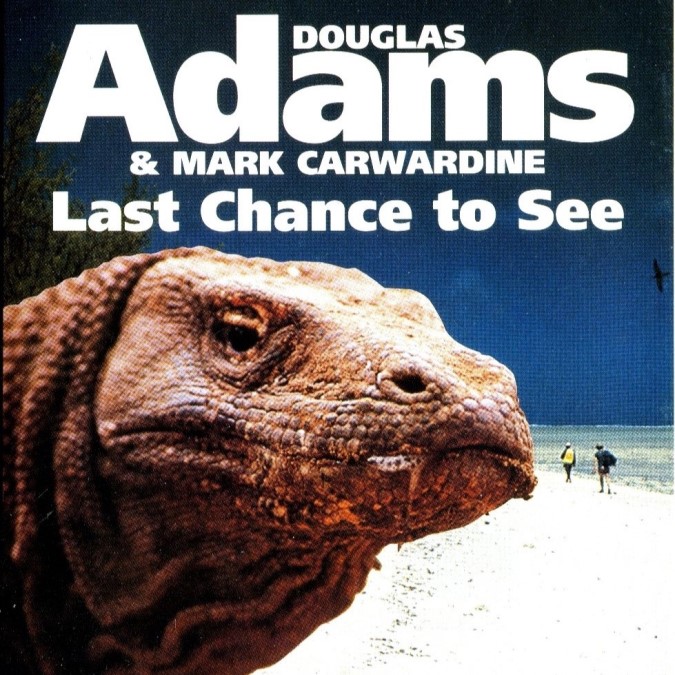
The early ’80s were a great time as a kid to discover Douglas Adam’s Hitchhikers Guide To The Galaxy.I saw the BBC TV series first, then I caught the BBC Radio series – recording each episode onto cassette for future enjoyment. And then I discovered the books. I devoured the first novel: it was like the adaptations but with more jokes. Same with the sequel The Restaurant At The End Of The Universe, which was possibly one of the first “proper” books I read in a single day. Life, The Universe and Everything felt a little different, even threatening at times to tell an actual story. But still enough lunacy to keep me happy.


 A Damn Fine Cup of Culture