A Damn Fine Cup of Culture Podcast #71: Summer of Collaborations – The Coen Brothers & Co

Our summer of collaborations continues with an iconic duo from Minnesota: the Coen Brothers are probably among the filmmakers of recent decades most associated with the (flawed) notion of the auteur – but at the same time, they’re among the directors who keep working with the same collaborators, whether they’re actors (Obviously Frances McDormand, but also Steve Buscemi, John Goodman, John Turturro, George Clooney, and several others), composers (Carter Burwell) or cinematographers (Roger Deakins). In this month’s podcast, we discuss three key films in the Coens’ filmography – Blood Simple (1984), Fargo (1996) and The Man Who Wasn’t There (2001) – which all star McDormand and feature soundtracks by Burwell, and we ask ourselves: to what extent are the Coens’ films defined by the brothers’ frequent collaborators? And how much are these collaborators shaped by their work on the Coen Brothers’ films?

Note: Since this podcast was recorded earlier in the summer, we talked about the supposed ‘break-up’ of Joel and Ethan Coen, both of whom have made solo films (The Tragedy of Macbeth and the upcoming Drive-Away Dolls) since their hiatus from one another after 2018’s The Ballad of Buster Scruggs – but they’ve since mentioned in interviews that they are working together on a new film.

For last year’s summer series of podcasts, check this link:

A Damn Fine Cup of Culture: Summer of Directors (2022)

Continue reading
Six Damn Fine Degrees #141: The Hitchhiker’s Guide to reading in other languages

Welcome to Six Damn Fine Degrees. These instalments will be inspired by the idea of six degrees of separation in the loosest sense. The only rule: it connects – in some way – to the previous instalment. So come join us on our weekly foray into interconnectedness!

Here’s a puzzle for you: who has two thumbs, an English mother, but his mother tongue is German? This guy!

Okay, okay, that was not very good, even worse than the usual “two thumbs” jokes – but it’s true. My dad was German, my mother English, I was born and raised in the Swiss German-speaking part of Switzerland, and the language I learnt first was German, not from my dad (who, like most fathers of his generation, was much less present) but from my mother. She did try to teach my sister and me English, but… well. Let’s say she was partly successful: we learnt how to understand English, but when we were small we’d always answer in German. Once we did start learning English in earnest, it was admittedly easier for us, but even though I talk and write English much more than any other language these days, I would not call myself a proper native speaker. Half-native, maybe, which sounds like a weird term from 19th century literature; Kipling, maybe, or Joseph Conrad.

Continue reading

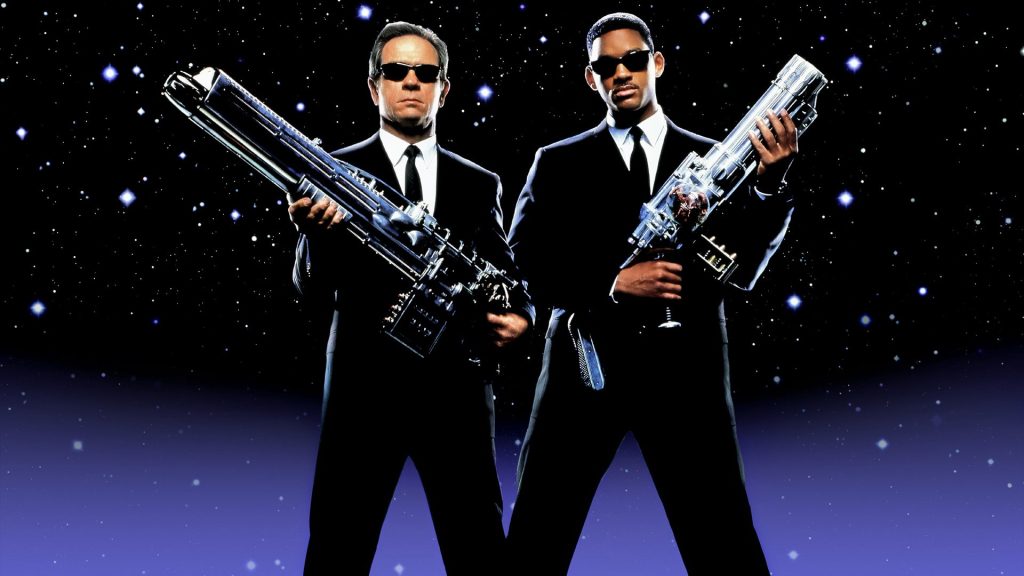
Six Damn Fine Degrees #140: Men in Black (1997)

Welcome to Six Damn Fine Degrees. These instalments will be inspired by the idea of six degrees of separation in the loosest sense. The only rule: it connects – in some way – to the previous instalment. So come join us on our weekly foray into interconnectedness!

We’re not hosting an intergalactic kegger down here! ~Zed

Continue reading

Six Damn Fine Degrees #137: Cormac McCarthy

Welcome to Six Damn Fine Degrees. These instalments will be inspired by the idea of six degrees of separation in the loosest sense. The only rule: it connects – in some way – to the previous instalment. So come join us on our weekly foray into interconnectedness!

The high-priest of bloodshed and violence has died. While that sounds like a blood-curdling read, it comes in one of the most beautiful languages that literature has to offer. “He slept and when he woke he’d dreamt of the dead standing about in their bones and the dark sockets of their eyes that were indeed without speculation bottomed in the void wherein lay a terrible intelligence common to all but of which none would speak.” That is from his novel All The Pretty Horses (1992), and to me, it’s impossible not to be attracted and repulsed by that image at the same time.

Continue reading

A Damn Fine Cup of Culture Podcast #70: Summer of Collaborations – Akira Kurosawa and Toshiro Mifune

After the inaugural episode of our Summer of Collaborations (starting with Spencer Tracy and Katharine Hepburn), we’ve arrived at the second instalment of our summer series, this time focusing on a collaboration that gave us iconic performances and classic films across a range of genres – though the one that perhaps comes to mind first is that of Jidaigeki (Japanese period drama), and more specifically, the samurai film. We are, of course, talking about the films resulting from the collaboration between Akira Kurosawa and Toshiro Mifune. Join Alan, Julie and Matt as they discuss Rashomon (1950), a film that mixes genre to such an extent that Wikipedia describes it, inadequately, as a “Jidaigeki psychological thriller-crime film”; Yojimbo (1961), the action-packed samurai film that Sergio Leone’s A Fistful of Dollars stole from liberally; and High and Low (1963), a police procedural crime drama about a botched kidnapping. What made the collaboration between Kurosawa and Mifune work so well? How does it develop over these three films? And just how does Mifune manage to look so damn cool wearing a threadbare kimono and stroking his chin?

For last year’s summer series of podcasts, check this link:

A Damn Fine Cup of Culture: Summer of Directors (2022)

Continue reading

Six Damn Fine Degrees #134: Dark Phoenix Saga

Welcome to Six Damn Fine Degrees. These instalments will be inspired by the idea of six degrees of separation in the loosest sense. The only rule: it connects – in some way – to the previous instalment. So come join us on our weekly foray into interconnectedness!

In 1980 Marvel Comics published a story which was to become known as “The Dark Phoenix Saga”. Running in the pages of its Uncanny X-Men title it told the story of how Jean Grey, a regular in the comic since its very first issue in 1963, gained God-like powers only to become corrupted by them and have to make the ultimate sacrifice to save the universe.

Continue reading

A Damn Fine Cup of Culture Podcast #69: Summer of Collaborations – Katharine Hepburn and Spencer Tracy

Last year we dedicated the summer to some damn fine directors, from Jane Campion, Dario Argento (who was also the topic of our most recent espresso) and Ida Lupino to Robert Altman and Martin Scorsese. This year, we decided to look at some of the great collaborations of cinema, and for the first instalment in our Summer of Collaborations, Julie has been talking to Alan and Sam about one of the legendary couples of Hollywood, both on- and off-screen: Katharine Hepburn and Spencer Tracy. The two starred in nine films, many of them romantic comedies banking on the palpable chemistry that was apparent between Hepburn and Tracy from the first. Our trio of cultural baristas takes a closer look at the first collaboration between the two, Woman of the Year (1942); their last, Guess Who’s Coming to Dinner (1967), finished just 17 days before Tracy’s death; and perhaps their most iconic film together, Adam’s Rib (1949), which Julie previously wrote about. What made this one of the most sparkling acting collaborations in Hollywood? Why was there this fascination with Hepburn’s characters being knocked down a peg? And how well do these films, the issues they address and the way they address these issues hold up more than half a century later?

For last year’s summer series of podcasts, check this link:

A Damn Fine Cup of Culture: Summer of Directors (2022)

Sources, apart from the usual ones:
The Hepburn Tracy Project, by Glenn Kenny and Claire Kenny;
The ever reliable Karina Longworth, on You Must Remember This.

Continue reading

A Damn Fine Cup of Culture Podcast #68: Documentary film – The drama of the truth

It had to happen sooner or later: for our May episode, Alan, Julie and Matt got together to talk about the genre of documentary films. Their subjects may not be the ones you might expect: while the likes of Ken Burns, Werner Herzog and Errol Morris get a mention, our three cultural baristas picked examples of the genre that are perhaps less well known: Nostalgia for the Light (2010) by the Chilean filmmaker Patricio Guzmán, which draws a line from the astrological observatories in the Atacama Desert to the women who still search the desert for the remains of their loved ones who were murdered by the Pinochet regime; Dick Johnson Is Dead (2020), writer-director Kirsten Johnson’s attempt to come to terms with her father’s dementia and the reality of a death foretold, in which the daughter enlists the help of the eponymous Dick Johnson to pre-enact possible (and impossible) scenarios of his demise; and Mark Rappaport’s 1995 video essay From the Journals of Jean Seberg, about the actress who was hounded to her death by the FBI and the culture of a movie industry for whom women are commodities and screens onto which men can project their wishes, needs and fantasies. The focus of the conversation is firmly on these films, but obviously no discussion of documentary films can be complete without getting into questions like “What is a documentary?”, “How does it differ from fictional features?”… and “What are the worst documentaries we’ve ever seen?”

For more talk about documentaries and related topics, make sure to check out:

Continue reading

A Damn Fine Cup of Culture Podcast #67: Second Chances – Two Androids called David

What is it about films featuring androids called David that makes them, let’s say, not entirely successful with audiences and critics? Following their recent trip to the Stanley Kubrick Archive in London, Alan and Matt dedicate this this year’s Second Chances episode to two sci-fi films by iconic directors that are unlikely to feature on those directors’ best-of lists: Ridley Scott’s Alien prequel Prometheus (2012) and Steven Spielberg’s A.I. (2001). Both films have recently been revisited by critics who found more to like in them than they originally recognised. Will our baristas also enjoy these films better this time around? Or will the films fare worse the second (or third) time around? And just what is it about androids called David?

Also make sure to check out these past episodes:

Continue reading

A Damn Fine Cup of Culture Podcast #66: Grand Designs – Architecture in Movies

Our baristas have shown before that they have an eye for interesting locations in movies, in their discussion of their home towns and their appearances in films as well as in last summer’s episode on the cinema of Dario Argento. This month they’re going from a geographical, ‘on location’ scale to the more individual, designed spaces of interior and exterior architecture. Sam is joined by Alan and Julie to talk about architectural design in cinema: staircases that range from grand to absurd and dreamlike, the modernist villains’ lairs (watch out for a feline cameo in keeping with the theme!) and iconic War Rooms of Ken Adams, and the grand, retro-futuristic design and cityscapes of Blade Runner and other epic-scale sci-fi. What do our cinephile sightseers like better: grand bespoke sets or on-location shots of existing places? Matte paintings, miniatures or CGI architecture? And what are some of the staircases that no movie lover should miss?

Also make sure to check out these past episodes:

Continue reading