Six Damn Fine Degrees #114: Vertigo Restored (my first DVD)

Welcome to Six Damn Fine Degrees. These instalments will be inspired by the idea of six degrees of separation in the loosest sense. The only rule: it connects – in some way – to the previous instalment. So come join us on our weekly foray into interconnectedness!

Do you still remember the first DVD you ever purchased? I will certainly never forget mine: the restored version of Alfred Hitchcock’s ultimate classic, Vertigo. Not because of the 70+ Swiss francs I paid for it – a fortune for a 17-year old back then and yet a pittance for the movie-hungry teenager that I was – but how it increased my love affair with Hitchcock and this particular movie. And how it left me in awe at the restoration process that brought this masterpiece back to life on the then-state-of-the-art DVD format – a process that back then topped everything that had gone into salvaging film stock before (thanks to Julie’s post from last week for reminding me of it).

It had taken Robert A. Harris and James C. Katz, the two restorers in charge, over two years to complete the incredible feat of examining and saving the original camera negative of Hitchcock’s 1958 film and discover in horror the state it was in. After restoring stunning versions of Lawrence of Arabia, My Fair Lady and Spartacus before, however, the two remained undeterred by the insurmountable-seeming challenge of raising Vertigo from the dead.

Their problems were manifold and of dramatic proportions: The negative itself had enormously faded from lack of proper storage and the sound elements, they found, had been thrown out in the late 60s. After all, Vertigo had not been the intended hit and Hitchcock himself pulled it from release after some time, only for it to disappear in obscurity until re-released in 1984 after his passing. The version shown at cinemas then, however, was equally based on imperfect prints and contained the errors Harris and Katz needed to adress in their long restoration process.

I had loved Hitchcock and particularly Vertigo ever since watching it in German-dubbed 4:3 pan-and-scan versions taped off television broadcasts in the early 1990s, which says a lot about how good this film really is. Hearing of the restoration and spending all my money on that first DVD player, I was naturally extremely curious what the new version would look and sound like. Having added a then-illegal NTSC-switch to my PAL machine, I was finally ready to push play on this US release (at this point, most DVDs were still only released in the States but unplayable on European players) of restored Vertigo.
The result was stunning, to say the least: Harris and Katz had freshened up every single frame of the film, transferring it to its original VistaVision 70mm glory, which more than doubled the detail of information on the film strip. According to the original Universal press release and this insightful article in the Chicago Tribune at the time of the restoration release in 1996, everything was done without digital help and therefore by hand, sometimes comparing more than a handful of prints for reference for each bit of film.

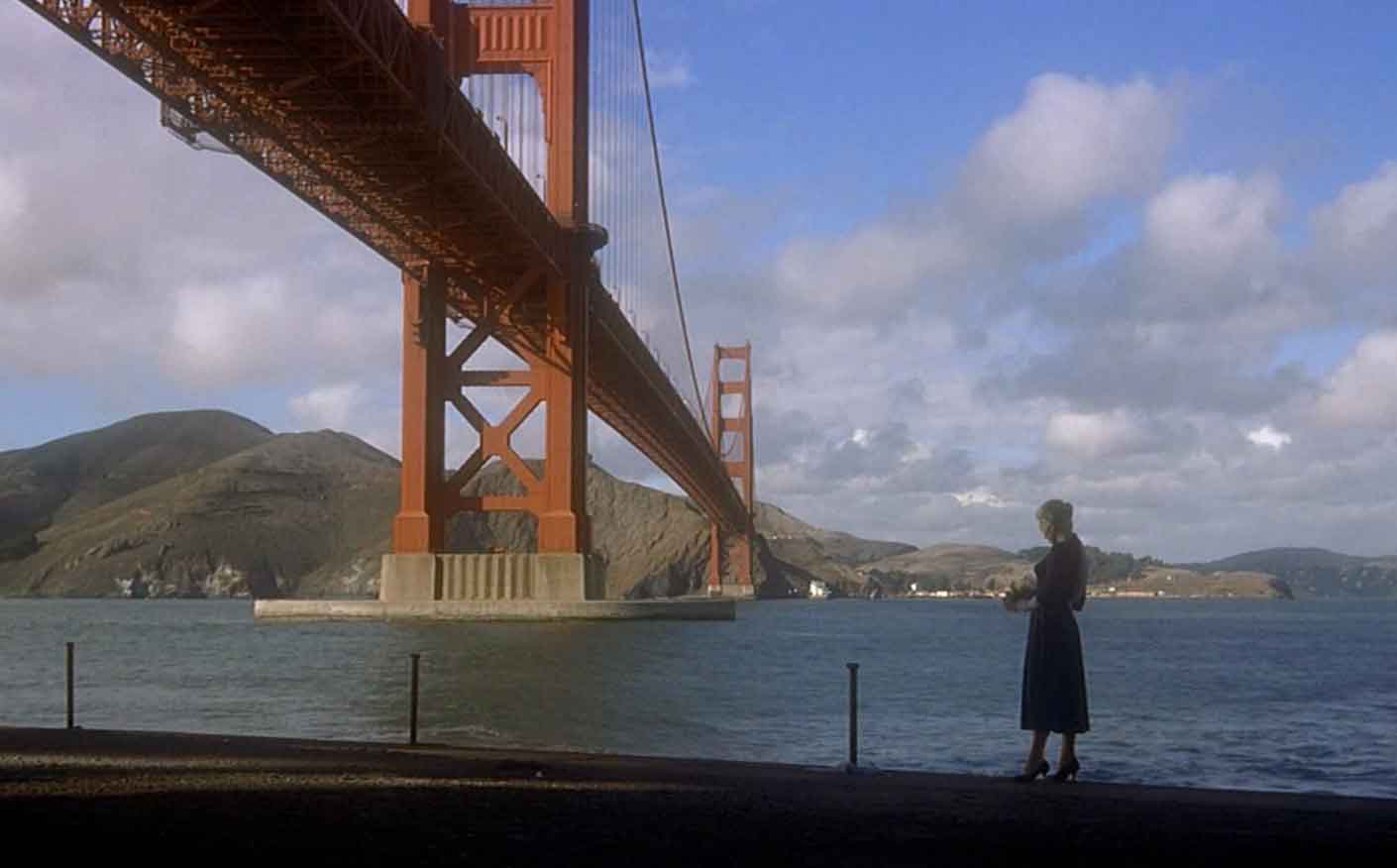
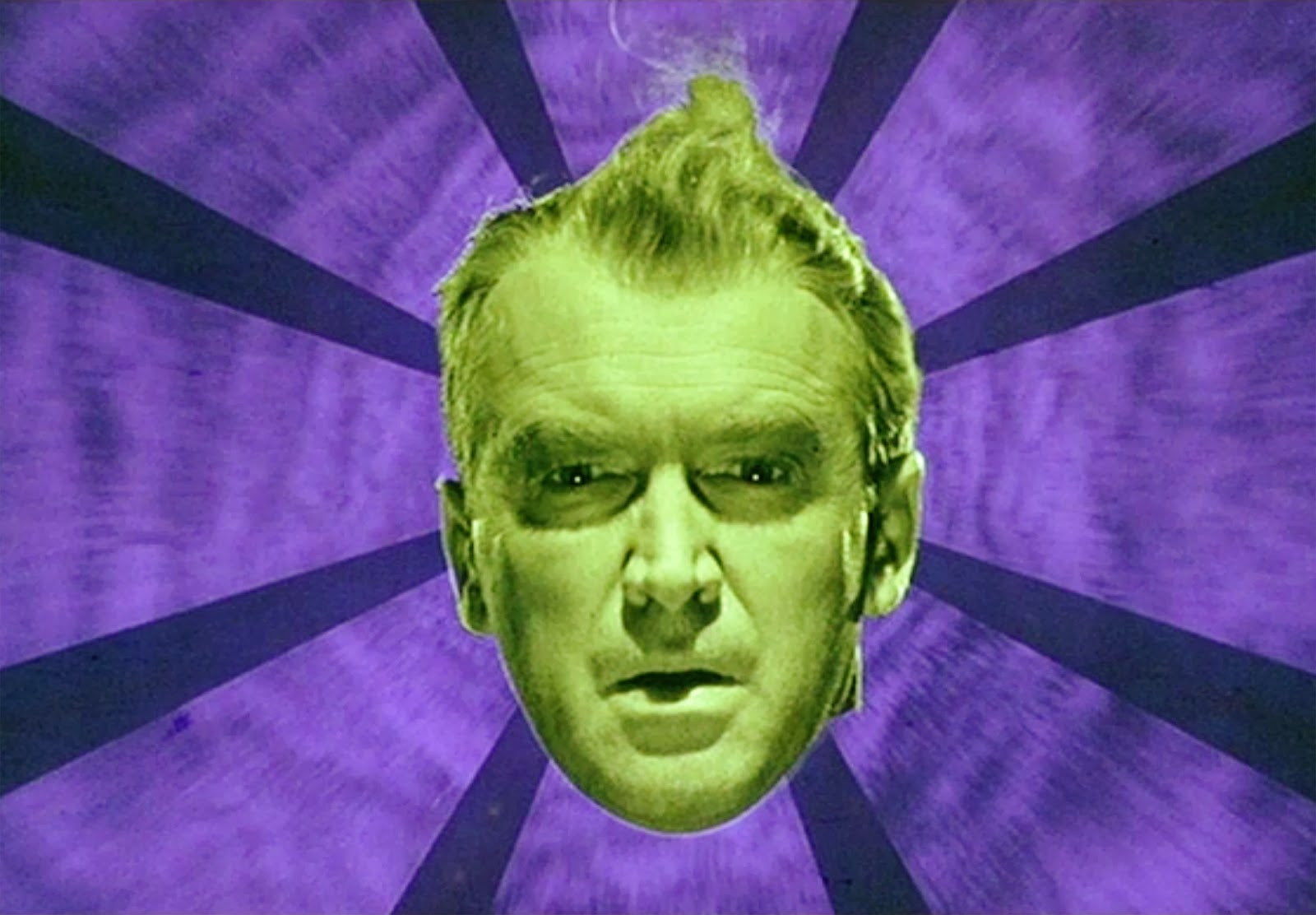
Never had the colours come out as perfectly – the burnt orange of Golden Gate Bridge when Kim Novak’s Madeleine throws herself into the bay in front of Jimmy Stewart’s Scottie; the red tapestry at Ernie’s restaurant when Scottie is mesmerized by a ghost-like Madeleine in a stunningly green dress for the first time; the neon light in Kim Novak’s sordid hotel room (now as Judy), casting an eerie green on the big lie she’s been fooling Scottie with; and the horrifying purple of the nightmare that plunges Scottie into the abyss of depression under the presumption that Madeleine died at his hand. The difference to everything I had seen was mindblowing and my love for the film was deepening by the minute.
The Harris and Katz effort, however, didn’t just completely restore the visual but also the audio dimensions of Hitchcock’s masterpiece: Having found only copies of the film without separate dialogue, sound effect and music tracks, the two were forced to digitally remove the dialogue from one version and re-record the sound effects altogether (using in parts original motor or revolver sounds from the 1950s). Their work was greatly helped by the discovery of the original recordings of Bernard Herrmann’s seminal soundtrack, only to discover that half had been done in pristine stereo quality in London, whereas the rest of the sessions had been moved to Vienna for a sub-par mono recording due to a strike among studio musicians at the time.

The two restorers still managed the almost impossible and created a convincing new stereo surround 6-channel track to a film that had never sounded as good. Now, astonished audiences including myself, could not only see details they had never perceived but also hear and feel the full emotional and dramatic impact the filmmakers and composer had intended.

The 1996 Harris and Katz restoration, to me, is still the singlemost impressive example of its kind I have seen. Since then, I had the chance to attend several screenings of such pristine prints, including three accompanied by large film music orchestras, and I wouldn’t want to see Vertigo any other way anymore. Its impact on me is still the most significant cinematic experience I have had, and I will be forever grateful for still remembering almost every detail of what a quantum leap the new version really was.

My DVD was given away long ago and BluRays and digital platforms now partly offer probably even better resolutions and versions, but one never quite forgets that first purchase, the unpacking of the disc, the reading the liner notes and the deep-dive into Bonus Disc materials before pushing play on the actual movie: the unashamedly perfect version of Vertigo!

Click here for the previous link in the chain

Click here for the next link in the chain

Criterion Corner: Design for Living (#592)

Three young, smart, attractive people – Gilda, a commercial artist, the painter George and the playwright Thomas – meet on a train to Paris. Their initial conversations may not be entirely friendly, but the sparks that fly as they exchange zingers make it clear that the men are attracted to Gilda, and vice versa – and how could they not be? They’re witty, they’re attractive, and they’re in Paris. Soon they fall: both of the men for Gilda, and Gilda for, well, both of them. She can’t choose, and she won’t choose – so Gilda, George and Tom come up with a plan: they live together as Gilda is a friend, a muse and a critic to both men. They make a gentlemen’s agreement to make sure that this will work: no sex.

What could possibly go wrong?

Continue reading

I’ll be in my trailer… watching trailers: You say ‘Sunday’, I say ‘Monday

Join us every week for a trip into the weird and wonderful world of trailers. Whether it’s the first teaser for the latest instalment in your favourite franchise, an obscure preview for a strange indie darling, whether it’s good, bad, ugly or just plain weird – your favourite pop culture baristas are there to tell you what they think.

It had to happen sometime – it was Sunday evening, we were tired… and we entirely forgot that trailer posts don’t post themselves. At least not yet, though I’m sure that GPT-3 or whatever AIs are currently being created in dark IT labs by mad computer scientists will be more than up to the task. When Skynet stages its coup, we’ll recognise the terminators because they’ll have too many fingers and too many teeth.

And talking about too many teeth: Matt found himself liking Top Gun Maverick a surprising amount, while finding Avatar: The Way of Water dull and unengaging. And there’s something surprisingly poignant about Tom Cruise finally starting to show his age. What if Tom’s just one of us?

Continue reading

A Damn Fine Espresso: January 2023

For our first espresso episode of 2023, Julie and Sam got together to once again share their love of good film soundtracks and to talk about soundtrack concerts. What is the experience of watching a film while a live orchestra is playing the soundtrack? What’s the overall state of film music and movie concerts? What are some of the duo’s favourite movie soundtracks? And how do Sam and Julie end up talking about some of the lesser-known Billy Wilder movies?

If you enjoy our conversation about film soundtracks, make sure also to listen to our podcast episode #49, “The Music Makers”, about some of our favourite soundtrack composers and films where the music is central to the experience.

Continue reading

Six Damn Fine Degrees #113, Metropolis: Félix-Didier and the Raiders of the Lost Reels

Welcome to Six Damn Fine Degrees. These instalments will be inspired by the idea of six degrees of separation in the loosest sense. The only rule: it connects – in some way – to the previous instalment. So come join us on our weekly foray into interconnectedness!

On Tuesday, July 1st 2008, Paula Félix-Didier, museum director in Argentina, traveled to Berlin from Buenas Aires with something extraordinary in her luggage. Disembarking on a hot summer’s day, temperatures rising to up to 30 degrees, she was to meet with three experts, there to review what she had brought. She had previously confided in an editor of German newspaper Die Zeit, Karen Naundorf, as she thought Germany would be the perfect place to publicise her spectacular piece of news: she may have just uncovered missing footage, long presumed lost, from the 1927 Fritz Lang tour de force Metropolis. Any reconstructions of the film before that time, still offered the sad little insert: “More than a quarter of the film is believed to be lost forever.”

Continue reading

Let’s blow this thing and go home: Avatar: The Way of Water (2022) and Top Gun Maverick (2022)

I can’t really claim to have been particularly invested in either Avatar: The Way of Water or Top Gun Maverick. I watched Tom Cruise’s 1980s navy erotica as a teenager, off of a VHS copy, and I remember very little, other than snippets of Goose’s death. Meanwhile, I enjoyed watching the piece of Na’vi erotica that was the original Avatar when it came out, but it proved utterly forgettable, and when we recently rewatched it, I found its spectacle tacky and its white-saviour narrative too trite and bland even to be particularly offensive. When the reviews of the two decade(s)-late sequels started to come in, I was surprised to find almost universal praise for Maverick and some surprisingly positive takes on James Cameron’s return to Pandora, even if a lot of the reviews weren’t exactly enthusiastic – including some very complimentary reviews from critics who aren’t exactly fans of big CGI blockbusters.

Continue reading

I’ll be in my trailer… watching trailers: I’m Thinking of Joaquin Phoenix Things

Join us every week for a trip into the weird and wonderful world of trailers. Whether it’s the first teaser for the latest instalment in your favourite franchise, an obscure preview for a strange indie darling, whether it’s good, bad, ugly or just plain weird – your favourite pop culture baristas are there to tell you what they think.

If Alan had wanted to make it as difficult as possible to come up with a trailer to fit his Six Damn Fine Degrees post on The Balanescu Quartet’s string covers of Kraftwerk tunes, he definitely succeeded. The closest we could manage? Wim Wender’s The End of Violence features some Kraftwerk on its soundtrack – but instead, let’s go with The Big Lebowski, which may not have any Kraftwerk (or Balanescu Quartet) music on its soundtrack, but its German nihilist character played by Peter Stormare used to play in a band called Autobahn, an obvious homage to the titans of experimental krautrock. Take it away, Dude!

Continue reading

The Compleat Ingmar #40: Fanny and Alexander (theatrical version) (1982)

So, here we are. The last of the stations on my travels with Ingmar. (Or not, as there are some epiloguy bits to follow.) The theatrical version of Fanny and Alexander, about a month after having watched the TV series in its full, 5+ hour glory, and a couple of weeks after Christmas, so close enough to the film’s natural habitat, seasonally speaking.

Continue reading

I’ll be in my trailer… watching trailers: The Two Nicks

Join us every week for a trip into the weird and wonderful world of trailers. Whether it’s the first teaser for the latest instalment in your favourite franchise, an obscure preview for a strange indie darling, whether it’s good, bad, ugly or just plain weird – your favourite pop culture baristas are there to tell you what they think.

Time flies yet again: we’re already at the second trailer post of 2023 – and it begins with the classic Bong Joon-ho joint Memories of Murder, which Matt wrote about earlier this week.

Continue reading

A Damn Fine Cup of Culture Podcast #64: No movies!

For most of our podcasts, and many of our posts, A Damn Fine Cup of Culture talks about films – which makes sense, because we love cinema, but there is so much more to culture. Why is it that the conversation usually defaults to movies? And why don’t we talk about other media more often? In our first episode of 2023, Julie, Matt and Sam decide to amend this and to talk about the other damn fine cups of culture they’ve enjoyed recently that didn’t show on a big screen. Sam’s brought along three books – And the Band Played On (1987) by Randy Shilts and When We Rise (2016) by Cleve Jones, two non-fiction books about the the LGBT activism of the 1970s and 1980s and the AIDS epidemic in the US, and Swiss Book Prize winner Blutbuch (2022) by Kim de l’Horizon (which is currently only out in German, but is set to come out in English in 2023). Matt talks about two streaming series he very much enjoyed in 2022, namely Severance (Apple TV+) and Star Wars: Andor (Disney+). And yes, even when we talk about media that aren’t cinema, we don’t fully get away from the movies: Julie recommends the podcasts You Must Remember This (by Karina Longworth) and The Secret History of Hollywood (by Adam Roche) about the real stories of classic Hollywood. The book she mentions is Watergate, a New History by Garrett M. Graff.

Continue reading