Welcome to Six Damn Fine Degrees. These instalments will be inspired by the idea of six degrees of separation in the loosest sense. The only rule: it connects – in some way – to the previous instalment. So come join us on our weekly foray into interconnectedness!
Learning that films are going to disappear from a streaming service is a good motivation for finally watching them. Suddenly there’s a deadline, and if it’s missed, who knows when there’ll be a chance to catch up. So it was that at the end of February 2023, I found myself rushing through the entire cinematic Mission Impossible franchise, as a sinister countdown clock ticked down to all the films self-destructing (on that streaming service only).
Welcome to Six Damn Fine Degrees. These instalments will be inspired by the idea of six degrees of separation in the loosest sense. The only rule: it connects – in some way – to the previous instalment. So come join us on our weekly foray into interconnectedness!
While reading Matt’s musings about the heist movie genre and Steven Soderbergh’s knack for it, my head was inevitably raided by musical themes: jazzy and cool, funky and bold, sneaky and witty they were – and all wonderfully descriptive of the act of boldly scheming, meticulously planning and sneakily (or spectacularly) executing! Is it a coincidence that a large majority of the most popular heist movies are associated with scores that often remained the most memorable aspect about the films? Maybe the indelible combination of suspense, anticipation and audacity is among the most fruitful contexts for a composer to create dynamic and energetic themes.
Welcome to Six Damn Fine Degrees. These instalments will be inspired by the idea of six degrees of separation in the loosest sense. The only rule: it connects – in some way – to the previous instalment. So come join us on our weekly foray into interconnectedness!
Pretty much from its infancy, cinema recognised the dramatic potential of crime.Whether we’re talking about whodunnits in the style of their literary ancestors, films in which the protagonists were sleuths and detectives, or their counterparts, the movies that told the stories of gangsters, thieves and murderers, crime pays – at the very least in ticket sales. Something else cinema exceeds at: showing us people who are very, very good at what they do. There’s a joy to watching consummate professionals at work. (There’s even a phrase for it, competence porn, and Breaking Bad‘s Mike Ehrmantraut is its laconic patron saint.) And, of course, there’s the place where the Venn diagram meets: many a highly entertaining film has been about criminals who are good at their particular genre of crime. The con men and women, the safe breakers and thieves, and yes, even the killers who are just so damn adept at killing that it’s delightful to watch them go about their gruesome business.
And at the heart of the intersection of those two sets is a particular brand of movie, about a particular brand of criminals who do a very specific kind of crime requiring the upmost professionalism: the heist movie.
Welcome to Six Damn Fine Degrees. These instalments will be inspired by the idea of six degrees of separation in the loosest sense. The only rule: it connects – in some way – to the previous instalment. So come join us on our weekly foray into interconnectedness!
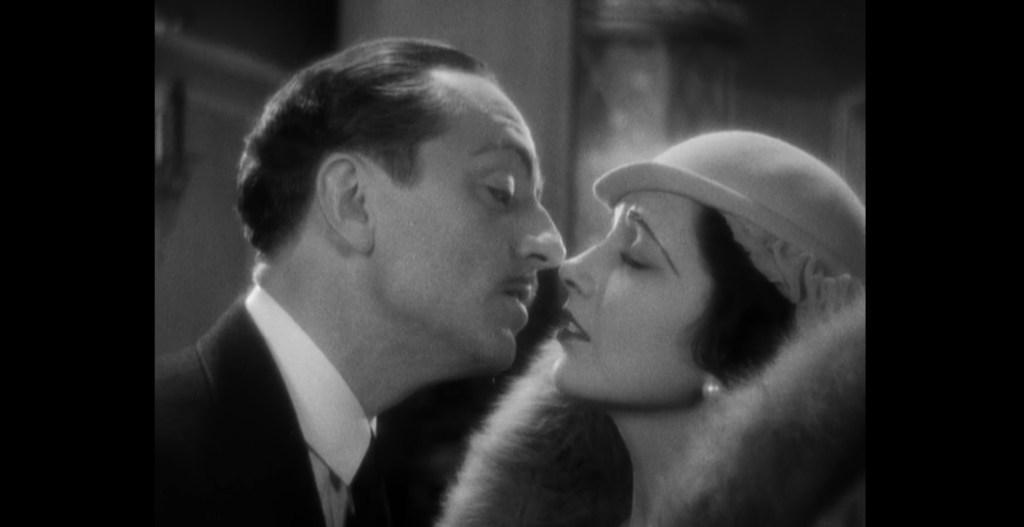
To Kay Francis, 1932 was just another long year. She had made The False Madonna, Strangers in Love, Man Wanted, Street of Women, Jewel Robbery, One way Passage, Trouble in Paradise and Cynara (yes, all of those in ’32).
Of these, One Way Passage was Kay’s favorite and Trouble in Paradise was her best. But before these two, one of her most charming pictures released that year was Jewel Robbery. In what can be considered almost a preface to Trouble in Paradise, she plays a cheefully jaded Baroness who becomes the enthralled victim of a very unorthodox and very polite robbery, subsequently falls hopelessly in lust with the suave gentleman robber, and vice versa.
Welcome to Six Damn Fine Degrees. These instalments will be inspired by the idea of six degrees of separation in the loosest sense. The only rule: it connects – in some way – to the previous instalment. So come join us on our weekly foray into interconnectedness!
When Metro-Goldwyn-Mayer realised they had a hit on their hands with 1934’s The Thin Man, it was inevitable that they’d demand a sequel. Two years later, they got it with After The Thin Man. The title references the fact that the action takes place directly after the first film. That had ended with the two leads boarding a train in New York for their home in San Francisco. The sequel starts with them arriving. This title went on to become effectively the brand for these films; four more were to follow with Thin Man in the title.
Welcome to Six Damn Fine Degrees. These instalments will be inspired by the idea of six degrees of separation in the loosest sense. The only rule: it connects – in some way – to the previous instalment. So come join us on our weekly foray into interconnectedness!
“Somewhere in here I was born… and here I died. It was only a moment for you… You took no notice.”
Even just reading those words gives me goose bumps. In Alfred Hitchcock’s Vertigo, a film that’s not light on ominous, eerie moments, it is probably the one scene that most gets under my skin, even after I’ve seen the film a half-dozen times. It is strange and uncanny (even if it is actually part of an extended con), but also, and perhaps most of all, it is sad, as many of my favourite ghost stories are. The woman in front of you pointing at the tree rings, pointing out where she was born, first, and then where she died.
Welcome to Six Damn Fine Degrees. These instalments will be inspired by the idea of six degrees of separation in the loosest sense. The only rule: it connects – in some way – to the previous instalment. So come join us on our weekly foray into interconnectedness!
Do you still remember the first DVD you ever purchased? I will certainly never forget mine: the restored version of Alfred Hitchcock’s ultimate classic, Vertigo. Not because of the 70+ Swiss francs I paid for it – a fortune for a 17-year old back then and yet a pittance for the movie-hungry teenager that I was – but how it increased my love affair with Hitchcock and this particular movie. And how it left me in awe at the restoration process that brought this masterpiece back to life on the then-state-of-the-art DVD format – a process that back then topped everything that had gone into salvaging film stock before (thanks to Julie’s post from last week for reminding me of it).
It had taken Robert A. Harris and James C. Katz, the two restorers in charge, over two years to complete the incredible feat of examining and saving the original camera negative of Hitchcock’s 1958 film and discover in horror the state it was in. After restoring stunning versions of Lawrence of Arabia, My Fair Lady and Spartacus before, however, the two remained undeterred by the insurmountable-seeming challenge of raising Vertigo from the dead.
Their problems were manifold and of dramatic proportions: The negative itself had enormously faded from lack of proper storage and the sound elements, they found, had been thrown out in the late 60s. After all, Vertigo had not been the intended hit and Hitchcock himself pulled it from release after some time, only for it to disappear in obscurity until re-released in 1984 after his passing. The version shown at cinemas then, however, was equally based on imperfect prints and contained the errors Harris and Katz needed to adress in their long restoration process.
I had loved Hitchcock and particularly Vertigo ever since watching it in German-dubbed 4:3 pan-and-scan versions taped off television broadcasts in the early 1990s, which says a lot about how good this film really is. Hearing of the restoration and spending all my money on that first DVD player, I was naturally extremely curious what the new version would look and sound like. Having added a then-illegal NTSC-switch to my PAL machine, I was finally ready to push play on this US release (at this point, most DVDs were still only released in the States but unplayable on European players) of restored Vertigo.
The result was stunning, to say the least: Harris and Katz had freshened up every single frame of the film, transferring it to its original VistaVision 70mm glory, which more than doubled the detail of information on the film strip. According to the original Universal press release and this insightful article in the Chicago Tribune at the time of the restoration release in 1996, everything was done without digital help and therefore by hand, sometimes comparing more than a handful of prints for reference for each bit of film.
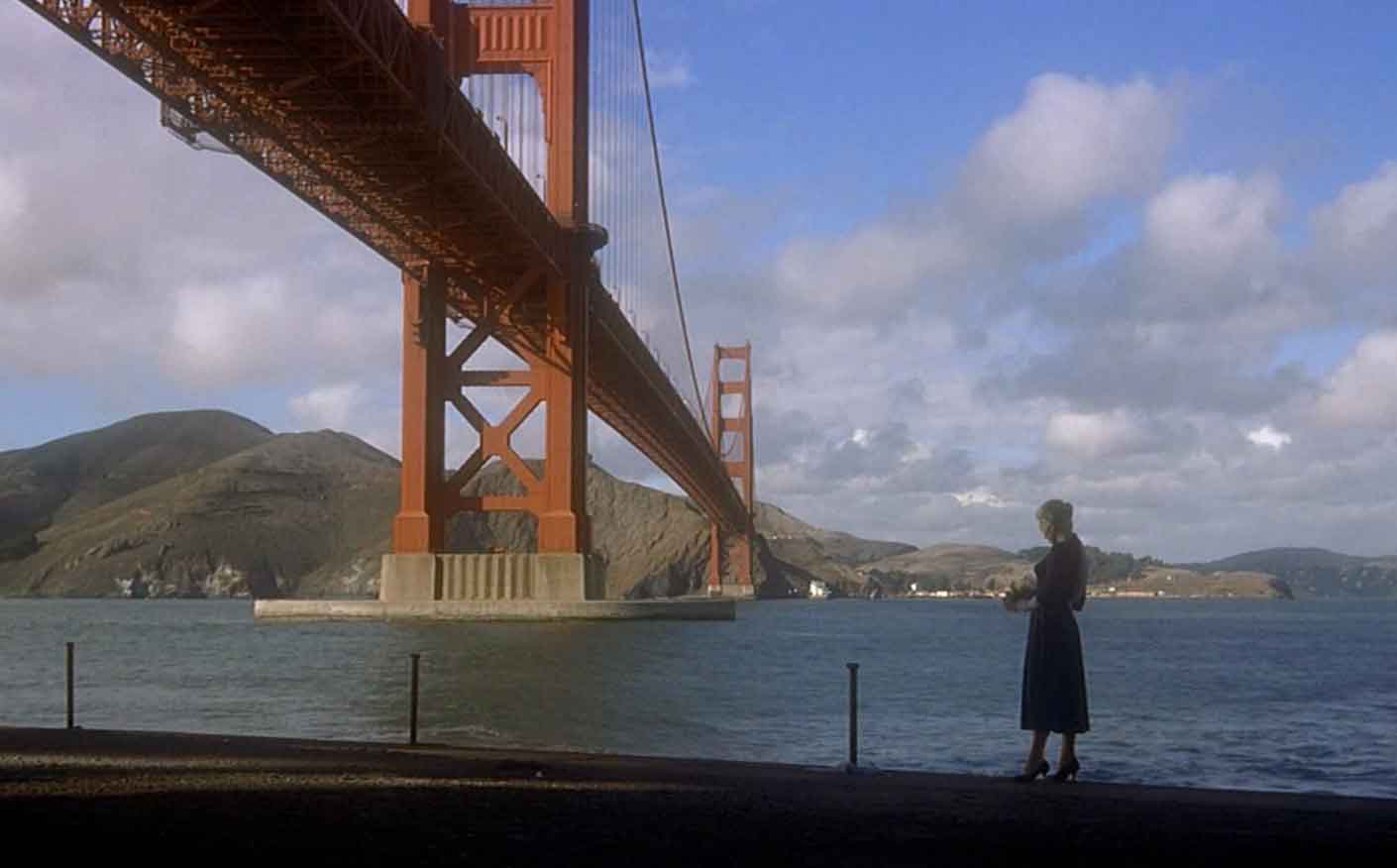
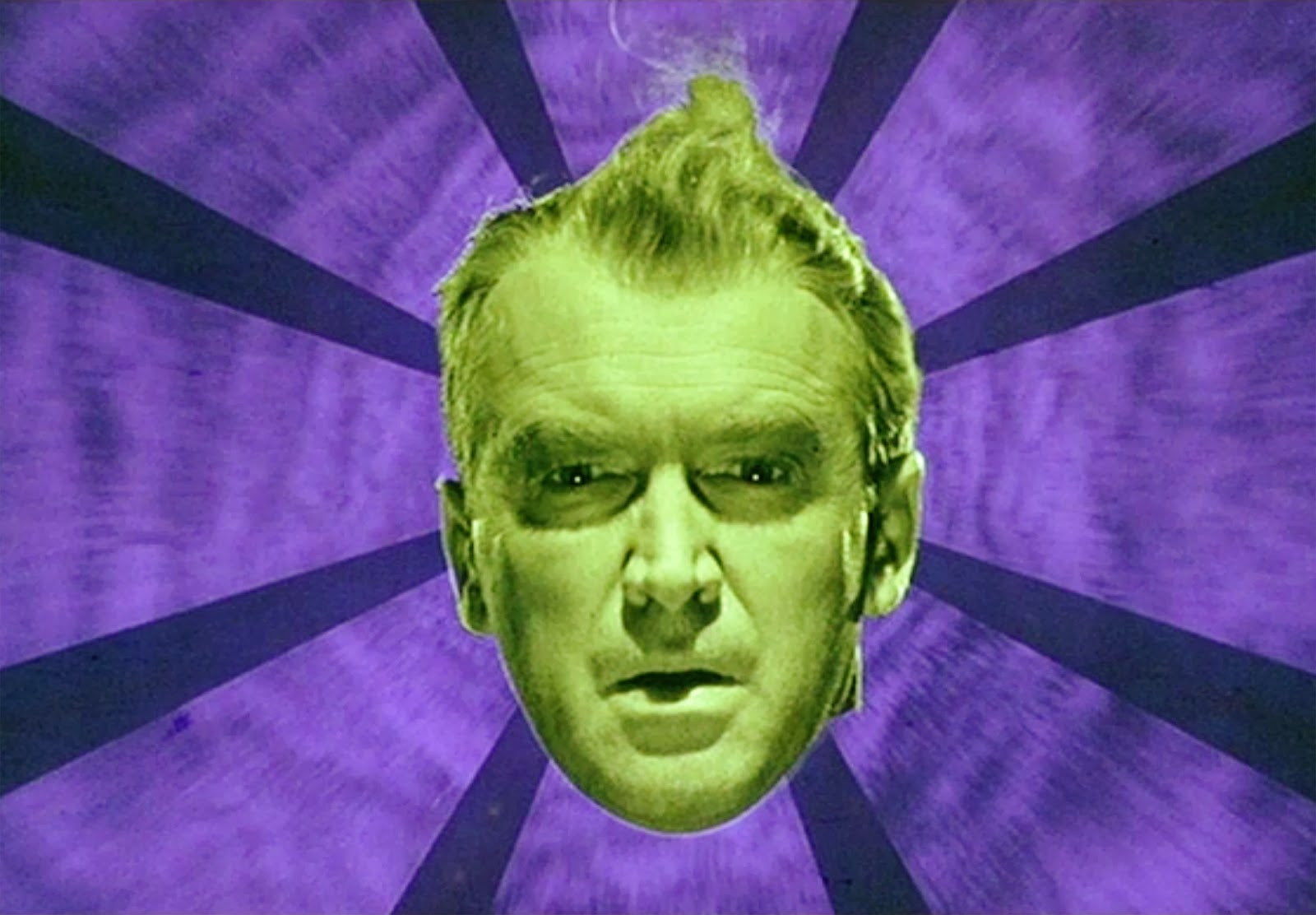
Never had the colours come out as perfectly – the burnt orange of Golden Gate Bridge when Kim Novak’s Madeleine throws herself into the bay in front of Jimmy Stewart’s Scottie; the red tapestry at Ernie’s restaurant when Scottie is mesmerized by a ghost-like Madeleine in a stunningly green dress for the first time; the neon light in Kim Novak’s sordid hotel room (now as Judy), casting an eerie green on the big lie she’s been fooling Scottie with; and the horrifying purple of the nightmare that plunges Scottie into the abyss of depression under the presumption that Madeleine died at his hand. The difference to everything I had seen was mindblowing and my love for the film was deepening by the minute.
The Harris and Katz effort, however, didn’t just completely restore the visual but also the audio dimensions of Hitchcock’s masterpiece: Having found only copies of the film without separate dialogue, sound effect and music tracks, the two were forced to digitally remove the dialogue from one version and re-record the sound effects altogether (using in parts original motor or revolver sounds from the 1950s). Their work was greatly helped by the discovery of the original recordings of Bernard Herrmann’s seminal soundtrack, only to discover that half had been done in pristine stereo quality in London, whereas the rest of the sessions had been moved to Vienna for a sub-par mono recording due to a strike among studio musicians at the time.
The two restorers still managed the almost impossible and created a convincing new stereo surround 6-channel track to a film that had never sounded as good. Now, astonished audiences including myself, could not only see details they had never perceived but also hear and feel the full emotional and dramatic impact the filmmakers and composer had intended.
The 1996 Harris and Katz restoration, to me, is still the singlemost impressive example of its kind I have seen. Since then, I had the chance to attend several screenings of such pristine prints, including three accompanied by large film music orchestras, and I wouldn’t want to see Vertigo any other way anymore. Its impact on me is still the most significant cinematic experience I have had, and I will be forever grateful for still remembering almost every detail of what a quantum leap the new version really was.
My DVD was given away long ago and BluRays and digital platforms now partly offer probably even better resolutions and versions, but one never quite forgets that first purchase, the unpacking of the disc, the reading the liner notes and the deep-dive into Bonus Disc materials before pushing play on the actual movie: the unashamedly perfect version of Vertigo!
Welcome to Six Damn Fine Degrees. These instalments will be inspired by the idea of six degrees of separation in the loosest sense. The only rule: it connects – in some way – to the previous instalment. So come join us on our weekly foray into interconnectedness!
On Tuesday, July 1st 2008, Paula Félix-Didier, museum director in Argentina, traveled to Berlin from Buenas Aires with something extraordinary in her luggage. Disembarking on a hot summer’s day, temperatures rising to up to 30 degrees, she was to meet with three experts, there to review what she had brought. She had previously confided in an editor of German newspaper Die Zeit, Karen Naundorf, as she thought Germany would be the perfect place to publicise her spectacular piece of news: she may have just uncovered missing footage, long presumed lost, from the 1927 Fritz Lang tour de force Metropolis. Any reconstructions of the film before that time, still offered the sad little insert: “More than a quarter of the film is believed to be lost forever.”
Welcome to Six Damn Fine Degrees. These instalments will be inspired by the idea of six degrees of separation in the loosest sense. The only rule: it connects – in some way – to the previous instalment. So come join us on our weekly foray into interconnectedness!
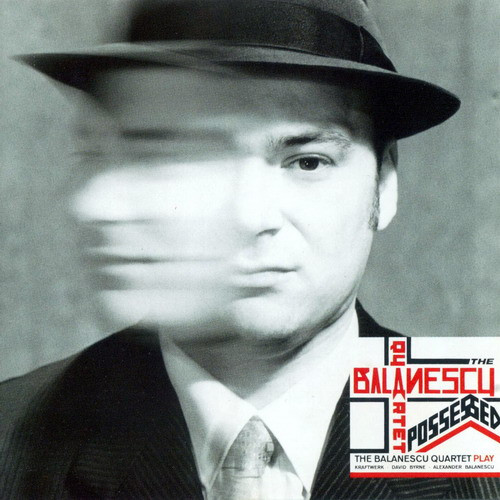
RobotsIt was their cover of Robots I first heard. I can’t exactly remember on what radio show. An evening show in 1992, no doubt, as I sat in my teenage bedroom pretending to do homework. I was fascinated by this reimagining and resolved to wait till the end to learn the name of the artist – The Balanescu Quartet.
Welcome to Six Damn Fine Degrees. These instalments will be inspired by the idea of six degrees of separation in the loosest sense. The only rule: it connects – in some way – to the previous instalment. So come join us on our weekly foray into interconnectedness!
I’ve always liked music. From an early age onwards, I played various instruments: pretty much anything with keys and anything that you had to hit with a stick or a mallet. But, as a kid and as a teenager, my musical tastes – and, really, my musical experience – were weird, and not necessarily in interesting ways. I liked big orchestral stuff, I liked film music, mostly of the Elmer Bernstein and John Williams variety, I enjoyed music that I’d heard in movies and TV series. Obviously I also listened to the pop and rock of the time, whatever was on Sky Channel first and later on MTV (which means that I associate much pop and rock first and foremost with the music videos), but I didn’t own a single album pre-CD, and even once I started buying CDs, it was almost exclusively film and TV music. My first, and for a long time my only, pop/rock album was Pink Floyd’s The Division Bell.
Which also means that as a male teenager growing up in the ’80s and ’90s I never had a heavy metal phase, and not only because I never had the hair for it.







 A Damn Fine Cup of Culture