Welcome to Six Damn Fine Degrees. These instalments will be inspired by the idea of six degrees of separation in the loosest sense. The only rule: it connects – in some way – to the previous instalment. So come join us on our weekly foray into interconnectedness!
Welcome to some sort of grim hat-trick. This entry might well be a part of our sadly ever-expanding series called Corona Diaries; it is also a revisit of what I once wrote for The Rear-View Mirror about Laura Spinney’s book Pale Rider; and the concept of six degrees carries a very cynical note when thinking about contagion, way back in 1918 when the Spanish Flu hit, and again today, for glaringly obvious reasons.
Welcome to Six Damn Fine Degrees. These instalments will be inspired by the idea of six degrees of separation in the loosest sense. The only rule: it connects – in some way – to the previous instalment. So come join us on our weekly foray into interconnectedness!
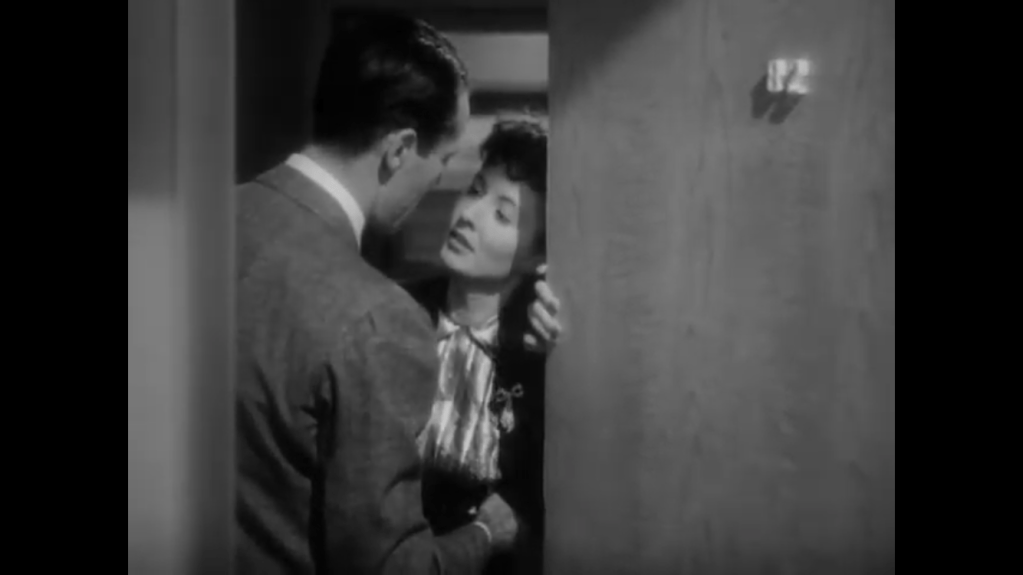
Ever since the invention of the motion picture, there’s been an audience appetite to watch hot couples getting it together. You want people to pay money to go see your movies, you can’t go wrong with putting a gorgeous man and an attractive lady in front of the camera and let the audience know they’re into each other.
Welcome to Six Damn Fine Degrees. These instalments will be inspired by the idea of six degrees of separation in the loosest sense. The only rule: it connects – in some way – to the previous instalment. So come join us on our weekly foray into interconnectedness!
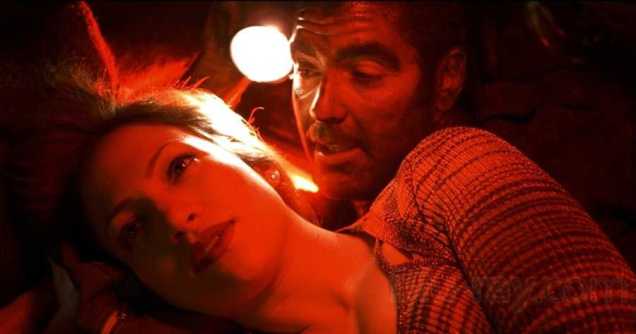
The first time I was exposed to Elmore Leonard (I make him sound a bit like a virus, don’t I?) was probably when Get Shorty came out in 1995 and was a big hit. I didn’t see it at the cinema, but I caught it on TV a while later. I have to admit that there’s pretty much nothing I remember about Get Shorty, so the first time I actually registered that this Elmore Leonard cat might be someone to look out for was when I went to see Out of Sight, in 1996, and fell for the film. I fell for the characters, the writing, the direction, the editing, the feel. And, obviously, I fell for Jack Foley (George Clooney), gentleman bank robber, for Marshall Karen Sisco (Jennifer Lopez), and most of all for their car trunk, whirlwind romance.
Welcome to Six Damn Fine Degrees. These instalments will be inspired by the idea of six degrees of separation in the loosest sense. The only rule: it connects – in some way – to the previous instalment. So come join us on our weekly foray into interconnectedness!
I don’t care how many movies you own, if your bookshelf doesn’t contain at least one single Elmore Leonard novel, there is a gap in your collection. There are very few novelists whose prose is already so close to a screenplay; in fact, if you, like me, imagine something very much alike to a movie scenes while reading a novel, you have it easy with Leonard, because his writing is, in the best sense of the word, graphic.
Welcome to Six Damn Fine Degrees. These instalments will be inspired by the idea of six degrees of separation in the loosest sense. The only rule: it connects – in some way – to the previous instalment. So come join us on our weekly foray into interconnectedness!
Michel Legrand‘s score to 1967’s Les Demoiselle de Rochefort is one of that film’s many delights. Not only is it better than his score for The Umbrellas of Cherbourg (yes, it is, no, I will not be taking questions) but its a vital underpinning to a frothy delight of a film full of bright, vibrant colours, happy dance routines, beautiful people falling in love – and, of course, an axe-wielding psychopath.
Welcome to Six Damn Fine Degrees. These instalments will be inspired by the idea of six degrees of separation in the loosest sense. The only rule: it connects – in some way – to the previous instalment. So come join us on our weekly foray into interconnectedness!
Gangster portraits in recent movies have tended towards more and more nasty realism, as Julie so admirably analysed in last week’s post on iconic French gangster Jacques Mesrine. Long gone seem the late golden days of Hollywood gangster glamour, in which style prevailed over morality and sexiness seemed to make up for all crimes committed.
Welcome to Six Damn Fine Degrees. These instalments will be inspired by the idea of six degrees of separation in the loosest sense. The only rule: it connects – in some way – to the previous instalment. So come join us on our weekly foray into interconnectedness!
If Goodfellas is about the glitz, and Donnie Brasco is about the grind, the Mesrine dyptich consisting of L’Instinct de Mort and L’Ennemi Public No1 illuminates the cruelty inherent in a life of crime. Jacques Mesrine is a hard man. Not in the more stylized De Palma vein but as the real deal. Often racist, sometimes misogynistic, and extremely violent. The political incorrectness is not inadvertent, nor is it glamourized. It is simply symptomatic of a type who does not give a shit about anything at all. Not about people’s lost or ruined lives, either directly through his actions, or by their consequences. He wants what he feels he is owed, no matter the cost. Though certainly clever, articulate, intermittently charismatic and even charming – he has his moments –, Jacques Mesrine (Vincent Cassel) is a man of such staggering volatility and entitlement that he makes Tony Montana look like a parody.
Welcome to Six Damn Fine Degrees. These instalments will be inspired by the idea of six degrees of separation in the loosest sense. The only rule: it connects – in some way – to the previous instalment. So come join us on our weekly foray into interconnectedness!
It has been a little forgotten, hasn’t it, that little gangster flick called Donnie Brasco (1997)? It hasn’t anything as iconic to offer as The Godfather‘s ascent to power or The Godfather: Part II‘s empty shell of a mob boss, although it does have Al Pacino at its center, too. It’s not a Scorsese-style hellride that could make us like or at least weirdly admire the hard men of organized crime we are supposed to condemn outside of a movie theater.
Welcome to Six Damn Fine Degrees. These instalments will be inspired by the idea of six degrees of separation in the loosest sense. The only rule: it connects – in some way – to the previous instalment. So come join us on our weekly foray into interconnectedness!
In Rocky, Talia Shire does a great job of depicting a character that is painfully shy and seems exceedingly mousey at first, but who reveals depths of emotion and loyalty as the film progresses. She’s a good fit for Sylvester Stallone’s Rocky, also a character who doesn’t fit the bill of archetypical heroic lead at first. Whatever the Rocky franchise turned into, both the movies and their leads started off at a point where they were downright antithetical to what they’d become later – not least in Rocky IV, in which the title character was pretty much the embodiment of Reagan’s America during the late stages of the Cold War. Rocky and Adrian were engaging characters, but as depicted by Stallone and Shire their charisma wasn’t readily apparent.
Fast-forward 39 years, to 2015 and to Creed, a quasi-sequel or spin-off to the original Rocky series. Yes, I can already hear you: did the world of cinema need to continue turning that particular dead horse into a punching bag? That’s pretty much what I thought – and then I saw who was involved: Ryan Coogler, pre-Black Panther but post-Fruitvale Station. Michael B Jordan, who has come so far since he played poor, doomed Wallace in the first season of The Wire.
Welcome to Six Damn Fine Degrees. These instalments will be inspired by the idea of six degrees of separation in the loosest sense. The only rule: it connects – in some way – to the previous instalment. So come join us on our weekly foray into interconnectedness!
Alan’s shining pieceon why Shelley Duvall is the true star of The Shining, Stanley Kubrick’s masterful Stephen King adaptation, reminded me of another late ’70s star almost forgotten for the emotional impact she had on audiences while staying in the background of strong male leads – and doing it twice in the most successful and critically acclaimed films of the decade: Talia Shire in The Godfather and Rocky series of films.
Woman in the shadows, but always at the very heart of each of her Rocky outings: Talia Shireas Adrian.Continue reading →




 A Damn Fine Cup of Culture