Welcome to Six Damn Fine Degrees. These instalments will be inspired by the idea of six degrees of separation in the loosest sense. The only rule: it connects – in some way – to the previous instalment. So come join us on our weekly foray into interconnectedness!
I wonder whether director Jim Jarmusch was aware of TV’s The Little Vampire, which I watched ferociously growing up in the mid-’80s. Weren’t the slim-hipped goth vampires in his Only Lovers Left Alive (whom Julie described so well in last week’s piece) potentially inspired by this definitely goth-rock take on vampirism in the present-day world? It would be too interesting to ask and find out!
Welcome to Six Damn Fine Degrees. These instalments will be inspired by the idea of six degrees of separation in the loosest sense. The only rule: it connects – in some way – to the previous instalment. So come join us on our weekly foray into interconnectedness!
Welcome to Six Damn Fine Degrees. These instalments will be inspired by the idea of six degrees of separation in the loosest sense. The only rule: it connects – in some way – to the previous instalment. So come join us on our weekly foray into interconnectedness!
Welcome to Six Damn Fine Degrees. These instalments will be inspired by the idea of six degrees of separation in the loosest sense. The only rule: it connects – in some way – to the previous instalment. So come join us on our weekly foray into interconnectedness!
1941’s Ball Of Fire is an absolute gem of a film. Powered by a whip-smart script from Billy Wilder, it tells the story of fusty linguistics Professor Potts (Gary Cooper) falling for the quick-talking Sugarpuss O’Shea (Barbara Stanwyck at her very. very best) as he conducts his own research into slang. It’s a romance that encompasses all the essentials for a great screwball comedy – sassy innuendo, comic misunderstandings, a brilliant ensemble cast, the thrill of crime and, of course, the slow, academic research required in the compilation of Encyclopaedias.
Welcome to Six Damn Fine Degrees. These instalments will be inspired by the idea of six degrees of separation in the loosest sense. The only rule: it connects – in some way – to the previous instalment. So come join us on our weekly foray into interconnectedness!
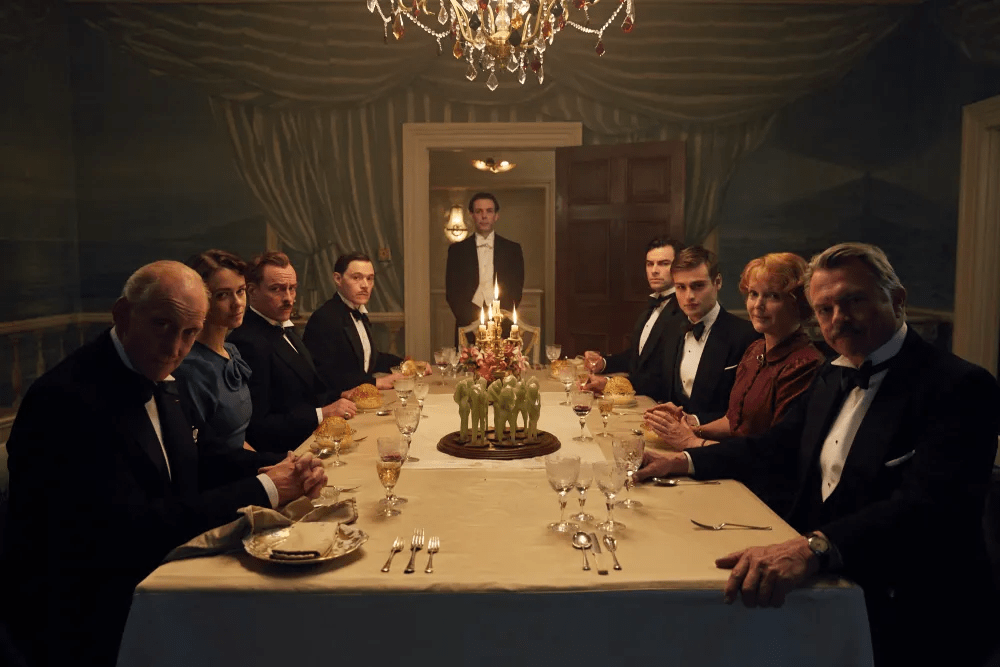
I don’t remember a time when I didn’t know about Agatha Christie, her stories and her characters. Somehow, Miss Marple and Hercule Poirot have always been around, much like modern mythology. Settings such as the manor house, scenes where a sleuth has assembled all the suspects and lays out all the clues, feckless local law enforcement: I knew all of these – without ever having read a single one of Christie’s novels or short stories or having seen any of the numerous adaptations. Again, I was aware of Margaret Rutherford in black-and-white movies and of Peter Ustinov in glamorous locales, sporting a silly moustache and a sillier accent. But the actual thing passed me by for the longest time.
Welcome to Six Damn Fine Degrees. These instalments will be inspired by the idea of six degrees of separation in the loosest sense. The only rule: it connects – in some way – to the previous instalment. So come join us on our weekly foray into interconnectedness!
Welcome to Six Damn Fine Degrees. These instalments will be inspired by the idea of six degrees of separation in the loosest sense. The only rule: it connects – in some way – to the previous instalment. So come join us on our weekly foray into interconnectedness!
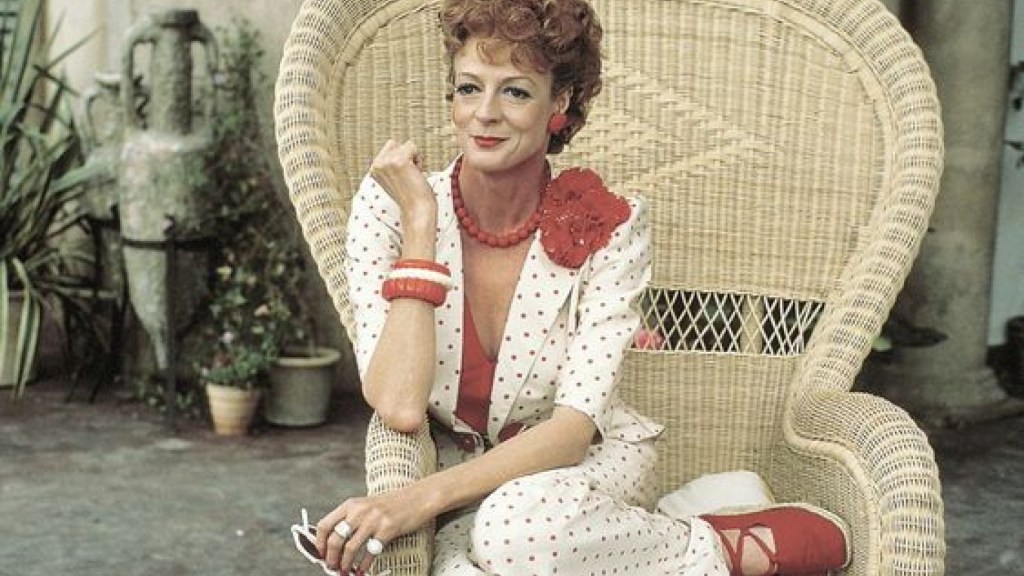
The passing of Dame Maggie Smith in late September has caused an outpouring of appreciation and love by film critics, movie buffs and the stage aficionados alike. Rarely has there been in the loss of an actress such a display of a wide-ranging fan base, from the Harry Potter kids to the Downton Abbey addicts and from silver-age Hollywood connoisseurs to the West End audiences and independent cinemagoers, everybody seems to have harboured a deep respect and admiration for her unique talent. Channels and feeds were crammed full of shorts and reels for days, with no real end in sight.
Welcome to Six Damn Fine Degrees. These instalments will be inspired by the idea of six degrees of separation in the loosest sense. The only rule: it connects – in some way – to the previous instalment. So come join us on our weekly foray into interconnectedness!
In 2002 the UK TV Channel ITV announced that it was to begin producing an all new adaptation of Agatha Christie‘s Miss Marple novels. These would be big-budget, high-production-value affairs, with an eye on the global TV market.
Welcome to Six Damn Fine Degrees. These instalments will be inspired by the idea of six degrees of separation in the loosest sense. The only rule: it connects – in some way – to the previous instalment. So come join us on our weekly foray into interconnectedness!
A ’70s-inflected theme starts up: raspy, excitable horns, tense vibrato strings. On a burgundy background, a slim image appears across the width of the screen, a pair of eyes opening and looking at the audience, looking with intent. The eyes disappear and the background changes to a dark blue; the eyes pop up again, this time at the bottom of the screen, looking to the left. Again they disappear, the blue becomes darker, and the pair of eyes, familiar by now, comes up centre-screen, peeking right at first but then again focusing on us, the audience. White lines appear from the sides of the screen, one horizontal, one vertical, crossing over the eye on the right, then five concentric circles, going from large to small, all centred on where the lines cross – forming crosshairs, taking aim. The innermost circle turns into an O – and the title is revealed: TATORT.
The title sequence continues at this point, the theme becoming even more ’70s, if that is even possible, with a slapping bassline that’s probably more familiar to TV audiences across Germany (and Austria and Switzerland) than the German national anthem. It’s Sunday evening, 8.15pm. It’s Tatort time.
Welcome to Six Damn Fine Degrees. These instalments will be inspired by the idea of six degrees of separation in the loosest sense. The only rule: it connects – in some way – to the previous instalment. So come join us on our weekly foray into interconnectedness!





 A Damn Fine Cup of Culture