Breaking points

First of all, let me be absolutely clear: I like Breaking Bad a lot. I consider it one of the best TV series of the millennium to date. It’s ambitious, smart, exceedingly well acted (with some exceptions in the minor parts), and it has a grasp of complex characterisation like few other series.

I also think that in some ways Breaking Bad is overrated. It’s not quite the perfect series it’s sometimes made out to be, and while it exceeds in many respects, there is room for improvement in others. Granted, I may be talking out of turn, as I haven’t yet finished the series; we’re five episodes away from seeing the last of Mr. White. However, as I’m currently rewatching the first four seasons in parallel to finishing season 5, I think I can safely address what I consider the series’ main flaw.

More than many of my favourite series, from The Sopranos via Six Feet Under to Deadwood, Breaking Bad is heavy on plot. It uses plot to talk about its characters, but it still puts a considerable focus on What Happens Next. This in itself isn’t a flaw; what is, in my opinion, is that while the characters develop in an interesting five-season arc, the season-to-season plotting undermines these arcs to some extent.
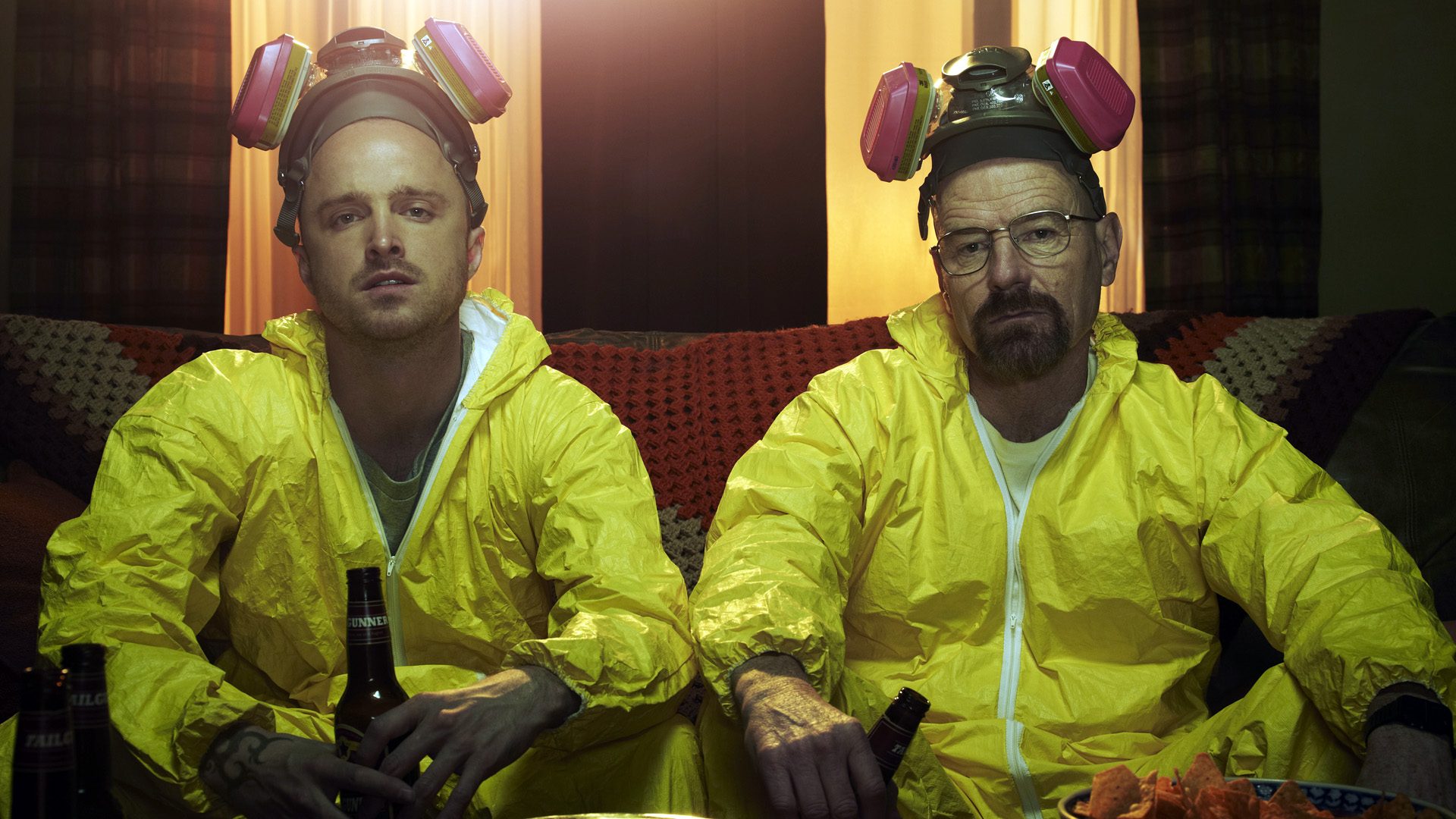
Men at work

To a large extent, Breaking Bad is about Walter White oscillating between pathetic, disempowered male, anti-hero and outright villain, and the discrepancy between how he sees and presents himself and how the audience sees him. The tension between these different positions is always interesting, but the series spends a lot of its dramatic ammunition too early, moving Walt into villainous territory only to retcon him – or, more accurately, our view of him – in the following season to some extent (Warning: the following will spoil events up to and including season 5.)

One of Walter’s main crimes in the final season is the way he glibly accepts the murder of an innocent child as something that couldn’t be avoided and that, he thinks, wasn’t really his fault. We watch the scene and its aftermath and we see him as the monster he has become. However, is this act more monstrous than his watching as Jesse’s girlfriend Jane suffocates on her own vomit while she’s in a drug-induced stupor? Especially if we consider what Jane’s death leads to, namely an air crash that kills hundreds. No, Walt doesn’t pull any triggers – but then he rarely does when he’s at his worst, does he? – but his actions lead to those deaths, both the more abstract hundreds of victims of the crash and the more immediate death of Jane. As in season 5, his reaction is to rationalise his actions and his involvement, coming to the conclusion that he is not to blame. Is this more villainous in season 5 because we see the victim, a young boy on his BMX bike? Or is the series suggesting that people may not remember season 2 and the beginning of season 3 (if indeed they were watching Breaking Bad at the time) and the point needed to be reinforced?

There are other points in the overall narrative that hit similar points – Walt getting Jesse to kill Gale, a defenseless and relatively innocent man, for instance – that in the context of their seasons and the surrounding episodes make perfect sense, but when you look at the overall narrative beats they feel like we’re revisiting ground that has previously been covered. It makes some sense if you consider that audiences watching the series on TV would have several month-long breaks between seasons, so there’s a purpose to treading old ground – but in hindsight several mini-arcs feel redundant in terms of how they develop the characters. They feel like the makers of Breaking Bad either didn’t know where they were taking the series, or they didn’t know how many seasons they had left to tell their story. Especially Walter White’s overall arc almost depends on the viewers forgetting or ignoring where the series had previously taken its characters and how far they’d progressed into full-on villain country.

The Meth Throne

The fact that Breaking Bad still works eminently well is largely due to its stars; even when revisiting old ground, Bryan Cranston and Aaron Paul’s performances feel fresh and immediate. The same is true for Anna Gunn’s Skylar, although arguably the series and its writing have been less generous to her at times; rewatching the previous seasons, I was struck by how similar her arc in the first half of season 5 is to how she developed in season 3, yet Gunn delivers a great performance. Nonetheless, if it were possible to go back and redo Breaking Bad, it’s the overall plotting that would require attention. If my suspicion is correct and vince Gilligan didn’t always know from one season to the next if the series would be renewed plotting accordingly, it’s understandable that he would have aimed for arcs that hit certain character beats, not knowing whether he’d get another chance later to do so – but it did leave him with characters whose overall arcs have built-in redundancies. While this makes for clever design, it makes for slightly frustrating storytelling. More so because there are so many things Breaking Bad does not just well but better than almost any other TV series.

And that’s before we even mention The Awkward Case Of The Ricin Cigarette – so let’s leave it at that.
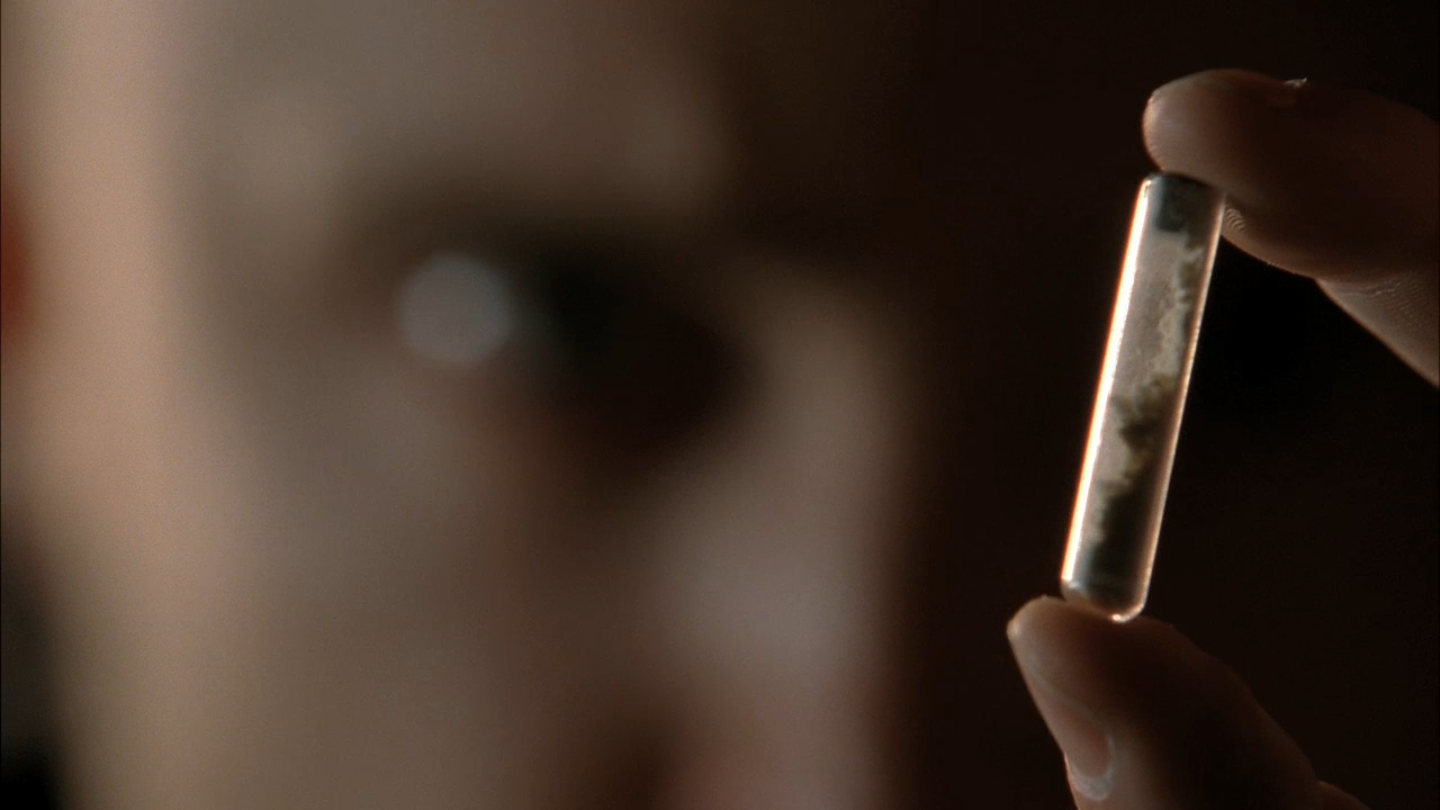
The Telltale Ricin

P.S.: Another thing that I’ve realised while rewatching especially season 1: Marie Schrader may just be the character that benefitted most from the series’ evolution over the course of its five seasons. In season 1, she is a two-dimensional character at best, slipping at times into flat caricature; by the final season, she is as rounded, complex and capable of tragedy as any of the main characters. While I may see this as something of a flaw of early Breaking Bad, in this case I prefer to look at it the other way around: the series definitely got better over time. This is also clearly seen in its villains: there’s no comparison between psychotic Tuco “Loony Tunes” Salamanca and the much more nuanced Gustavo Fring.
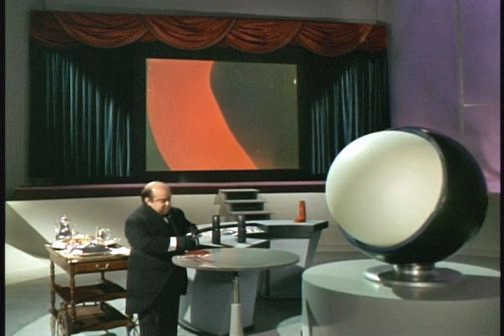
Information! Information!

… and yes, you’re right, that post title needs to be read in a booming voice. (Don’t turn around now, by the way – there’s a giant white inflatable ball right behind your chair!)

While the title is prompted by us having only one more episode of The Prisoner to watch (my thoughts will follow in an upcoming post), this is actually more of a “Did you know that you could waste hours by following these links?” kind of post, plugging the following two things:

  1. XKCD, a self-described “webcomic of romance, sarcasm, math, and language” – although I think that their recent comics have been somewhat hit-and-miss, the new feature What If? is quite inspired at times, addressing important questions such as “What would happen if everyone on earth stood as close to each other as they could and jumped, everyone landing on the ground at the same instant?” (nothing, at first, but what follows is fascinating!) and the surprisingly poignant “What if everyone actually had only one soul mate, a random person somewhere in the world?” If you’re even mildly nerdy and sort of miss those student conversations at 2pm after a couple of glasses of wines every now and then, well worth checking out!
  2. How long has it been since I’ve plugged anything HBO-related? The A.V. Club‘s John Teti has just finished his series of reviews-cum-analysis of the second season of Six Feet Under. Some of the most insightful writing I’ve seen on the series and especially on Nate and Brenda – and it’s made it clear that it’s time for me to watch the series again in its entirety.

Farewell to Oz

We managed to finish two long works recently – first Don Quixote (I’m convinced that most people didn’t read past page 150, since almost every single reference you read or hear is to what happens in the first fifth of the novel), and then Oz, the HBO prison (melo)drama.

The series is a prototype for so many later HBO gems, The Sopranos and The Wire just two of them. It pioneered the network’s trademark adult style, with lashings of violence and sex. Its characters were often nuanced, always ambiguous, its cast of characters portrayed by actors who give it their all. I don’t regret watching the whole series, and there were very strong moments throughout.

All of which is building up to faint praise, to be quite honest. The series’ grasp exceeded its reach – which in itself isn’t that much of a problem, but what really rankles is how Oz seems to think itself more astute, more perceptive on the evils of the American penal system than it really is. It is too infatuated with its own running commentary and social critique, and it displays the tendency towards hysteria in its storylines and presentation that Spike Lee is prone to. It’s easy enough to forgive this in Lee’s films of the late ’80s and early ’90s, but to find the same tricks used over and over in a series in the late ’90s and early 21st century… well, it makes the series look hokey.

More than that, though, Oz could have been much stronger and held up much better to its successors if it had been two or three seasons rather than the full six seasons it lasted. Its social critique started off as hit-and-miss, often facile rather than perceptive, and this only increased as the series went on. By the time we got to the last couple of seasons, many storylines were thin and fraying at the edges; what kept us watching wasn’t the commentary on prison and how it often achieves an effect that is the opposite of what is intended, but the soap opera. Would Beecher find happiness in his relationship with charming sociopath Keller? Would McManus finally manage to have an adult relationship and not turn into a dick towards a woman he clearly likes? Would Schillinger finally accept that no one knows how to pronounce his name correctly? And as with daytime soaps, the episodic plots were sordid, tacky, maudlin: Rebadow takes up playing the lottery because his son is dying of leucaemia! Alvarez’ wife is divorcing him and fucking his brother! Did I care? Yes – but in a distanced, not particularly involved way.

The final season was a mess of barely begun, half finished ideas and storylines. Dead characters from past seasons were brought back to add their voice to Augustus Hill’s – and then that idea was dropped. New characters were introduced for no apparent reason, almost as if the producers were pretending that Oz wasn’t coming to an end. There were powerful moments – Cyril’s almost-execution – but others were as silly as the series’ worst excesses. (Kirk and Hoyt believing they’re possessed by the devil – WTF?!) The prison production of Macbeth (and the running gag of replacing the actors because they keep dying off) was forgotten for most of the season, even if it was used effectively to stage one character’s death.

All things considered, though, this is one Oz I’m unlikely to revisit. I’ve seen Six Feet Under three times (and am gearing up for a fourth). Same with The Wire, The Sopranos, Deadwood – even Carnivale and Rome. I’m unlikely to go back to Oz Penitentiary any time soon, though. I guess what we had here was a failure to communicate, eh?

Vale of Tears, HBO style

My tastes probably tend towards the dark and tragic somewhat. For a while David Fincher’s Seven was my feelgood film (and I’m only exaggerating slightly). I’m not particularly into comedies, mainly because I don’t tend to find them funny – but I think that Shakespeare’s Richard III and John Webster’s The Duchess of Malfi are both rich in humour, though of the blackest sort. I tend to label things as “bittersweet” that my Significant Other would call “depressing as hell”.

Imagine my surprise when we finished watching season 2 of Oz… and my reaction was pretty much this: Whoa. This series may be too negative, too pessimistic, too “everything is going to shit” for me. By comparison, the last two seasons of Six Feet Under were light tragicomedy, The Sopranos is Analyse This! and Deadwood is Paint My Wagon. In the season 2 finale, Oz gives us a pedophile ex-priest getting crucified by Arians, a Latino guard’s eyes getting stabbed (with disturbing visuals of the damage) and one inmate’s arms and legs being broken. (I can still hear the snapping sounds…) When an old Nigerian gets stabbed to death, it almost feels like a relief: Thank god, they could have put his arm down the garbage disposal and then fed him his own kidneys!

Oz is open to allegations of being gratuitous in its use of violence, at least in this episode – but then, I can think of scenes of Deadwood, Rome and indeed Six Feet Under (elevator bisection!) that are as visceral and gory. So what is it, if not the gruesome depiction of violence? Is it that the characters are by and large doing evil things? Hey, Al Swearengen could pull off as many as six evil things before breakfast, without breaking into a sweat. The Soprano mob was no bit more angelic than the inmates of Oswald Penitentiary. So, again: what is it that makes Oz less bearable?

I think it’s this: Oz is about a world where hope is mostly dead, and what hope is left is killed over and over again. All these other series, for the pain, suffering and evil acts they depict, they haven’t killed off hope. Goodness can exist and survive and sometimes even thrive. In Oz, the only way that goodness can avoid being trampled is by hiding away, making itself smaller. There are sparse moments of light, but they are so exceptional and all the characters seem to know it that you almost dismiss them as a mere distraction from the doom and gloom. And yes, there is humour, but most of the time it’s grim as hell. Even the world of The Wire is more hopeful. Consider that: The Wire is more hopeful than Oz.

Arguably, that’s the world the series depicts: its version of the American penal system is Hell, an institutional hell where goodness is weakness, and the weak get their arms and legs broken. But if a series is that relentlessly negative and nine out of ten times something good happening is just occasion for the characters to fall from a greater height, it becomes wearying. And it’s the first HBO series where I’m not exactly eager to get started on the next season as soon as possible.

Perhaps I need to recover with something lighter.

More series business

How many different series can a person watch and still keep them all apart? Right now we’re watching Angel, House  M.D., Carnivale and Heroes and Grey’s Anatomy, I’m rewatching Six Feet Under, Battlestar Galactica and Life on Mars, we’ve just finished Fringe and we’re waiting to continue The Sopranos and Buffy. Well, at least no one can accuse me of being a total elitist snob when it comes to telly series…

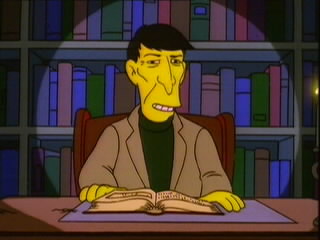
I enjoyed Fringe because it fulfilled my post-X-Files FBI-investigating-weird-shit cravings. Is it a good series? Not particularly – it’s repetitive, some of the acting is dubious and with half the episodes I think that I’ve seen them before, only Mulder and Scully did them better. It’s great turn-off-your-brain TV fast-food, though, and I’m looking forward to more Leonard Nimoy in season 2. “It’s all lies. But they’re entertaining lies. And in the end, isn’t that the real truth?” (Damn you, YouTube, for not having a clip of that scene!)

The answer is, "No."

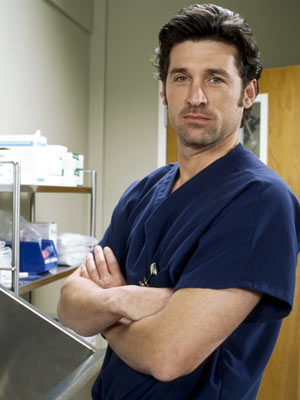
Grey’s Anatomy has been something of a guilty pleasure of mine, and throughout much of season 4 it wasn’t all that much of a pleasure, to be honest. The series’ problem – well, main problem – is that they’ve got a number of very good actors and even the middling actors know their parts by now, but the writing (especially with respect to character development) covers the whole range from maudlin to obvious to plain bad, with the occasional strong scene. If the series could decide to be a comedy, it wouldn’t matter that most of the characters are written to be highly unprofessional so much of the time (typical example: some patient is dying and needs urgent care, and doctor X decides that this is the right moment to ask doctor Y why they didn’t have sex the previous night – remind me not to get ill in TV Seattle…). It takes very good writing to make the constant jumps from quirky comedy to serious (melo)drama work if the characters aren’t to come across as nincompoops at the mercy of the script. Season 5 had many of those weaknesses, but it had enough strong moments to keep me watching. Still, there are some developments and storylines that just annoy the hell out of me: a resident at a big Seattle hospital going more or less bankrupt from one day to the next because Daddy cuts her trust fund? Swapping one interesting lesbian character for cute but eternally bland blondie because you want eye candy rather than an actual character? Derek Shepard yet again going all pompously self-righteous, and still no one takes one of those circular saws to his perfectly coiffed head?

If we all gang up and stab him with scalpels, it shouldn't take too long...

In the meantime, I’m rather enjoying where Angel season 3 is taking us. Yes, there were a couple of false steps – Gunn and Wesley going all mooney over Fred wasn’t cute, it was just annoying, and having it go on for several episodes made me want to go Angelus on them all – but it’s fascinating to see how Angel, Cordelia and especially Wesley develop during the season. Just 2-3 more episodes to go until season 4 – and I’m ignoring all those people who say that it’s one of the worst seasons ever in the Whedonverse, because it’s something we have to get through before season 5 and “Smile Time” and the (wait for it) bitter-sweet finale. (Yes, Lucy, I put that there just for you…)

Oh, before I forget: gotta love this recent article in The Onion: Next Tarantino Movie An Homage To Beloved Tarantino Movies Of Director’s Youth.

Fight, fight, fight, fight, fight, fight, fight. How many fights is that? A lot.

And finally: I’ll be writing a weekly entry at The Best Shows You’re Not Watching, alternating between Six Feet Under and Life on Mars. You can find the first one here. Let me know what you think!

Skeletor is not a crook (and our little Brad’s finally gone and grown up)

Sorry for that post title. I was going for something clever and intertextual, but after staying up for the Academy Awards I simply don’t have the brains for it.

Did anyone else see them? I was doubtful that I’d enjoy them – but I did, not least for the huge grin on Danny Boyle’s face that grew with every one of his mates winning an Oscar. And his Tigger impression was sweet. I always knew that the man who directed 28 Days Later had to have a genuinely sweet side to him.

Incidentally, the last two films I’d seen at the cinema were among the most nominated titles: Frost/Nixon and The Curious Case of Benjamin Button. A lot has already been said and written about how the latter is practically a remake of Forrest Gump; my only comment on that is that yes, in terms of plot this allegation is absolutely true. But David Fincher, thank the celluloid gods, is no Robert Zemeckis. It’s not his best film, not by a long shot, but it’s a poetic, not a little surreal story about the things and the people we leave behind. As such I found it very effective and another illustration of Brad Pitt growing as an actor with every year.

All things considered, though, I was more taken with Frost/Nixon, perhaps more so because I didn’t expect to be. The first film I’d seen Michael Sheen in was Underworld, which ranks high in my list of worst films ever. (No, Kate Beckinsale in tight leather doesn’t stir my, ahem, imagination any. Sorry, Kate.) I wasn’t prepared for his strong, nuanced performance as David Frost – but I was doubly not prepared for Frank Langella’s sad, pathetic, tragic Richard M. Nixon. Who’d have thought that the guy who played Skeletor in the film version of Masters of the Universe would be this good? I should probably go back and watch those early Deep Space Nine episodes he was in.

What next? Well, I definitely want to see Revolutionary Road and quite possibly Milk and The Reader. And at some point I should check out The Visitor, which garnered Richard Jenkins (yes, that’s right – Nate the Elder from Six Feet Under) a nomination. Ah… something isn’t right if you don’t get to go to the cinema at least once a week!

It was you, Bodie. You broke my heart.

Life (and Death) on the Streets

I feel old. I been out there since I was 13. I ain’t never fucked up a count, never stole off a package, never did some shit that I wasn’t told to do. I been straight up. But what come back? Hmm? You’d think if I get jammed up on some shit they’d be like, “A’ight, yeah. Bodie been there. Bodie hang tough. We got his pay lawyer. We got a bail.” They want me to stand with them, right? But where the fuck they at when they supposed to be standing by us? I mean, when shit goes bad and there’s hell to pay, where they at? This game is rigged, man. We like the little bitches on a chessboard.

Poor Bodie. Poor loyal, misguided, tragic Bodie. Like so many on The Wire, we’ve seen him do terrible things ever since he and Poot shot Wallace back in season 1 – yet he wasn’t a bad guy. He wasn’t evil. He was just one of those little bitches on a chessboard, just like another tragic player who decided that enough was enough and ended up hanging from a prison doorknob with a belt around his neck.

Poor Randy. Screwed over by the stupidity of a cop who doesn’t get that he’s betraying this kid – but screwed over even more by a society where talking to a cop is much worse a crime than putting a bullet in someone’s head, it seems, and by a system that at best can keep an account of the people it’s failing – but actually helping them? Sorry, no. Not enough money, not enough people to do the work, not enough of an incentive to cut through the red tape.

Poor Carver, trying so hard to do right by those under his care. Poor Dukie, for whom a day in high school is more frightening than a life on the corners. Poor Michael, killing his soul to protect his little brother. Poor Bubbles, saddest of all. You all broke my heart… and I know I’ll be back for more.

bubbles

I’d thought that season 2 of The Wire was as tragic as it would get. Frank Sobotka going to his death, thinking that he had even the tiniest chance of patching things up for himself, his nephew, his union, for the men he felt responsible for. But the slow, drawn out death of the working stiffs’ union doesn’t hold a candle to the perpetual, systemic sickness which The Wire, season by season, evokes for us, and the way it infects the youngest already.

With “Final Grades”, the season 4 finale, The Wire may just have topped Six Feet Under as my favourite series. The care and intricacy with which the characters are developed, the interconnecting themes play out – has there ever been a series as perfectly constructed yet feeling so right and so true? I could point to episodes, plot strands and even characters in Six Feet Under that didn’t add anything much to the overall series. The Wire? Everything adds to the whole, coming together with dizzying precision, affecting me to an extent that I never would have expected from what looks like a naturalistic cop series about drugs and crime.

Chris, Michael and Snoop (shudder...)

All of this might sound like The Wire is too complex, too constructed for its own good, but the scenes and the characters breathe with a lightness of touch that has to be seen over a number of seasons to be appreciated. It’s only when you take a step back that you can see just how perfectly wrought the series is.

Okay, enough of this clumsy attempt to put into words the effect that “Final Grades” had on me. Unless you’re scared of spoilers, you may want to check out this page (http://www.theguywiththeglasses.com/2008/03/wire-top-scenes.html) as it deftly picks some of the best scenes of the series up to the end of season 4.

And, apart from anything else, it’s good to see a quality series that actually makes it to the end without being cancelled prematurely. (There is something cruelly ironic about releasing a DVD set called Deadwood – Complete Collection. Be honest, cocksucker, and call it what it is: Deadwood – Dead Before Its Time or Deadwood – We Killed It Because We Had To Pay For This Weirdo Surfer Dude Series or Deadwood – Because A Good Novel With The Final Chapter Ripped Out Is Still A Good Novel, Right?)

Shame I’ve already used “A Death in the Family”…

Anyway, it’s really two deaths I’ll be writing about. And the whole notion of family… well, let’s put it this way. It’s complicated.

I’m currently rewatching The Sopranos and I just finished season 3 (“… In which an old friend’s son is shot in the back of the head and Meadow interrupts a sentimental song with thrown chunks of bread and a rendition of a Britney Spears classic”). While the series dealt in ambiguities from the very beginning, season 3 is perhaps the first one where the audience’s complicity is brought to the fore. We root for Tony Soprano, paterfamilias to two families, but for all his charm and for all our sympathy for him (when he’s not being an asshole to the people around him) he is evil – if he is defined by who he is and what he does, he’s evil. Less so than the outright psychos in his entourage (I’m mainly looking at you, Paulie and Ralphie) and more self-aware, but he enables them and depends on them and their actions for his own success.

Up to the end of season 3, we’ve never seen him quite this manipulative and hypocritical, and now it’s seeping into his children more and more. Knowing quite well on one level that her idiot ex was killed because of the system her father upholds, she now defends it – to the face of idiot ex’s sister and with a degree of self-righteousness that is nauseating.

He's behind you!

The problem I have with rewatching The Sopranos, though, is that differently from, say, Deadwood, Six Feet Under or (most of all) The Wire the episodes and seasons are pretty much exchangeable. There’s very little character development – which may be the point, but if you could watch the episodes in pretty much any order and the only thing you can determine by whether it’s season 1, 3 or 6 is how old the kids are and whether Pussy Bompensiero is around? In my books that diminishes the lasting appeal and success of the series.

Talking of deaths in series: since Switzerland is a couple of months behind the States with respect to TV, we only got to see the House season 4 finale now… and what a downer that one was. Even though season 4 was the shortest season of the series ever, most of the episodes after House had chosen his new team felt like retreads (or, in fact, re-re-retreads), but the two finale episodes, “House’s Head” and “Wilson’s Heart”, were among the best and definitely the emotionally strongest episodes. I remember pretty much hating Robert Sean Leonard in Much Ado About Nothing, but together with Hugh Laurie he carries the series even in its most generic episodes. Give him material such as this and he absolutely shines. (And I don’t know what it is, but give me a well-acted man crying his eyes out in a series and I get a big lump in my throad…)

I still don’t think that Kate Beckinsale is talented or particularly beautiful, though, so there.

Give me Emma and Kenneth any time. Please.

Hamsterdam and the gooey kablooie

You have to admire Stringer Bell’s attempts to de-thuggify the Baltimore drug trade. His endeavours to get his business away from the drive-by shootings and everyday violence is one thing; his sweet, endearing (not words easily used when it comes to The Wire, except for everyone’s favourite addict Bubbles) meeting rules are something else altogether. It wouldn’t feel more strange to have these dealers and “soldiers” in the drug war speaking in Jane Austenese.

Season 3 of The Wire once more is among the best TV there is. It’s smart, impeccably crafted and unexpectedly funny. (A shout-out has to go to “My dawg…”.) I’m also finding it less affecting than the second season, though. Is it that the stevedores represented by Frank Sobotka had more pathos? Frank’s final episode nearly had me in tears. Or is it that I, in spite of my impeccable bleeding heart credentials, can relate better to pudgy, corrupt white guys with receding hairlines than to black hoppers slinging red tops and getting hot and bothered about semi-automatics.

There’s more than enough here to get to the viewer, though: Cutty’s attempts to get back into the game after 17 years in prison, or Bunny Colvin’s subversive social experiment born out of a frustration with the shambles and hypocrisy of the war on drugs and a wish to do something, however radical, that might actually break the stalemate and help.

And on that happy note I’d like to thank Amazon for its special offers. (No, I don’t get paid for this. I should, though!) Thanks to them, seasons 4 and 5 of The Wire are on the way and I don’t even feel too guilty about spending the money. I’m slowly running out of interesting HBO series, though… so in one, two years’ time I’ll either be reduced to Sex and the City – or it’s back to Six Feet Under. In which case I might as well rename this blog “Fisher & Sons”.

Girl power

Buffy the Vampire Slayer is an odd beast. It is perhaps the wittiest series with what would seem to be the dumbest premise: HIgh school chick fights vampire. It was cheesy, it had bad fight scenes much of the time, and many of the actors weren’t terribly good.

Yet what Buffy got right, it got right. In every season, there were episodes that are up there with my favourite television fare ever – and yes, that includes Six Feet Under and Deadwood. Over the course of seven seasons, I’ve come to care about all the characters. That never happened with any of the Star Trek series that I watched as a teenager. Nor did I grow tired of Buffy in the way that I lost patience with The X-Files.

Much of that has to do with Joss Whedon’s characters. They quickly come to feel like people you want to spend time with. Yes, even Angel… and yes, even season 6/7 Buffy, although to a lesser extent. (There were moments – flashes – when I even liked Dawn. I’m sorry.) They come to feel real, which is an amazing feat, considering that these people tend to spend their time fighting rubber-mask baddies and being American teenagers.

Yes, the series lost some steam after season 5 ended. There’s a lot going on in seasons 6 and 7 where I thought, “Yes, I see what they’re doing there… I see where they’re going with this”, but it was less enjoyable than what had come earlier. But I do not get the hate those later seasons get from some of the fans. I do not get the vitriol or the sense of betrayal that you find on the internet. (But then, there’s so much on the internet I do not get…)

It’s interesting re-watching season 2 now (our Sunday morning fare), since this is pretty much when the series came into its own. In the sophomore year, the actors had found their feet and really got their characters, to the point where it didn’t matter that much whether they were great actors or not. The writing had got more comfortable, yet at the same time more daring. In season 1, a later episode such as “The Body” or “Once More, With Feeling” wouldn’t have been imaginable; after season 2, pretty much anything was possible. (Well, not quite. I was only prepared for Whedon’s sadistic glee in doing horrible things to his characters because I’d previously seen Serenity. Yes, Joss, I know what you were doing there, I know what you were going for, and if I ever meet you I’ll be sure to applaud you for your audacity while I repeatedly kick you in the privates.)
So, re-watching Buffy while cuddling up to my loved one keeps me from missing Giles and Willow, and Xander and Cordelia, Oz and Joyce… and Buffy. As Willow said so memorably, “Sweet girl. Not that bright.”

Good thing that Joss Whedon and Brian K. Vaughn (of Y: Last Man and Runaways fame) are doing season 8 in comic book form. Shiny.