Do hackers dream of digital love?

Can one fall in love with a fictional character? More to the point, can one fall in love with a character in interactive fiction, experienced only through (fictional) e-mails? And what if that character turns out to be an Artificial Intelligence?

Welcome to the nostalgia soaked world of Digital: A Love Story, an interactive fiction by the improbably named indie game designer Christine Love. Interactive fiction: does that mean Digital is a game? Well, it is, although it lacks many of the conventional traits of games – it cannot be lost, it isn’t difficult as such (there are a handful of puzzles that are well integrated into the plot, but that’s that), in many ways its not all that much more interactive than HTML pages filled with hyperlinks. The notion of an indie interactive fiction, especially one concerned with a theme as weighty and overdone as love, may strike some as pretentious, that most overused and pointless of critical words.
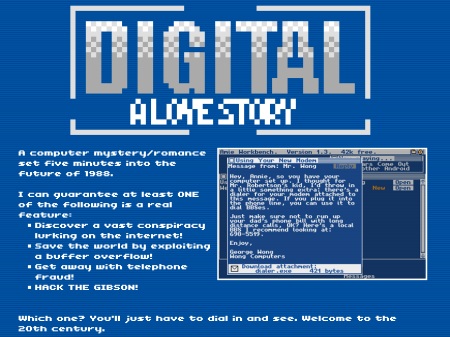
Don’t let any of that keep you away from Digital, though. I’d imagine that Love’s beautiful, intelligent and moving game works best for those who used computers in the late ’80s already and who are at least not completely opposed to the cyberpunk fictions of William Gibson. Digital‘s use of cyberpunk sci-fi is subtle and her interest is always in characters and emotions rather than in technology (at least as anything other than the vehicle for relationships). Her main interest, at least on the basis of this and its successor, the wonderfully titled don’t take it personally, babe, it just ain’t your story, is relationships and feelings – though not in a soppy way, as her writing and especially her use of the medium shows her to be eminently smart at what she’s doing.

The whole of Digital happens in the low-tech environment of BBSes or bulletin board systems – basically the pre-internet versions of webpages and message boards. As the player exchanges messages with other users of a number of BBSes, a plot emerges… and a romance develops between yourself, the player, and another user called Emilia. One of Love’s smartest decisions is that the player’s messages are never spelled out. You learn from the replies what you must have said, but the exact words, the details, everything that makes up your personality, is left up to you. It’s this specific kind of gaps in the narrative that is unique to games, pulling you in a way that is very different from how prose fiction engages its readers – and it’s difficult to imagine such compelling experiments in interactive fiction in big-budget mainstream games development. It’s the low-tech environment of indie gaming that makes gems such as Digital feasible.

There’s a twist roughly halfway through Digital, and (perhaps due to half-remembered spoilers in reviews) I’d figured it out fairly early into the game, but it doesn’t matter: Love deftly tells her story with the player’s help in a way that makes it much less about what happens than about how you react emotionally. As Digital came to an end, I found myself sitting there almost crying. A synopsis of the game, even a more detailed retelling, could not evoke the feelings I was going through: it was the sensation that this was my story, that I was living it as it happened, and that it would always be a part of me. Even as I could see the strings by which the puppets were manipulated (me included), there was an emotional reality to Digital that is rare in most fiction, whether interactive or not.

And if I haven’t already turned you off the game, consider this: it’s free. Want to see whether there is anything to my effusive praise? Download Digital here, play it, and then come back and tell me what you thought of it.
When the morning stars sang together, each to each

If the cosmic astronaut God-baby from the end of 2001 came back to earth and made a movie, this would be it. (And we wouldn’t understand what it was trying to tell us, either.)
– Andrew O’Hehir, Salon

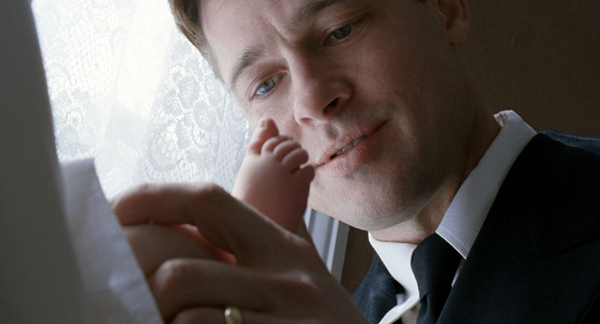
There can be no doubt about it – Terrence Malick has made some of the most visually beautiful films in the history of cinema. Narrative coherence, strong characterisation, those are not what anyone should look for going into a Malick movie, but they can expect to see awesome images. And not in the Michael Bay, big explosions, expensive CGI and Megan Fox’s cleavage way; Malick and his DPs create images that are poetic, both grand and intimate, and they’re masterful at evoking moods and emotions. Even if all the dialogue were stripped from his films, they’d still be powerful pieces of cinema.

In fact, perhaps the films would be more powerful without the dialogue. Malick is often accused of pretentiousness, and especially from The Thin Red Line onwards the voiceovers are less and less about characters and increasingly about giving voice to Malick’s philosophical concerns. The problem is that the questions voiced are not only grand but veer towards vague commonplaces. Why are we here? Why does Man fight against himself? Where are we going? Are we there yet?

No doubt, these are big and important questions, but they’re so big that they need to be broken down to be addressed, unless you’re having one of those student dorm, 2am, after a bottle or two of cheap red wine conversations. At his best, Malick breaks them down by providing many individual moments and perspectives, all of them contributing in impressionistic fashion towards answers. At his worst, the voiceovers evoke a sarcastic “That’s, like, deep, man!”

The Tree of Life has some of Malick’s most beautiful, evocative images to date, and I enjoyed the film more than his last, The New World. (I’m a Thin Red Line man, myself – and give me Days of Heaven any day.) It also relies less on voiceovers, which is good, because the more verbal Malick gets in his last few films, the more he risks becoming preachy and annoying, like one of those dreadful slim volumes of facile sub-Zen meditations on life. But in its elliptic nature, The Tree of Life becomes vague in ways that are condusive less to deep thought than to confusion. Who’s that kid? Is he one of the brothers? Are those Jack’s parents fighting? Why are we watching a dinosaur step on another dinosaur’s neck? Is Jack dead? Are those angels? Is that Aunt Petunia? Isn’t Smetana’s “Moldau” a beautiful piece of music, even if it’s criminally overused? Should I get a Coke in the break?

During the film’s strongest moments, its insistence on narrative ellipses is as evocative as the visuals. Malick can pull this off as well as Tarkovsky. At its worst, though, The Tree of Life is so intent on letting its visuals and the audience do its work, meditative becomes soporific and self-consciously coy. Does it make the film deeper, more meaningful that there are three brothers, if two of them barely become more than cyphers? Do glimpses of some kid having an epileptic fit in the background, while Jack is being led away, add to the experience if we have no idea whether that kid is a neighbour or a brother or just some random kid off the street? Gaps in the storytelling can be great starting points for our own thoughts, but if the gaps are too big, our thoughts become random – we’re as likely to think about what we need to get from the shops the next day as we are to ruminate about our existence and the grandiose beauty of creation. And the ending? I was torn between being moved, intrigued, “Huh?”ed and thinking, “I remember when this was an Orange ad.”

Would I recommend The Tree of Life? Probably not. Did I enjoy it? That’s a qualified yes. Was it beautiful to look at? Definitely, almost achingly so. Just don’t think too much about that plesiosaur. Just be awed, and don’t feel too bad if your thoughts wander to the shopping list.

P.S.: Is it just me, or is Hunter McCracken (who plays Jack as a child) almost eerily like a young version of Jim Caviezel’s character in The Thin Red Line?

The discreet charm of the post-apocalypse

Is The Road a depressing movie? Do cannibalistic chickens have lips? Good question, actually – does a beak count as lips? Anyway, I’m ambivalent on the matter… not of poultry and their facial appendages, but of The Road‘s overall outlook on life. It is a powerful piece of cinema, though – perhaps almost too powerful. I wouldn’t be too surprised if a number of audience members found the grim, sad plot and atmosphere of the film so overbearing they resisted its effects and perhaps even resented its relentlessness.

And relentless the film is, which probably doesn’t come as a surprise to those who have read Cormac McCarthy’s novel – yet it’s not the relentlessness of so many post-apocalyptic films. There are moments that in other films might be thrilling, scenes where the film’s wandering father and son are pursued by cannibalistic survivors (no chickens, though), but in the end it’s not these fleeting moments of jeopardy that are the greatest threat to survival in the world of The Road. It’s finding the strength each morning to go on. The father played by an increasingly Giacomettian Viggo Mortensen has his son to keep him going, but most of the survivors we see don’t even have that. They seem to be alive simply because they haven’t died yet.

Nevertheless, The Road is about survival, not only physical survival but that of the soul, of the part that makes us more than glorified animals. As the son puts it in his childish words, “Are we still the good guys?” You’d think that good and bad would become relative in a world where you avoid other survivors because it’s more than likely that they only survived by preying on others, and the father’s reluctance to show compassion for others makes perfect sense. The son’s insistence on doing the right thing is naive and borders on the suicidal – yet survival, to the son and eventually the father, should not simply be about delaying the inevitable. And it is in this insistence that there is more to living than simply not having died yet, even in a world that seems to be all about death, that The Road, for all its horrors and sadness, is an idealistic story.

This may be the point where The Road loses some: it is difficult to accept the hopeful notes scattered throughout for the sheer weight of all the horrors we’re presented with. Does a single surviving beetle, a dog that’s alive against all hope (and hasn’t been eaten by its famished keepers) constitute a convincing ray of sunshine against the billions dead, the destroyed wildlife and decaying forests (by the way: this is the first film where I had to switch off the subwoofer – because the trees crashing to the ground were simply more than we wanted to inflict on our neighbours!). I bought both the despair and the glimmer of hope, but the former may overpower the latter for many.

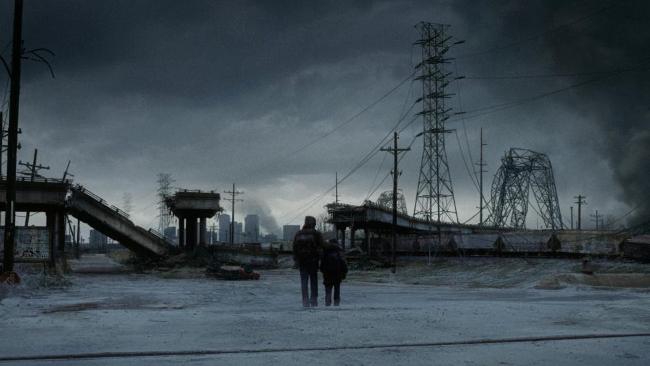
Through it all, though, the one thing that’s stuck most in my mind is the desolate, grim beauty of the world Hillcoat depicts in his adaptation. There’s dark poetry in McCarthy’s prose, and the visuals of the film capture this poetry impressively well.

O O O O that Kermodian rag!

I have found a new addiction. It’s called Mark Kermode. And the last couple of days I’ve been bingeing on his reviews (either on the BBC website or on YouTube).

What makes a good reviewer? I think that most people, me included, tend to respond first to those critics who agree with them. I also respond to critics who take a film on its own terms, something that Roger Ebert ten years ago (less so now, as far as I’m concerned) used to be brilliant at. A good critic should be able to acknowledge that in terms of what it achieves a brilliantly made genre piece (say, Raiders of the Lost Ark) is up there with the best of cinema, even if it may not be about ‘important’ things.

The best critics are the ones whose reviews you may disagree with completely, but that a) show you that the critic cares about the medium they’re writing about, b) make you think (and about something other than, “What’s this guy going on about?!”) and c) know how to write. Kermode hits all three of these, and trust me, there are a couple of reviews where my take on the film is practically 180° in the other direction. Fair warning, though: he can be smug and he is at times somewhat in love with his jokes – but he also seems self-aware enough to laugh about himself.

Anyway, enough from me. Here are two recent(ish) reviews by Mr Kermode that I liked a lot – enjoy!

War… War never changes.

It’s fascinating, and not a little unsettling, how little certain things about warfare seem to have changed. In the almost 100 years since the First World War, you’d think that soldiery has become something entirely different – that stealth bombers, ‘smart guns’ and UAVs would be worlds away from the gruelling trench warfare, mustard gas attacks and biplanes of the early 20th century.

There obviously are big differences between the wartime experience of a soldier in the trenches trenches near the Somne and that of a Marine deployed in Afghanistan in recent years. The wars can barely be compared. And yet, after watching Restrepo (by Tim Hetherington and Sebastian Junger) two things seem to be very much the same: the powerlessness while you’re under fire, and the tedium in between fights. In spite of PSPs and other distractions, the lulls between one engagement and the next seem to be as much of an enemy as the guys on the other side armed with AK-74s. It’s the moments when you become painfully aware of the situation, of the guy who was shot in the neck the other day, who used to be a friend and now is a body. It’s those moments when the overpowered gun you’ve got that’s so good at tearing apart the bad guys is of no use whatsoever.

Watching Restrepo it’s difficult not to think of Generation Kill although the soldiers in the HBO miniseries keep saying how Afghanistan, now, that was a good deployment. None of that Iraqi quagmire shit. However, for all its realistic look and feel, its journalistic credentials, Generation Kill is storytelling in a way that Restrepo isn’t. The former is structured in a way that makes it more immediately watchable and relatable. You care about Sgt. Colbert and Cpl. Person, about Lt. Fick and Doc Bryan, in ways that you don’t immediately about the Platoon depicted in the documentary. Hetherington and Junger didn’t over-narrativise their subjects, which is frustrating for the audience: there are times when Restrepo feels unstructured, and the tedium that the solders experience does creep in. It’s exactly this, though, that gives the scenes when an operation goes wrong and US soldiers get killed all the more chilling. When you watch one of the men realise that one of his friends has died and break out in loud wails unexpected from a guy who before had been much closer to the cliché of an all-American grunt.

It’s rare to get a depiction of men at war as devoid of judgment as Hetherington and Junger’s. Whether factual, facts-based, fictionalised or outright fictional, most writers and film makers dealing with war have certain attitudes towards the soldiers they depict. I haven’t seen many films, though, that leave it up to the audience to make up its own mind as much as Restrepo. It’s irritating, but it’s also liberating; I don’t mind documentaries taking a clear stand, as long as the bias is always overt, but Restrepo does that rare thing: it reports. It doesn’t opine. Which doesn’t mean that the film is artless – the craft of the film is evident – but it doesn’t use its art to tell the audience how to feel towards what it’s showing. It’s a rare document that deserves to be watched and remembered… even if it didn’t get the Oscar. And much more so because it is one of the last works of one of its authors.

Diary, by Tim Hetherington

Tim Hetherington: 1970-2011

Taken from Vimeo: “‘Diary’ is a highly personal and experimental film that expresses the subjective experience of my work, and was made as an attempt to locate myself after ten years of reporting. It’s a kaleidoscope of images that link our western reality to the seemingly distant worlds we see in the media.

Camera + Directed by Tim Hetherington
Edit + Sound design by Magali Charrier
19′ 08 / 2010″

I likes them vague…

… or at least I thought so.

I lost my nouvelle vague virginity to Truffaut’s Jules et Jim, and boy, was it a fantastic first time. After seeing that film, I was excited for the medium of film. Never mind that the film was over 40 years old at that time, I’d seen something that in its cinematic language was radical and fresh and lightyears away from tropes as old as the mountains. Probably some of that was a cinematophile’s crush on a young Jeanne Moreau (and who better to have a crush on than her?), but a lot of it was Truffaut’s way of making the material become incandescent through making it new. Even now, just thinking about the film makes me want to rewatch it – and if I could go back to being a teenager, be assured that a Jules et Jim poster would adorn my bedroom wall.

In the meantime I’ve seen a couple of films that are attributed, more or less loosely, to the nouvelle vague, from precursors like Bob le Flambeur and Ascenseur pour l’échafaud, to Truffaut’s Les 400 coups and Tirez sur le pianiste. Yes, Truffaut’s a constant, mainly because I was hoping to find something that would leave me as amazed as his seminal love triangle. Bob didn’t do much for me (for a heist film it’s disappointingly tame and lacking in memorable scenes – or perhaps I’m just too much into Soderbergh and compare every heist flick to Ocean’s 11), and both Truffauts mentioned above were good enough though somewhat underwhelming. Ascenseur, Malle’s first feature, worked well enough, but that is due in no small part to Miles Davis’ soundtrack, bringing out the sadness beneath the cool, and to Jeanne Moreau walking Paris in the rain for what feels like an eternity.

While nothing had lived up to that first time, I thought I was ready to graduate to Jean-Luc Godard. The signs were in my favour: here’s a French director whose name recalls both my mother’s maiden name (don’t ask me why this would be a good sign, but I thought it was) and my favourite Starfleet captain. (Somehow I think that if Godard had founded a society, it would have had a big sign at the entrance: “No geeks!”) It had gorgeous black and white photography and a cute-in-that-French-way-although-she’s-American Jean Seberg.

Here’s an admission: if a film’s main character is a dick, I will have to work twice as hard to like it. If the protagonist is a sexist dick, it becomes three times as hard. And if he’s behaving like an adolescent ass, four times.

Jean-Paul Belmondo’s Michel in A bout de souffle is all of that. He’s full of himself, he’s a blowhard, he’s a revolutionary in his head but a reactionary in his gut. He’s a git with an inflated sense of entitlement. In effect, in all but physical age he’s a teenager. Which would be okay, but the film seems to buy into him completely. The film seems to think that Michel is cool, revolutionary, a breath of fresh air. Cocky arrogance, that’s okay, that I can deal with – but Godard’s film seems so infatuated with its central character it becomes difficult for me not to transfer my intense, immediate dislike for him to A bout de souffle.

Stylistically Godard’s movie is interesting, and there are individual scenes that work well for me. All in all, I think I would have loved it as a 10-minute short. As a 90-minute feature, though, it feels at least two hours too long. Thing is, you can find a number of parallels between Truffaut’s film and Godard’s, and between its central characters. Catherine and Michel are both amoral, they’re both self-centred, and they get what they want at the expense of others. They’re both willful and capricious and narcissistic. They’re both adolescents in their emotions and actions, and both films ask us – at least up to a point – to forgive their actions. With one big difference: for everything horrible she inflics on the two men in her life, I can forgive Catherine. Michel, on the other hand, I want to punch in the nose, repeatedly.

I guess it’s like Vincent Vega said: “My theory is that when it comes to important subjects, there’s only two ways a person can answer. For example, there’s two kinds of people in this world, Elvis people and Beatles people. Now Beatles people can like Elvis. And Elvis people can like the Beatles. But nobody likes them both equally. Somewhere you have to make a choice. And that choice tells me who you are.”

History will teach us nothing

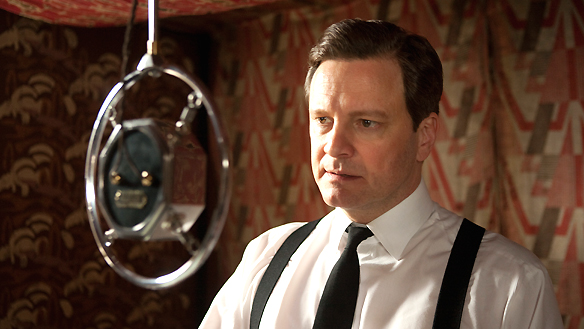
The British have this knack. They take topics and plots that have a pronounced risk of ending up as high kitsch and bathos, and they make them work. Case in point: The King’s Speech. A predictable plot riddled with tired old tropes – a teacher and his reluctant student, a friendship across the classes, an eleventh-hour crisis, protagonists overcoming adversity and pulling off a climactic challenge to prove their worth to themselves and to others, growing in the process. We’ve seen these beats dozens of times.

In the hands of Hollywood, so far so nauseatingly familiar. But the Brits tend to add gentle self-mockery and ambivalence, two elements that are often absent in American treatments* of the same story. Perhaps it comes with being an old nation and losing an empire (“Now where did I put India?”). Whatever it is, it is my impression that English directors, writers and actors more consistently take the heroic and find the flawed, ridiculous and deeply human in it. Colin Firth’s Albert (later George VI – that’s twice the George that Mr. Speaks-to-Trees was!) is a figure of pity, first and foremost, not a hero in any conventional sense, yet the pity is tempered by the script’s wit and its sharp dialogues, played with relish by Firth and his Oz counterpart Geoffrey Rush.

That ambivalence more common to British films is also evident in The King’s Speech. Yes, the final scene of the film, the titular speech at the onset of the Second World War, is shown to give hope and unity to a kingdom in dire need of these things, but an encouraging regal speech notwithstanding, the country is still on the brink of a war that will kill millions. The victory is not of the fist-pumping, Independence Day kind – it is momentary and does not ignore the fact of the coming losses.

It’s the irony and ambivalence of the film, combined with the level of craft on display (much of the acting is quite wonderful), that make the film so enjoyable. They also cover the fact that The King’s Speech, for all its self-mockery, ambivalence and Firthery, is quite conservative, like so many vehicles for Imperial nostalgia. The eponymous King is taken down a peg or two by an Australian speech therapist with little respect for class or the monarchy, but he is elevated by the plot’s trajectory at the same time. The gentle subversion personified by Rush’s Lionel Logue in the end serves to reinforce the conservative structures. “It’s good and right that we have a king,” the film seens to propose, “as long as he pulls himself together and doesn’t forget he is human.”

The problem with this is that it buys into the notion that things were better in the past, that traditions have innate value and should be preserved, if at the cost of a few minor concessions to modernity. Especially when it comes to the monarchy, the film has an underlying hankering for the Good King. Its irony finally has an insidious side, because it emphasises that what is needed to overcome a crisis is a better king but not, heavens save us, a discussion about whether we need a king in the first place.

To get back to where I started: I enjoyed The King’s Speech a lot and I admire the acting craft on display. I also enjoy the way the Brits pull off nostalgia and pathos with a touch of self-mockery and ambivalence but I am wondering whether these result in questionable ‘eternal’ truths being propped up and reactionary values made palatable. Irony is the spoonful of sugar perhaps. Or perhaps I’m worried about the credibility of my wannabe neo-Marxist credentials crumbling under the stealth attack of Colin Firth and Geoffrey Rush being witty, touching and altogether entertaining. What’s an Elgar-loving pinko liberal to do?

*Not always, mind you. For instance, people rarely remember that the original Rocky ends with the titular hero’s defeat.

More than fine

I’m not a big fan of Heavy Metal. Perhaps it’s that I’ve never had the hair to go with headbanging. Perhaps it’s that I dislike the sexism that often seems to go with it. Perhaps it’s simply that I was raised on Prokofiev’s Peter and the Wolf and that has influenced my entire musical development. I’ve always been more into borderline pretentious psychedelic prog rock, if anything, and then lots of indie singer/songwriter stuff than the leather-and-studs bridgade. I enjoyed This Is Spinal Tap, but half the jokes probably went straight over my head. Other than Ozzie, I’m not sure I could pick any of the greats of Metal out of a police line-up.

Imagine my surprise, then, when I started playing Tim Shafer’s Brütal Legend (savour that umlaut!) – and immediately fell in love with the world and atmosphere of the game.

Tim Shafer could be called the Tim Burton of the videogame world – if you disregard Burton’s creative stagnation, his repetitiveness and his increasingly mannered goth shtik. His games are strong on character, world building and storytelling, to the point where the gameplay becomes secondary. He’s the guy who spliced together Casablanca and the Mexican Day of the Dead and who created a summer camp for the psychic. And he’s the mastermind behind Brütal Legend, a game that takes as its inspiration Heavy Metal – not only the music, but the aesthetic, the ethos, the feel of it all (minus the “Smell the Glove” misogyny, mind you). Its world is designed to look like all the Metal album covers you can imagine, turned up to 11. It’s inhabited by laser-eyed black panthers and mastodons with gleaming metal tusks. It should be tacky – but instead it pulls off its loving hommage with style, with a little help from Jack Black. I mean, how can you not warm immediately to a game featuring lines such as these:

– Ever feel like you were born in the wrong time – like you should have been born earlier, when the music was… real?
– Like the seventies?
– No. Earlier… like the early seventies.

What is perhaps most amazing is that in a game featuring KISS-faced Amazons, phony big-haired rock stars (even the guys from Spinal Tap would find General Lionwhyte embarrassing – and yes, he’s one of the game’s villains) and a very familiar-looking Guardian of Metal, Shafer manages to pull off a story that takes turns being funny, thrilling and finally poignant. It’s difficult not to wipe away a manly Metal tear at the game’s ending. In a medium that’s full of teenage male wish fulfillment gone wrong (or just stale), that’s a rare gift.

Vale of Tears, HBO style

My tastes probably tend towards the dark and tragic somewhat. For a while David Fincher’s Seven was my feelgood film (and I’m only exaggerating slightly). I’m not particularly into comedies, mainly because I don’t tend to find them funny – but I think that Shakespeare’s Richard III and John Webster’s The Duchess of Malfi are both rich in humour, though of the blackest sort. I tend to label things as “bittersweet” that my Significant Other would call “depressing as hell”.

Imagine my surprise when we finished watching season 2 of Oz… and my reaction was pretty much this: Whoa. This series may be too negative, too pessimistic, too “everything is going to shit” for me. By comparison, the last two seasons of Six Feet Under were light tragicomedy, The Sopranos is Analyse This! and Deadwood is Paint My Wagon. In the season 2 finale, Oz gives us a pedophile ex-priest getting crucified by Arians, a Latino guard’s eyes getting stabbed (with disturbing visuals of the damage) and one inmate’s arms and legs being broken. (I can still hear the snapping sounds…) When an old Nigerian gets stabbed to death, it almost feels like a relief: Thank god, they could have put his arm down the garbage disposal and then fed him his own kidneys!

Oz is open to allegations of being gratuitous in its use of violence, at least in this episode – but then, I can think of scenes of Deadwood, Rome and indeed Six Feet Under (elevator bisection!) that are as visceral and gory. So what is it, if not the gruesome depiction of violence? Is it that the characters are by and large doing evil things? Hey, Al Swearengen could pull off as many as six evil things before breakfast, without breaking into a sweat. The Soprano mob was no bit more angelic than the inmates of Oswald Penitentiary. So, again: what is it that makes Oz less bearable?

I think it’s this: Oz is about a world where hope is mostly dead, and what hope is left is killed over and over again. All these other series, for the pain, suffering and evil acts they depict, they haven’t killed off hope. Goodness can exist and survive and sometimes even thrive. In Oz, the only way that goodness can avoid being trampled is by hiding away, making itself smaller. There are sparse moments of light, but they are so exceptional and all the characters seem to know it that you almost dismiss them as a mere distraction from the doom and gloom. And yes, there is humour, but most of the time it’s grim as hell. Even the world of The Wire is more hopeful. Consider that: The Wire is more hopeful than Oz.

Arguably, that’s the world the series depicts: its version of the American penal system is Hell, an institutional hell where goodness is weakness, and the weak get their arms and legs broken. But if a series is that relentlessly negative and nine out of ten times something good happening is just occasion for the characters to fall from a greater height, it becomes wearying. And it’s the first HBO series where I’m not exactly eager to get started on the next season as soon as possible.

Perhaps I need to recover with something lighter.