Welcome to Six Damn Fine Degrees. These instalments will be inspired by the idea of six degrees of separation in the loosest sense. The only rule: it connects – in some way – to the previous instalment. So come join us on our weekly foray into interconnectedness!
Join us every week for a trip into the weird and wonderful world of trailers. Whether it’s the first teaser for the latest instalment in your favourite franchise, an obscure preview for a strange indie darling, whether it’s good, bad, ugly or just plain weird – your favourite pop culture baristas are there to tell you what they think.
It’s December – which means, it’s time for snow! And since the actual white stuff falling from the sky is becoming rarer and rarer in many places, your cultural baristas at A Damn Fine Cup of Culture are talking about the cinematic version: snow in films. Join Julie, Sam and Matt as they talk about films in which snow is central, focusing on the following three movies: James Whale’s The Invisible Man (1933), starring a young Claude Rains, Where Eagles Dare (1968), Brian G. Hutton’s WW2 adventure featuring Richard Burton and Clint Eastwood, and finally an enduring favourite of several of us at A Damn Fine Cup: the Coen Brothers’ modern classic Fargo (1996). What role does snow play in these films – and which of them is the ultimate snow movie, in which the white stuff isn’t just an aesthetic choice or a means to an end but much, much more?
(By the way, due to technical difficulties, Matt’s audio in this episode unfortunately sounds like he recorded his audio with his mic in one room and himself in another. We hope that you’ll still enjoy the conversation – and if necessary, we’ll send him and his mic out into the snow until he’s promised to do better next time!)
P.S.: If you’re interested in more talk about the Coens, make sure to check out our podcast from summer 2023:
Welcome to Six Damn Fine Degrees. These instalments will be inspired by the idea of six degrees of separation in the loosest sense. The only rule: it connects – in some way – to the previous instalment. So come join us on our weekly foray into interconnectedness!
Like Sam, I was a big fan of The Little Vampire as a kid – though, unlike him, I was a Book Firster. I loved the books by Angela Sommer-Bodenburg (at least as far as I read them, stopping somewhere around the fourth or fifth volume), and I think I may have had something of a kid crush on the vampire girl the main character fell in love with, but I couldn’t abide what I saw of the TV series. I’d been looking forward to watching the adaptation, but to me at the age of 10 or 11 it felt deeply silly. To be fair to the series, though, perhaps it was simply that I was growing out of the books at the time, and maybe I minded what I saw as the series’ silliness because it highlighted to me the ways in which The Little Vampire was, first and foremost, a series of children’s books. Not YA, not “for all ages”, but kids’ books. Which doesn’t mean that you’re magically too old for such fare at the age of 10, nor that such books cannot be enjoyable as you get older – but, for me, The Little Vampire stopped being as enjoyable as it had been originally. And, having loved the books dearly until then, perhaps that’s why I pretty much stopped reading them from one day to the next.
Join us every week for a trip into the weird and wonderful world of trailers. Whether it’s the first teaser for the latest instalment in your favourite franchise, an obscure preview for a strange indie darling, whether it’s good, bad, ugly or just plain weird – your favourite pop culture baristas are there to tell you what they think.
For this week’s Six Damn Fine Degrees, Sam took us back to one of his childhood favourites: The Little Vampire, which he discovered first as a TV series and then as a series of children’s books. But, sadly, there doesn’t seem to be a trailer for that one, so here’s a trailer for a very different vampire child.
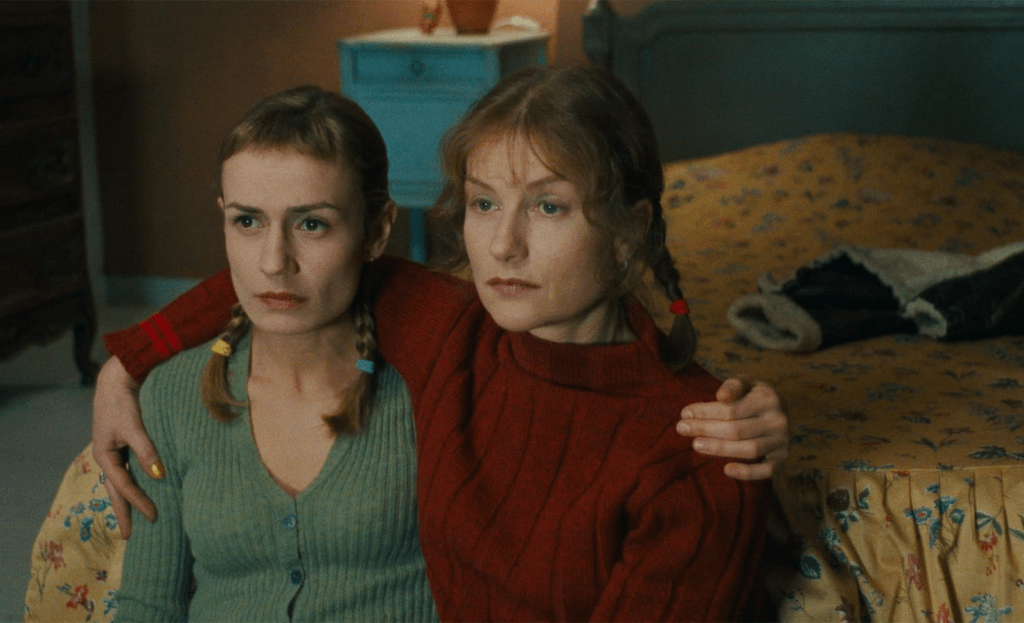
There are so many iconic directors that came out of the Nouvelle Vague, the French New Wave. Obviously there’s François Truffaut and Jean-Luc Godard, and even if you don’t like either or both, there’s no getting past them. Then there are the likes of Rohmer and Rivette, and others associated with (but not always counted as part of) the Nouvelle Vague, such as Resnais, Demy or Varda.
And then there is Claude Chabrol, who stands out for his dedication to genre cinema, something that is rare in the movement. He is one of the directors I’ve been aware of for a long time, but I had only seen a couple of films: The Colour of Lies (original title: Au coeur du mensonge, translated more accurately as At the Heart of the Lie), a thriller that I enjoyed at the time but that didn’t leave all that much of a trace, and the Highsmith adaptation The Cry of the Owl (Le cri du hibou), which I absolutely hated. Highsmith should be a good fit for Chabrol, but this particular adaptation didn’t work for me, leaving some characters utterly vague, others grotesquely one-note, and all of them annoying. (I later saw the more recent English-language version with Paddy Considine, which was almost aggressively mediocre but nonetheless felt like an improvement on Chabrol’s take.)
Because of this, I went into La Ceremonie with some trepidation: would I bounce off as much as I had with The Cry of the Owl? Does Chabrol just not do it for me all that much? Should I go back to the less genre-minded members of the French New Wave?
I’ll cut it short: even if I’d not seen any other Chabrol films at all – hell, even if I’d only seen, and hated, The Cry of the Owl -, La Ceremonie‘s strength would be enough to make me a fan. This is a definite keeper – that is, if you’re okay with thrillers that leave you feeling deeply uneasy for days.
Welcome to Six Damn Fine Degrees. These instalments will be inspired by the idea of six degrees of separation in the loosest sense. The only rule: it connects – in some way – to the previous instalment. So come join us on our weekly foray into interconnectedness!
I wonder whether director Jim Jarmusch was aware of TV’s The Little Vampire, which I watched ferociously growing up in the mid-’80s. Weren’t the slim-hipped goth vampires in his Only Lovers Left Alive (whom Julie described so well in last week’s piece) potentially inspired by this definitely goth-rock take on vampirism in the present-day world? It would be too interesting to ask and find out!
Join us every week for a trip into the weird and wonderful world of trailers. Whether it’s the first teaser for the latest instalment in your favourite franchise, an obscure preview for a strange indie darling, whether it’s good, bad, ugly or just plain weird – your favourite pop culture baristas are there to tell you what they think.
We’ve covered remakes extensively this summer, but what about their often derided sibling, the sequel? We’re taking the recent release of two high-profile sequels, Joker: Folie à deux and Gladiator 2, as an opportunity to talk about sequels. Are they all creatively bankrupt exercises in IP masturbation, or is there potential in sequels? Is the only good sequel one that gives us more of what we enjoyed the first time around, or should a sequel break with what has gone before and surprise us? Where are Joker 2 and Gladiator 2 on the continuum from more-of-the-same sequels to throw-everything-out-the-window sequels? Is Folie à deux as much of a waste of talent and money as most people said? Is Gladiator 2 a worthwhile return to Rome and to the arena that gets our thumbs-up?
For more thoughts on sequels with a bonus link to Ridley Scott, you may want to check out the following:
A Damn Fine Espresso: September 2024(in which Sam and Alan talk about Alien: Romulus, the latest sequel? prequel? something-quel to Ridley Scott’s iconic Alien)
Welcome to Six Damn Fine Degrees. These instalments will be inspired by the idea of six degrees of separation in the loosest sense. The only rule: it connects – in some way – to the previous instalment. So come join us on our weekly foray into interconnectedness!



 A Damn Fine Cup of Culture