Six Damn Fine Degrees #244: The Jack Lemmon-shaped hole in Billy Wilder’s “Kiss Me, Stupid”

Welcome to Six Damn Fine Degrees. These instalments will be inspired by the idea of six degrees of separation in the loosest sense. The only rule: it connects – in some way – to the previous instalment. So come join us on our weekly foray into interconnectedness!
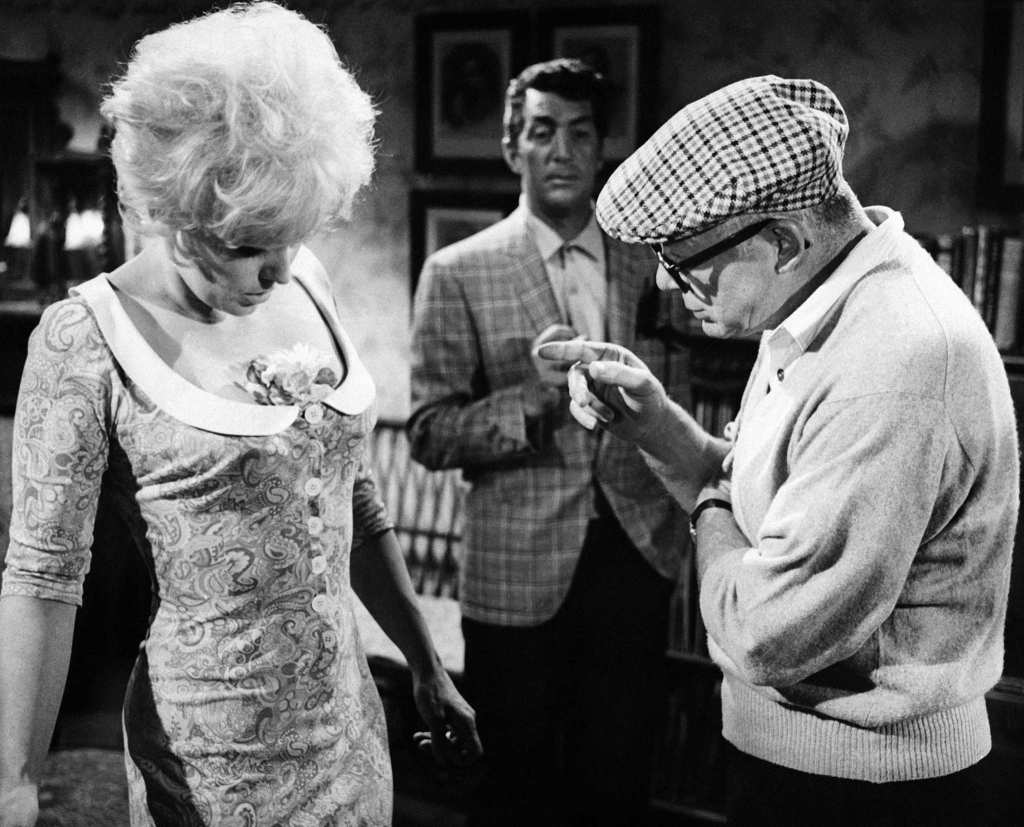
One of Jack Lemmon’s most impressive skills as an actor is his ability to take the role of a slightly schlubby loser, a character prone to selfish and petty acts, and still make him likeable. You can really see this in his films with Billy Wilder, roles such as Jerry in Some Like It Hot, C.C. Baxter in The Apartment, Nestor Patou in Irma La Douce and Wendell Armbruster Jr in Avanti! But I think its perhaps best highlighted in his absence from another Wilder film – Kiss Me, Stupid.

Continue reading
A Damn Fine Cup of Culture Podcast #91: Three Sherlocks

To many fans of detective fiction, he’s the greatest sleuth of them all: Arthur Conan Doyle’s Sherlock Holmes. He’s figured in many stories, novels, films, TV series and video games, to mention just a few of Mr Holmes’ exploits. He survived death by Reichenbach Falls, he appeared in the Victorian era and beyond, including adaptations in present-day England and America. And yet: to date, the greatest detective has only appeared on this site very, very rarely. Well, in the podcast episode we’re releasing today, this will be remedied, as Julie, Sam and Alan share their deductions about three cinematic takes on Sherlock Holmes: the 1939 film The Adventures of Sherlock Holmes starring Basil Rathbone, Nigel Bruce and Ida Lupino; Billy Wilder’s 1970 classic The Private Life of Sherlock Holmes, in which Robert Stephens and Colin Lively play the iconic Holmes and Watson; and the 1976 made-for-TV film Sherlock Holmes in New York, which has Roger Moore don the inauthentic yet iconic deerstalker – and John Huston take on the role of Holmes’ nemesis Moriarty. Which of these do justice to Sherlock Holmes? Which are worth watching, and which are better given a miss? Make sure to join our trio of pop culture baristas as they get out their magnifying glasses and investigate the case of Three Sherlocks. The game’s afoot!

And if you’d like to hear more about less-than-successful takes on Arthur Conan Doyle’s famous detective or indeed other iconic trios, make sure to check out these past episodes:

Continue reading

I’ll be in my trailer… watching trailers: Walk the line

Join us every week for a trip into the weird and wonderful world of trailers. Whether it’s the first teaser for the latest instalment in your favourite franchise, an obscure preview for a strange indie darling, whether it’s good, bad, ugly or just plain weird – your favourite pop culture baristas are there to tell you what they think.

This week, Sam reminisced about the animated line art of his childhood – or, more precisely, he wrote about his memories of the Italian cartoon La Linea, which featured a little man made up of a single line and his ongoing fight against the vicissitudes of life… and the whims of his animator. No trailer this time; instead you’re getting an entire La Linea cartoon (and the accompanying doo-bee-doo 1970s soundtrack), courtesy of YouTube.

Continue reading

A Damn Fine Cup of Culture Podcast #89: Second Chances (feat. Shirley MacLaine)

It’s that time of the year again, when we look at films we didn’t enjoy originally and give them another chance. This time it’s Sam and Alan having another look at movies they’d previously bounced off of, and both films feature Shirley MacLaine: Billy Wilder’s The Apartment (1960) (yes, Alan hasn’t been a big fan of the film to date!) and MacLaine’s first film, The Trouble with Harry (1955), her first feature appearance and one of the movies generally considered to be lesser Hitchcock. Will our intrepid two come away with a new appreciation of these films, or will their original opinions be reinforced?

Continue reading

A Damn Fine Cup of Culture Podcast #87: Snowpisode!

It’s December – which means, it’s time for snow! And since the actual white stuff falling from the sky is becoming rarer and rarer in many places, your cultural baristas at A Damn Fine Cup of Culture are talking about the cinematic version: snow in films. Join Julie, Sam and Matt as they talk about films in which snow is central, focusing on the following three movies: James Whale’s The Invisible Man (1933), starring a young Claude Rains, Where Eagles Dare (1968), Brian G. Hutton’s WW2 adventure featuring Richard Burton and Clint Eastwood, and finally an enduring favourite of several of us at A Damn Fine Cup: the Coen Brothers’ modern classic Fargo (1996). What role does snow play in these films – and which of them is the ultimate snow movie, in which the white stuff isn’t just an aesthetic choice or a means to an end but much, much more?

(By the way, due to technical difficulties, Matt’s audio in this episode unfortunately sounds like he recorded his audio with his mic in one room and himself in another. We hope that you’ll still enjoy the conversation – and if necessary, we’ll send him and his mic out into the snow until he’s promised to do better next time!)

P.S.: If you’re interested in more talk about the Coens, make sure to check out our podcast from summer 2023:

Continue reading

A Damn Fine Cup of Culture Podcast #86: Stealth remakes

For this year’s summer series, A Damn Fine Cup of Culture focused on remakes, from men who knew too much and trucks bearing explosive goods to planets that create their own remakes and finally to stars being born and dying. But these are the obvious remakes (whatever their directors might say, depending on which day of the week it is): what about iconic films – that almost no one knows to be remakes? In this episode, Julie and Alan get together to talk about two films that are infinitely more famous than the originals that preceded them: Some Like It Hot (1959) and The Maltese Falcon (1941). Why do these films escape the frequent criticism of remakes: that originality is dead and that Hollywood only knows how to repeat itself? How do the originals compare to the more iconic later films? And what’s the key to making a remake that will eclipse the film(s) that came before?

Continue reading

Six Damn Fine Degrees #207: Howard Hawks’ Ball Of Fire Reignited

Welcome to Six Damn Fine Degrees. These instalments will be inspired by the idea of six degrees of separation in the loosest sense. The only rule: it connects – in some way – to the previous instalment. So come join us on our weekly foray into interconnectedness!

1941’s Ball Of Fire is an absolute gem of a film. Powered by a whip-smart script from Billy Wilder, it tells the story of fusty linguistics Professor Potts (Gary Cooper) falling for the quick-talking Sugarpuss O’Shea (Barbara Stanwyck at her very. very best) as he conducts his own research into slang. It’s a romance that encompasses all the essentials for a great screwball comedy – sassy innuendo, comic misunderstandings, a brilliant ensemble cast, the thrill of crime and, of course, the slow, academic research required in the compilation of Encyclopaedias.

Continue reading

Six Damn Fine Degrees #205: Witness for the Prosecution

Welcome to Six Damn Fine Degrees. These instalments will be inspired by the idea of six degrees of separation in the loosest sense. The only rule: it connects – in some way – to the previous instalment. So come join us on our weekly foray into interconnectedness!

Continue reading

A Damn Fine Cup of Culture Podcast #80: Swan song

We often talk about the films directed by the big names at A Damn Fine Cup of Culture – but the films we end up talking about are rarely the final works of these directors. Enter Alan and Sam, who in our latest podcast episode discuss the directorial swan songs of two of the most famous Hollywood directors of all time: Alfred Hitchcock and Billy Wilder. Why do people rarely talk about Family Plot, Hitchcock’s black comedy thriller of 1976, or about Wilder’s comedy Buddy Buddy (1981), in which Walter Matthau plays a professional hitman and Jack Lemmon the suicidal husband whose attempts at taking his life foil Matthau’s plans? Where were Hitchcock and Wilder in their careers at the time when they made these films, and how do they fit into the directors’ oeuvres? Is either film a diamond in the rough, or are they clearly lesser works?

For further damn fine reading and listening material on the two directors, make sure to check out Six Damn Fine Degrees #129: All About Fedora (by Sam) and Six Damn Fine Degrees #130: Sunset Fedora (by Alan), as well as A Damn Fine Cup of Culture Podcast #33: The Good, the Bad and Alfred Hitchcock, Sam’s first podcast appearance (still as a guest at the time).

Continue reading

Six Damn Fine Degrees #130: Sunset Fedora

Welcome to Six Damn Fine Degrees. These instalments will be inspired by the idea of six degrees of separation in the loosest sense. The only rule: it connects – in some way – to the previous instalment. So come join us on our weekly foray into interconnectedness!

Come think of it, the whole place seemed to have been stricken with the kind of creeping paralysis… out of beat with the rest of the world… crumbling apart in slow motion.” — Joe Gillis, Sunset Boulevard

Last week, Sam did a damn fine job arguing the merits of Billy Wilder’s penultimate film Fedora. I’m very glad he did. I’ve had Fedora on my list of possible subjects to do for a Six Degrees for a long time now but never quite managed it. Every time I thought I would write something I would inevitably come up against a terrible problem, namely that I love Billy Wilder but really, really dislike Fedora. And if you adore a director, why focus on a much-maligned later work if all you’re going to do is malign it some more.

Continue reading