Welcome to Six Damn Fine Degrees. These instalments will be inspired by the idea of six degrees of separation in the loosest sense. The only rule: it connects – in some way – to the previous instalment. So come join us on our weekly foray into interconnectedness.
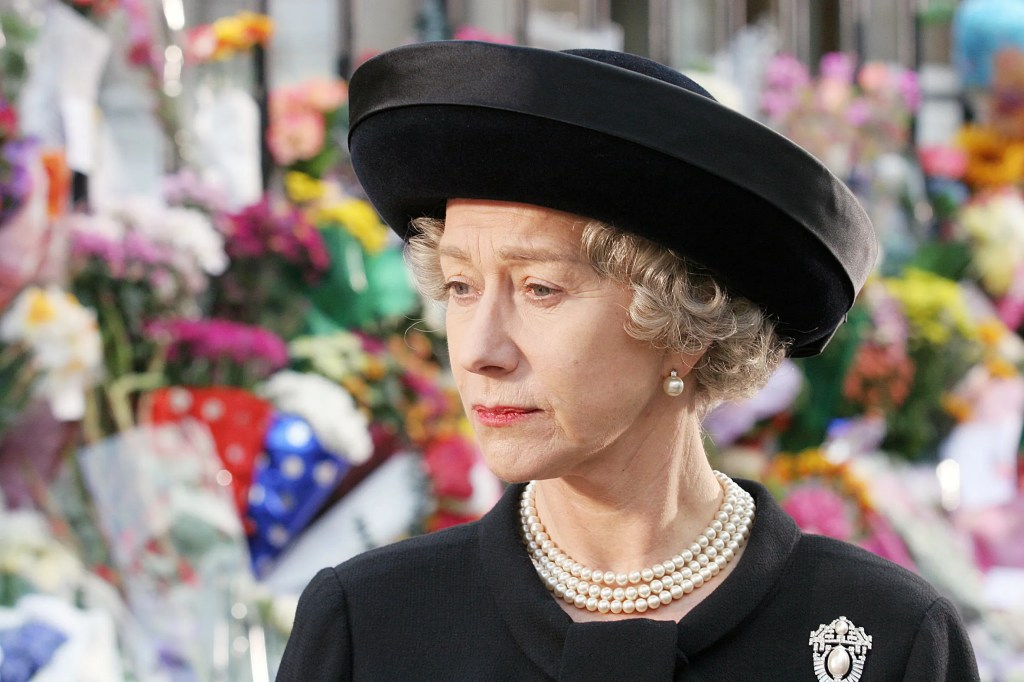
There’s always something strange to watching an actor play a real person, doubly so when the actor in question is one we know, and know well, from other parts, and triply so when that real person is still alive. Oh, look – there’s Gary Oldman playing Lee Harvey Oswald, and there’s Bruno Ganz as Adolf Hitler! There’s Helen Mirren or Emma Thompson (did you know that?) playing Queen Elizabeth II! Is that a trio of Truman Capotes or is that Philip Seymour Hoffman, Toby Jones and Tom Hollander having a chat? We recognise Taron Egerton, but we also recognise the bespectacled pop star he’s playing. We know that neither Michelle Williams nor Ana de Armas are Marilyn Monroe, but when we watch them on screen they are somehow both. And is it comforting or monstrous (or both at the same time) that the horrible person in the Oval Office isn’t actually Donald Trump but Brendan Gleeson playing the man?
 The maddening thing with most of Michael Moore’s documentaries is that at some point, he hurts his own line of argument, whether it’s an unnecessary digression or a small mistake. Moore’s oeuvre is certainly not there for comfort viewing, but I always feel restless watching something new of his because he seems to veer off at some point into the undergrowth. Remember how he quoted wrongly from the hull of a Lockheed bomber plane in Fahrenheit 9/11? He starts to build up his argument with footage, witness accounts and pictures that seem too good to be true, and then he commits a blunder that makes the movie lose steam – not all of it, but the story he wants to tell gets weaker, and the movie has a hard time recovering from it.
 A Damn Fine Cup of Culture