It’s somewhat strange for me to say that I have a favourite kind of animation. It depends on the individual film, on the individual artists. I love Studio Ghibli’s Spirited Away and Porco Rosso and The Tale of the Princess Kaguya. I love the vibrant, expressive, always surprising computer animation of the Spider-Verse films as much as that of WALL-E with its Roger Deakins-like, classically handsome lighting and cinematography. I love Brad Bird’s The Iron Giant, the Looney Tunes classics, the medieval inspirations of Cartoon Saloon’s The Secret of Kells and Wolfwalkers. The styles and techniques with which these films were made were meaningful choices, and they were the right choices.
There are films I love in all kinds of animation. But if I did have to choose a favourite between these styles and techniques, I would have to say it’s stop motion.

By this I don’t mean that stop motion is inherently better than classic animation or computer animation, nor that it’s better at telling stories or anything silly like that. No, for me it’s something different altogether, something that is perhaps best illustrated by the films of Laika, the animation studio that did Coraline, ParaNorman and Kubo and the Two Strings, to mention just a few. Several of the studio’s films do the following: a time-lapse sequence in the end credits showing the animators at work, moving the figures frame by frame to create the illusion of movement. This is pretty much a truism: show alternating stills that all differ in minute ways and you get a motion picture. But these credit sequences manage something quite amazing: they show us the animation process, they show the people who move the figures’ limbs and adjust their facial expressions, highlighting the craft and the work, but while they show the illusion for what it is, they still uphold it. We see the puppets for what they are, puppets controlled by human beings, but at the same time as the artifice we’re seeing the resulting illusion and we believe in it. It’s theatrical magic of the best kind: we see the strings and they don’t matter – the puppets come to life.
And this is true to some extent for all stop-motion animation, the way it is for the best kind of theatrical puppetry as well: we see the material, we see the puppets, we see the strings – or, in the case of the animation of another famous studio working largely with stop motion, we see the fingerprints on the clay. (Apparently, Nick Park, the creator of Wallace and Gromit, calls this quality “thumbiness”.) Somehow, the illusion isn’t shattered or even weakened by these telltale signs of the process: it’s enhanced.
Classical animation doesn’t generally have this, nor does computer animation. There’s a hermetic quality to these techniques: their worlds just seem to exist, they don’t draw attention to their own artifice – unless we’re watching something like one of the more meta-minded Looney Tunes clips. Especially with computer-animated films such as Pixar’s modern classics, the artists strive for a visual quality, in terms of lighting and materials and overall cinematography, that takes its inspiration from live-action cinema. The tendency with those films seems to be to make the illusion as shatter-proof as possible. The world of the stories we watch is there on screen, but it’s removed from the world in which these stories were made. No strings whatsoever are visible. Certain more recent films like the Spider-Verse movies change this up a bit, they are more comfortable with a self-awareness that extends to the visual style, but it’s probably The Lego Movie and its sequel, spin-offs and sequences inspired by it that aspire to the tactile, material quality of stop motion most – to such an extent that they emulate the slightly jerky quality that the technique has often had. Imagine that: we’re talking about computer animation that artificially recreates the imperfections of stop motion in order to capture its very particular liveliness! Which reminds me of the series of Wallace and Gromit computer games in which the beloved claymation characters were recreated as computer-animated figures – but the creators of the games made sure to recreate Aardman’s trademark fingerprints on the figures: virtual thumbiness, so to speak.

There is something about stop motion, as there is about puppetry in general, that foregrounds the act of make-believe more than other animation techniques. To some extent we always look at stop motion with a certain double-vision, seeing the puppets, the clay and plasticine, for what they are, physical material; and we suspend our disbelief to accept them as living beings – the way we did as children, playing with puppets and action figures. We were the ones creating the illusion, holding plastic Barbies, Action Men or Hulks and moving them here and there. We performed the voices. We knew that these figures were lifeless, but we imbued them with life.
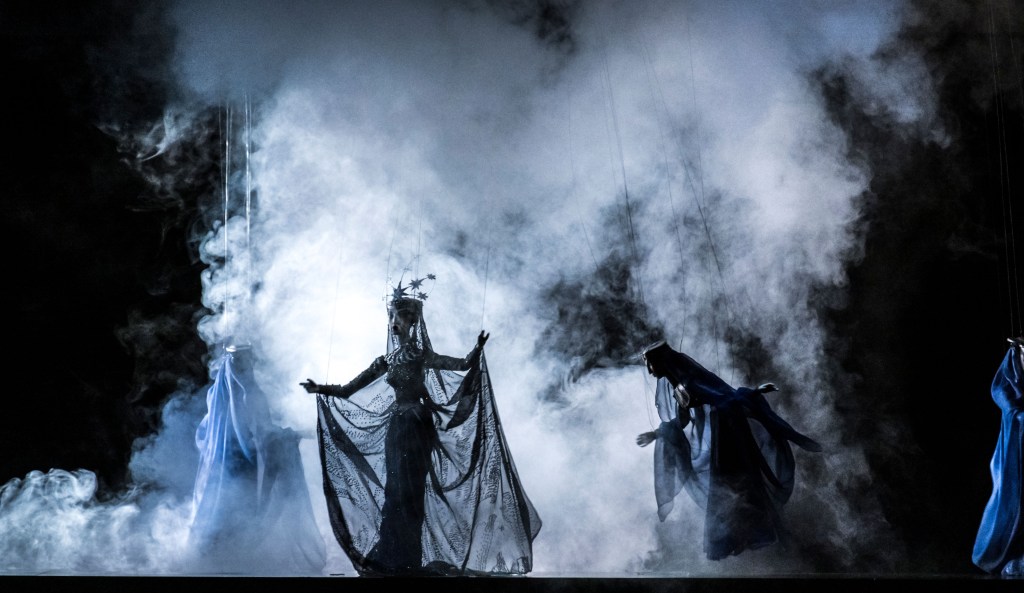
Last year, we visited the Austrian city of Salzburg, and while there we went to see a production of Mozart’s The Magic Flute at the Salzburg Marionette Theatre. At the end of the (heavily truncated but greatly enjoyable) opera, both the puppets and the puppeteers came on stage to take a bow – or, more literally, the puppeteers came on stage, bringing their puppets with them, they moved the puppets (as they had been doing for the last hour) so that it looked like they were taking a bow and then the puppeteers themselves took a bow. But while this may be more accurate in a narrow-mindedly literal sense, it is also untrue to the magic of the moment. If we cannot embrace that moment of magic that is being created in front of our eyes, if we cannot become complicit in it, what’s the point of puppetry? For me, it’s the same with stop motion. This is not a type of animation that hides the artifice, the mundane reality of the process. We see the material, we see the thumbprints, we are aware of the imperfections – so we take a more active part in the process of bringing this material to life.
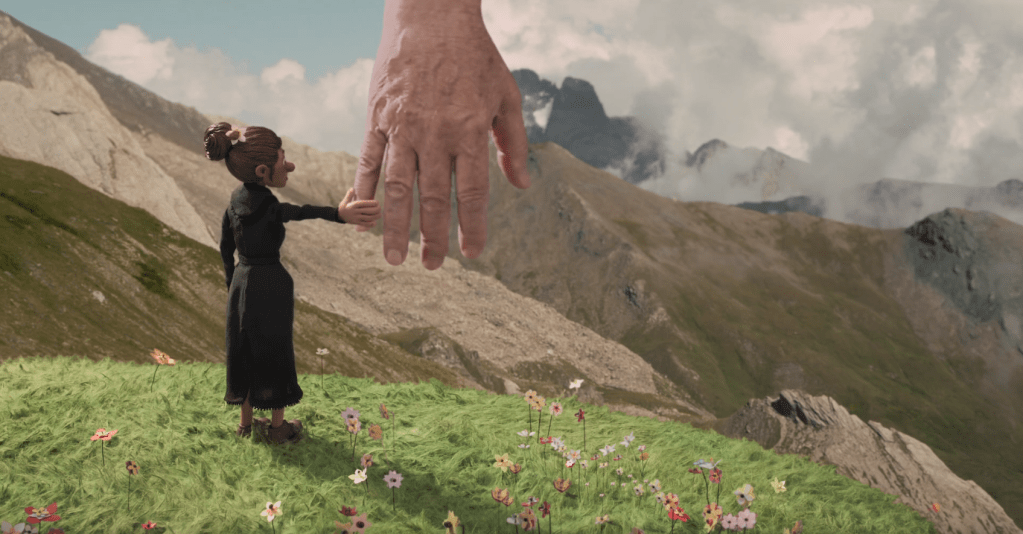
A couple of months ago, we went to see the European co-production No Dogs or Italians Allowed by the director Alain Ughetto. In it, Ughetto tells the story of his grandparents Luigi and Cesira who leave their home in Northern Italy to make a better life in France. No Dogs or Italians Allowed breaks the fourth wall frequently, never hiding the making of the story. We first see Ughetto collecting material to use in the film, and then we see these materials pop up in Luigi and Cesira’s story. More than that, Ughetto’s hand almost becomes its own character, acting on the world of the story he depicts. And, late in the film, there is a scene where the director talks to the puppet representing his grandmother – or, more accurately, we watch Alain talk to Cesira. She extends her hand, and he takes it. The animated figure and the human director, inhabiting two different worlds in more than one sense, touch and connect. The technique Ughetto uses to tell a simple if poignant story of leaving one’s home and emigrating to a new, not entirely welcoming country takes on a magical quality: as the artist making this film and having created a version of his grandparents in the telling takes the hand of the puppet, the grandson also takes the hand of the grandmother that gave birth to his father. There’s a gentle yet mindbending poetry to the way creator and creation, ancestor and progeny, loop and blend into one another until it no longer matters who made whom and who is writing whose story at this moment.
There is a lot of animation that I like, even love. There is something inherently magical to how animation creates worlds that can be entirely new, or how it can present the world we know through entirely different eyes. But there is a special magic to stop motion. Obviously not all stop motion works with this magic;: there is a world of difference between the melancholy strangeness of Niki Lindroth von Bahr’s The Burden and the crude, puerile stop-motion humour of present-day Robot Chicken (though I’d champion several of their older sketches). Not all stop-motion animators are interested in exploring the strangeness and magic that the technique offers. But I love the imperfection and the thumbiness of stop motion. It involves the audience actively in the act of making believe in a way that other forms of animation don’t. It lets us in on the magic: the act of creation.


2 thoughts on “Artistic fingerprints: loving stop-motion animation”