Welcome to Six Damn Fine Degrees. These instalments will be inspired by the idea of six degrees of separation in the loosest sense. The only rule: it connects – in some way – to the previous instalment. So come join us on our weekly foray into interconnectedness!
Most of the films running at my best local cinema are shown in digital format – but occasionally, after the ads and the trailers, there will be a slide saying something to the effect of: the following feature will be shown in an analog, 35mm version. Whenever that happens, I imagine that I hear a contented sigh from all the real cineastes in the audience. 35mm. None of those new-fangled bits, bytes and pixels. Real film: warm, grainy, as God intended.
Now, I consider myself a pretentious film geek with the best of them. But, honestly? I can’t remember a single such announcement that we’re about to see a film on, well, film rather than only a digital facsimile that didn’t make me think: couldn’t we have the digital version instead?
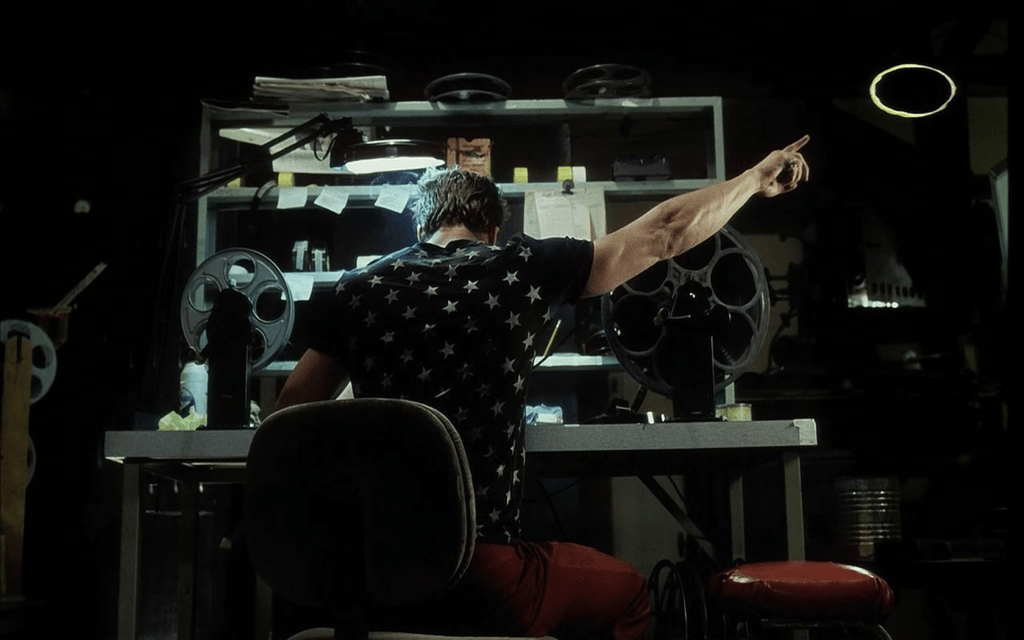
Now, of course it’s not that simple. I understand the sensual appeal of film that stems from the imperfections: the occasional jitters of the image, the scratches and the cigarette burns, the crackle, the faded colours. There is a reason why our podcasts start with the clatter of a film projector. I, too, enjoy the vibe of these things. I just don’t think they’re necessarily more authentic and therefore superior, more in tune with what the original filmmakers intended. The telltale marks, sights and sounds of film in its original format are an aesthetic, and that aesthetic communicates something: nostalgia, times gone by, and everything that comes with this. But I also feel that when a modern filmmaker takes their footage shot digitally and adds vintage effects in post-production, in order to generate that particular vibe, at least when it’s done well and with a clear sense of purpose.
Moreover: the way that a well-worn film reel looks on modern equipment isn’t the same as what it looked like when it was first shown: we’re seeing the wear and tear that comes with a film having been shown multiple times, and the equipment itself will also reveal things that on older gear might not have been as visible. Moreover, if a 35mm film is popular, there’s likely to be more wear and tear – and, as such, those analog artefacts certainly tell a story. But that story isn’t the only one, or even the most important one, that a film tells.
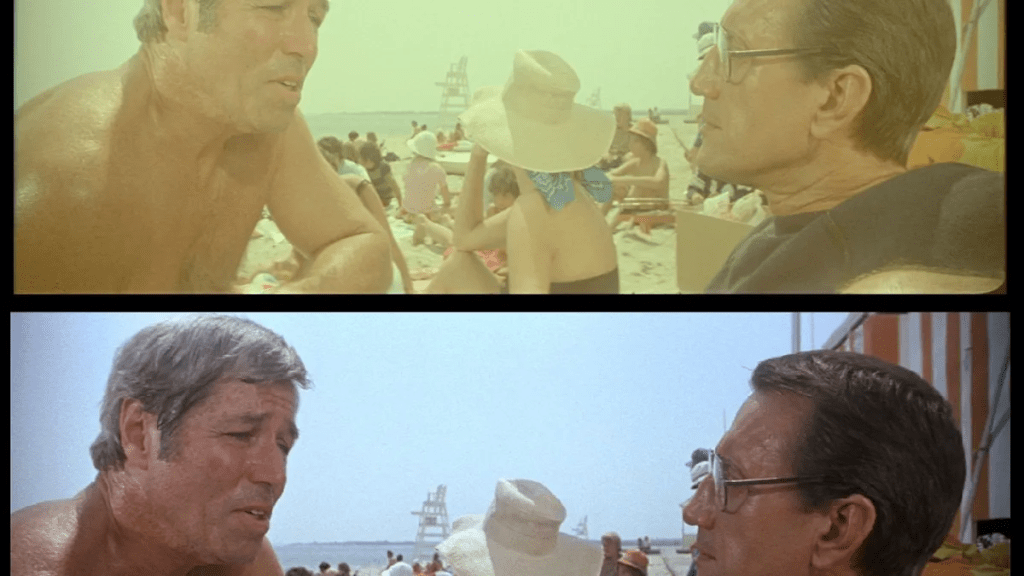
It’s certainly not that I am a fetishist of all things digital: there are good, bad, even horrible digital remasters. I’ve been lucky enough to avoid the waxy, hyper-real re-issues of, say, Predator, that have all the grain sanded off, resulting in an uncanny image in which young Arnold looks like a digital revenant of himself – like those early attempts at using CGI to de-age actors, where we ended up with creepy versions of Patrick Stewart or Robert Downey Jr. (Jeff Bridges in Tron Legacy gets a pass, just about, because the de-aged Bridges we see is supposed to be a computer-generated being most of the time. Just forget that there are also some shots that are supposed to be of actual young Flynn.)
But take a good, carefully made 4K remaster of a classic film, like most of the Criterion releases I’ve seen ever since they started doing 4K with that most K of films, Citizen Kane – and the image is beautiful to behold. The beauty and the crispness especially of old, black-and-white releases restored and remastered into 4K is almost startling – but if done well, the image absolutely has warmth and life and grain. The same is true for more modern films from the ’80s and ’90s, such as Jane Campion’s The Piano: a film whose releases on VHS and DVD always looked a bit too gauzy to my eyes. Take Criterion’s 2022 release and you (re)discover a tactility and a texture to the pictures shot by cinematographer Stuart Dryburgh. The ultra-high resolution doesn’t make things look too sharp, too precise, it rather allows us to see the nuance in these faces and fabrics and materials: the New Zealand mud, the tree bark, the black dress that Ada wears. To me, it’s like the difference between seeing a painting by one of the Old Masters in a glossy, high-quality print – and seeing that same painting up close at a gallery, seeing the brushstrokes and the light playing on the layers of paint.

I’ve also made a few bad experiences with classic films played from old reels: we once saw Roman Holiday, and the film would jump by a second or two when a bunch of frames were pretty much completely gone. Only last year, we saw a copy of All About Eve that had about half a minute missing in one place, so in one scene a character appears out of thin air, as if he’d been there all along. In a very abstract sense, I can see some appeal in this strangeness: the material of filmmaking is the most apparent as material when some of that material no longer serves to carry the movie. What is split, torn, fractured, highlights that which is still reasonably whole. But that is a different experience: you’re watching the time that has passed since a film was made and released at least as much as you are watching the film itself. I’m not saying that there’s no value in this – but it is not more authentic of the film itself. Again, the film being deteriorated tells a story of its own, but it’s a different story from the one the film is telling. (Though the two can converge, I guess, if you’re watching an old print of, say, Whatever Happened to Baby Jane? or The Hunger.)
In some ways, I find myself reminded of that scene in Fellini’s Roma, in which archaeologists unearth Roman frescoes buried in a catacomb – and just as they lay their eyes on these paintings that are thousands of years old, the air starts to affect them and, in effect, ruin them. Art, in its original form, is not forever: there is certainly a point to making the passage of time visible. As much as I am in favour of preservation (as discussed in this podcast episode from last year’s Lost Summer), it should not mean that the old is cast in wax and made falsely eternal. There is an extent to which all releases of a film, in all formats, are always a palimpsest of sorts: overlaying interpretations that differ from an original that itself never really existed. A film on celluloid doesn’t look the same on two different screens in different cinemas. It doesn’t look the same from one showing to the next, even in the same place on the same projector. The material accumulates wear and tear. The people who restore films also make choices, educated guesses, they fill in blanks based on their knowledge as much as on preferences. They put their thumbprints on the material they work on, even while they endeavour to bring it back to its original glory. And all of these thumbprints are legitimate: whether you show a film in crisp, beautiful 4K or of a worn but still serviceable 35mm copy. Or, indeed, an old VHS tape, or a recording off TV, complete with vintage ads.
The point is this: all of these versions in which we watch films have their purpose, they all have their particular look and feel. It’s fair to have preferences. But we shouldn’t fetishise those preferences, and we should certainly not fall for a facile idea of what is and what isn’t authentic. We leave traces on the films we watch as much as they leave traces on us, and those traces often express more about us than they do about the films themselves. In some ways, the original and most real Star Wars for me is one which is in 4:3 format, has the distortions typical for 1980s video tape, and it is interrupted every 20-30 minutes by ads for Bisto gravy, Hovis bread and PG Tips tea. But that doesn’t mean that, in 2026, I would want to watch that particular version of A New Hope.