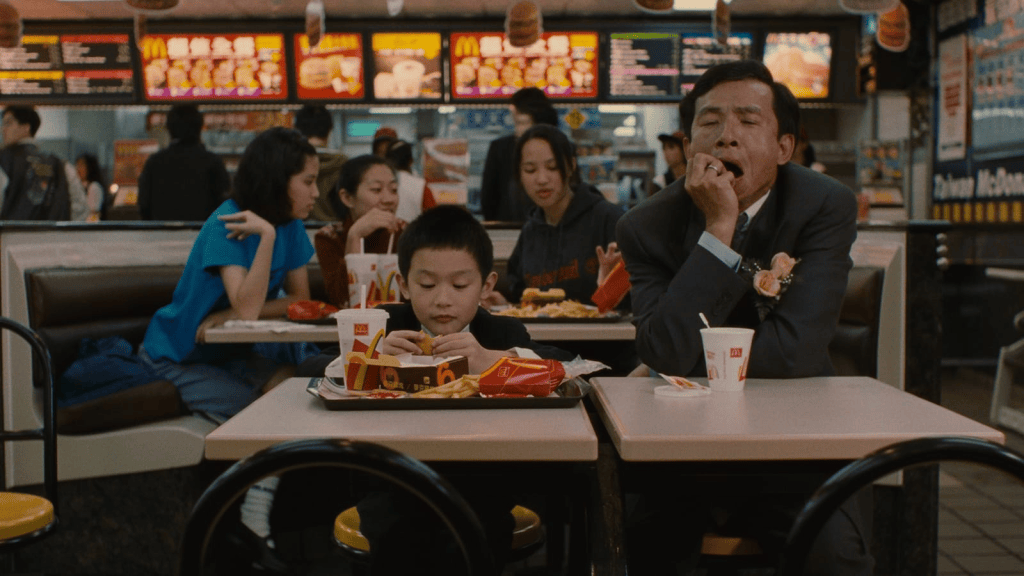
There are some filmmakers that pop up on your radar again and again – but it takes you a very long time to get around to watching any of their films. There are just too many interesting filmmakers and too many films to check out – and if you’ve got a great local repertory cinema with a well-curated programme, you may even think, “Hey, sooner or later they’ll get around to something by this director on their programme.” Or, indeed, Criterion releases some of the director’s films, so you order them, and once they’ve arrived you put them on your shelf, next to the other Criterion films you’ve not yet got around to watching.
And then years pass, because in the meantime there are so many other films to watch, other directors to check out, other Criterion releases to get excited about and other cinema programmes featuring yet more films and filmmakers to keep you busy.
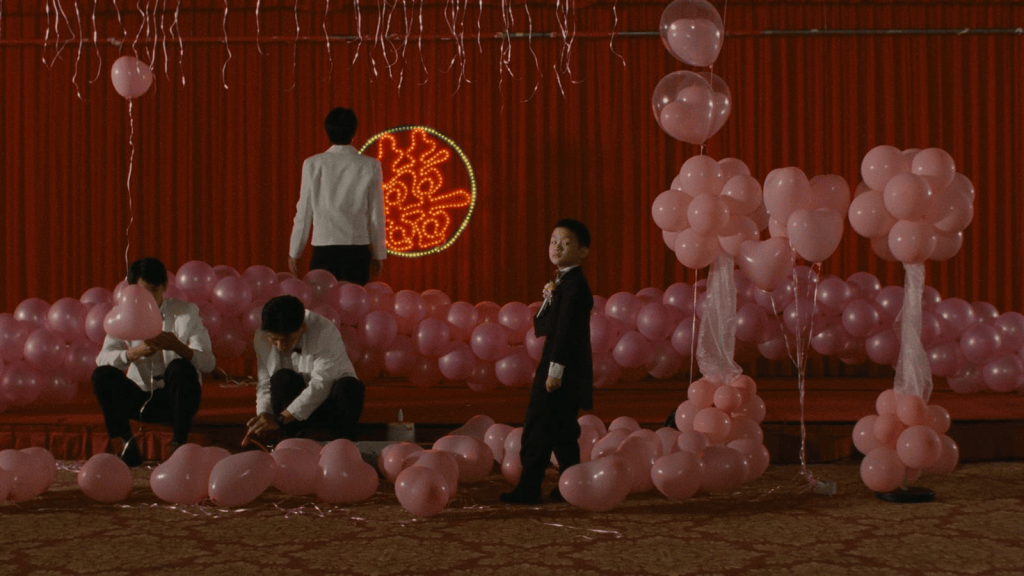
Until, in this case, your favourite local repertory cinema puts on a series of films from the Taiwanese New Wave, and you finally get to see two films by Edward Yang (well, actually three, though one of these was one episode in the anthology film In Our Time) for the first time – not on TV, played from a Criterion disk, but on a movie screen, as the God of Cinema intended. So this is a bit of a cheat in terms of being a Criterion Corner entry – but I assure you, Yi Yi (2000) has been sitting on my shelf for a long time, and A Brighter Summer Day (1991) is on its way as I write this. And I am already looking forward to revisiting both films in their Criterion releases.
Yi Yi is the later of those two films, but I do think it’s a great Edward Yang film to watch first. Starting off at a wedding, we’re introduced to a middle-class family, the Jians, made up of father NJ (Wu Nien-jen), mother Min-Min (Elaine Jin), teenage daughter Ting-Ting (Kelly Lee) and son Yang-Yang (Jonathan Chang). During the reception, Min-Min’s mother is clearly out of sorts, and she has a stroke, leaving her comatose. The old woman is put on life support, but the Jians keep her at their flat, looking after her – and this triggers various crises in the family: Min-Min becomes depressed, breaks down and temporarily up and leaves her family for a Buddhist retreat, while NJ, having recently run into his first love for the first time in decades, begins to question the choices he has made in his life. Meanwhile, Ting-Ting, who feels responsible for what has happened to her grandmother, compounds those feelings of guilt when she falls for the boyfriend of her closest friend – and eight-year-old Yang-Yang? He’s perhaps the most cryptic member of the family. He takes photos of the backs of people’s heads, he develops his first crush on a girl that has been tormenting him, and he decides to teach himself how to swim – which may not have been a good, or altogether safe, idea.
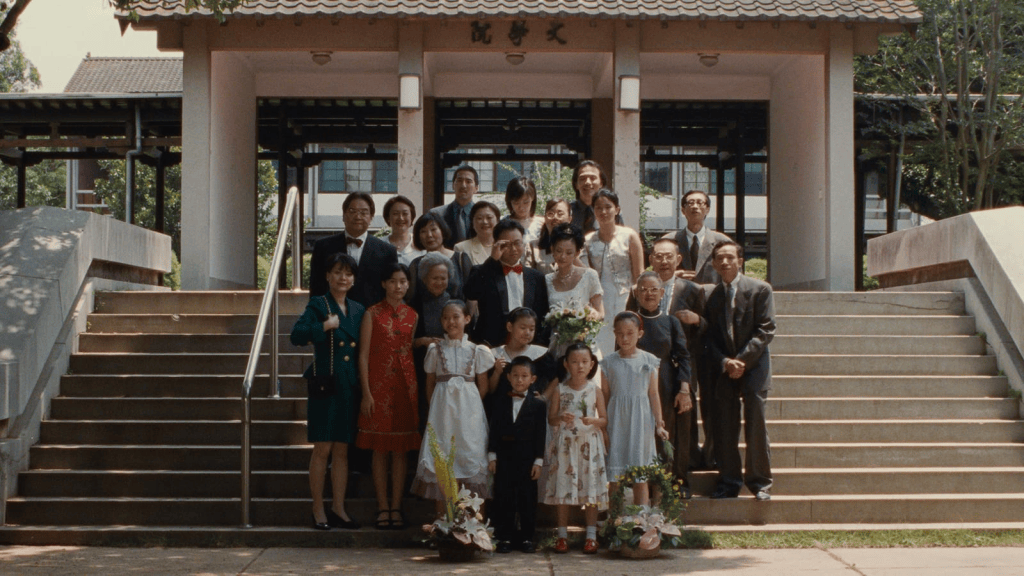
Yi Yi won the 2000 Palme d’Or at Cannes, and Yang was awarded as Best Director – and those were just two of many awards. He worked on other projects, but Yi Yi would be his final film: Yang died in 2007.
A Brighter Summer Day is also a family drama – but not only: Wikipedia describes it as an “epic crime drama”, which isn’t wrong, but it is reductive. The film, which also focuses on a middle-class family, is set in 1959 – a time of martial law and the era of the so-called ‘White Terror’, marked by tensions and outright violence between social and ethnic groups. It is also a time during which teenage street gangs and American culture (and, in some ways, the overlap between the two) were on the rise. Hsiao Si’r (Chang Chen, who’d later play the rakish bandit in Ang Lee’s Crouching Tiger Hidden Dragon), the youngest of five children, witnesses the inadequacy and corruption of the adults around him, and finds himself drawn to the world of the gangs, as their leaders seem to be more worthy of respect than the bourgeois adult world and its hypocrisies.
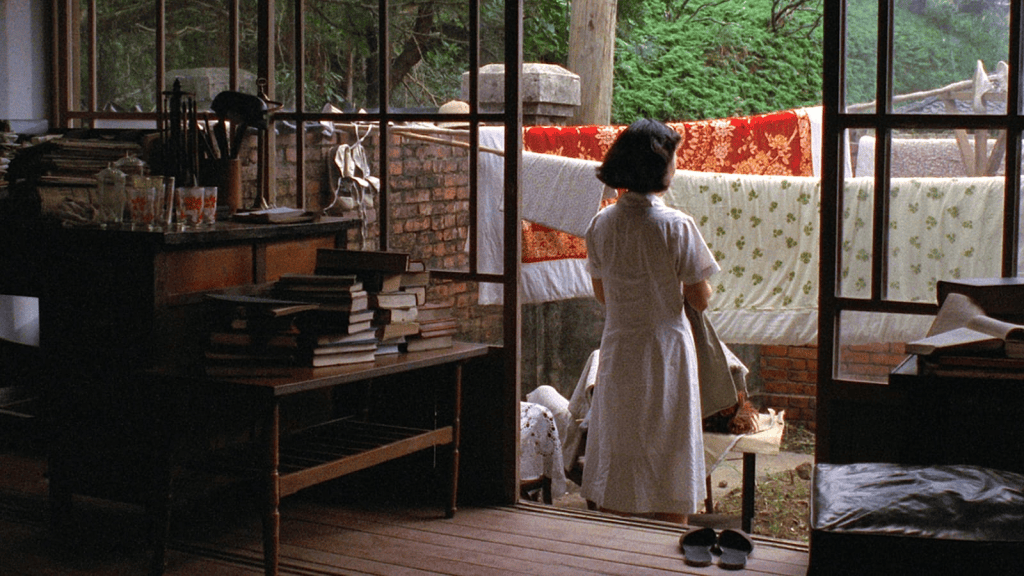
A Brighter Summer Day looks at first like a historical coming-of-age drama, and it is that – but it is more: it depicts the Taiwan of the time by means of its schoolyard-and-youth-gang microcosm, and differently from the usual coming-of-age tale, it finally tells a real-life story of a violent crime that no one can really quite make sense of, perhaps least of all the one who perpetrates it.
Verdict: Yi Yi is a beautiful portrait of a family in crisis, each of its members facing up to the end of one stage of their lives or the beginning of a new stage. It doesn’t broadcast its themes in obvious, blatant ways; instead, it observes its characters over time to weave a tapestry. It doesn’t rush its storytelling, but it is constantly engaging – and beautiful to look at, without its beauty overshadowing the simple humanity of its various story strands. Yang, who also wrote the script, isn’t afraid of using sentimentality where it suits the story, but the film never tips into becoming mawkish. Where it challenges its audience perhaps unduly is in its vast cast of characters, and there are times when I wish Yi Yi had not extended to quite as many individuals: the core of the film is certainly its family of four, and this is where it is by far the most cohesive.
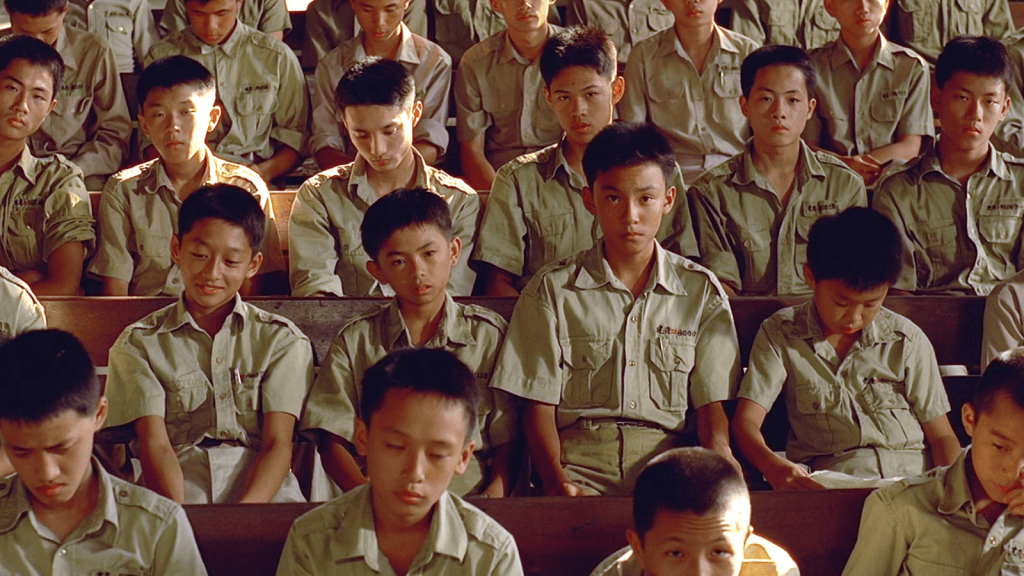
Meanwhile, A Brighter Summer Day is also beautiful in terms of its cinematography and its depiction of mid-20th century Taiwan, but there is a dark streak to this one – culminating in a grim climactic scene that feels shocking at first but is almost inevitable in hindsight. The two films, Yi Yi and A Brighter Summer Day, clearly share a lot of DNA, but, as befits the era it depicts, Yang’s 1991 film shows a society under strain, and that strain breaks out in sometimes organised, sometimes seemingly random violence. Yet Yang’s humanist storytelling also uses humour in effective, striking ways, balancing its tones and moods effectively.
Both films are well worth seeking out, in particular for newcomers (like me) to Taiwanese cinema. They are great introductions to a cinema I was barely aware of before the recent series on the Taiwanese New Wave – and each film leaves the viewer with the sense that they’ve not just come to know these two families but witness a world in microcosm at two key points in its history.