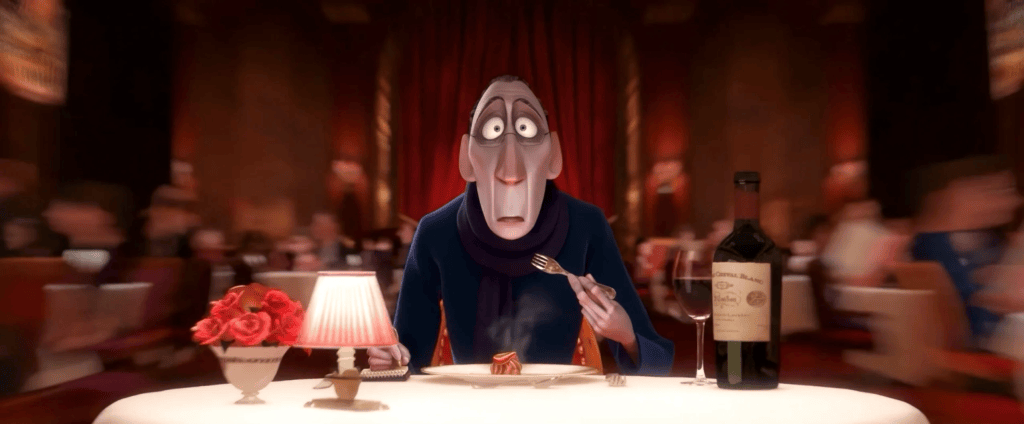
Welcome to Six Damn Fine Degrees. These instalments will be inspired by the idea of six degrees of separation in the loosest sense. The only rule: it connects – in some way – to the previous instalment. So come join us on our weekly foray into interconnectedness!
I have a strong personal belief when it comes to criticism of art of any kind: critics have to make a distinction between disliking the thing they’re criticising, whether that’s a film or a book, a game or an album, and that thing actually being bad. This doesn’t mean that they have to put every criticism down as a personal dislike: a good critic should be free to think, and state, that this movie or that novel is actually bad. But any critic, or indeed anyone uttering criticism, that seems to think that if they dislike a work it must obviously be bad? They can go take a long walk while I unfollow them and remove their sites from my bookmarks.
Over the last couple of weeks, I’ve been reading Andy Weir’s Project Hail Mary. I thought the film was absolutely fine, but it didn’t bowl me over as one of the best of 2026 – so when I saw people on the internet say that whatever issues I had with the film (and there were several) that the book did it much better, I was curious. I was also doubtful: I wasn’t sure that what I disliked about Project Hail Mary was likely to be solved by having a few hundred pages to fill in the gaps. But, having liked the film made of Weir’s first hit, The Martian, I thought I should give him the benefit of the doubt.
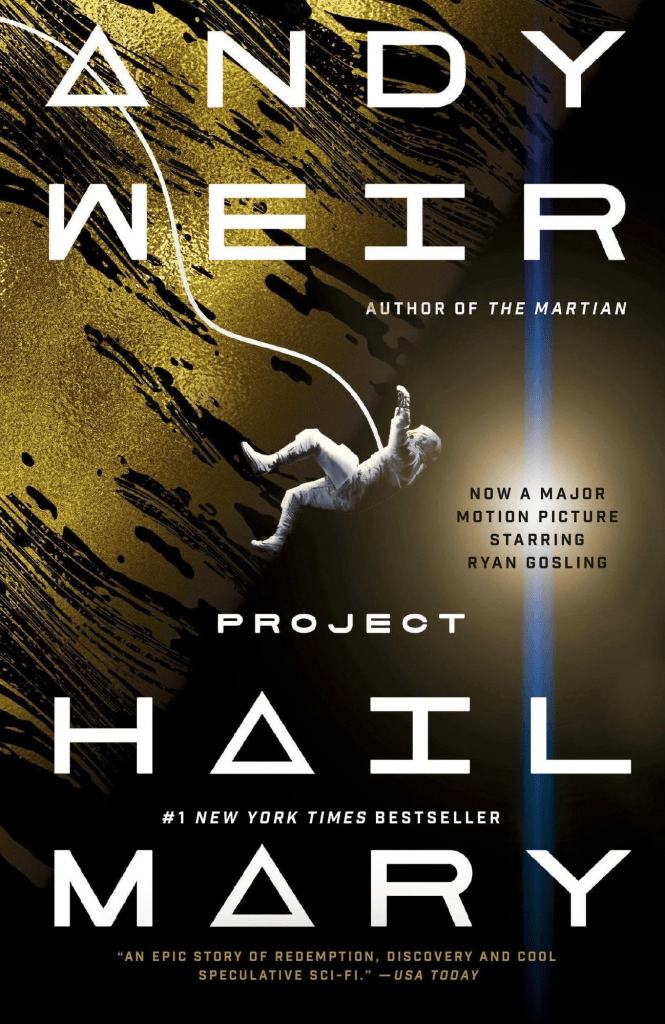
About a quarter into Project Hail Mary, I was sure that the things I’d minded about wouldn’t be fixed by the novel. In fact, I’d go further: at that point into reading the book, I would have said that Andy Weir is a bad, bad writer. His prose is clunky, his characters are flat and clichéd, his dialogues perfunctory at best and often downright dreadful. I would even say that reading Project Hail Mary gave me a newfound appreciation of the film: the screenplay by Drew Goddard, who had also adapted The Martian into a film script, certainly had its shortcomings, but it made the film’s characters and the dialogues into what I assume Weir was aiming at. As adapted by Goddard and then played by Ryan Gosling, Sandra Hüller and James Ortiz, the characters may not have been particularly deep or devoid of cliché, but they were engaging and fun.
It is a very rare thing for me to give up on a book I didn’t particularly enjoy reading, so I persisted and finished Project Hail Mary – and as I continued reading, I found that while my opinions of Weir’s prose, dialogue and characterisation didn’t improve, I could see that he was better at telling an actual story. It’s not that he’s a master storyteller, because a good, well-told story does need better writing and stronger characters – but Weir certainly knows how to string incidents together in a way that makes you want to know what happens next. I would even go so far as to say that in Weir’s original version of the story, he managed to sneak some themes into the plot that in the movie adaptation were lost in all the moment-to-moment incident.
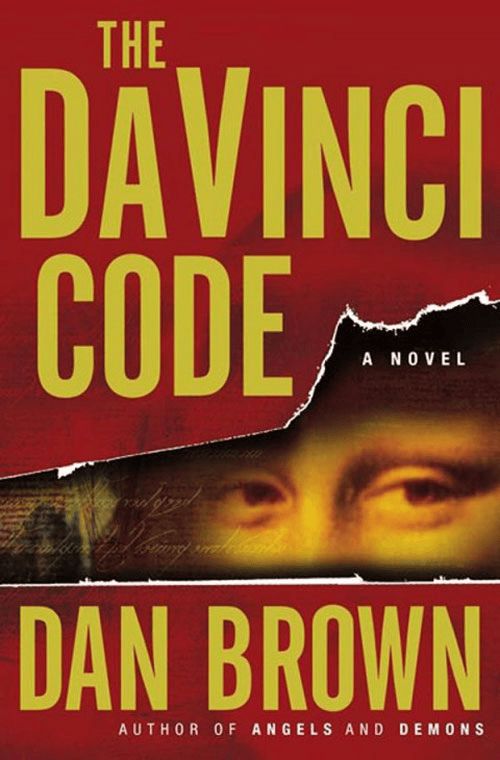
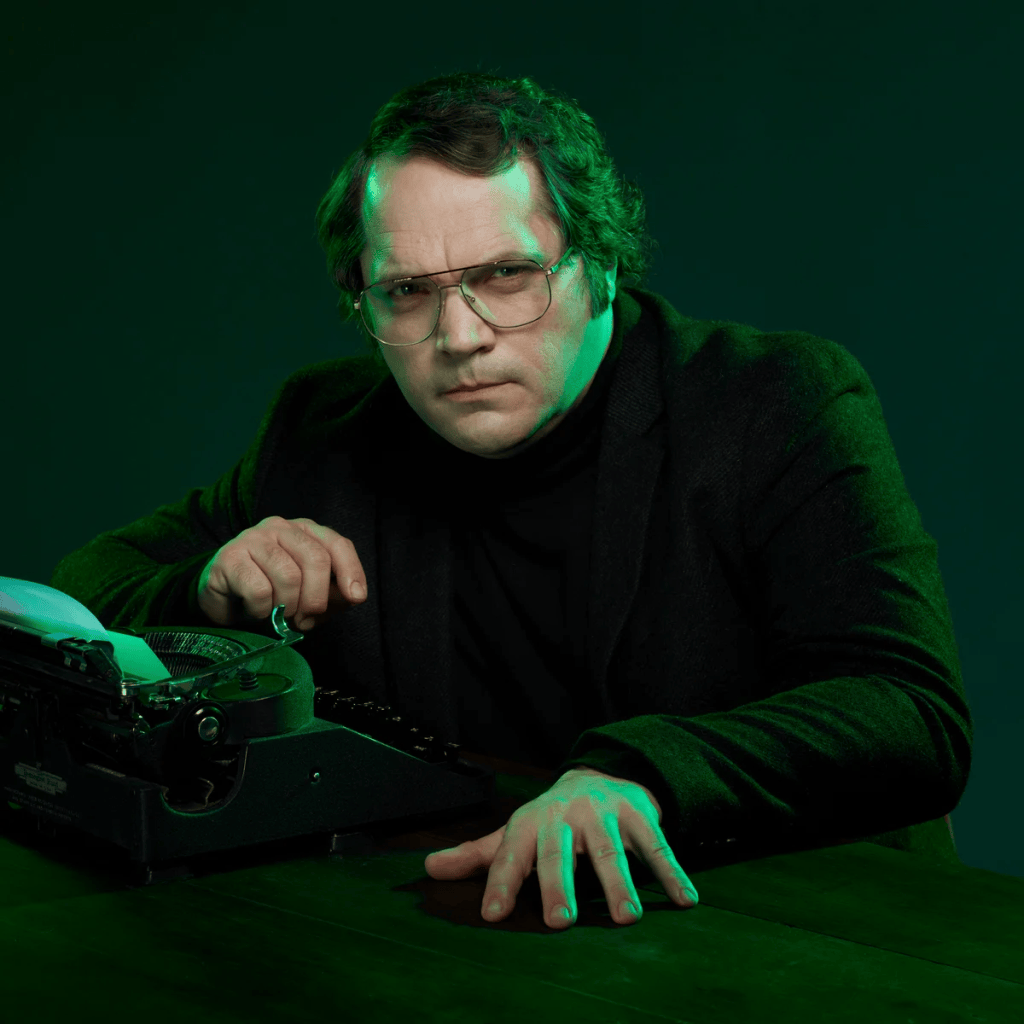
Which reminded me of a previous life of mine: for a while there, in the early 2000s, I taught English Literature at Uni, which in Switzerland also meant that I’d be called on to sit in on the Swiss equivalent of high school exams. For the oral exams, students had to pick a number of books and talk about them to the examiners: their English teacher and me in this case. The exam I remember best was with a clearly smart student who, as one of his books, had picked Dan Brown’s The Da Vinci Code. I’d not read Brown’s novel, but it had been impossible to avoid it completely – and I’d seen a bunch of reviews that had quoted Brown’s prose liberally. I was quite confident that their assessment was correct: Dan Brown was a bad writer. His writing appears to be not too dissimilar from that of fictional horror author Garth Marenghi, star of the 1990s parody series Garth Marenghi’s Darkplace and coiner of the phrase: “I know writers who use subtext and they’re all cowards.”
So we were curious: had the student liked the Da Vinci Code? He’d brought it to the exam, probably knowing Brown’s reputation as a bad writer, which suggested an impish impulse in the student’s selection of books. When we asked the student about the novel and his opinions on it, he started off saying: yes, Dan Brown isn’t a good writer. Yes, the writing is clichéd and close to self-parody. He also made a very convincing case for The Da Vinci Code being a fun read, sometimes in spite of Brown’s shortcomings, sometimes because of them. He could’ve done the easy thing and just laid into Brown and the novel, but he presented a compelling case for both the strengths and the weaknesses of The Da Vinci Code. It was one of those exams where, after fifteen minutes, we rather wished that we could have kept the discussion going.
Does this mean that I think The Da Vinci Code and Project Hail Mary are good books? Well, I’ve still not read the former and have no intention to do so, but I would nonetheless say that everything points in the direction of Dan Brown being a bad writer and his novels being similarly bad – but I can also see how someone might like them. Whether that is because Brown gets some things right, or whether he simply leaves all the right gaps in his stories, or simply because there’s no account for taste: I don’t know, and I don’t much care. Project Hail Mary, meanwhile, gets some things right and other things very, very wrong – and I can totally see how someone who’s into the plot and the whole sciencery of Weir’s novels could enjoy them while not giving much of a damn about the prose or the characters beyond getting to enjoy another variation on the Mark Watney template from The Martian: a smart, snarky, science-loving dude left on his own to survive and win the day, and just a bit of a Gary Stu to boot.
I like criticism. I like reading someone’s thoughts on why they think this film they just watched is good or bad or interesting or strange. And my favourite criticism is able to look at something and say they enjoyed it even if they think it’s not actually very good, or conversely, they’ll be able to recognise its strengths while also saying that they very much didn’t like watching or reading or playing it. They may like things I dislike or vice versa, and they may consider aspects bad that I think are actually quite good. (In one of our recent podcast conversations, Alan commented on the chemistry between the two leads not quite convincing him, while I thought the two actors had fantastic charisma. Who’s right and who’s wrong? You decide.) Both these dimensions play a role in criticism, and a critic’s tastes as much as their criteria when it comes to quality will tell me not just about whatever it is they’re criticising, but about how much the critic’s assessment is likely to align with my own. And, honestly, much of the best criticism has little to do with how much it overlaps with my own thoughts on a work of art: it’s understanding where the critic comes from in all respects, and not just some narrow conception of what is good and what is bad, that allows me to understand what they’re saying in the first place.