Welcome to Six Damn Fine Degrees. These instalments will be inspired by the idea of six degrees of separation in the loosest sense. The only rule: it connects – in some way – to the previous instalment. So come join us on our weekly foray into interconnectedness!
First, a disclaimer: This post contains spoilers for Exit 8 and Backrooms. But it takes quite some time to get there!
When my daughter was six, she asked me, “What actually are monsters?” I had to think about that one – even at that age, she asked questions that go beyond surface curiosity. I finally told her: “Monsters are just creatures that haven’t been categorised yet.” If biologists got hold of a mythical monster, they’d taxonomy the hell out of it and then it would stop being mythical. It would be just another animal. If you look at some of the predators roaming our earth, they fit the picture of monsters. But we call them, for example, Architeuthis dux and stick them in a classification drawer. All is well. The human mind can rest, satisfied.

I was reminded of that when reading last week’s post. Matt asked: “Where are the truly alien aliens?”, in a way that seems tautological. Ridley Scott’s alien, he posits, is, in essence, a biomechanical predator and thus too understandable to be truly alien. The aliens in Star Trek or Spielberg’s E.T. are too humanoid: beings with a purpose we can empathise with. The aliens in Arrival (I confess I haven’t seen that one, but now I’m sold) are…giant hands. He finally arrives at Solaris and Odyssey 2001, whose alienness is defined by the fact that we can’t wrap our minds around it. If these aliens have a purpose, it never gets revealed and we can speculate but never truly understand. By that definition, I would add Stalker to the list.
The Straw Alien
That’s the tautological part: The alien is that which cannot be understood. As soon as we understand it, it stops being alien. Yet a major driving force of sci-fi is to try to give the alien a shape, a purpose, something to empathise with. This is the delightfull pull-and-push essence of sci-fi, in which we provide both the ineffable mystery and the taxonomical resolution of what ultimately becomes a straw alien. Because to achieve this, we keep striving to break the boundaries of the human mind by summoning something it cannot fathom. But the human mind can only recreate itself. Eventually, we always end up staring into our own faces.
The only way to succeed in this bind is to show but not explain aliens, which is where Solaris and Odyssey 2001 fit in. Matt quite rightly defines them as the ultimate aliens; their origin, volition and personhood remain laughably untouched by human understanding.
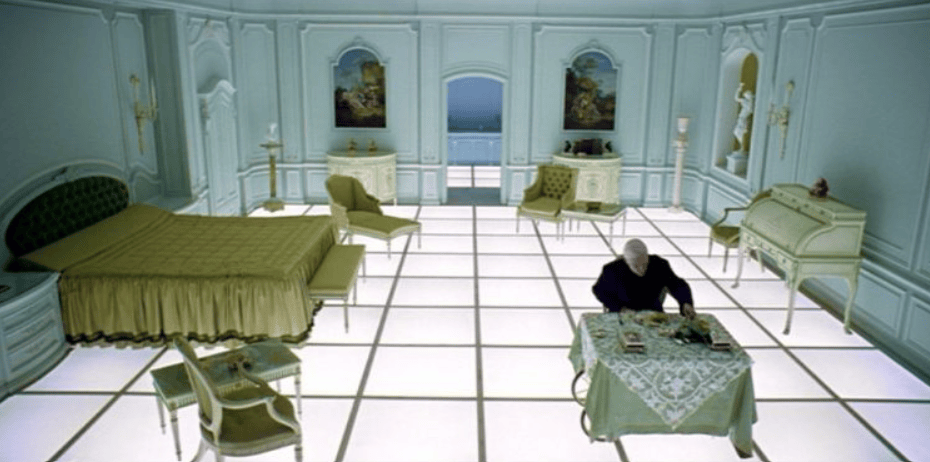
The problem with this sort of alien – one who seems devoid of relatable personhood or purpose – is that once you accept its existence, it becomes no more than an (un)natural phenomenon. A force that rearranges your world for no understandable reason might as well be a volcanic eruption, a typhoon or any other phenomenon your homeowner’s insurance won’t cover. It’s like making a movie about a new kind of earthquake that defies the current laws of physics.
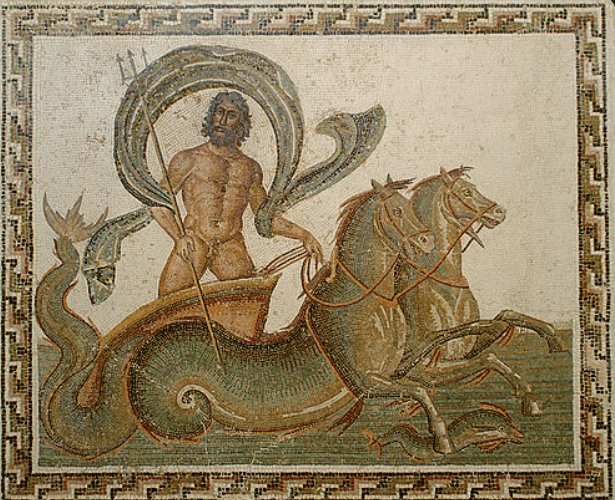
Aliens as an unnatural phenomenon are interesting but ultimately unsatisfying for people who want an alien instead of merely the alien. And wanting this is so extremely human! After all, the first thing humankind did about the natural forces buffeting us around, was to give them a purpose, a personality and sexy looks. And we called them “gods”.
The question for storytellers thus always becomes: How much of the alien identity do we expose and explain? How much do we show of the monster? And how much humanity do we thus risk injecting? This is not limited to sci-fi. The other genre that has been constantly renegotiating that question from the very beginning is, of course, horror. I was reminded quite forcefully of this by two recent releases: Backrooms and Exit 8. They both create a story around a franchise that started off with pure atmosphere, and they both had to navigate the question of how much of the initially non-existent mystery to reveal. But to my mind, they weren’t equally successful at it.
The Backrooms got a back story – with mixed results
The Backrooms originated as a creepypasta and liminal space concept on 4chan in 2019. It started off with this uncomfortably yellow picture (shot in a Wisconsin furniture store undergoing renovation).

The whole thing was so… negatively inspiring that it became an internet phenomenon. The “unsettling maze of yellow-walled rooms with fluorescent lighting and carpeted floors” became the staging ground for Kane Parsons’ 25-episode YouTube series. Presented largely as found footage, the series follows scientists who explore an extradimensional space consisting of large, mostly vacant and interconnected indoor complexes. In it, monsters roam.
Then, Kane Parsons went on to expand the concept into a feature length movie. And that is where he had to make the decision: to either base his story around an inexplicable topography and the drama it causes among the human characters, or to give fear a form and a volition. In other words, a monster. Kane Parson chose the monster, and he chose to give the backrooms a human psychological underpinning. To really hammer this home: he chose to offer an explanation to the ineffable. His movie suggests that the backrooms are a doorway to our collective psyches, filled with representations of things in our minds – for good or ill.
The main monster, a creature called “Pirate Clark”, looks like a giant papier-mâché haunted house attraction. It is a representation of protagonist Clark’s own id, unfettered by morals or indeed original thoughts.
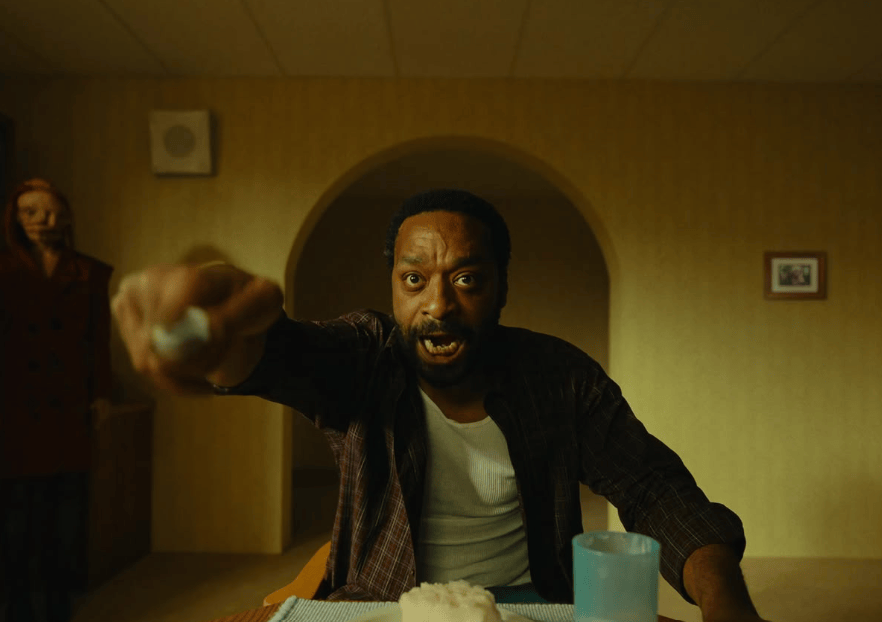
I honestly think all of that didn’t work too well. One major obstacle being that Clark is an insufferably whiny, bitter divorcee at the best of times. Nobody actually wants to see his id in action. But the bigger problem is this: I left the movie thinking that understanding more of the Backrooms took away from their compellingness rather than the opposite. Don’t get me wrong, it wasn’t a bad movie. It had some nice gross bits. The mounting drama of the backroom exploration and its pervading creepy atmosphere were well executed. Chiwetel Ejiofor does a great job embracing his inner monster. But all those aspects never gel, and the essential creepiness of the backrooms takes backstage when the horror becomes overt and concrete. I think that, in this case, the decision Kane Parsons made, to give the backrooms an explanation and a function, wasn’t the best one. I felt a tiny bit of disappointment with every reveal.
Exit 8 forges an escalating feedback loop between story and topography
Some weeks later, and with some trepidation, I watched Exit 8. The movie from 2025, directed by Genki Kawamura, is based on the video game of the same name. The premise of the game is that you are caught in a loop in a subway station. You have to find the 8th exit. Every time you pass the same passageway, you have to assess whether it still looks exactly the same or whether there is an anomaly. If there is an anomaly, you have to turn back. If there isn’t, you move on. If you make a mistake, you’re back to Exit 0. The premise is simple. I wasn’t expecting much of the story.
How do you make being stuck in a subway passage interesting for 1½ hours? How do you give this thing a story and some kind of personal angle without destroying the mystique or divorcing the story completely from its origins? Kawamura, who wrote the screenplay with Kentaro Hirase, succeeded in ways I find hard to articulate.
One thing that carried the movie was a relatable main character, played by the extremely expressive Kazunari Ninomiya. Aptly named “The Lost Man”, he’s struggling with a personal crisis even while stuck in a horror film loop: his ex has just informed him that she is pregnant and doesn’t know what to do. The Lost Man is depressed and beaten down by life. He is not courageous. He does not believe that life is worth living or creating and the thought of being responsible for a new baby reduces him to tears. One might infer that the subway loop is a physical representation of him running in circles in his own head. But that remains an analogy, not lore. Other characters and supernatural manifestations turn up. In a lot of ways, they echo and magnify the theme of children. Eventually, the Lost Man takes a stand.

Exit 8 is definitely a horror movie. At times, it reaches Jumanji-levels of frenetic chaos, and at one point it comes up with a weird, displaced body horror moment. Yet it moved me – and it moved the teenagers I saw it with – in ways I didn’t expect. It’s as if the horror elements and the game mechanics of the setting give power to the emotional angle and that in turn gives power back to the horror aspect. It ends up creating an escalating and immensely compelling feedback loop.
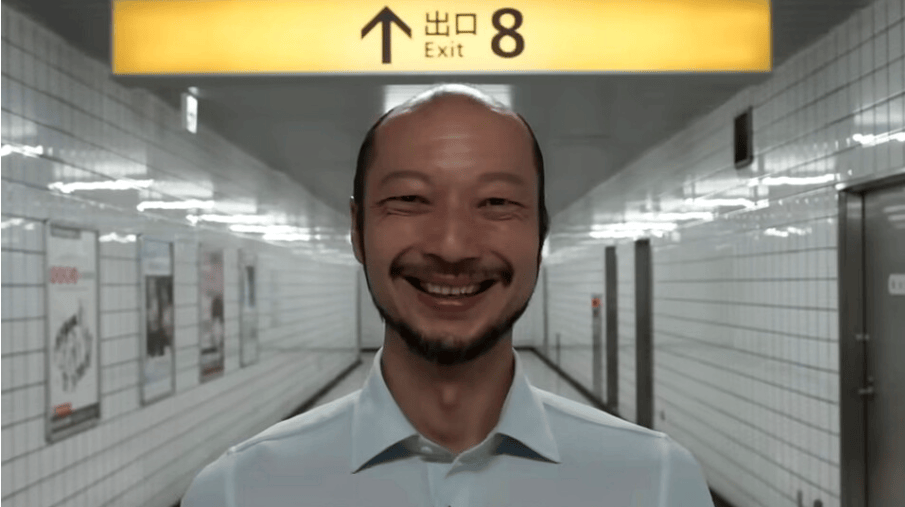
Despite approaching things not that much differently than Kane Parsons – giving his strange topography psychological underpinnings and peopling it with scary creatures – Kawamura succeeds in forging something whole that is more mysterious than any of its parts. And he does that by finding meaning in the Lost Man’s experience without ascribing reason to what are essentially glorified video game mechanics. He reveals nothing about the reason or the nature of the Exit 8 subway loop, it remains a mystery. And so he neatly skirts the issue: The Lost Man’s journey of self discovery has both nothing and everything to do with the nature of Exit 8.

