Each Friday we travel back in time, one year at a time, for a look at some of the cultural goodies that may appear closer than they really are in The Rear-View Mirror. Join us on our weekly journey into the past!

So you’ve got zombie fatigue, too? I don’t blame you. Even my teenage daughter has given up quite a while ago on Rick Grimes and his merry gang (and resorted to vampires, but that’s a story for another night). Even the most ardent zombie fan has to admit that the survivors of a zombie apocalypse are much more dangerous than those slouching, moaning, shuffling undead. In a way, George A. Romero had it easy: when he made his Night of the Living Dead in 1968, zombies were not yet a (excuse the pun) recurring staple of horror movies. And indeed, Romero’s debut doesn’t even use the term.
Continue reading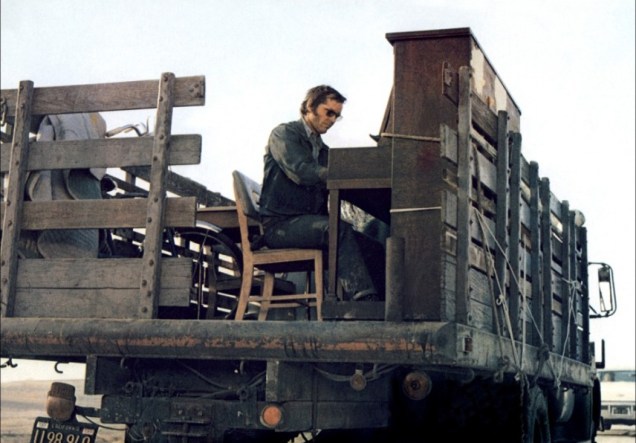
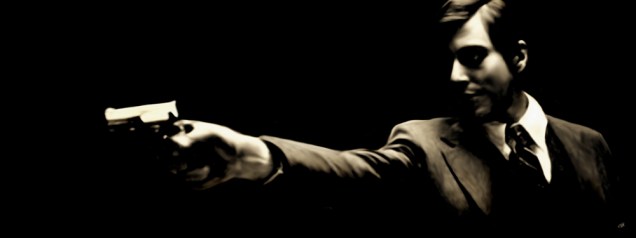
 There is a point beyond which suspense does not increase. It’s a point that every filmmaker and editor should know, and avoid. In the words of a theatre director I once knew: “If you think your timing is just right, you are too slow.” He said this about most scenes, although maybe some scenes in horror movies are allowed to go on a little longer until the tension almost reaches tipping point, but even for horror flicks, there must be a limit to how long an audience is scared by ominous rumbling and blurry shadows moving in dark corners. It’s likely that horror movies depend more on suspenseful arcs than other genres. Obviously, writer and director Oz Perkins thought he would shoot his second feature I Am the Pretty Thing That Lives in the House a tad too slow, because slightly slower means slightly scarier, right?
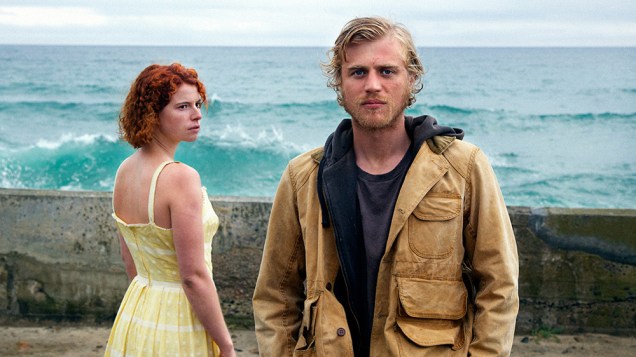 Michael Pierce’s feature debut Beast is less than the sum of its parts. It has very, very strong scenes, but just because the pearls are all beautiful doesn’t mean they belong on the same necklace. Here’s a list from memory: the moment when Moll (Jessie Buckley) runs away from her own birthday party to go dancing. The moment when she meets Pascal (Johnny Flynn) for the first time and is smitten with him, because he looks as wild as she wants to be, and he might be her ticket out of the stuffy surroundings of a small town on a small island called Jersey. The moment when Moll lies into the grave of a dead girl, pretending to be her. The well-meaning cruelty of her mother (Geraldine James). Moll’s apology to the girl she hurt back in school. The whole funeral sequence.
 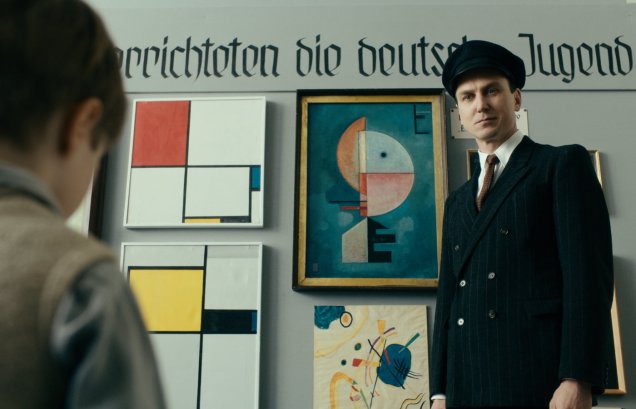 Reader, it’s not easy for me to describe why I like Never Look Away so much, so let me start with the title. The movie’s original title is Werk ohne Autor (Work without Author), which is much better, since it’s a movie about a fledgling painter who seems to see himself as a mere conduit for his paintings than an active artist. A title like Never Look Away suggests that it’s about the Holocaust, although that is not so wrong either. The movie was written and directed by Florian Henckel von Donnersmarck, who also wrote and shot The Lives of Others, an excellent movie, and the slightly disappointing The Tourist. Werk ohne Autor is loosely based on the life of German painter Gerhard Richter, who has seen the movie and disapproves of it.
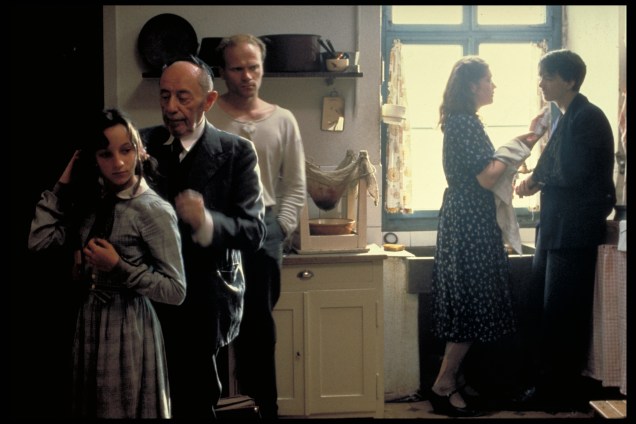 Markus Imhoof’s early feature film Das Boot ist voll (The Boat is Full) from 1981 was an immediate success. It won prizes at the Berlinale in 1981 and got nominated for an Oscar for Best Foreign Language Film a year later, but didn’t win. It made waves at the box office, and it still turns up on many top ten lists of best Swiss movies, and rightly so. The title is a cowardly statement by a leading Swiss politician about the refugee situation in Switzerland during the Second World War. The movie is about six refugees who jump off a train going to Nazi Germany, trying to find shelter and safety on the other side of the border in Switzerland. Three of them are children, but there is also a spirited woman named Judith Krüger who is looking for her husband who is in a detention facility somewhere in this country. There is an old man named Lazar Ostrowskij who has lost his wife during the escape attempt from the train, and since he can no longer be a husband, he is a grand-dad to the three children, although it’s hard to remember who is related to who. The sixth refugee is a deserting German soldier, and the other five are reluctant to be in the same room with him. Judith Krüger soon realises that they have to reshuffle their relationships in order to pass for a real family so they can either stay in Switzerland or get transit visas.
 A Damn Fine Cup of Culture