The Five Stages of Backlog Anxiety

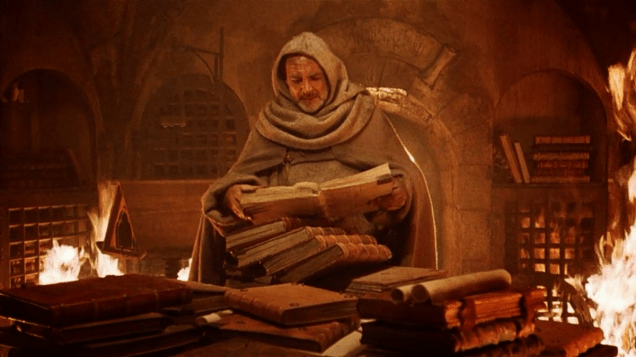
There was a point in my mid-40s where I realised: I have so many games purchased on Steam, I will not live to play all of them, at least not unless I start going through them one by one… and not unless I stop buying a single additional game.

And, looking at my collection of films on physical media? The same may be true. I have a bit more of a fighting chance: my library of games on Steam is in part so large because once a game I’m even just mildly interested in is on sale for US$10 or less, I tend to buy it. Films still cost more, especially those highly addictive Criterion releases I can’t seem to do without. Still: I buy films at a higher rate than I watch the films I’ve bought. The same is definitely true for books.

And, frankly: when I realised the extent to which my backlog would survive me? I felt an unsettling sense of vertigo. (And, embarrassingly, I briefly hoped that by the time I’m old, there’d be a way to upload my consciousness into the cloud, where I would then spend eternity working off my backlog.)

This is fine.
Continue reading

I’ll be in my trailer… watching trailers: All singing, all dancing

Join us every week for a trip into the weird and wonderful world of trailers. Whether it’s the first teaser for the latest instalment in your favourite franchise, an obscure preview for a strange indie darling, whether it’s good, bad, ugly or just plain weird – your favourite pop culture baristas are there to tell you what they think.

In this week’s Six Damn Fine Degrees, Sam wrote about Netflix’ adaptation of Alice Oseman’s Heartstopper books – and the importance of normalising LGBTQI+ romance that doesn’t need to adhere to limiting tropes and clichés. You’d think that we’d be further in 2026, but, sadly…

Continue reading

They create worlds: the melodies of Silksong

One of the things that video games can do magnificently is create worlds. These posts are an occasional exploration of games that I love because of where they take me.

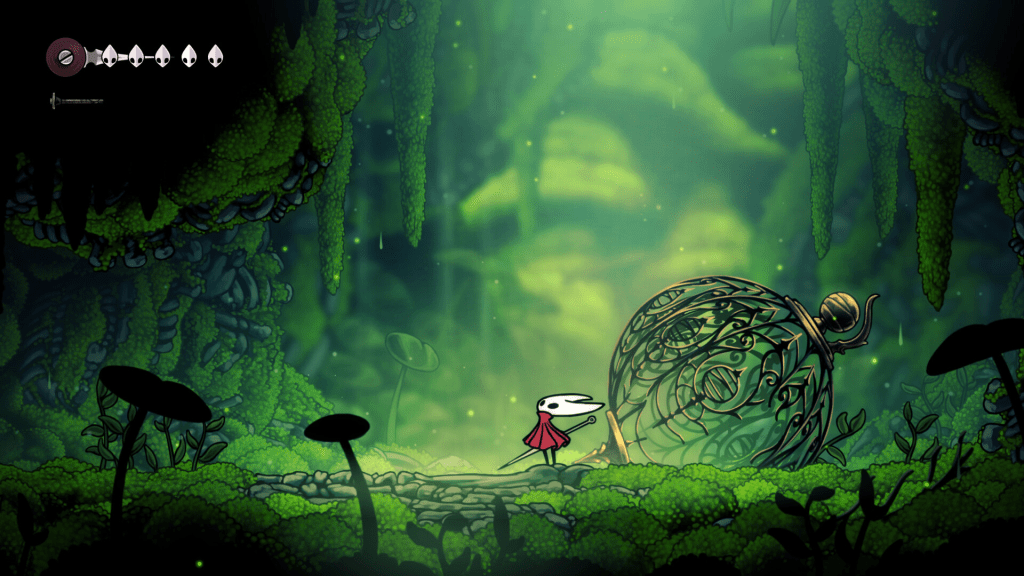
In 2017, a small Australian studio called Team Cherry released Hollow Knight. The game, an action adventure set in a world of insects, was well received by gamers and critics, and its reputation grew over the following years, as much for its challenging gameplay as for its melancholy world and atmosphere. Over time, Team Cherry aded to the game in various ways game – but the main expansion they originally promised, which was to feature Hornet, one of the game’s characters that starts off as an antagonist only to become an ally of the player character, proved too ambitious. As a result, Team Cherry announced in 2019 that Hornet’s adventures could not be contained in an add-on of the original Hollow Knight but instead required their own game: Hollow Knight: Silksong.

It would take another six years until Silksong came out.

Continue reading

That was the year that was: 2025

Let’s be honest: it’s no big secret that 2025 was a shitty year in many ways, so much so that at times, as if we’d woken up in an episode of Black Mirror, it felt like reality itself had installed a doomscrolling plugin. You no longer have to take out our phone or tablet: just walk around with open eyes and the rest will take care of itself.

And yet: not everything is bad. Whenever I hear or read someone going on about how culture, originality, cinema and TV are dead, I can’t help but roll my eyes – because there is so much out there that is pretty damn good: fresh, engaging, challenging, riveting.

See exhibit A:

Continue reading

Six Damn Fine Degrees #265: Poisoned pages

Welcome to Six Damn Fine Degrees. These instalments will be inspired by the idea of six degrees of separation in the loosest sense. The only rule: it connects – in some way – to the previous instalment. So come join us on our weekly foray into interconnectedness!

If you had asked me in the early aughts about my favourite writers, it’s very likely that Neil Gaiman would have been one of the names I mentioned. Like many I know, I first encountered him via Terry Pratchett, when I read Good Omens (1990), co-written by Pratchett and Gaiman, and fell in love with it. Next came the short story collection Smoke and Mirrors (1998), with its tales that ranged from urban fantasy and horror to stranger, more meta fare, and shortly after, I got into The Sandman (1989-1996), arguably Gaiman’s magnum opus in a big way. Once I’d made my way through the ten volumes of that series, there was a phase during which I bought almost everything Gaiman wrote. (Ironically, not his anthology comic Endless Nights, which is what furnishes this post with its link to last week’s Six Damn Fine Degrees.) I recommended him to friends, even to some of my teachers at university. After I graduated and started teaching at Uni myself, I did an introductory course on comics, and one of the texts I had my students read was issue 19 of The Sandman, “A Midsummer Night’s Dream”. Yes, I was that kind of fan.

Continue reading

The Loneliness of the Hollywood Superstar: Jay Kelly (2025)

Stop me if you’ve heard this one: Hollywood, the Dream Factory – it is actually quite silly, and none are more silly than Hollywood superstars. Drop them in the real world on their own, without their entourage, and they wouldn’t survive five minutes. They’re shallow, self-centred and vain, they barely have a personality of their own, which is probably why they choose acting in the first place. But then, they bring joy to all our lives, so all is forgiven. We love you, Hollywood superstar!

Continue reading

I’ll be in my trailer… watching trailers: Here they come

Join us every week for a trip into the weird and wonderful world of trailers. Whether it’s the first teaser for the latest instalment in your favourite franchise, an obscure preview for a strange indie darling, whether it’s good, bad, ugly or just plain weird – your favourite pop culture baristas are there to tell you what they think.

Our ongoing chain of associations, Six Damn Fine Degrees, arrives in 1989, with Julie’s entry on the BBC mystery series Campion, starring Peter Davison (who’s also played various kinds of doctors, and Doctors, throughout his career) and Brian Glover (who, among other performances, provided a particularly memorable death scene in Alien 3). And, unexpectedly, there’s even a trailer for it!

Continue reading

A Damn Fine Cup of Culture Podcast #99: Ozmosis

Arguably, the big event movie of this year’s holiday season is Wicked: For Good, the second part to last year’s hit film Wicked. (Sorry, Avatar fans, but that’s just how it is.) Most people loved the first instalment adapting the stage musical, which in turn adapted Gregory Maguire’s 1995 revisionist take on L. Frank Baum’s 1900 novel The Wizard of Oz and especially its iconic 1939 reincarnation as iconic Technicolor musical fantasy.

At the time this podcast was recorded, Wicked: For Good was just about to be released, prompting Sam, Alan and Julie to talk about the 2024 blockbuster and to revisit the Judy Garland classic. How does The Wizard of Oz stand up, and what does our trio think of the first Wicked film?

P.S.: Since we can do what Hollywood does as well, it is just about possible that we’ve split our discussion of Wicked into two separate podcasts. Watch out for the forthcoming December espresso, for good or for bad!

Continue reading

Criterion Corner: The Spy Who Came In from the Cold (#452)

Most people, when asked to think about spy movies, will think of James Bond, of Sean Connery or Roger Moore or Daniel Craig. They’ll think of shootouts and stealth and suave secret agents bedding exotic beauties.

The novels of John Le Carré, inspired and informed by Le Carré’s own work for both MI5 and MI6 in the mid-20th century, are as far from James Bond as one could imagine – though it is just about possible to bend them into something more Bond-like in the name of entertainment, as happened for instance with the TV adaptation of The Night Manager that was released in 2015. As written, Le Carré’s stories are often less thrillers, though they can be thrilling, than tragedies, infused with existentialism, paranoia and a Kafkaesque sense of inevitability. And these are rarely as much in evidence as they are in Martin Ritt’s 1965 adaptation of The Spy Who Came In from the Cold.

Continue reading