Join us every week for a trip into the weird and wonderful world of trailers. Whether it’s the first teaser for the latest instalment in your favourite franchise, an obscure preview for a strange indie darling, whether it’s good, bad, ugly or just plain weird – your favourite pop culture baristas are there to tell you what they think.
Did we need another crime miniseries about smalltown murder and violence against women? Is Kate Winslet enough to make it worthwhile? Matt recently finished Mare of Easttown, and his thinking is that while Winslet is great in the series, there’s plenty more there to make it worthwhile. Check out his post, and enjoy this trailer – though remember that the series is much more lively and, yes, even funny than the trailer makes it out to be.
Welcome to Six Damn Fine Degrees. These instalments will be inspired by the idea of six degrees of separation in the loosest sense. The only rule: it connects – in some way – to the previous instalment. So come join us on our weekly foray into interconnectedness!
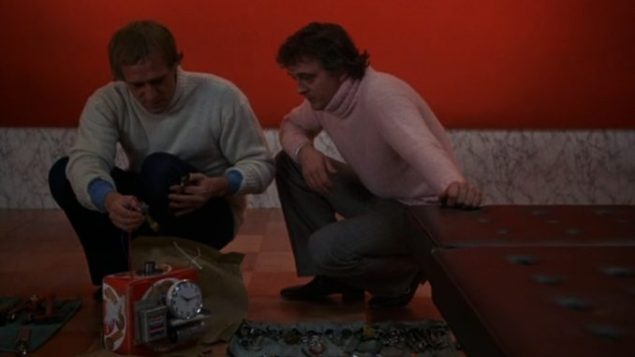
Richard Lester’s Juggernaut (1974) was probably the first Richard Harris film I ever saw. It’s very likely it was also the first time I ever saw a film starring Omar Sharif, Anthony Hopkins, Ian Holm or Freddie Jones. It’s most definitely the first time I encountered that time-honoured trope where a bomb exposal expert faces two differently coloured wires and has to decide which one to cut: one will defuse the bomb, the other will mean death, for him and for everyone else in the building, on the plane or (in this case) aboard the ship.
Join us every week for a trip into the weird and wonderful world of trailers. Whether it’s the first teaser for the latest instalment in your favourite franchise, an obscure preview for a strange indie darling, whether it’s good, bad, ugly or just plain weird – your favourite pop culture baristas are there to tell you what they think.
Let’s start with the humanoid killer shark in the room: the big-screen DC movies haven’t always been all that much fun to watch, so it was quite a pleasant surprise for Matt to find out that The Suicide Squad succeeds at being just that. Who needs mopey Bats and grimdark Supes when you can hang out with Harley Quinn & Co?
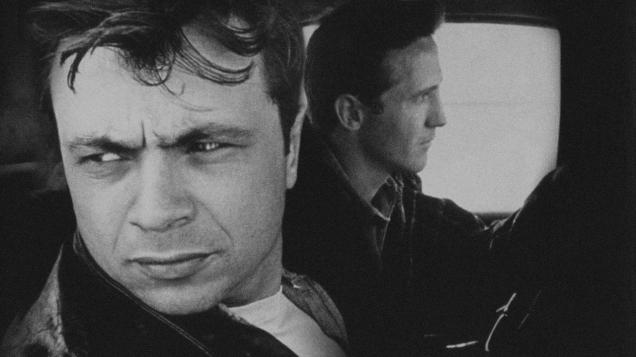
I’ve never read In Cold Blood – in fact, I don’t think I’ve ever read anything by Truman Capote. I have seen the two competing films about the writing of In Cold Blood, though, Capote (2005) and Infamous (2006), in which the idiosyncratic author was played by Philip Seymour Hoffman and Toby Jones respectively, so I was quite aware of what Capote’s novel, and its 1967 film adaptation, would be about. I was also aware of the whole discourse about the non-fiction novel, the genre that Capote adopted. Did Capote create, or at least shape, the format that we’ve come to know as true crime? Or did he just reflect cultural anxieties and currents that were already forming?
Some people have a visceral hatred for David Ayer’s Suicide Squad (2016). I don’t. I found a lot of it annoying, but most of all I found it forgettable, apart from a few bits and pieces. It introduced us to Margot Robbie’s Harley Quinn, a character (or, rather, a version of the character) that proved more durable than the film in which she originated. Other than that, though? There was a Will Smith character and someone with a boomerang, and someone with… some sort of fire thing? A crocodile-skinned dude? A guy with a gun? No, as much as I try, I simply don’t much remember the film. I remember Folding Ideas’ video essay on the film better than I remember Suicide Squad itself (though nothing against Folding Ideas, and his video essay on Suicide Squad is great).
Having said that, I like the idea. If handled right, I can absolutely see the appeal of taking a bunch of goofy comic book villains and putting them together in a Dirty Dozen-style adventure, where no one is exactly good, everyone is unpredictable, and death might strike pretty much anyone at any time. I have little attachment to these characters, I don’t consider myself particularly invested in the continuity, so yeah, if you offer me a good time and a chuckle while you have fun with your action figures, then, yeah, I’m in. Man lives not by Bergman alone.
And that’s exactly what James Gunn delivers with what is less a sequel than it is a second chance (and we’re fond of those here at A Damn Fine Cup). Silly, inventive, blackly humorous fun. Something that the superhero genre definitely could do with at this time.
Join us every week for a trip into the weird and wonderful world of trailers. Whether it’s the first teaser for the latest instalment in your favourite franchise, an obscure preview for a strange indie darling, whether it’s good, bad, ugly or just plain weird – your favourite pop culture baristas are there to tell you what they think.
Pandemics and cinema produce interesting things. Is The Cassandra Crossing one of these, or is it trash – and if so, is it the kind of trash that’s fun to watch? Check out Sam’s Six Damn Fine Degrees post to find out!
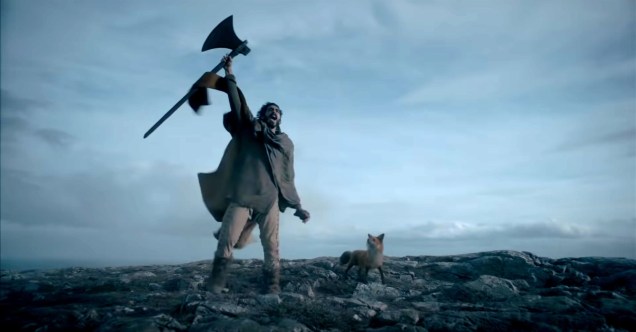
Frequently, films that make use of surrealism are compared to dreams, but I don’t think that’s necessarily quite accurate: dreams may be surreal, and they often are, but while you’re dreaming, everything seems to cohere, to make sense, even if you can’t figure out that sense. Some of A24’s strongest films have that quality, albeit they sometimes veer towards the nightmarish end of the spectrum. David Lowery’s The Green Knight may not be as terrifying as Midsommar or The Lighthouse, but it does feel like a dream you’re having while watching the film. And it can also be quite frightening. Most of all, though, it is one of the most unique visions I’ve recently seen at the cinema.
Welcome to Six Damn Fine Degrees. These instalments will be inspired by the idea of six degrees of separation in the loosest sense. The only rule: it connects – in some way – to the previous instalment. So come join us on our weekly foray into interconnectedness!
The grim reality of an ongoing global pandemic and the eerie parallels to other historical viruses like the Spanish flu of 1918 (so poignantly discussed in last week’s post) have not exactly whet our appetites for pandemics in movies. The likes of Contagion (2011) and Outbreak (1995) might be too real for comfort and post-virus zombie tales of World War Z (2013) or 28 Days Later (2002) too horrific for escapist entertainment.
Join us every week for a trip into the weird and wonderful world of trailers. Whether it’s the first teaser for the latest instalment in your favourite franchise, an obscure preview for a strange indie darling, whether it’s good, bad, ugly or just plain weird – your favourite pop culture baristas are there to tell you what they think.
What happens when we watch a film, don’t like it – and then we return to it, half a dozen years (or more) later? Why do some of the films we don’t enjoy still stay with us, and what’s necessary for us to change our minds? In the August episode of our podcast, Julie and Matt talk about these questions and give two films a second chance: Julie’s brought along Mildred Pierce in its 1945 adaptation by Michael Curtiz, starring Joan Crawford, and Matt has rewatched the more recent Killing Them Softly, adapted for the screen and directed by Andrew Dominik in 2012. Why did we bounce off of these films when we first saw them? Was it them or was it us? Are we seeing the films through different eyes, or do they still not convince us? Join us for a conversation about expectations, being in the wrong mindset or mood, and what happens when you revisit a film ten, twenty years after you’ve first seen it. And, who knows? We might just give this format more than one chance!


 A Damn Fine Cup of Culture