It took me a while to get into Roma, Alfonso Cuarón’s much-feted black and white quasi-memoir following the life of Cleo, who lives with and works as a housekeeper for a middle-class family in Mexico City. Ironically, what kept me from engaging with the movie for the first half hour is also one of the things that Roma has received most praise for: its cinematography.
What better way to get into a festive mood than by watching a woman dressed as a cat licking the face of a man dressed as a bat? Celebrate the holiday season with us as we talk about that Christmas classic, Batman Returns – and give a yuletide welcome to Julie, the new addition to the cultural baristas at A Damn Fine Cup of Culture!
I am going to go out on a limb and say that even those viewers who say they like Gaspar Noé’s movies don’t find them easy to sit through. It’s hard to like any of his movies in the conventional feel-good sense. Nobody likes von Trier that way, either. And while von Trier is on the darker side of the emotional cineastic spectrum, Noé can be almost maniacally, forcefully happy by way of a drug-induced high for a short time, but his movies, sooner rather than later, always tip over into loss and despair. Irreversible has that unflinching and seemingly endless rape scene, Enter the Void is about a guy overdosing and then floating above Tokyo, visiting his sister and other people. Love is about a three-way relationship breaking apart, which is almost conventional for Noé. All of them, however, have in common their pretty radical storytelling, floating unsteady camera, flickering primary colors, and their unapologetic leaps into nudity and/or violence.
Each Friday we travel back in time, one year at a time, for a look at some of the cultural goodies that may appear closer than they really are in The Rear-View Mirror. Join us on our weekly journey into the past!
I have a confession to make: I don’t particularly like Jurassic Park. Sure, Spielberg gets the sense of wonder just right, the visual effects still hold up well, Bob Peck’s death scene is fantastic and it’s got Samuel L. “BAMF” Jackson – but I will take that big, rubbery shark over T. Rex and Friends any day of the week.
What makes a family real? Is it genes? Are blood relatives the only real kind of family? Or is family something that is chosen, committed to and reaffirmed every day? Can family begin as a matter of convenience, even a decision taken for economic reasons, can it be based on a lie – and then change into something else when you’re not paying attention?
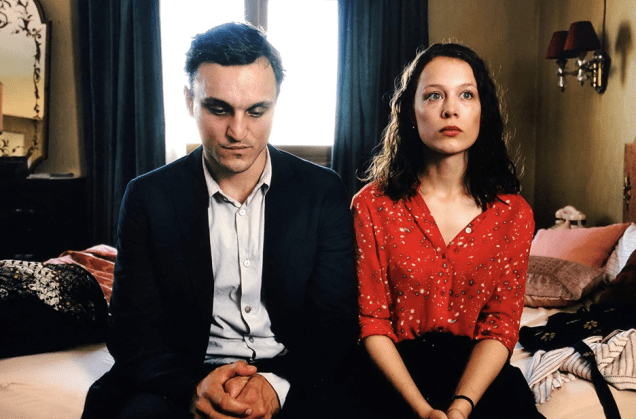
It’s spooky how easily Christian Petzold’s Transit juxtaposes the mass escape from Germany in 1940 with the mass migrations of today. There should not be so many parallels between the two movements, 70 or 80 years apart, but there are. His movie is based on the 1944 novel Transit by Anna Seghers, which mainly takes place in Marseille and is about a small group of German migrants who want to flee Nazi Germany and get a transit visa in order to get to Mexico. Petzold’s movie shows them in today’s Marseille, trying to flee the country, but getting stuck in the red tape procedures that must be all too familiar to any migrant anywhere. Continue reading →
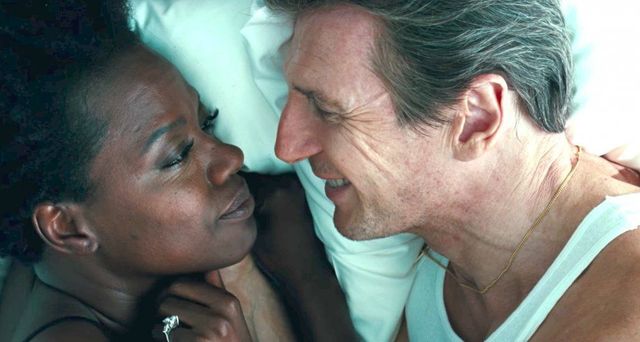
The title of Steve McQueen’s latest film is more telling than it may seem at first: these women are widows, but before that they were wives. First and foremost they were seen by others, or saw themselves, as the plus ones to their husbands: the competent leader, the strong man, the guy who brings home the money. And this, the notion that their lives are tied to their husbands even after the latter have lost their lives, persists. First and foremost Veronica (Viola Davis), whose husband Harry (Liam Neeson) led a robbery gone fatally wrong for all the men involved, finds out that she is being held accountable for the millions of dollars Harry stole, even if she had no part in his criminal career – and she in turn seeks out Linda (Michelle Rodriguez) and Alice (Elizabeth Debicki), the other bereaved widows whose husbands died in the van shot to pieces by a SWAT team, to twist their arms into helping her. The only way they can free themselves from their dead husbands is to take on the roles of their husbands and to do that proverbial last job.
What should I do with a movie like The House That Jack Built? Not only is it a Lars von Trier movie, which can’t be a walk in the park at the best of times, but it seems to be his most controversial feature yet, and that is saying something. There are moments in Melancholia (2011) that are as good as anything I’ve ever seen in a movie. I’ve watched The Element of Crime (1984) more times than I can remember. He’s held parts of the movie-making scene hostage with his Dogma movement, producing some interesting results, only to break his own rules later. On the other hand, von Trier’s movies are, more often than not, unkind or cruel to its women. And The House That Jack Built is about a serial killer whose victims are mostly women. At least in this feature, von Trier’s misanthropy cannot fully obscure his misogyny. I know that it would be a grave mistake to confuse the writer-director’s attitude with the movie’s, but it’s von Trier’s oeuvre that seems to repeatedly mistreat its female characters. I try to give him the benefit of doubt, but there is a point where my doubt shows cracks. Continue reading →
Each Friday we travel back in time, one year at a time, for a look at some of the cultural goodies that may appear closer than they really are in The Rear-View Mirror. Join us on our weekly journey into the past!
– It’s all lies – but they’re entertaining lies, and in the end, isn’t that the real truth?
The Usual Suspects doesn’t get much mention these days. In part, that’s probably due to its director and the actor who played its main character, neither of whom have done themselves many favours in recent years, either professionally or privately. In part, though, it’s probably due to the film’s twist being undoubtedly effective – but moviegoers are notoriously fickle when it comes to endings that seem to undo everything they’ve seen. If the story they’ve been told in effect didn’t happen, what was its point?
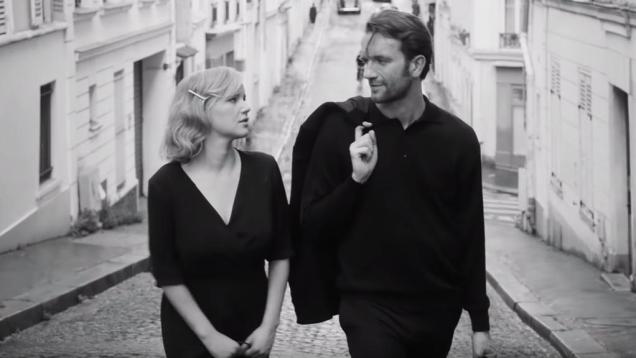
Pawel Pawlikowski’s Cold War is brim-full of music, singing and dancing, but it’s as far from a musical as it is possible to be. If you have seen Pawlikowski’s Ida (2013), you know what mood to expect. It opens with three people travelling through the snow in a van to remote Polish villages, recording the music of farmers and working class members. We learn that those three people are the co-directors of a musical college who want to find the biggest talents in order to tour Europe. The introverted musical director, Wiktor, soon falls for a fantastic singer called Zula. She knows what she wants, and she wants Wiktor, there and then. In Poland, in 1949, it can’t have been easy at all to be that forward for a young woman. That Zula is on probation because she stabbed her incest-minded father makes her even more fascinating to Wiktor. Continue reading →

 What better way to get into a festive mood than by watching a woman dressed as a cat licking the face of a man dressed as a bat? Celebrate the holiday season with us as we talk about that Christmas classic, Batman Returns – and give a yuletide welcome to Julie, the new addition to the cultural baristas at A Damn Fine Cup of Culture!


 What should I do with a movie like The House That Jack Built? Not only is it a Lars von Trier movie, which can’t be a walk in the park at the best of times, but it seems to be his most controversial feature yet, and that is saying something. There are moments in Melancholia (2011) that are as good as anything I’ve ever seen in a movie. I’ve watched The Element of Crime (1984) more times than I can remember. He’s held parts of the movie-making scene hostage with his Dogma movement, producing some interesting results, only to break his own rules later. On the other hand, von Trier’s movies are, more often than not, unkind or cruel to its women. And The House That Jack Built is about a serial killer whose victims are mostly women. At least in this feature, von Trier’s misanthropy cannot fully obscure his misogyny. I know that it would be a grave mistake to confuse the writer-director’s attitude with the movie’s, but it’s von Trier’s oeuvre that seems to repeatedly mistreat its female characters. I try to give him the benefit of doubt, but there is a point where my doubt shows cracks.
 Pawel Pawlikowski’s Cold War is brim-full of music, singing and dancing, but it’s as far from a musical as it is possible to be. If you have seen Pawlikowski’s
  A Damn Fine Cup of Culture