Disney princesses they most certainly ain’t, even if like good old Ariel, the little mermaids of the (wait for it…) Polish horror fairy tale pop musical The Lure by director Agnieszka Smoczyńska are based on Hans Christian Andersen’s fairy tale. In spite of their fish-like tails they are decidedly different beasts from Disney’s red-haired teen heroine.
Movies

Soldiering on
 Sicario: Day of the Soldado is a textbook example of diminishing returns. What is missing most of all is Kate Macer, the Emily Blunt character from Denis Villeneuve’s original Sicario (2015), who provided us with an entry into the seriously skewed ethics of clandestine missions across the US-Mexican border in the unwinnable war on drugs. Also missing is Roger Deakins’ excellent camera work. Soldado, again written by Taylor Sheridan, and directed by Stefano Sollima, an Italian director with experience in crime stories (the Gomorra series), focuses instead on the two characters we already know: Matt Graver (Josh Brolin), the US government’s go-to guy for unsavoury operations and unusual footwear, and Alejandro (Benicio del Toro), the vengeful hired gun. This time round, the US government finds that terrorists disguised as Mexicans have crossed the border. That makes the crossing a terrorist act in their eyes, and so they are allowed to retaliate. See what I mean by skewed ethics? Continue reading
Snap judgment
Ant-Man and the Wasp was fun, an action comedy that used both its likeable cast of characters and its inventive visual jokes to good effect. It was great breezy popcorn fare, the ideal thing at the end of a day mostly spent sweating and feeling much too hot for comfort. More even than Guardians of the Galaxy, the film embraced the comedy genre, becoming a necessary palate cleanser after the grim conclusion of Infinity War.

The Rear-View Mirror: Anomalisa (2015)
Each Friday we travel back in time, one year at a time, for a look at some of the cultural goodies that may appear closer than they really are in The Rear-View Mirror. Join us on our weekly journey into the past!
In a better, fairer world, Charlie Kaufman’s IMDB page wouldn’t indicate that the director hasn’t had any films in development since 2015. There are kazillions of dollars around for the likes of Michael Bay, surely it wouldn’t be too horrible if a bag of cash ended up on the doorstep of Mr Kaufman, right?

It’s not just all in your head if it’s contagious
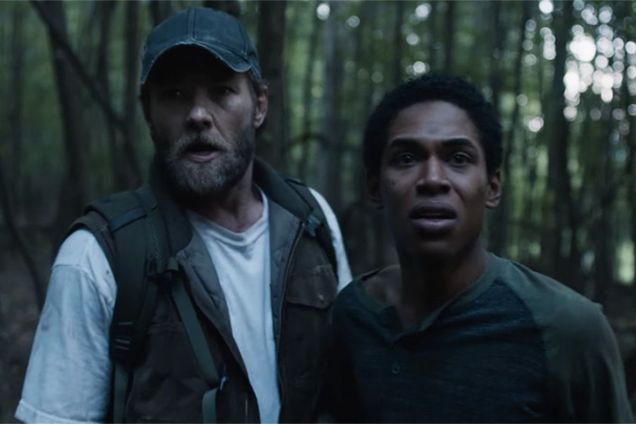 It Comes At Night made me realize that some horror movies have too many ingredients. This one here contains: a family of three in a boarded-up, but otherwise intact, creaky house in the woods, banks of fog, sleeplessness and nightmares. That’s it. There are no aliens, knife-wielding loonies, supernatural catastrophes, magical-realist occurrences, ominous messages from beyond, or ghosts of any kind. There is no longer any electricity, and there is also no nonsense about someone sabotaging the generator in the middle of the night because there isn’t one. Paul and Sarah and their teenage son Travis have to make do with camping lanterns. That sounds slightly arthouse-y and intellectual for a horror flick, but it’s way better than any other genre exercise I’ve come across lately, with the exception of A Quiet Place.
Death in Stockholm
Talk about serendipity – there I was in Stockholm on 14 July, the day that would have been Ingmar Bergman’s 100th birthday, and they were showing The Seventh Seal. What better way to enjoy a hot summer afternoon on vacation than to spend it in the company of a knight undergoing an existential crisis and the Grim Reaper himself?

The Rear-View Mirror: Swiss Army Man (2016)
Each Friday we travel back in time, one year at a time, for a look at some of the cultural goodies that may appear closer than they really are in The Rear-View Mirror. Join us on our weekly journey into the past!
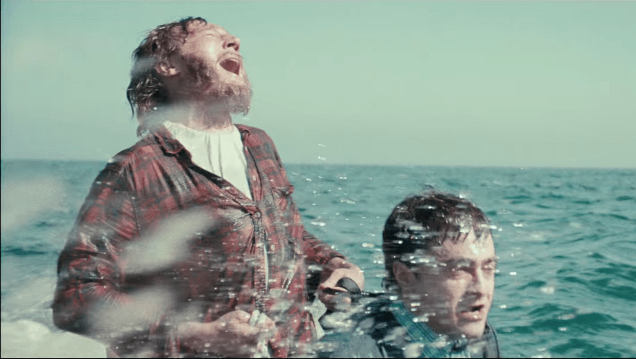
Swiss Army Man is one of those movies that I didn’t think much of at the time, but my mind kept going back to it a surprising number of times, even now, two years later, and I am not entirely sure why. Maybe it’s because in my teenage years, I had big problems walking over to a girl and starting a conversation. Hank (Paul Dano) has the same problem, and he seems to be able to create an imaginary friend just when he wants to hang himself on a deserted island. The imaginary friend is a washed-up corpse, dressed in a wet and rumpled suit and played by Daniel Radcliffe. Sometimes quirky is just what the doctor ordered.
Continue readingSick rom-com, bro!
What makes for a good romantic comedy? To be honest, I may be the wrong person to ask, since I have it on good authority that my narrative preferences lean towards the melancholy, if not the downright depressing. Which probably makes me the last person who should argue the qualities of good romantic comedies. Most entries in the genre strike me as manipulative, dishonest and often toxic in their notions of romance and courtship, not to mention their views on masculinity and femininity. And, last but not least, I have pretty dim views of the genre’s infatuation with phony happily-ever-after tropes.

So it may not be a huge surprise that what may be my favourite romantic comedy of the last ten years (okay, nine years – I liked (500) Days of Summer quite a bit) revolves around one of the main characters almost dying and being in a medically-induced coma for much of its running time. Nothing more romantic than that, eh?
Fog of Law
The men walk along the river. It is night. In the distance, the lights of the city glimmer. The man walking behind raises his arm, brings it down again, hard. A muffled sound of impact. The man in front goes down. The man behind – the murderer – hits his victim again.
Again.
Again.
Once he is done and his victim is dead, he sets fire to the body and watches the flames.

This is how The Third Murder begins. As may have become clear to the director’s fans: this is not your usual Kore-eda. Continue reading
The Loneliness of the Superstore Employee
There is a strange beauty to it all: the geometry of the almost deserted aisles, the precarious stacks of beer crates, the discrete whoosh of electric pallet carriers zooming to and fro (to “The Blue Danube”, no less!), and all of it during the graveyard shift. In the half-dark, the superstore is less of an abomination that is part supermarket, part warehouse: it is a refuge for the assorted sad sacks and losers that work there, most likely because they wouldn’t find anything else. These are the outskirts of East Germany almost thirty years after Reunification, and the reality is drab and depressing – but at night, in the aisles, you may just find something you don’t have anywhere else: a home.

 A Damn Fine Cup of Culture