Each Friday we travel back in time, one year at a time, for a look at some of the cultural goodies that may appear closer than they really are in The Rear-View Mirror. Join us on our weekly journey into the past!
The Watergate scandal and its complexities holds many stories worth telling. The story of how Martha Mitchell tried to blow the whistle and got ridiculed, or the story of democratic candidate Edmund S. Muskie who was undermined by the Nixon administration and lost his cool. Or the story of the hilariously monikered whistle-blower “Deep Throat” – yes, after the Linda Lovelace porno – who was finally outed in 2005 as Mark Felt, FBI associate director. All the President’s Men is the story of Bob Woodward (Robert Redford) and Carl Bernstein (Dustin Hoffman), or “Woodstein”: two journalists who tried to make the public aware of the scope of Watergate, as if anyone at the time really cared. Later Gore Vidal would famously quip to Dick Cavett that he “…must get my Watergate fix each morning”.

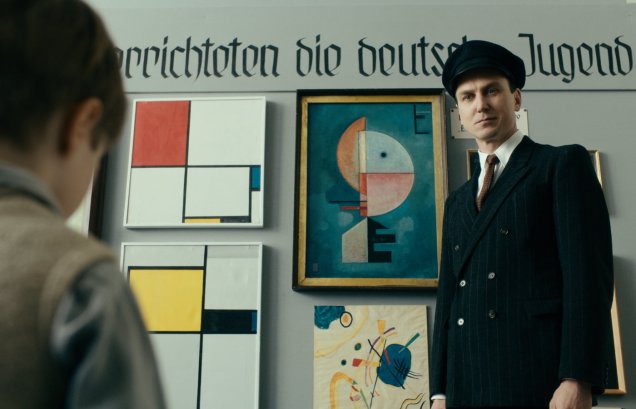 Reader, it’s not easy for me to describe why I like Never Look Away so much, so let me start with the title. The movie’s original title is Werk ohne Autor (Work without Author), which is much better, since it’s a movie about a fledgling painter who seems to see himself as a mere conduit for his paintings than an active artist. A title like Never Look Away suggests that it’s about the Holocaust, although that is not so wrong either. The movie was written and directed by Florian Henckel von Donnersmarck, who also wrote and shot The Lives of Others, an excellent movie, and the slightly disappointing The Tourist. Werk ohne Autor is loosely based on the life of German painter Gerhard Richter, who has seen the movie and disapproves of it.


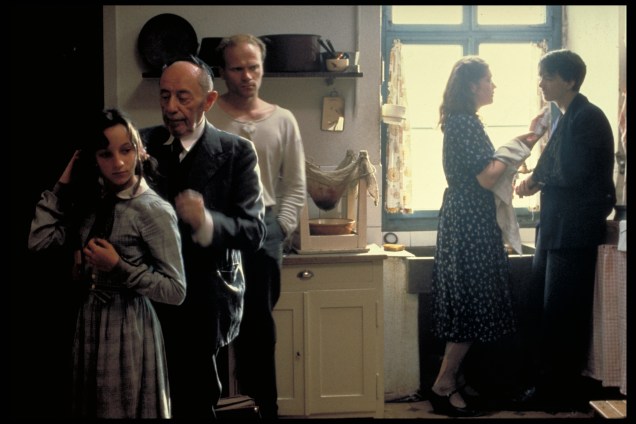 Markus Imhoof’s early feature film Das Boot ist voll (The Boat is Full) from 1981 was an immediate success. It won prizes at the Berlinale in 1981 and got nominated for an Oscar for Best Foreign Language Film a year later, but didn’t win. It made waves at the box office, and it still turns up on many top ten lists of best Swiss movies, and rightly so. The title is a cowardly statement by a leading Swiss politician about the refugee situation in Switzerland during the Second World War. The movie is about six refugees who jump off a train going to Nazi Germany, trying to find shelter and safety on the other side of the border in Switzerland. Three of them are children, but there is also a spirited woman named Judith Krüger who is looking for her husband who is in a detention facility somewhere in this country. There is an old man named Lazar Ostrowskij who has lost his wife during the escape attempt from the train, and since he can no longer be a husband, he is a grand-dad to the three children, although it’s hard to remember who is related to who. The sixth refugee is a deserting German soldier, and the other five are reluctant to be in the same room with him. Judith Krüger soon realises that they have to reshuffle their relationships in order to pass for a real family so they can either stay in Switzerland or get transit visas.