Welcome to Six Damn Fine Degrees. These instalments will be inspired by the idea of six degrees of separation in the loosest sense. The only rule: it connects – in some way – to the previous instalment. So come join us on our weekly foray into interconnectedness!
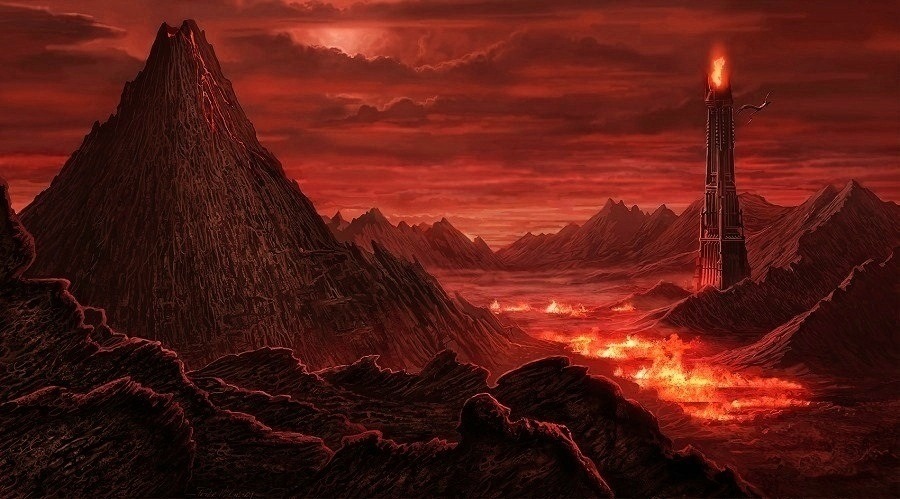
“Mount Doom” by Pete McKinstry
“Why didn’t they just send the Eagles to drop the Ring into Mount Doom?”
Welcome to Six Damn Fine Degrees. These instalments will be inspired by the idea of six degrees of separation in the loosest sense. The only rule: it connects – in some way – to the previous instalment. So come join us on our weekly foray into interconnectedness!
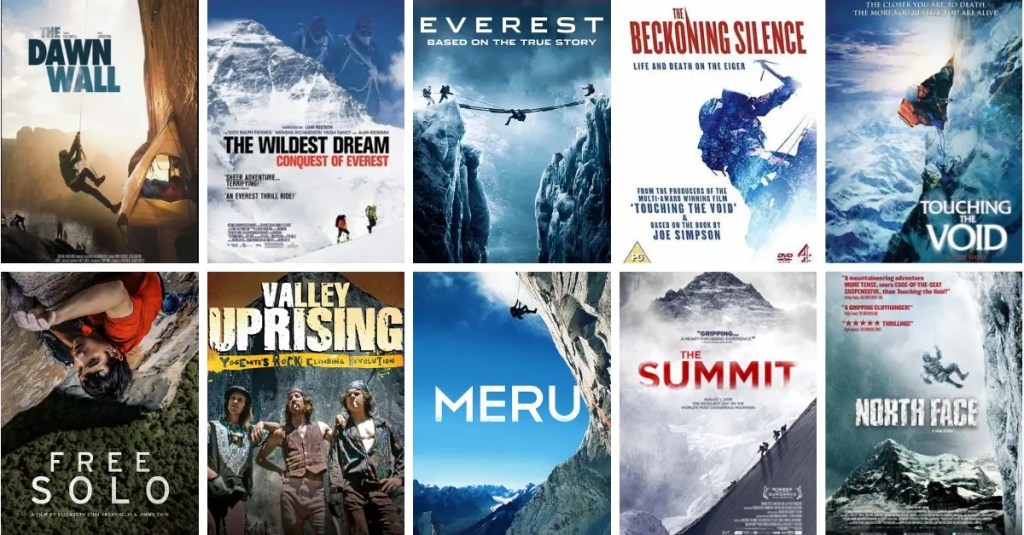
There is apparently no shortage of movies set on or around mountains, mountain climbers and peak-seeking adventures in recent years according to my initial IMDb search. Yet when Julie asked me to follow up on her lovely piece surrounding Jon Krakauer’s book Into Thin Airfrom last week, I felt hard-pressed to find such movies that I had truly enjoyed (or let alone had seen). Wouldn’t the glorious scenery of mountain peaks, the thrill of the climb, the horror of the fall and the brave men and women surviving all of that lend themselves ideally to dozens of great screenplays?
Welcome to Six Damn Fine Degrees. These instalments will be inspired by the idea of six degrees of separation in the loosest sense. The only rule: it connects – in some way – to the previous instalment. So come join us on our weekly foray into interconnectedness!
Men play at tragedy because they do not believe in the reality of life tragedy which is actually being staged in the civilized world. ~ Jose Ortega Gasset (Quoted in Into Thin Air)
Welcome to Six Damn Fine Degrees. These instalments will be inspired by the idea of six degrees of separation in the loosest sense. The only rule: it connects – in some way – to the previous instalment. So come join us on our weekly foray into interconnectedness!
On the surface, Kasabian’s Club Foot is a macho song: “One, take control of me? – you’re messing with the enemy.” And there is, after the ominous intro, that one-two rattled beat making sure you are paying attention despite yourself. It’s the best use of a bass guitar outside of the Beastie Boys’ Sabotage. Yes, it’s possible to love or hate a pop song just because of the pace of its rhythm. The song steps straight on, not paying any attention to the left or the right. It’s wearing silver-studded boots, leaving messy prints behind. There is sweaty leather and unwashed hair in that little tune. The title is a red herring if there ever was one: someone is stepping large, seemingly able-bodied, sartorial and not giving a frigging fuck. In your face, Tony Manero. Club Foot is as subtle as a viking attack.
Welcome to Six Damn Fine Degrees. These instalments will be inspired by the idea of six degrees of separation in the loosest sense. The only rule: it connects – in some way – to the previous instalment. So come join us on our weekly foray into interconnectedness!
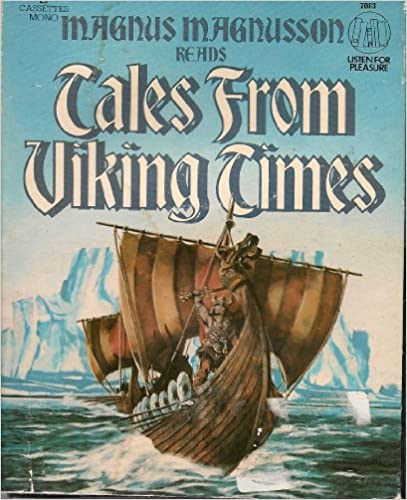
As a kid, I was a massive fan of listening to stories on cassettes. Far more so than music. Music cassettes inevitably had those tracks you wanted to skip past, leading to fiddling attempts to fast forward the right amount (…and miss it and go back and overly compensate going back and so try to jump forward and – uh-oh, I think the tape is chewed up now). Whereas a good story tape was immersive. You were there for the ride for at least the rest of the side.
Welcome to Six Damn Fine Degrees. These instalments will be inspired by the idea of six degrees of separation in the loosest sense. The only rule: it connects – in some way – to the previous instalment. So come join us on our weekly foray into interconnectedness!
I remember that as a kid I found the Biblical dramas of the 1950s fascinating. I didn’t watch all that many of them, but I remember movies that drew me in with gladiatorial combat but kept me engaged with Technicolor melodrama and righteous men and women sacrificing their lives for some greater good – which in those films always meant God in the end, and more specifically, a bearded, male, white God with just the right blend of being stern and being kind, someone inbetween Charlton Heston and Gregory Peck. I was raised Catholic in a place where Catholicism wasn’t particularly strong or particularly strict, so while we did go to church once or twice a year and while I did receive First Communion when I was 8 or 9, I didn’t get much of a sense of the metaphysical from Sunday School. My religious education at the time derived from old movies – oh, and from Jesus Christ Superstar and from Oh, God! Book II. My sense of the eternal was hippies singing and dancing to showtunes in the desert, George Burns’ ironic smile, and Richard Burton and Jean Simmons looking heavenwards while celestial choirs sing and the credits roll, moments before they are eaten alive by lions.
Welcome to Six Damn Fine Degrees. These instalments will be inspired by the idea of six degrees of separation in the loosest sense. The only rule: it connects – in some way – to the previous instalment. So come join us on our weekly foray into interconnectedness!
The spiritual motorcycle journey to San Francisco described in last week‘s postreminded me of another spiritual journey by the man who had lent his name to the City by the Bay: Saint Francis of Assisi. And I was especially struck again by the one film that made an indelible connection between the medieval saint‘s life and the hippie lifestyle that originated in San Francisco: Brother Sun and Sister Moon (1972).
Directed by Franco Zeffirelli, who had not made a film by this point since his stunning success of the gorgeous Romeo and Juliet in 1968, the film stars Graham Faulkner as Francesco. Traumatised by war, he first spends days suffering nightmares in his native Assisi. After several inspirations of faith and nature, Francesco famously gives all possessions including his name to his rich parents and walks away from Assisi naked to find his spiritual destiny, rebuilding a church, founding a community of believers and being received and surprisingly honoured by Pope Innocent III (Alec Guinness’ early practice for the Obi Wan Kenobi role a few years later).
Photographed in Zeffirelli’s signature style (Director of Photography Ennio Guarnieri also lensed several Fellini movies), every image looks taken out of a glossy magazine, with an array of memorable faces in combination with Umbria’s natural beauty. Beside Faulkner and Guinness, the film stars Judi Bowker (Clash of the Titans), Leigh Lawson (Tess), Valentina Cortese (Day for Night) and Kenneth Cranham (Layer Cake).
Despite its medieval background, this makes it look much less like a faithful biopic or historical drama than a thinly veiled allegory on the supposed first hippie. Refusing worldly possessions, peacefully demonstrating against the authorities, starting a new life in a countryside commune and building a new spiritual basis had more than a handful of echos within the world the film was produced and released. In Zeffirelli’s view, Saint Francis was shown as the spiritual father of the flower power movement, so to speak, with hippie singer/songwriter Donovan providing the tunes underneath the magical transformation.
Reviews were not particularly kind at the time of the film’s release (Roger Ebert called it “an excess of sweetness and light”), but as often happens, the film has garnered appreciation and a cult status over the years, and many see it as a perfect companion piece to Romeo and Juliet (possibly even a trilogy with Taming of the Shrew) before the director’s journeys into more historical fiction (TV’s Jesus of Nazareth, Tea with Mussolini), Shakespeare (Hamlet starring Mel Gibson, Otello at the opera) and odd ventures into Hollywood mediocrity (The Champ, Endless Love). Later in his life, Zeffirelli became famous for his countless opera productions before infamously ending his illustrious career for a senate seat in Berlusconi’s right-wing populist party and never publicly coming to terms with his homosexuality.
Long gone by then were the pure if at times simplistic convictions he portrayed about San Francesco’s early modern hippie life that makes the innocent beauty of Fratello Sole, Sorella Luna.
* On a strange side note, the highly popular Donovan songs were never released at the time and the Italian soundtrack album only featured composer Riz Ortolani’s instrumental score and the Italian title song. It was in 2004, finally, that Donovan re-recorded all his original songs for an iTunes release, much to the delight of the film’s fan following.
Welcome to Six Damn Fine Degrees. These instalments will be inspired by the idea of six degrees of separation in the loosest sense. The only rule: it connects – in some way – to the previous instalment. So come join us on our weekly foray into interconnectedness!
Philosophy? Honestly? Old dudes with beards? Nope, not for me. That was, until I picked up a German soft-cover edition of Robert M. Pirsig’s Zen and the Art of Motorcycle Maintenance (1974). The cover looked good, promising some sort of roadside adventure, the blurb sounded intriguing. Pretty far away from dull old philosophical babbling, I thought.
The book is about Pirsig’s travels by motorcycle with his son Chris. It took me long to realise that the other alter ego in the book, undergoing electroconvulsive therapy because of his schizophrenia, was of course also Pirsig himself. There are some philosophical moments in the book, but by and large, we are witness to the road trip and to Pirsig’s mental illness.
Welcome to Six Damn Fine Degrees. These instalments will be inspired by the idea of six degrees of separation in the loosest sense. The only rule: it connects – in some way – to the previous instalment. So come join us on our weekly foray into interconnectedness!
In the early ‘70s, a British film studio hoping to make a global success decided to tap into one of the nation’s most famous exports:Agatha Christie. When it came to which of her works they would adapt, they opted for Murder On The Orient Express – a story that would allow for an exotic (if relatively cheap) location and a large cast that could be filled with bankable stars. Audiences, they hoped, would head to the cinemas thanks to the name of the author and the likes of Sean Connery, Lauren Bacall, Ingrid Bergman and Anthony Perkins.
The formula worked. The film was a huge hit, a commercial triumph topping the US box office. It also enjoyed great reviews, with critics praising Sidney Lumet’s stately direction and the strength of the adaptation. Indeed both audiences and critics seemed to mention just one flaw with the film: Albert Finney as Poirot.
Welcome to Six Damn Fine Degrees. These instalments will be inspired by the idea of six degrees of separation in the loosest sense. The only rule: it connects – in some way – to the previous instalment. So come join us on our weekly foray into interconnectedness!
While Agatha Christie is possibly most famous for her many fictional English villages or mansions or lodges or what have you, my imagination was always drawn to the books she set in the desert. Preferably, though not necessarily, on archaeological digs. Because, although she herself keeps insisting she will not describe any scenery in her books, she has a knack of picking out details which bring these fantastic places to life. The sound of the waterwheel, the flowers, the sparsely furnished accommodations. In Murder in Mesopotamia, a group of archaeologists are working at a dig, very near the fictional town of Hassanieh. And although the plot is one of her weaker ones, the characterizations of the people and the description of their routines seems to evoke a world that just seems more real to me than St Mary Mead or Chipping Cleghorn. The reason for this, as I found out much later, is that they are, in a sense, more real – or rather, they represent Christie’s later years, ones imbued with more affection and gratitude, her second lease on life.




 A Damn Fine Cup of Culture