The Rear-View Mirror: Nina Simone (1933)

Each Friday we travel back in time, one year at a time, for a look at some of the cultural goodies that may appear closer than they really are in The Rear-View Mirror. Join us on our weekly journey into the past!

I was in Berlin last summer, getting my bearings back, and I walked past a bar where someone played a live version of Nina Simone’s take on Sinnerman. Honestly, my friends, there cannot be many more songs such as this one getting under my skin like that. She wants to make light because the rhythm of the song wants to sound so jolly, and it does, but then that voice comes in and puts a damper on the cheer, warning about what is going to happen, turning the rhythm from jolly to urgent. And yet there is hope somewhere, not much, but just enough. Continue reading

The Rear-View Mirror: Isao Takahata (1935)

Each Friday we travel back in time, one year at a time, for a look at some of the cultural goodies that may appear closer than they really are in The Rear-View Mirror. Join us on our weekly journey into the past!

There are no two ways about it: Hayao Miyazaki is a great filmmaker who has created many fantastic worlds that are both breathtakingly new and grounded in very human realities. His films are epic yet intimate, they deal with serious topics but Miyazaki never loses the whimsical twinkle in his eyes. It’s clear why Miyazaki would be seen by many as the face of Ghibli Studios.

Nonetheless, it is sad that Miyazaki’s fame tends to eclipse the other great creative mind at Ghibli: Isao Takahata (1935-2018).

Continue reading

The Rear-View Mirror: Don DeLillo (1936)

Each Friday we travel back in time, one year at a time, for a look at some of the cultural goodies that may appear closer than they really are in The Rear-View Mirror. Join us on our weekly journey into the past!

Two weeks ago, I sang the praises of Raymond Carver’s short stories, their lean, almost terse language. If that is way, way too short for you, then you might feel right at home in some of the novels by Don DeLillo (born in 1936), the longest of which is a weighty tome called Underworld, published in 1997 and clocking in at a whopping 827 pages, something that some of my university tutors called a two-hander. It’s true, you can’t read it in bed, holding it over your face, because if you let it fall, you die.

Continue reading

The Rear-View Mirror: The Hobbit (1937)

Each Friday we travel back in time, one year at a time, for a look at some of the cultural goodies that may appear closer than they really are in The Rear-View Mirror. Join us on our weekly journey into the past!

Honestly, I don’t envy the job that Peter Jackson ended up with when he became the director of the film adaptation of The Hobbit. From what I’ve read and heard, he famously didn’t want the job, having already spent years and years of his life on The Lord of the Rings, he was hired after Guillermo del Toro left the project and given relatively little time to get the show on the road, and he was told to change a two-film plan into another big fantasy trilogy. Never mind that The Hobbit, J.R.R. Tolkien’s novel, is a slim volume that cannot really be compared with the big, fat doorstop that is The Lord of the Rings.

Continue reading

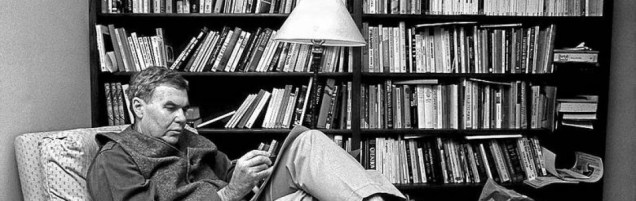
The Rear-View Mirror: Raymond Carver (1938)

Each Friday we travel back in time, one year at a time, for a look at some of the cultural goodies that may appear closer than they really are in The Rear-View Mirror. Join us on our weekly journey into the past!

The most grassroots definition of a writer’s writer, I guess, is one whose writing you love to bits and immediately want to tell your friends about. In other words, somebody really good but still undiscovered. Katherine Dunn. Marisa Matarazzo. Esther Morgan. Sofi Oksanen. Greg Hollingshead. Rick Bass. Please feel free to add your own favourite obscure authors, and you will never run afoul of the definition above. Another, slightly looser definition might be that there is a lot you can learn from a writer’s writer for your own writing, such as dialogue from Elmore Leonard, or cliché-free sci-fi from China Miéville. Continue reading

The Rear-View Mirror: La Règle du Jeu (1939)

RulesoftheGame6

Each Friday we travel back in time, one year at a time, for a look at some of the cultural goodies that may appear closer than they really are in The Rear-View Mirror. Join us on our weekly journey into the past!

If you are fond of lists, you may have seen La Règle du Jeu (or The Rules of the Game) on several of those “best films of all time” lists. If you are not, let me be the one to tell you: it firmly belongs with the best films of all time.

Continue reading

The Rear-View Mirror: The Waste Land and other poems (1940)

Each Friday we travel back in time, one year at a time, for a look at some of the cultural goodies that may appear closer than they really are in The Rear-View Mirror. Join us on our weekly journey into the past!

I’ve just finished Robert Musil’s The Man Without Qualities, a book I would have stopped reading if I’d had to carry it around with me, but there is an excellent audio-book, read by Wolfram Berger, thanks to which I somehow made it through. Did I understand all of the philosophical, political and social musings in there? Of course not – not even half. That is the advantage of novels: you can delve into certain sections and figure them out and read on later, and you can skip other parts. Novels must have some kind of plot, or they are barely novels. There is an obvious red thread, however spurious, that we can figure out and follow. Continue reading

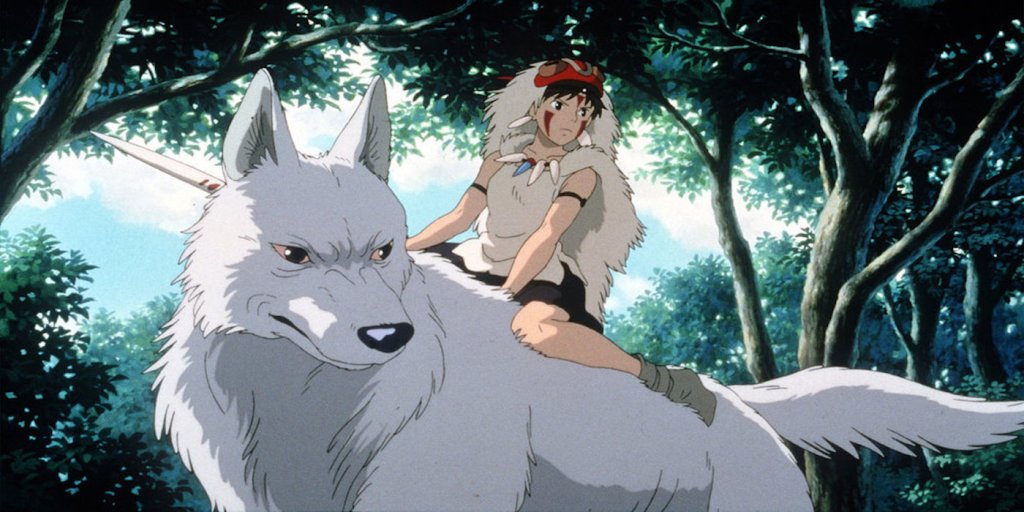
The Rear-View Mirror: Hayao Miyazaki (1941)

Each Friday we travel back in time, one year at a time, for a look at some of the cultural goodies that may appear closer than they really are in The Rear-View Mirror. Join us on our weekly journey into the past!

I have the writer Neil Gaiman to thank for my first experience with director Hayao Miyazaki and his fantastic worlds: at the time, Gaiman wrote the script for Princess Mononoke‘s English dub, which was probably the first dub of a Miyazaki movie that didn’t cast actors primarily known for their voice work in the main parts. Instead, we got names such as Claire Danes, Billy Bob Thornton and Gillian Anderson – and we also got a wider release than anime features (as opposed to, say, the latest Disney princess movie) usually got in my neck of the woods.

Continue reading

The Rear-View Mirror: Cat People (1942)

Each Friday we travel back in time, one year at a time, for a look at some of the cultural goodies that may appear closer than they really are in The Rear-View Mirror. Join us on our weekly journey into the past!

cat-people2

In the early 1940s, RKO was in trouble. The costs of Orson Welles’ Citizen Kane and the financial disaster that was The Magnificent Ambersons (now tragically partly lost) had left the studio in dire straits. In order to get back in the black, they looked to Universal, which made a steady income from low budget by-the-numbers horror movies.

Continue reading

The Rear-View Mirror: The Life and Death of Colonel Blimp (1943)

Each Friday we travel back in time, one year at a time, for a look at some of the cultural goodies that may appear closer than they really are in The Rear-View Mirror. Join us on our weekly journey into the past!

My mother was an emigrant from England. Since both my parents were from countries other than the one where I was born and where I’ve always lived, I always felt to some extent that wherever I was from, it was elsewhere – and if pressed on the matter, I would have said that I felt a connection to England and to the UK that I didn’t feel to the place my father came from. However, over the last few years I’ve very much had both an opportunity and a reason to re-examine my feelings towards the UK. Probably it started before then, but ever since the summer of 2016 it’s been impossible to avoid the escalating conversation/shouting match/toxic circle-jerk that, at its core, seems to be about identity: what does it mean to be British? What does the UK want to be? What does it want to represent in the world? Does it want to look forward or backward, outward or inward?

Continue reading