The Rear-View Mirror: Bruce Springsteen and The E-Street Band, Live/1975-85 (1986)

Each Friday we travel back in time, one year at a time, for a look at some of the cultural goodies that may appear closer than they really are in The Rear-View Mirror. Join us on our weekly journey into the past!

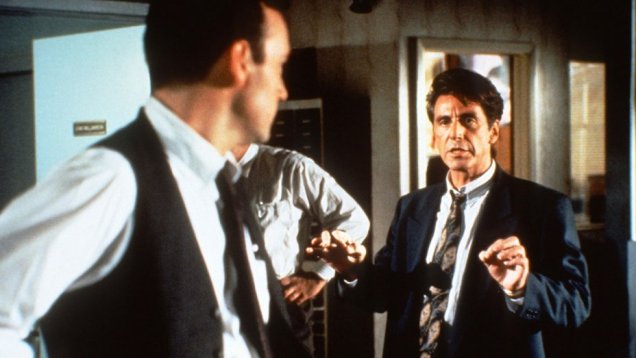
Bruce Springsteen seems to be a part the bedrock of the music business, but he is the first to admit that he is a fraud. He has never held down a working-class job in his life, he has never seen a factory from the inside. (If you don’t believe me, then go watch Springsteen on Broadway, currently on Netflix.) He is one of the greatest posers ever. And yet nobody sees him that way because he has unearthed something, a kind of poetic common denominator, an idealised, romanticised version of the USA, or of working class life, or of being young – maybe a bit of everything. There is a sense of wanting to get out of this town that he caters to with his music. Or why do you think his biggest hit is called Born To Run?

Continue reading
The Rear-View Mirror: Leisure Suit Larry (1987)

Each Friday we travel back in time, one year at a time, for a look at some of the cultural goodies that may appear closer than they really are in The Rear-View Mirror. Join us on our weekly journey into the past!

BUY CONDOMS

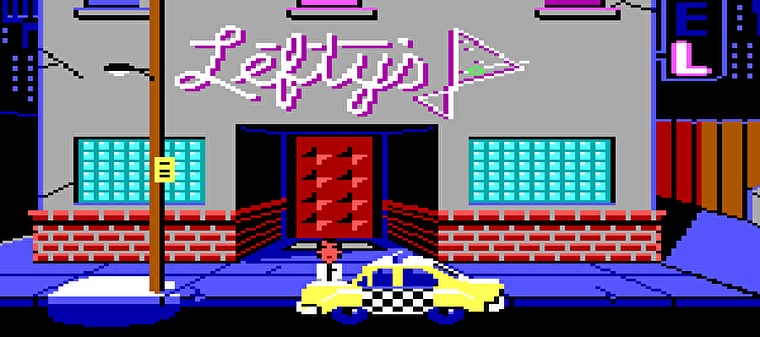
How many 1980s nerds had their first sexual experience at Lefty’s Bar? How many teenagers learned about the perils of sex by catching an STD and having to reload an earlier savegame – or restart the game because they forgot to “Save early, save often”? How many never made it past the pimp in the first place, or forgot to properly prepare (also known as GET NAKED) to do the deed?

Leisure Suit Larry in the Land of the Lounge Lizards
Continue reading

The Rear-View Mirror: The Thin Blue Line (1988)

Each Friday we travel back in time, one year at a time, for a look at some of the cultural goodies that may appear closer than they really are in The Rear-View Mirror. Join us on our weekly journey into the past!

thin blue line

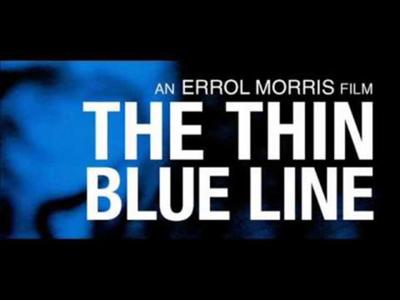
If you have seen other Erroll Morris films (TabloidThe Fog of WarGates of Heaven), you will know that he likes for people to tell their own stories. At the time of its inception Morris was doing in investigation on Dr. James Grigson, nicknamed Dr. Death, a psychiatrist who invariably advised a death sentence, because defendants would “kill again”. During this research he stumbled onto Adams’ story. The Thin Blue Line is about the murder of a police officer, and in it Morris has access to seemingly all the players in the drama, and the subsequent court case. Through their own versions of what transpires, or what they think transpires, Morris makes an uncharacteristically solid case for the defense. It is not much of a spoiler that an innocent person was convicted. After all, Adams was not only acquitted (partly) due to the film, but subsequently sued Morris for the rights to his story. As is so often the case with Morris’ films, the fascination in The Thin Blue Line is for the viewer to be allowed to form their own opinion as to why and how an innocent man was convicted, a guilty man went free (at least for a while), and several witnesses testified to facts they could not possibly have seen or heard.

Continue reading

The Rear-View Mirror: The Fabulous Baker Boys (1989)

Each Friday we travel back in time, one year at a time, for a look at some of the cultural goodies that may appear closer than they really are in The Rear-View Mirror. Join us on our weekly journey into the past!

Love is a free agent. We may say that opposites attract, or that birds of a feather flock together or whatever; we have our kinks and fetishes and predilections and our angsts when it come to relationships and love and sex; we describe ourselves as homo- or heterosexual or polyamorous or bi or as of many colors of the rainbow, but we really don’t know why we fall for this person or that person. It’s a mistery, at its core, that crazy little thing called love.

Continue reading

The Rear-View Mirror: Goodfellas (1990)

Each Friday we travel back in time, one year at a time, for a look at some of the cultural goodies that may appear closer than they really are in The Rear-View Mirror. Join us on our weekly journey into the past!

goodfellas

A car rides into darkness. The film cuts to the three passengers and we hear noise from the back of the car.

“The f*&k is that? … Jimmy?” says the man behind the wheel. “Did I hit something?”

“… the f*&ck is that?” the man in the back says. They pull over and get out. Lit by the red back light of the car the men draw their weapons. The man in the trunk is bloodied but still alive. Swearing, they finish him off. They are Henry, Jimmy and Tommy, our protagonists.

After this violent beginning Henry’s voice-over starts with what is probably the most famous line in the movie:

“As far back as I remember, I always wanted to be a gangster.”

Continue reading

The Rear-View Mirror: Lemmings (1991)

Each Friday we travel back in time, one year at a time, for a look at some of the cultural goodies that may appear closer than they really are in The Rear-View Mirror. Join us on our weekly journey into the past!

I’ve been playing computer games for… well, it’s been a while. My parents got a C-64 when I was about nine years old, back in the Cold War-and-neon days of 1983. Many of my fondest gaming memories go back to the time when pixels were the size of your fist and anything more than 16 colours on the same screen was not just luxurious but simply not possible. Later, when I was a teenager, I upgraded to the next Commodore model, the Amiga, but it never felt as iconic as the good old ‘breadbox’ did. When I think of the games that I grew up with, I think of the likes of International Soccer, ParadroidWizball and World Games, all of them on the C-64. Sure, I had some fun times playing Amiga games, but they didn’t have that ineffable thing that the technically more primitive games on the older, slower, less capable machine did.

There are a handful of exceptions, though. And the one that comes to mind in an instant is best described by the sound of a squeaky voice going “Oh no!”

Lemmings
Continue reading

The Rear-View Mirror: Glengarry Glen Ross (1992)

Each Friday we travel back in time, one year at a time, for a look at some of the cultural goodies that may appear closer than they really are in The Rear-View Mirror. Join us on our weekly journey into the past!

Nobody understands the confidence game better than David Mamet. His movies, most of all his debut House of Games (1989), show you in great detail how his con men entrap, use and manipulate their victims for money, influence, sex, or all of the above. His take on the long con is so simple that he is a playwright first and a moviemaker second; his games only need a stage and a few props. He often enlisted the late Ricky Jay, who was a magician first and an actor second. It’s also proof that more complex things are going on than meet the eye, but the con very often happens in plain sight. The point of any confidence game is this: “It’s called a confidence game. Why? Because you give me your confidence? No. Because I give you mine.” It’s the perpetrator’s choice, and the victim is hopelessly trapped. Some characters know what is happening to them, but can’t do anything about it. Others simply have no clue. There is a cruel purity to such a concept.

Continue reading

The Rear-View Mirror: Jurassic Park (1993)

Each Friday we travel back in time, one year at a time, for a look at some of the cultural goodies that may appear closer than they really are in The Rear-View Mirror. Join us on our weekly journey into the past!

I have a confession to make: I don’t particularly like Jurassic Park. Sure, Spielberg gets the sense of wonder just right, the visual effects still hold up well, Bob Peck’s death scene is fantastic and it’s got Samuel L. “BAMF” Jackson – but I will take that big, rubbery shark over T. Rex and Friends any day of the week.

Continue reading

The Rear-View Mirror: 253 (1994)

Each Friday we travel back in time, one year at a time, for a look at some of the cultural goodies that may appear closer than they really are in The Rear-View Mirror. Join us on our weekly journey into the past!

Geoff Ryman’s novel 253 was published in print in 1996, but it saw daylight on the internet in 1994. It’s about a London tube train on the Bakerloo line, travelling southbound from Embankment to Elephant & Castle. It’s a seven-minute ride, with stops at Waterloo and Lambeth North. This is from the foreword: “There are seven carriages on a Bakerloo Line train, each with 36 seats. A train in which every passenger has a seat will carry 252 people. With the driver, that makes 253.” And this is the novel for you: it contains 253 characters, each of them travelling on the train for those seven minutes. There are 253 entries in the book, each 253 words long. Repetitive? Well, yes, but boring? Not to me.

Continue reading

The Rear-View Mirror: The Usual Suspects (1995)

Each Friday we travel back in time, one year at a time, for a look at some of the cultural goodies that may appear closer than they really are in The Rear-View Mirror. Join us on our weekly journey into the past!

– It’s all lies – but they’re entertaining lies, and in the end, isn’t that the real truth?

The Usual Suspects doesn’t get much mention these days. In part, that’s probably due to its director and the actor who played its main character, neither of whom have done themselves many favours in recent years, either professionally or privately. In part, though, it’s probably due to the film’s twist being undoubtedly effective – but moviegoers are notoriously fickle when it comes to endings that seem to undo everything they’ve seen. If the story they’ve been told in effect didn’t happen, what was its point?

The Usual Suspects
Continue reading