The Music Men

Are there any movie genres that are more, well, generic than films about young, struggling musicians (and perhaps sports films)? Even the best films about musicians tend to follow the same story beats: a talented young person’s struggle against all odds, personal sacrifice to reach the top, stern but well-meaning teachers, following your dreams, making it at the big competition, that sort of thing. Whiplash was admirable for how it avoided the clichés in some ways and reinterpreted them in others, eschewing the feel-good ending for something considerably more ambiguous, but it’s a rarity in the genre.

Miloš Forman’s Amadeus, a movie that doesn’t receive anything near the recognition it deserves these days, is even more of a rarity. Here is a film that at a superficial glance would seem to fit three of the genres most prone to cliché and lazy filmmaking: the music film, the period drama and the biopic. However, while it may flirt with these genres, it is beholden to none of them. It doesn’t purport to be Mozart: A Life: The Film, nor does it tell a straightforward, inspirational story of artistic  triumph, and while it isn’t immune to the attraction of period detail, it’s decidedly not about giving the audience a touristic trip to picturesque 18th century Europe.

Amadeus

In fact, Mozart isn’t even the film’s lead; that honour falls to Antonio Salieri, in a performance by F. Murray Abraham that is still breathtaking. Quite literally, Amadeus begins and ends with him, a man who chooses to defy God out of a heady mix of spite, envy and spiritual crisis. The movie’s Salieri is a second-rate musician and composer at best, yet he has the ear to understand that this new kid on the block, Wolfgang Amadeus Mozart, is an immense talent. For Salieri, God speaks through Mozart’s music – yet Wolferl himself is a vulgar brat. What kind of God chooses not the diligent, devout (if more than a little vain) Salieri as his instrument but a manchild giggling madly at toilet humour? It is this metaphysical insult to his ego that fuels Salieri’s wish to destroy the musical genius – like a petty child that would rather destroy that which he cannot have entirely for himself.

How much further could this be from the variation on the dreary hero’s journey that is the common-or-garden-variety music film? Salieri isn’t the antagonist standing in the hero’s way: he is the protagonist, and we watch as he successfully destroys a man whose only crime is that he’s better at what he does than the bitter, self-centred main character. And what makes this more tragic is that Salieri, for all his poisonous pettiness, has enough self-awareness to understand what he is doing. As his plot progresses and as he fuels Mozart’s own self-destructive side, he begins to feel unexpected pangs of conscience. His destruction of the young genius birthes an amazing work of art, Mozart’s Requiem, yet it also destroys the conduit for this art, in an unhealthy relationship that isn’t entirely different from the sadomasochistic teacher-student dynamic of Whiplash. In destroying Mozart the man, Salieri becomes midwife to Mozart the legend.
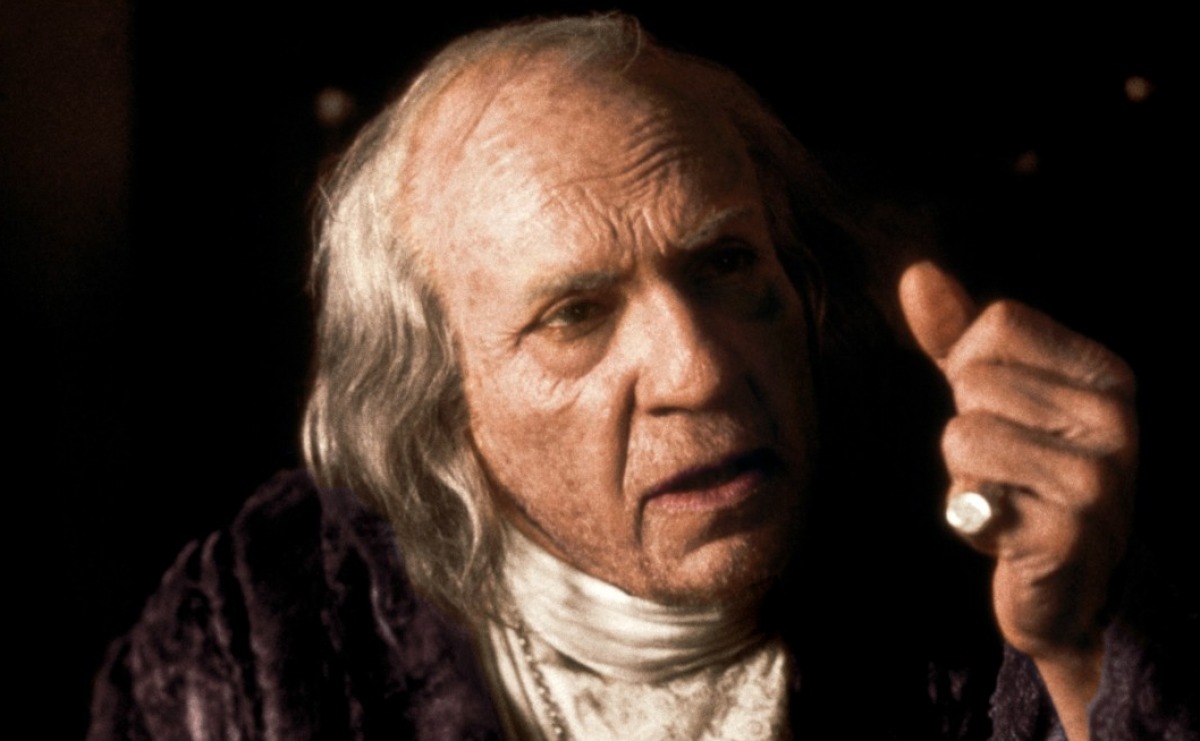
"That was God laughing at me. Through that obscene giggle..."

And therein lies the razor-sharp irony of Amadeus. Salieri is a man painfully aware of his own mediocrity, and in his sacrilegious envy he destroys Mozart, being the only one at the time to recognise his genius for it he is – yet in death, the composer becomes the iconic genius, while Salieri is all but forgotten. Just as it begins, the film ends with a forgotten old man who, after a fashion, killed his beloved nemesis but who cannot even kill himself; he is spirited away to an insane asylum, where we see him relating his blasphemous tale to an idealistic young priest and preaching to the insane, the self-styled patron saint of mediocrity.

In terms of its plot, and in comparison to the conventional music film, Amadeus is pretty far from inspirational – yet as an example of cinematic art, it’s joyous. It looks beautiful without succumbing to the superficial prettiness of so much period drama. The writing is witty and powerful, delivered by the actors with the right blend of naturalism and stylisation. Abraham is a sublime Salieri, moving from sly irony through self-pity to toxic hatred with an ease that is gorgeous – but the other performances, while mostly requiring less of a range, are just as impressive. Hulce’s Mozart is infuriating, oblivious and heartbreaking in equal measure, and the smaller roles are spot-on, especially Jeffrey Jones’ hilarious performance as Emperor Joseph II. All in all, Amadeus is a classic of a kind that is rarely made these days and that deserves to be better remembered than it is – not least because, like Whiplash, it is a fantastic corrective to the generic, utterly conventional music films out there.
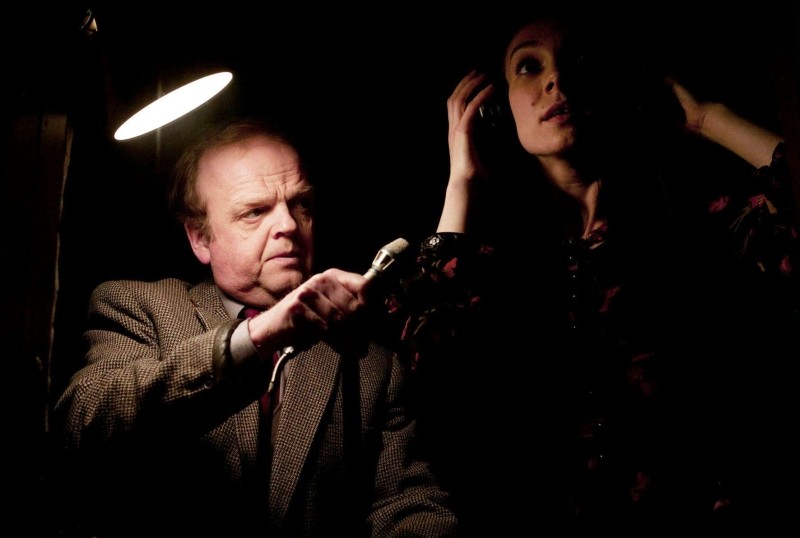

Il suono e il furore

Toby Jones is something of an unacknowledged gem. While his parts are rarely showy, he usually brings a beautifully earnest, genuine quality to them, whether as Truman Capote or as a computer-generated house elf with a heart much bigger than his diminuitive size suggests. It’s difficult to imagine Berberian Sound Studio with someone other than Jones in the part of the British sound engineer Gilderoy who seems to wish to shrink even more in the face of an intimidating job in an equally intimidating environment. Having worked primarily on bucolic British nature documentaries and recording the domestic sounds of rural England, he looks and feels out of place working in Italy on a bloody supernatural thriller – but don’t call it a horror movie, or the unctuous director will give you an earful about the film’s artistic ambitions! Gilderoy is visibly ill at ease, having traded the birdsong and ticking grandfather clocks of the recordings that remind him of home for the sounds that evoke medieval torture and putrid corpses.

Berberian Sound Studio

Aside from Jones, whose performance transcends the stereotype it’s written as (a repressed middle-class Brit intimidated by loud, garish and macho Italianness), the film’s main strength is its atmosphere and the way it is created: apart from its expressionist titles, we never see a single scene of The Equestrian Vortex, the film Gilderoy is working on, but as we are told about the horrific goings-ons on screen, we see and hear how the sound is created. Water melons are stabbed, overripe marrows smashed on the floor, and various other innocent vegetables tortured to evoke murder, torture and gratuitous deaths. Similarly, we don’t see beautiful young women falling victim to the vengeful witches’ curse, but we see actresses screaming in sound booths. Berberian Sound Studio demands our complicity in piecing together the film within a film from what we hear, and for audiences that buy into what the movie is trying to do it works exceedingly well: like a good sound engineer, Berberian Sound Studio creates an ominous, uncanny world in our heads by appealing to our ears.

There are distinct Lynchian overtones (no pun intended) to the film, suggesting especially Lost Highway’s games with identity, but Berberian Sound Studio is equally indebted to Kafka: while Gilderoy never wakes up to find himself turned into an enormous beetle, a puzzling sequence late in the film makes him undergo a transformation befitting its themes. Where Gilderoy was initially unable to speak Italian, entirely at the mercy of others who would choose when to understand him and when not, and when to exclude him from their conversations, suddenly the words coming out of Jones’ mouth are in the language of Mario Bava and Dario Argento – yet it’s a dub. Gilderoy’s own, English voice is gone. Where before he was working on a film, albeit hesitantly, his agency and selfhood are gone as he becomes subject to film. He is a character reduced to the bare minimum, a body, hollowed out and filled with someone else’s voice. The words may be the same, just in a different language, but the Gilderoy we watch as Berberian Sound Studio comes to a close comes across a doppelgänger. The man who from the first looked like he wanted nothing so much as to make himself vanish has been dubbed over.

Berberian Sound Studio

However, while Berberian Sound Studio is intriguing, it is also flawed. It excels in terms of atmosphere and evocativeness, and Jones is very strong, but at times the film feels like it’s trying too hard to become a cinephile’s cult movie. While I haven’t yet watched the short film that it grew out of, Berberian Sound Studio is too long for what it does. Scenes often repeat the same motifs and effects without reinforcing or varying them, and initially strong formal ideas wear themselves out. Moreover, while I like elliptic narratives, there are several moments where I felt the film was simply trying too hard to make itself worthy of cult. There’s a preciousness to its last half hour especially that would have worked better in a shorter film (though at 94 minutes, Berberian Sound Studio is by no means epic); as it is, the movie ends up being rather too self-consciously cryptic for its own good. It’s a perfect starting point for movie-geek discussions in part because it offers enough of a blank canvas. Nevertheless, the atmosphere and especially Jones’ performance hold it together, even if the film is somewhat too keen in aiming for cult classic, and it’s the kind of movie that lingers long after its final image has gone dark. Se non è perfetto, è ben doppiato.

Best served cold

I do like me a good revenge thriller – although I am also a bit of a moralist when it comes to the genre. The kind of film that takes revenge as a justification for two hours of Liam Neeson (or any other righteously growling alpha male) killing bad guys I can very much do without. If a film questions both the validity and the success rate of your average revenge spree, however, then give me more of that. Even as seemingly straight a revenge flick as Kill Bill complicates its heroine’s “roaring rampage of revenge” in a number of ways: by suggesting that vengeance may be self-perpetuating, by depicting the avenger as similarly guilty as those she wreaks vengeance on, by humanising some of the people at the receiving end of the Bride’s katana. Memento, The Limey, Inglourious Basterds, Oldboy (and in fact Chan-wook Park’s entire revenge trilogy): all of these show how characters may come to see revenge as their best course of action, but they equally suggest that vengeance has a way of coming back to bite you in the behind.

Blue Ruin

Blue Ruin may just be the most interesting revenge tale in years, and that’s in no small part due to its main character: Dwight, played by Macon Blair, is miles away from a Beatrix Kiddo or Charles Bronson in Death Wish, the granddaddy of revenge flick protagonists. With his scraggly beard and his wide eyes, he weirdly looks like the scruffiest, most frightened rabbit. Knives, guns and other stabbing or shooting utensils don’t look at home in his hands. And this drives Blue Ruin most of all: that Dwight may just be so much less capable at administering revenge than the people he’s avenging himself on. Already his murder of the man he presumes to have killed his parents is a messy act, and things don’t get any less messy along the way.

Does it matter that Dwight’s first victim turns out to be innocent of the crime he’s been convicted of? Blue Ruin presents his entire family as guilty in one way or another, and as entirely too ready to take up arms and reciprocate. Yet Dwight’s entire crusade seems misguided from the first: these are not the actions of a stable man, and definitely not those of a hero. When his actions endanger his sister and her family, he goes to warn her, after having gone off the reservation for years, and she tells him in a mixture of sadness and disappointment: “I’d forgive you if you were crazy, but you’re not. You’re weak.”

Blue Ruin

It’s this sentence that resonates most with me. For a scruffy bunny of a man, Dwight proves helpless in some moments, surprisingly resourceful and determined in others – but is he weak? The code of traditional revenge thrillers is that vengeance is that someone becomes the instrument of justice when society fails to do so. They take this task onto themselves because no one else is up to it. Blue Ruin turns this onto its head: Dwight isn’t making anything better, not for himself and most definitely not for his sister. The man that did kill Dwight’s parents is long dead, and Dwight’s first victim simply took the fall for his cancer-ridden father. He continues his spree because he believes his sister may be at risk – entirely due to his actions – but the longer he goes on, the harder it becomes not to see this as an extended, roundabout suicide-by-irate-criminal-family.

Blue Ruin isn’t perfect. Some of it feels a little too derivative – there are distinct overtones of the Coens’ Blood Simple – and while it does what it does very well, I did wish it would try to do more. It’s a small film by design, and I’m fine with that, but seeing how well writer-director Jeremy Saulnier handled his material I couldn’t help wishing that he’ll be more ambitious in his next project. Nevertheless,   will stay with me, mostly for Macon Blair’s pained, frightened eyes – the eyes of a man who just about suspects that he’s in way over his head and that there’s no way this will end well for anyone involved.

Fighting the franchise funk

Over the last few years we’ve been watching the Harry Potter movies with a friend who lives abroad; every time she’s been over, we watched another one or two of the films, and over the holidays we saw the two parts of Deathly Hallows, in my case for the third or fourth time. As far as I’m aware, the first part fared less well with critics and audiences than the second one, and it’s clear why: it’s definitely the less crowd-pleasing film of the two. Its plot meanders, what big setpieces there are don’t feel as cathartic as the showdown against Voldemort, and a lot of the movie seems to be dedicated to Harry, Hermione and, with some interruptions, Ron hiking, camping and generally looking wet, cold and miserable.

Nonetheless, rewatching the two films, I found myself clearly preferring the first one. Deathly Hallows Part 2 largely works because it’s the end of a journey, but it feels (and felt even when I first watched it) perfunctory to some extent. We need to resolve the different plot strands, we need to bring closure to Snape’s story, we need to dispose of the remaining horcruxes and of Voldemort himself – but little of this feels like it tells us anything about the characters. We know that Harry is brave, Hermione is smart and Ron is, well, Ron, and we also know that the visual effects wizards are great at doing what they do, as are the designers, artists and everyone else responsible for the way the film looks and sounds. After a while, though, setpieces become interchangeable, and while the escape from a fiery Room of Requirement is exciting in the moment, it’s also strangely bland. It’s a Harry Potter movie, of course there would be some chase or fight involving pixel magic, derring do and last-minute escapes. It’s fan service to some extent, but fan service isn’t automatically bad.

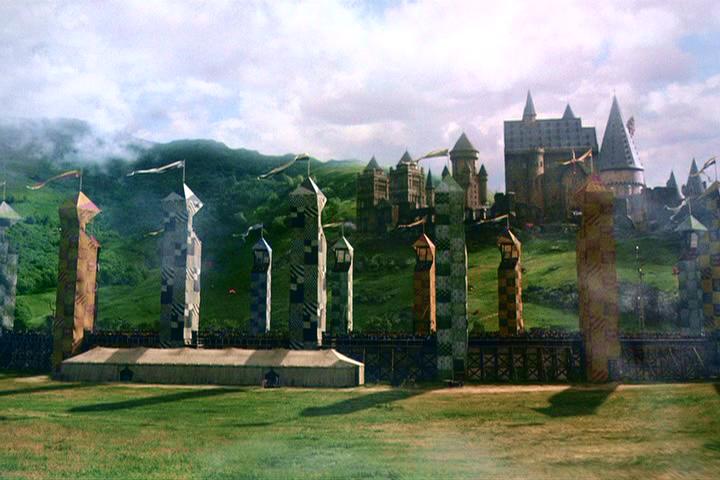
It's quidditch time!

However, there are moments in Deathly Hallows Part 1 that are decidedly different, that are quiet and unexpected, that have nothing to do with crowd-pleasing 3D whooshery. The film already starts with some of these scenes, filled with foreboding and sadness, as Hermione for instance wipes herself from her parents’ memories so they’d be safe. It’s a largely wordless scene, not of teary farewells but of loss and poignant resolve. Another scene I found surprising and delighting was the animated Tale of the Three Brothers; and later, as Ron is temporarily off and Harry and Hermione are alone, Nick Cave’s “O Children” plays on the radio, and Harry engages his friend of many years in a clumsy, sweet dance. It doesn’t further the plot, and it doesn’t get the pulse racing with excitement and danger – but it surprised and enchanted this muggle here more than all of the final part of the final part of Harry Potter.

Obviously the Potteriad wouldn’t have worked, or at least been as successful, if all it consisted of were these quiet, unexpected, intimate moments (though it would be intriguing to see someone try their hand at creating the Before Sunrise of the wizarding world) – but for me it highlights both the shortcomings and the potential of big franchises. Many of the fans love the Harry Potter films for the magic and the world, the quidditch matches and firebreathing dragons and wizards’ duels, so obviously these are things by which later instalments are judged. We want what we know, what is comfortable, because that’s how we came to love the franchise. These expectations are reasonable, but they’re also a trap, keeping a franchise frozen like an insect in amber. It’s similar with something like the Marvel Cinematic Universe, where we get some variation between the different strands – Iron Man isn’t the same as Captain America, whose pulpy WW2 first instalment and more sombre second film differ from Thor‘s sci-fi/mythology mashup – but we know what we’ll get, namely some good action setpieces, some snarky humour and a band of heroic characters that need to put their rivalries and disagreement aside and come together as a family to defeat some colourful yet dull villain – or, if you’re lucky, Tom Hiddleston.

Loki here!

Franchises are the storytelling equivalent of comfort food: when you want a plate of spaghetti, you don’t want it to surprise you with chopped coriander or shiitake mushrooms or a honey-aceto balsamico reduction with shavings of shock-frosted lamb’s kidney. The line between comfort food and tinned spaghetti is thin, though, and there’s always a risk of that exciting quidditch match or that bit where the Hulk goes smash getting stale, to the extent where you hardly know which particular instalment you’re watching at the time. Franchises thrive on constancy, on giving fans what they want, but they can’t be that and that only if they want to be alive and vibrant. They need scenes like Harry and Hermione’s awkward dance to Nick Cave, just like they need Trevor “I am (not) the Mandarin” Slattery. They need to be willing to withhold the simple, immediate gratification of More Of The Same” at times if they want to be good and not just safe. And there’s potential in exactly this: fans know what to expect, so you can surprise them by playing with the format. The most memorable episodes in TV series (which tend to be prone to becoming formulaic) are often the ones that, once the format has been established, play with the formula: Buffy the Vampire Slayer‘s “The Body”or “Once More With Feeling”, House M.D.‘s “Three Stories”,  M*A*S*H‘s “The Interview”. It’s because people know the formula that they see how it’s played with, and if it works, it can create some of the most memorable moments a franchise can afford.

Doing that with an entire film is risky: people who go and watch a Harry Potter movie want to see an adventure for the whole family, with magic and special effects setpieces. Iron Man fans want an action comedy with explosions, flying metal suits and Robert Downey Jr. doing what he does so well. But the safety net of the franchise shouldn’t become a prison. By all means, establish a formula, make us fall in love with the flying brooms, the comic-book villainy, the TIE Fighters and Star Destroyers and light sabres. But use those things as a starting point. Don’t just give us what we already know we want: surprise us and win our hearts again by whisking us into a clumsy, earnest dance to the strains of “O Children”. Because being a franchise doesn’t mean we want to watch the same movie over and over again, forever stuck on repeat.

Wishing everyone a happy 2015… at 25 frames a second

My partner-in-blog has written about his year in pictures, so I’ll end 2014 with three videos: two about the main thing that keeps us going here at Château Goofybeast, i.e. film, and one bonus one that barely qualifies as a video, but damn, if the music ain’t pretty. Here’s wishing each and every one of you a great 2015, with lots more films, books, comics, games and whatever your eyes, ears and hearts may desire!

In space everyone one can hear you feel

Interstellar pushed many of the right buttons for me, primarily the big one labelled “Sense of cosmic wonder”. I was the kid who had a poster of the solar system on his bedroom wall for an embarrassingly long time; I loved anything to do with space, but I reserved a special love for space exploration, especially of the supposedly authentic kind. Sure, I wanted to fly an X-Wing, but that thought never felt as wondrous as that of NASA journeys, of the Apollo missions or the Space Shuttle. Wormholes and black holes? Accretion disks? Count me in.

Interstellar

That sense of wonder was definitely there when I watched Interstellar, and the film captures it well. What it captures less well, though, is human emotion – which is a problem, since for all its space age imagery the film is essentially about sentiment much more than it is about physics. It’s not the emotions themselves that are the problem; thematically, Interstellar uses its premise and setting to tell a very human story. The problem is that the Nolans are much better at telling a different kind of story – one that is conceptual, that tends to be about puzzles. At their best, the Nolan-directed and -penned films are interested in the feelings of their characters, but they don’t focus on them head on. Their protagonists are often emotionally repressed, in denial or simply unable to access or express their feelings, and the stories tend to derive poignancy from this inability. Interstellar, though, wears its heart on its sleeve. Its characters talk about their emotions, they cry quickly and freely – and while the actors are more than capable, they can’t overcome that the words they’ve been given are often clumsy, overly explicit, explaining things too much. The worst scene in this respect has a teary-eyed Anne Hathaway trying to impress on her fellow astronauts that love is a force transcending space and time. Done differently, written better and allowing for some ambiguity, this could work, but in the film it feels like a NASA-themed Hallmark card. Those moments very much suggest that when it comes to the Nolans’ dialogue, quite literally, the less said, the better.

It is this tendency to overexplain, to make things too literal, that hobbles some of Interstellar‘s central scenes as much as its clumsy handling of emotion. Late in the film, the story bends causality back on itself in a classically sci-fi way, but where Christopher Nolan often finds striking images for settings and situations, here they turn faintly ludicrous, and they fire rockets full throttle into silliness the more the protagonists explain what is happening. All fiction, including speculative fiction, engages in some narrative handwaving, leaving gaps with respect to what is happening or how precisely it is happening, because the exact mechanics are irrelevant to what the story is about. Interstellar, however, tangles itself up in knots by trying to fill in the blanks, when it should well have left alone. Trying to elaborate on what is happening, the expository dialogue is hamfistedly literal, drawing attention to what is arguably least important, and raising questions about its feasibility that shouldn’t come up in the first place. (One can only imagine a Nolan-penned 2001: A Space Odyssey, giving the Monolith a -logue to explain to Dave Bowman what the last 20 minutes meant.)

When I first saw the Interstellar trailer, I was intrigued, but I was equally worried that this would be Nolan’s Contact, an intriguing sci-fi tale that takes a turn for the sentimental: daddy issues in space. It isn’t quite that bad, and there’s a lot to like about the film. It is ambitious, it is often beautiful, and Matthew McConaughey has vastly improved as an actor since the giddy days of 1997. Interstellar is a compelling illustration of both the strengths and the limitations of Nolan’s filmmaking, though, and it is frustrating in how it could have been a better, more subtle and more convincing film. This isn’t a complaint along the lines of “Waiter, there’s some sentiment in my sci-fi soup!” I don’t think that hard sci-fi, or any sci-fi, needs to lose the human element. What it does need, though, is a human element that’s done with the same skill as the visual effects. Interstellar excels at showing us the surfaces of alien worlds, but its telescope is flawed when pointed at the human heart.

Playing the beautiful song

One of the pleasures of having played computer and video games since, oh, the heady days of 1982 is that I’ve been in a position to observe their development almost from the beginning.  As with any medium, there’s been more than a fair share of absolute garbage, but as cultural artefacts games have proven to be vibrant, creative and surprising. Certainly, the big money tends to go to mainstream behemoths like Call of Duty, the equivalents of the latest summer blockbuster movie, but you also get surprise successes such as Minecraft, arguably the Lego of gaming in several ways. These days, indie gaming has freed up developers to be visionary as opposed to keeping a constant eye on the bottom line, and while some visions may be pretentious, confused or simply result in bad games, others have done more than just hint at the potential inherent in the form.

Transistor

Supergiant Games is not exactly the prototypical indie, but there’s definitely a strongly independent streak to their games to date, and this year’s Transistor bear few of the traits of mainstream gaming. The game’s production values are downright gorgeous, but there’s no pandering to what executives might think sells well – for instance, Transistor‘s protagonist is female, yet she isn’t sexualised in the sort of facile way that’s designed to appeal to a young male demographic. This is just one indicator of how, while the game echoes other examples of the medium, as a whole it is quite unique.

All in all, while in terms of gameplay Transistor isn’t necessarily my cup of tea, it’s a fantastic example of how the medium of games has come a long way: it is aesthetically creative and confident, evoking a world that can perhaps begin to be described as The Matrix filtered through a Gustav Klimt-inspired Art Nouveau/Art Deco sensitivity with a touch of anime. Its writing does not suffer from the tendency towards excessive exposition and over-explanation, instead being elegant and elliptic. The music is beautiful and stirring, more than worth a listen outside the game – but like all of Transistor‘s elements, it complements everything else exceedingly well. The game’s aesthetics, tone, soundscape, writing and atmosphere all come together to form what could easily be called a Gesamtkunstwerk, a total work of art, that is more than the sum of its already considerable parts. And it all works so well as a game; the visuals and acoustic design would fare well in any medium, but interactivity and choice add to Transistor, down to small touches that are full of personality. I mean, this is a game where pressing one of the controller buttons results in Red, the main character, humming in harmony to the music that’s playing.

Transistor won’t appeal to all: one person’s artistic triumph is another’s pretentious mess, the gameplay’s mix of action RPG and turn-based strategy won’t be to everyone’s taste, and many reviewers have criticised how much Transistor‘s writing leaves to the imagination. It trades broad appeal for a voice of its own (ironically, as aside from her humming Red has been stripped of her voice). A medium that’s capable of producing such works, I’d say, is definitely healthy and one I’m excited to keep following.

And when she was bad…

David Fincher’s Gone Girl is yet another example that Fincher is one of the most skilled directors working in Hollywood these days. It is gorgeous to look at, with the various elements of cinematic craft coming together almost to perfection. It is also a film that I found at turns annoying, ludicrous and distasteful, and that’s almost entirely due to the material. Similarly to Fincher’s previous film, The Girl with the Dragon Tattoo, it’s impossible not to admire the sheer craft while wishing that he had chosen better material to work with.

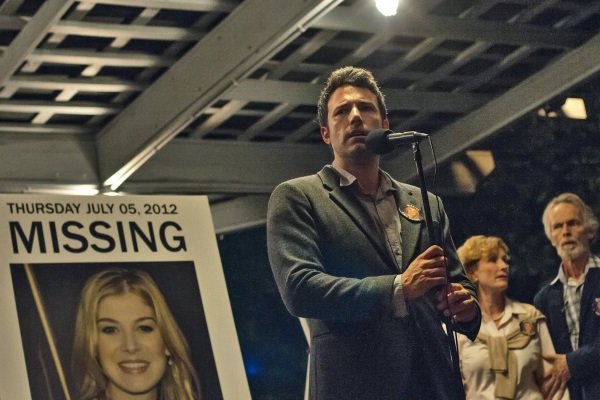
Gone Girl

Gone Girl, that is, the story and storytelling, is not without merits, but it’s too glib for its own good. There’s a lot here that individually is interesting, clever, engaging, amusing and chilling, but much of the time it doesn’t really add up: one moment it’s amoral and cynical as hell, the next it turns to moralising with a misogynist slant; in one scene it’s an effective if obvious satire of the media and the audience’s complicity that goes for the uncomfortable laugh, the next it’s a psychological thriller veering into outlandish melodrama, with only the most superficial similarity to reality. There’s an OCD quality to the story, as if Gone Girl didn’t quite trust itself to hold our attention if it decided to be one thing only. Not that films can’t strive for different things at the same time, but in this particular case we end up with a bit of a Frankensteinian creature on screen.

Gone Girl

Which is a shame, not least because to the extent that the film coheres it’s due to the dark, sharp performance in the emptiness where a different movie’s heart would be. I’d enjoyed watching Rosamund Pike in earlier performances, but I wasn’t prepared for how good she is in this. Again, though, there’s a tension here between the nuanced intelligence Pike brings to the part as a performer and the lurid, trashy quality of the material. For all its polish, Gone Girl is Grand Guignol, made up to look like, well, a David Fincher film, and one of his best-looking to date. Look beyond the aesthetics, though, and the one Fincher film that this most resembles is The Game, another movie of very effective individual parts that cohere less and less the more you look at the whole.

Gone Girl

Arguably Fincher’s a stronger, more skilled director at this stage than he was when he made The Game, so Gone Girl holds together better by the sheer quality of the filmmaking, but as I left the cinema, more than anything else I was hoping that next time round he’d decide to film a better script. His particular skillset is well suited to clever writing (as, say, The Social Network shows), but ideally his scripts have to be as clever as they think they are, and I don’t think that’s true for Gone Girl. I hope that whatever he decides to do next he runs like hell from material that in the final analysis is glib more than anything else.

Guardians of the Galaxy (2014)

If there’s one thing that the best of the Marvel movie adaptations have in spades, it’s personality. Compare the dour cinematic worlds of Batman and Superman to that of The Avengers or Guardians of the Galaxy, and the latter are simply much more fan to hang out with. It’s also what Guardians gets most right: almost from the start, we have a cocky, enjoyable Han Solo-alike to take us into a world of wonders and CGI, and differently than in Lucas’ bloated prequel trilogy we look past the pixels and shader effects and see characters. Rocket Raccoon, that rarest of things – a fully realised CGI character not motion-captured by Andy Serkis! -, pretty much repeats that trick; another hero from the mold of Han Solo, though arguably shorter and more furry, and one that is cynical where Peter “Star-Lord” Quill is excited for pretty much everything. Add Groot, Gamora and Drax, and you’ve got yourself the quintessential Marvel team. Batman may have his cool toys and Michael Caine, but I know who I’d rather hang out with.

Shiny...

There’s an element of laziness in the film, though. It is entertaining, it’s charming, but there’s a generic quality to Guardians‘ setup, which is the main reason why in spite of dancing baby Groot and “Hooked on a Feeling” The Avengers still works better for me. In Whedon’s movie, the characters don’t get along at the beginning but realise they need to form a messy, dysfunctional surrogate family to have a chance against the Big Bad; Guardians pretty much repeats this blow-by-blow. What it lacks, though, is strong motivations why Star-Lord’s motley crew are antagonistic to each other at the beginning. There are reasons, but they’re all underwritten and don’t really come from the characters: sure, Drax blames Gamora because she was working with the main villain when he killed Drax’ family, and Quill is seen simply as a paycheck by bounty hunters Rocket and Groot, but essentially the characters don’t get along at first because that’s what the plot structure needs. In comparison, the conflicts between the Avengers come from who the characters have been established to be: Tony Stark, arrogant millionaire playboy with a house full of toys won’t take orders from stick-in-the-mud WW2 relic Captain America, Thor is a god-of-sorts who isn’t all that into those teensy humans anyway, unless they look like Natalie Portman, and he’s mostly in it to get back at his brother Loki, and Bruce Banner thinks his life could be a hell of a lot better if people didn’t keep wanting the big green guy to come out and play. Oh, and that’s before we get to Nick Fury, who puts all of these in a room, barely united by their knowledge that Fury is not a man to trust.

The Avengers had charm too, but it did more heavy lifting to make sure that personality wasn’t the only thing it had going. Guardians has more, too, but it’s mostly of the “Ooh, look at that… shiny!” sort – arguably it takes us to visually more interesting places than Whedon’s first Marvel outing. But it’s a bit like the Cantina scene from Star Wars, two hours of weird creatures, exotic planets. It’s colourful and fun, and it works in a way that Batman’s Gotham hasn’t worked since the days of Tim Burton, when it really just worked intermittently.

A Kree, an elf and a companion walk into a bar...

However, there’s definitely one thing that Gotham City has that Marvel’s stable of superheroes is still missing, and that’s strong villains. The Avengers works well enough because Tom Hiddleston brings tons of personality to the table, and it helps that he’s connected (semi-literally) to the quasi-family at the story’s centre. Otherwise, though? Thor 2‘s evil space elf, any of the Iron Man villains, or Red Skull from Captain America? Good actors wasted on boring, perfunctory character conflicts. The interesting conflicts in the Marvel films are those between the good guys, but as soon as they unite to beat up the Big Bad, the films turn into CGI setpieces to fill the remaining fifteen minutes, with little to differentiate between them other than the make-up on the villain. Lee Pace’s Ronan is no different; there may be potential in the character, but in the film we mainly see a replaceable bad guy. Similarly, his henchwoman Nebula looks otherworldly and cool and is played competently by Karen Gillan, but she’s not what people will remember. Guardians is all about “I am Groot!” and awesome mixtapes, about cocky outlaws and cynical raccoons, but practically all of the Marvel films could have done with a Penguin, a Lex Luthor or a Joker. Captain America 2 came the closest to introducing an interesting conflict into the proceedings – and one of the reasons why its villains worked better than Red Skull or Malekith, and why Loki is probably the best bad guy of the whole bunch, is that these are closely connected to our heroes.

With Joss Whedon’s influence hanging over the Marvel Cinematic Universe, the writers may want to look at Whedon’s TV series and his Big Bads – both the ones that worked and the ones that didn’t. Usually it’s the ones that are, or were, or could be part of the family that worked best, as characters and as villains. Marvel has yet to do justice to their antagonists; they’ve got the actors, from Jeff Bridges to Christopher Eccleston, but they haven’t yet cracked the nut of conflict outside their bands of heroes. When they do, when their films have both personality and interesting conflicts that drive the stories? Then they might truly ring in an Age of Marvels. Hopefully one that still has a place for dancing baby tree creatures.

Hooray for Whatshisface!

There are the stars, the big names, the recognisable faces, the Brads and Georges and Scarletts. Then there are those actors who may not be gorgeous and glamorous but who are great actors and win awards. And then there are those actors whose faces you recognise, whose names you may not remember immediately but seeing them always makes you like a film that little bit more, because it’s got Whatshisface and Whatshername in it. Unless, of course, you are a film geek and sigh contentedly whenever you see good old Whatshisface, mouthing the man’s IMDB link to yourself.

One of the actors that I always enjoy seeing, even in middling and even decidedly dodgy films, is Richard Jenkins. He is probably what is called a “character actor”, which more often than not seems to translate into “We want to say something nice about this guy but he’s not a hunk nor is he a tortured genius.” He can be utterly amazing, as in The Visitor, a film that could have been unbearable Oscar bait but ended up subtle, poignant and quietly devastating, an achievement that was in no small part due to Jenkins’ performance.

However, as good as the actor was in The Visitor, it’s Six Feet Under that best encapsulates why I love Jenkins. He’s good at playing dignified, often melancholy and sometimes stodgy everymen, but when given the chance to let loose he has a goofy, subversive energy, a Coenesque quality that is unmatched. (He’s been in three of the Coen brothers’ films, but what I best remember him for is his turn in The Man Who Wasn’t There: “Riedenschneider!”)

Jenkins has the face of a slightly disappointed man exhausted by life, but he has that gift of pulling off quirkiness without that precocious, grating quality that indie quirk often takes on. There’s a scene in the first season of Six Feet Under, where main character Nate finds out that his deceased father Nathanael Fisher Sr., undertaker and proprietor of Fisher & Sons, had a secret room above an Indian restaurant that no one in his family knew about. As Nate imagines what his father may have got up to in this room, we see several scenarios: Nate Senior playing solitaire, Nate Senior shaking his booty to a groovy record, Nate Senior having it off with a hooker, Nate Senior shooting at passers-by with a sniper rifle. It’s a tricky scene, and I can’t imagine anyone other than Jenkins pulling it off as he does, deadpan and perfect.

The AV Club, as so often, has a fun and informative interview with Jenkins in their “Random Roles” series – well worth checking out for anyone who finds themselves to be quite a fan of Late Nate.