Short cuts

There’s a tendency among some gamers who’ve been pursuing their hobby for decades to measure the worth of a game by its length. I myself remember many a week and month spent playing single games, and there’s definitely something to be said for roleplaying games that deliver a huge world and an epic plot to match – but I’m also coming to appreciate the beauty that can come with brevity. Especially indie developers often benefit from providing a short but focused burst of gameplay, creating encapsulated experiences that, like short stories and short films, can succeed in ways that are essentially different from their longer – and at times too long – brethren.

So, in lieu of a regular Variety Pack, I want to introduce three short titles that I’ve recently played and that both occasional gamers and more old-school, hardcore (read: nerdy) gamers may have ignored. All three games excel at imagining fascinating, evocative worlds without the extensive, often tedious expository worldbuilding that game designers sometimes indulge in… and that some gamers mistake for deft storytelling.

Year Walk

How to describe this one? It’s as if Ingmar Bergman were to reimagine The Blair Witch Project by way of a puzzle box. Taking up the motif of the Nordic year walk, during which travellers encounter mystical creatures as they try to get to their village church in search of visions of the future, the game is one of the visually most unique miniatures I’ve ever played. It is exquisitely atmospheric, creepy and redolent of sorrow and guilt.

The Swapper

In general, puzzle-heavy games tend to lend themselves to a shorter format; even the most ingenious puzzle design gets old if repeated for hours upon hours. The Swapper is a perfect example of this, using its simple premise to great effect: the player guides an astronaut through a derelict space station. Using a swapper device, this astronaut can be cloned up to four times, their consciousness transferred from body to body. This allows the player to stand on buttons, pull boxes and do similarly banal things to progress through the station – but it also tells a subtle yet effective story of identity and the ephemerality of the soul. There are echoes of Moon, but also of Michel Gondry’s more melancholy dreamscapes in the game’s clay-moulded space scapes.

Botanicula

When I was a child, I watched the samey Saturday morning cartoons from America and Japan that were on TV, but there were also Eastern European children’s series that were both much more mundane, set in a world I recognised as being similar to my own (I probably missed all the subtext about living in a Communist system), and more surreal, even subversive. The heroes and sidekicks especially of the US cartoons all pretty much followed the same visual and character templates, while the series from Czechoslovakia were often much more unique, as if the oppressive systems they were created under forced them to find other creative outlets.

The Czech developer Amanita Design may not be working under the shadow of Soviet rule, but they have clearly inherited the creative drive of their forebears. Amanita’s games are gorgeous, unique toyboxes filled to the brim with personality, and Botanicula is a perfect example of this. Some of its puzzles may be annoying, but it is always a joy to inhabit an Amanita world, and this one is no exception.

“Overrated” seems to be the hardest word‏

There are some words used especially in internet discussions of films, books, TV series, games, albums and other media that are 99% certain to make me stop reading. One of them is “pretentious”, which is criticism’s analogue of Godwin’s Law – only the sturdiest of discussions survive its use intact.

The Art of FieldingWhile it’s not quite as bad as “pretentious”, I don’t like the term “overrated”, because usually it just expresses that the person using it doesn’t agree with the majority at the same time as believing that they’re right and the majority is wrong. It takes a certain amount of arrogance to believe that something is overrated… and yet, I’m about to desplay exactly that amount of arrogance, and possibly more.

When I read Chad Harbach’s The Art of Fielding, I couldn’t help feeling that it was pretty much the encapsulation of an overrated work. Like so many paperback novels, it starts with several pages of praise. Not just any bog standard praise, mind you, but superlatives along the following lines:

A dazzling debut… The Art of Fielding might be the best book you’ll read this year…

A triumphant first novel.

… the most delightful and serious first book of fiction that I have read in a while…

… a magical, melancholy story about friendship and the coming-of-age that marks the debut of an immensely talented writer… earnest, deeply felt emotion…

How to deal with such hyperbole? Do you just ignore it as the obvious sales ploy it is? I sometimes find it difficult not to take on a somewhat antagonistic attitude towards both the reviewers and the thing they’re reviewing: This is the best thing since gold-plated sliced bread that performs tasteful yet exquisitely exciting sexual favours? Prove it! Without the hyperbolic praise, I might not have read The Art of Fielding expecting it to either be amazing or fail to live up to those expectations – but then, I might not have read the novel, period. To be fair, The Art of Fielding is not bad – but this is where I will go into arrogant territory and beyond. The novel is pleasant, it’s an easy read. It’s great, for a while at least, if you’re tired and don’t want anything taxing. For a story that’s about a sport I find boring and the men who love it, it’s entertaining enough. Is it anything more than that, though? To be honest, I don’t see it. The writing is competent but not as clever as it seems to think. The characters are sketched quickly and deftly, but they never really become more than those sketches, and there are characters that come across as glib, smug cartoons that make me turn against the novel and its writer rather than against the characters themselves.

What bothered me most, though, may be exactly what makes the novel a pleasant read: it’s harmless. It has no edges whatsoever. It’s toothless. I don’t necessarily hold with Kafka’s dictum that “we ought to read only the kind of books that wound or stab us” – but Harbach’s novel never really gains characteristics beyond its pleasantness. There is something downright amorphous to it, an amoeba-like quality of having had all its edges sanded off. I like books that have personality, but this one never gains much personality beyond its generally sunny disposition, and as a result it felt vague and unconvincing when trying to convey stronger emotions. The drama it aims for in its plot lacks energy, conviction and the bite of real emotion.

Yet, going by the reviews the book wasn’t just generally liked, it was loved, a reaction I’m puzzled by. I can imagine people enjoying The Art of Fielding‘s pleasantness, but I cannot fathom anyone mustering the kind of strong reaction that the reviews hint at. Is this the flipside of the more usual, glib cynicism which makes it easier to tear into something than to praise it? I expect reviewers to have more of a range than either panning something or praising it as if it were the Second Coming. Or perhaps the fault, dear Brutus, is in myself – it is possible that as I am tone-deaf to the pleasures of baseball I am equally oblivious to what makes The Art of Fielding not just pleasant but great? Is the novel overrated… or am I overrating my own critical abilities?

Breaking points

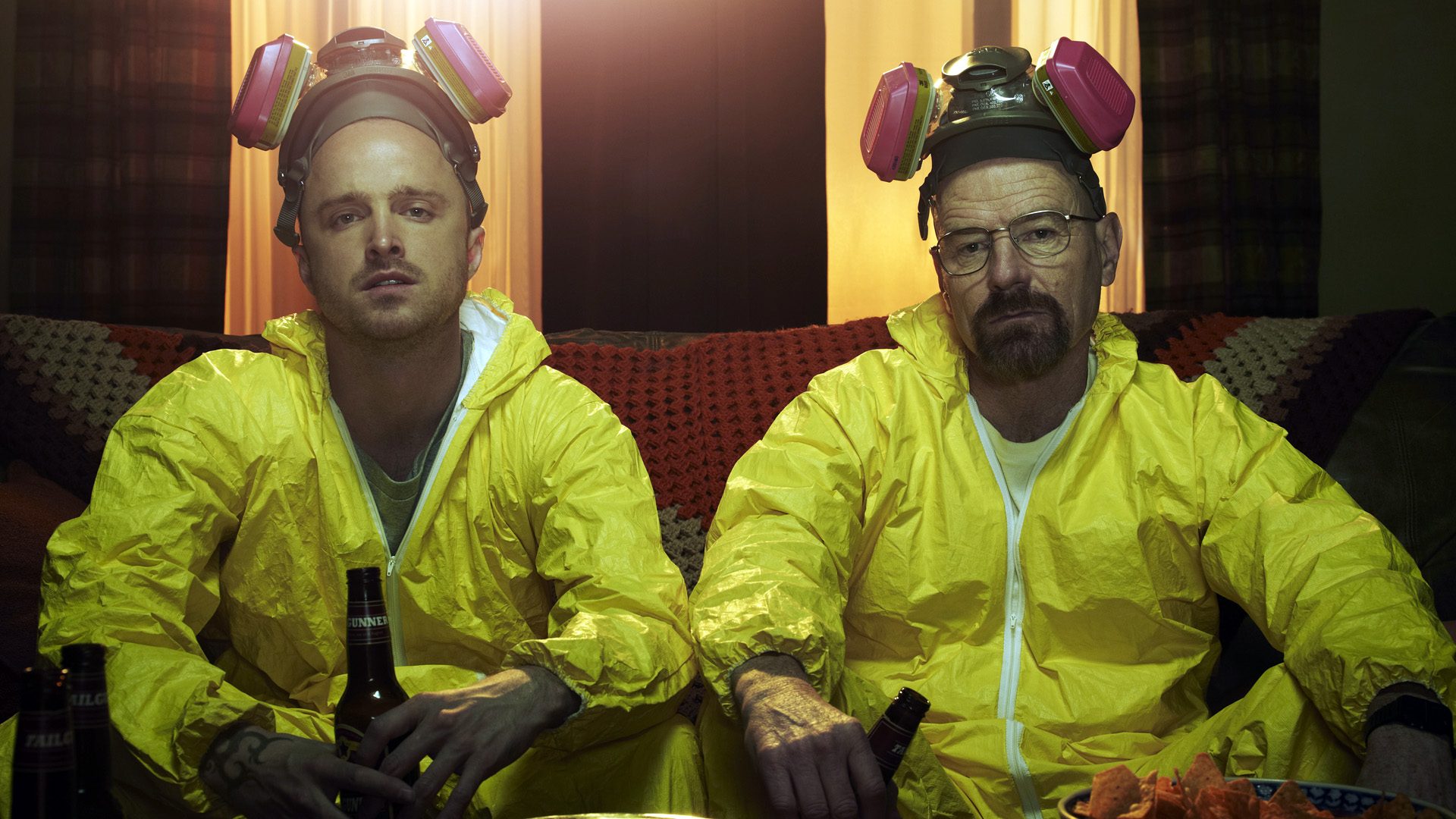
First of all, let me be absolutely clear: I like Breaking Bad a lot. I consider it one of the best TV series of the millennium to date. It’s ambitious, smart, exceedingly well acted (with some exceptions in the minor parts), and it has a grasp of complex characterisation like few other series.

I also think that in some ways Breaking Bad is overrated. It’s not quite the perfect series it’s sometimes made out to be, and while it exceeds in many respects, there is room for improvement in others. Granted, I may be talking out of turn, as I haven’t yet finished the series; we’re five episodes away from seeing the last of Mr. White. However, as I’m currently rewatching the first four seasons in parallel to finishing season 5, I think I can safely address what I consider the series’ main flaw.

More than many of my favourite series, from The Sopranos via Six Feet Under to Deadwood, Breaking Bad is heavy on plot. It uses plot to talk about its characters, but it still puts a considerable focus on What Happens Next. This in itself isn’t a flaw; what is, in my opinion, is that while the characters develop in an interesting five-season arc, the season-to-season plotting undermines these arcs to some extent.

Men at work

To a large extent, Breaking Bad is about Walter White oscillating between pathetic, disempowered male, anti-hero and outright villain, and the discrepancy between how he sees and presents himself and how the audience sees him. The tension between these different positions is always interesting, but the series spends a lot of its dramatic ammunition too early, moving Walt into villainous territory only to retcon him – or, more accurately, our view of him – in the following season to some extent (Warning: the following will spoil events up to and including season 5.)

One of Walter’s main crimes in the final season is the way he glibly accepts the murder of an innocent child as something that couldn’t be avoided and that, he thinks, wasn’t really his fault. We watch the scene and its aftermath and we see him as the monster he has become. However, is this act more monstrous than his watching as Jesse’s girlfriend Jane suffocates on her own vomit while she’s in a drug-induced stupor? Especially if we consider what Jane’s death leads to, namely an air crash that kills hundreds. No, Walt doesn’t pull any triggers – but then he rarely does when he’s at his worst, does he? – but his actions lead to those deaths, both the more abstract hundreds of victims of the crash and the more immediate death of Jane. As in season 5, his reaction is to rationalise his actions and his involvement, coming to the conclusion that he is not to blame. Is this more villainous in season 5 because we see the victim, a young boy on his BMX bike? Or is the series suggesting that people may not remember season 2 and the beginning of season 3 (if indeed they were watching Breaking Bad at the time) and the point needed to be reinforced?

There are other points in the overall narrative that hit similar points – Walt getting Jesse to kill Gale, a defenseless and relatively innocent man, for instance – that in the context of their seasons and the surrounding episodes make perfect sense, but when you look at the overall narrative beats they feel like we’re revisiting ground that has previously been covered. It makes some sense if you consider that audiences watching the series on TV would have several month-long breaks between seasons, so there’s a purpose to treading old ground – but in hindsight several mini-arcs feel redundant in terms of how they develop the characters. They feel like the makers of Breaking Bad either didn’t know where they were taking the series, or they didn’t know how many seasons they had left to tell their story. Especially Walter White’s overall arc almost depends on the viewers forgetting or ignoring where the series had previously taken its characters and how far they’d progressed into full-on villain country.

The Meth Throne

The fact that Breaking Bad still works eminently well is largely due to its stars; even when revisiting old ground, Bryan Cranston and Aaron Paul’s performances feel fresh and immediate. The same is true for Anna Gunn’s Skylar, although arguably the series and its writing have been less generous to her at times; rewatching the previous seasons, I was struck by how similar her arc in the first half of season 5 is to how she developed in season 3, yet Gunn delivers a great performance. Nonetheless, if it were possible to go back and redo Breaking Bad, it’s the overall plotting that would require attention. If my suspicion is correct and vince Gilligan didn’t always know from one season to the next if the series would be renewed plotting accordingly, it’s understandable that he would have aimed for arcs that hit certain character beats, not knowing whether he’d get another chance later to do so – but it did leave him with characters whose overall arcs have built-in redundancies. While this makes for clever design, it makes for slightly frustrating storytelling. More so because there are so many things Breaking Bad does not just well but better than almost any other TV series.

And that’s before we even mention The Awkward Case Of The Ricin Cigarette – so let’s leave it at that.

The Telltale Ricin

P.S.: Another thing that I’ve realised while rewatching especially season 1: Marie Schrader may just be the character that benefitted most from the series’ evolution over the course of its five seasons. In season 1, she is a two-dimensional character at best, slipping at times into flat caricature; by the final season, she is as rounded, complex and capable of tragedy as any of the main characters. While I may see this as something of a flaw of early Breaking Bad, in this case I prefer to look at it the other way around: the series definitely got better over time. This is also clearly seen in its villains: there’s no comparison between psychotic Tuco “Loony Tunes” Salamanca and the much more nuanced Gustavo Fring.

Look at the size of those pixels!

I’ve written about pixel art before, but as someone who was playing games already when pixels were bigger than my hand there’s something about them that speaks to me, and it says things other than, “Put that away! It’s horrible!” I’m wondering to what extent this is nostalgia talking – big pixels remind me of the time when I was young, full of promise and had hair on my head rather than my ears. What does a non-gamer, or someone whose gaming career started at resolutions beyond 320×200, see when they look at pixel art? Do they see technical limitations, or do they see what I and my fellow gaming Methusaleas see?

Sword & Sworcery

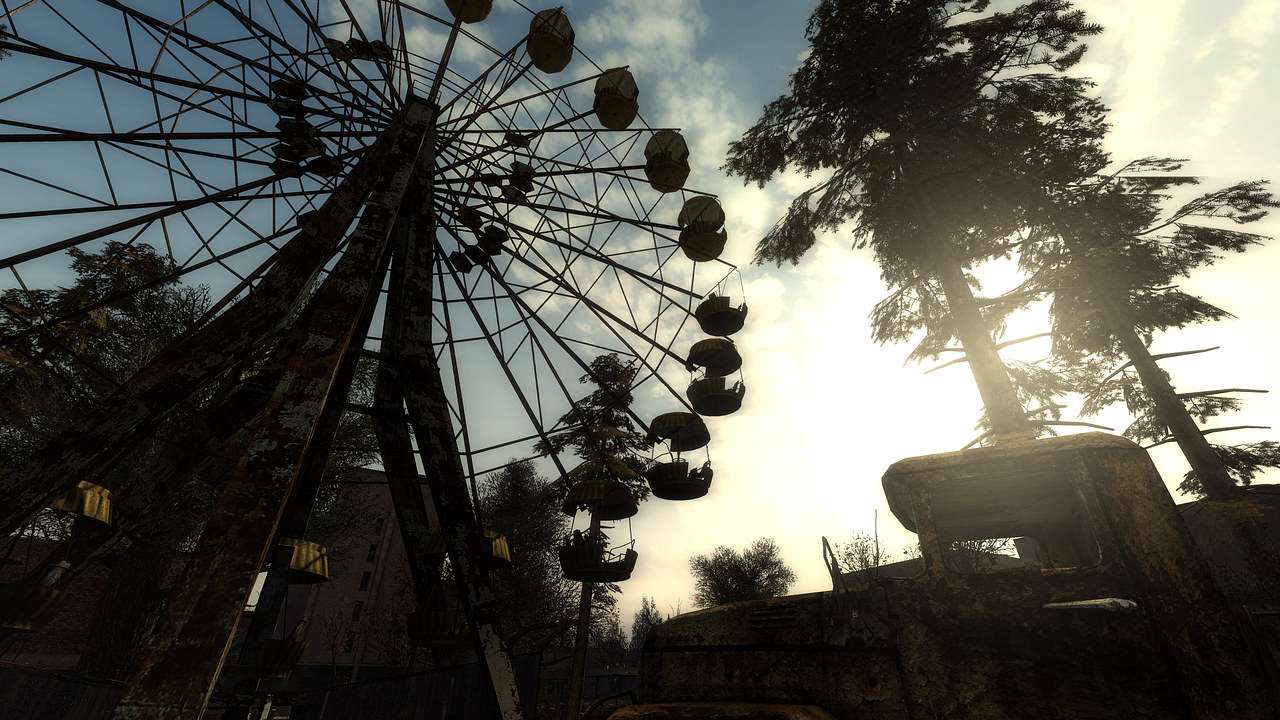
For me, the stylistic choice made for instance by the developers of Superbrothers: Sword & Sworcery EP (yup, that’s its actual title) is a valid one, since its pixel-heavy goodness achieves a unique effect. It’s not just retro-hipsterish affectation – it’s a valid form of abstraction that is particular to video games. When I look at a screenshot from Sword & Sworcery, I find a highly evocative quality in the image that reminds me of Scott McCloud’s writing on comics. In that medium, the reader is engaged to some extent by the elliptic quality of the frame-by-frame format: we fill in the blanks that are between the individual images. Retro pixel art asks us to fill in the blanks between the pixels; it’s a very specific stylistic cousin to blurring an image for artistic effect. A simple high-resolution paint job would make the picture more specific, more precise, but that evocative potential would be lost in the process. If I think of films that work largely through allusion and ellipsis, such as Andrej Tarkovsky’s Stalker, I imagine something akin to the pixelscapes of Sword & Sworcery more than the more realistic (though also evocative) vistas of the Stalker computer game, a distant cousin of Tarkovsky’s film with very different intentions.

Stalker: Call of Chernobyl

Undoubtedly there’s an economic side to pixel art in indie games: the resources needed to create a game featuring old-school graphics are on an entirely different scale than what goes into flashy, hyperdetailed 3D environments. Beyond this, though, I don’t think that titles such as Papers, Please, Echo of the Wilds or Hyper Light Drifter (you’ll find trailers for all of these below) went with pixel-based artwork because it’s cheaper – all of these aim for a specific effect, an abstraction that at its best can be as gorgeous and evocative as high-detail photography. Even the purposeful ugliness of Hotline Miami and its grotesque ultra-low-res ultra-violence aims for a visual quality that I expect does not only speak to the oldtimers clutching their gamepads. The bigger the space between some pixels, the more space for gamers to lose themselves in.

P.S.: It’s quite fitting that today Rock Paper Shotgun posted an interview with Dave Gilbert, whose Wadjet Eye Games develops old-school low-res pixel art adventure games; in the interview Gilbert says the following: “The great thing about pixel art is it can, how do you explain it? It’s more like your mind fills in a lot of the details when it’s done the right way. When it’s done the wrong way it just looks ugly, that’s the case with any art.”


He’s not the Antichrist, he’s a very naughty boy!

Note (to self as much as to anyone else): This should’ve gone up a while ago, but it seems it’s been stuck in draft limbo. If anyone feels they’ve already read this one, let me know, because that would be a sign that my mind – or at least my memory – is pretty much going.

I’d been avoiding Lars von Trier’s Antichrist for a while, mainly because I dislike provocation for provocation’s sake, and that’s what Lars von Trier’s public persona largely seems to be about. Having finally seen the film, I have to admit that it didn’t strike me as adolescently provocative as the man himself – and credit where credit’s due, von Trier makes highly unique films* that are fascinating examples of the craft. Antichrist is a striking film, although for each effective scene there’s another one that overuses a certain technique, causing a bit of von Trier fatigue. Nevertheless, it is only fair to say that the director is eminently skilled.

Antichrist

Having said that, I do think Antichrist goes off the rails and after a strong beginning becomes too random. Stylistically it remains fascinating, but it doesn’t so much bring up motifs and raise themes as throw them against the wall like so much psychosexual spaghetti. Grief! Despair! Pain! Clash of genders! Misogyny! Men are logical, and logic is evil! Women are emotional, and emotion is evil! Nature is evil! Woman is nature! Men can’t cope with women and so burn them! Antichrist flirts with all of these but doesn’t end up doing all that much with any of them. None of it seems to add up to anything much, feeling like window dressing for what is in effect an arthouse slasher movie. For all of the scenes of extreme violence, cruelty and self-harm, I rarely felt particularly involved – nor even all that shocked. When you feel non-plussed rather than anything else at fairly explicit scenes of genital mutilation, you have to wonder what exactly Lars was trying to do.

I imagine that courses on film, gender, violence and Lars von Trier will have a field day with Antichrist, and in fact I might enjoy a discussion about it more than I enjoyed the film itself. In the end, though, I have to wonder whether von Trier, always a consummate trickster, didn’t primarily enjoy the idea of doing a genre film and chose the various thematic overtones more as a game, a puzzle without a solution for the audience to try and solve in vain. It would be interesting to check out the Criterion edition of the film, which seems to be choc-a-bloc with excatly these kinds of discussions by scholars – but while I usually have to be physically kept from ordering yet another Criterion disk, I don’t think I have an urgent need to see Antichrist again, commentary track or not.

I am, however, slightly more curious about Nymphomaniac than I was before, so as an expensive, extended advert for Lars von Trier’s work the film seems to have done its trick. I’m sure his body doubles will appreciate this.

*When I say “unique”, though, I have to relativise that statement – especially at the beginning I did feel I was watching a mashup of David Lynch and Ingmar Bergman’s work, although with more graphic sex than you’d find in either of those.

Great Expectations

I’ve seen both of the main winners at this year’s Academy Awards, Gravity and 12 Years A Slave – and I came away from both of them feeling just a bit underwhelmed. Don’t worry, this isn’t going to be one of those “Why the Oscars suck!” posts, not least because I don’t really feel particularly invested in them to begin with. What I want to talk about instead is this: expectations.

With 12 Years A Slave, I went in expecting to be as much bowled over as I was with Hunger and Shame. I was stunned when I caught Hunger on TV a couple of years ago; his visual language and his storytelling, combined with Fassbender’s amazing performance (is the guy ever any less than very good?), struck me as something I’d never seen. Shame built on this, engaging me both emotionally and intellectually in a way that’s rare in films. 12 Years A Slave is by no means a bad film, in fact it’s very good, a beautiful example of moviemaking craft on all fronts – but it didn’t stun me. It felt less unique than McQueen’s previous films.

Gravity

Gravity, too, is an exquisitely crafted film. It’s been criticised for being (allegedly) thematically shallow, all spectacle and no substance – which I don’t agree with. No, my beef with Gravity is this: I watched the trailer on a large screen in HD, and it pulled me in, evoking a real dread of floating in outer space, untethered, with nothing there but stars that are trillions of miles away. It’s not that the film itself didn’t summon this dread, but it didn’t build on it: basically the thing I liked best about the film was already there in the trailer. More so, actually, because it was distilled into two minutes. It doesn’t help that I’m not a big Sandra Bullock fan, finding her bland rather than relatable, but mainly my disappointment was similar to what I felt after 12 Years A Slave. I was disappointed, not because the films were bad, but because they didn’t, and perhaps couldn’t, meet my expectations.

In some ways I think those expectations weren’t entirely fair, if fairness indeed comes into the matter. If I hadn’t seen and been so receptive for that particular Gravity trailer, the actual film might have wowed me more thoroughly. If I hadn’t been stunned by Hunger and Shame, I might not have expected 12 Years A Slave to be stunning in that particular way, and this in turn might have allowed me to appreciate it more for what it was rather than being disappointed at what it wasn’t. Then again, without the trailer I might not have gone to see Gravity to begin with; I might not have gone to see 12 Years A Slave at the cinema just because of Chiwetel Ejiofor (no doubt a great actor, but I don’t go to the cinema just because of a particular actor).

12 Years A Slave

How many films could I have appreciated more if it hadn’t been for very specific expectations? And how do you manage your expectations anyway? I’m not sure I could, or would want to, watch a trailer and go, “Yeah, fantastic trailer, but I’m sure the film won’t live up to it. I’ll go and see it, but ho hum…” I want to be enthusiastic about things, I want to have that feeling of anticipation – and when such expectations aren’t just met but surpassed, it feels amazing. If anything, the problem may not be how much I expect but how specific my expectations are.

Anyway: sometimes when I rewatch films that underwhelmed me the first time, I enjoy them all the more the second time around. I’m sure that in a couple of years’ time Film Four will show 12 Years a Slave and Gravity, just in time for Cuaron and McQueen’s latest works – and if I go to see them expecting to be just a bit disappointed and underwhelmed, perhaps I’ll come away enjoying them all the more.

If war is hell, and hell is other people…

… I was going to say something clever about my new mini-obsession: playing multiplayer matches of the Arma series of games, military simulators focusing on combined operations. While that’s still what I’ll be writing about, I thought I’d drop the attempt at wit. Let’s face it, the joke would have faced the same fate as many of my Arma adventures: fifteen minutes of creeping up slowly, only to die in a display of futility.

I’ve never really been into playing multiplayer games, at least not online. I remember a long, fun night of playing Jedi Knight against a friend who’d brought along a computer, but most of my forays into online MP were brief: some Battlefield 2, some Ultima Online and Star Wars Galaxies beta testing, the occasional coop game of Splinter Cell: Chaos Theory, that sort of thing. Not that it’s not fun, but I’ve always been drawn more to story-heavy single player titles.

Over the last year, though, I’ve discovered why some people get into multiplayer almost to the exclusion of single player goodness. It all started with GTA V‘s online modes – and it’s not the whole “shoot other players in the face” aspect that got me hooked: no, what made me reconsider was the more serene moments of coop. Yes, I confess, I got some of my greatest online enjoyment out of starting a cooperative mission and hopping into a car driven by another person clutching their PS3 controller on a different continent. There’s something about inhabiting a living, breathing virtual world and interacting with others that aren’t controlled by a computer – it’s basically the Matrix, if that classic of Keanu-y goodness was about driving around a pastiche of Los Angeles in a convertible. Yes, usually that drive ended in an ambush by assault gun-wielding gangsters and swift death for my online avatar, but sharing a virtual space with other, real people makes that space feel more real too.

Arma is a strange case, actually: I’m pretty far from a fan of heavy militarism, doubly so if it’s po-faced militarism. It’s not the dudebro, Michael Bay-style kind of military porn (“Is that an M16 in your pocket or are you just happy to see me?”), but the games are definitely designed to appeal to those who know the difference between an AK-47 and an AK-74 (and no, I don’t think the answer is 27!). It’s also a game that can be unforgivingly difficult – you can spend twenty minutes crawling through the undergrowth on your belly only to be spotted and shot by an opposing soldier from 200 metres away – mind you, a soldier you haven’t even seen yet, let alone shot at.

Yes, no one could claim that Arma is a friendly game – if something like Plants vs. Zombies exists at one end of the spectrum, Arma sits at the other end, readying an artillery barrage in the direction of those singing sunflowers and cartoony undead. However, I’ve found that the people I play with are very friendly and welcoming. They also make up for the game’s seriousness with laconic, self-deprecating wit, which makes for a perfect counterweight to Arma‘s seriousness. I especially remember a session with about 30 others, starting with us sitting in a transport helicopter flying us closer to the location we were supposed to attack, and the joking, singing and general silliness of that flight was what made the game for me at least as much as the following ambush we got ourselves caught up in. Probably more so.

This doesn’t mean that I’ve given up on story-heavy single player games – I still enjoy those. But I’m pleasantly surprised that some of the most fun I’ve had as a gamer of… fuck, has it been that long?!… 30+ years consists of virtual road trips. If only I’d known all those years ago when I found long car drives to holiday destinations sheer torture – and those didn’t even end with ambushes, mass slaughter and slow motion death scenes set to Samuel Barber’s “Adagio for Strings”. If only.

A shout-out to the crazy people at Folk ARPS. It’s always an honour to be shot up while in your company!

Back to the Roots

I have a confession to make: I was underwhelmed by 12 Years A Slave.

Don’t get me wrong, the film is extremely well made. It’s beautifully shot, the acting is impeccable, and I would go as far as to say that Steve McQueen’s latest may just be the best, most accomplished slave narrative on film. My problem with it is that I was entirely bowled over by his earlier two works, Hunger and Shame. Especially the former of these took me completely by surprise, its style amplifying its story to an almost unbearable extent, and Shame, while perhaps not being quite as immediately striking (no shit mandalas in this one, for one), was similarly effective. 12 Years A Slave deals with what I’d consider a historically more major issue, but the film didn’t surprise me. In fact, it felt weirdly predictable.

12 Years A Slave

Not every film has to be surprising, and I can’t think of anything that 12 Years A Slave does wrong, but I came out of the film thinking that I’d basically seen a more cinematic, nearly perfectly executed version of the early episodes of Roots. There’s absolutely room for such a film, but McQueen being the director made me expect something, well, more, or perhaps rather something different. I expected something more unique – and I want to stress that this is my problem more than the film’s. However, I came away thinking that McQueen could have done more with what’s unique about the story he’s working with.

The big difference to other slave narratives is that the film’s protagonist, Solomon Northup, was born free in the USA and abducted into slavery. This is touched on in 12 Years A Slave: Northup, as played by Chiwetel Ejiofor, holds himself differently from his fellow slaves, he sees himself as separate from them for a long time. His situation, from his perspective, is immediately wrong to him in ways that the other slaves’ situation might not be in his eyes. This is alluded to occasionally throughout the film – but it is of much less interest to the film McQueen has made than the shared reality of what being a slave must have been like. There is clearly a purpose in depicting this universal reality, but I couldn’t help wanting more of what made Northup’s story different as much as what made it universal.

Does 12 Years A Slave deserve the accolades it gets? Absolutely. It is, as I have mentioned, a beautifully made, engaging film. It just isn’t the surprising, unique work that I expected from McQueen.

Philip Seymour Hoffman 1967-2014

Well, fuck. I remember a few years ago, just around this time, hearing about Heath Ledger’s death and believing it to be some internet-era hoax at first. Yesterday was very similar: I quickly go to check Facebook and see a handful of posts that Philip Seymour Hoffman had been found dead in his apartment, and my first instinct is not to believe it. He can’t be dead. He’s too good. This is some sad internet joker’s idea of a good joke.

If it’s a joke, it’s definitely one of the worst I’ve heard in a long time – or the Great Big Casting Agency In The Sky decided to up its game considerably, because Hoffman was one of the strongest, most unique and least vain actors to come out of Hollywood. Here’s hoping he’s sitting next to Maximilian Schell right now, going through his lines with that half-amused, half-exasperated half-smile of his.

In Memoriam Philip Seymour Hoffman 1967-2014

Like so many people, I first noticed Hoffman on my radar when I saw Magnolia. He’d been in earlier films and had a poignant part in Paul Thomas Anderson’s Boogie Nights that was indicative of the work to come, but Anderson’s Magnolia put him in one of the leading parts, and rightly so. There was something seriously weird about the performance, but not in the quirky indie style that we’ve become accustomed to; there was no trace of that cutesy self-centredness in him. Magnolia: now there’s a film that was almost impossible to act and act well, for all involved. In the wrong hands, its lines would be overblown melodrama. Its too-decent-to-be-true character Phil Parma, among many others, would fall flat. Not so in Hoffman’s hands.

By the time The Talented Mr Ripley came around, it felt like Hoffman had always been there. Even though it was only shortly after Magnolia, I remember looking forward to the film because, damn, Philip Seymour Hoffman, one of my favourite actors! The part was smaller, but it’s one of the most memorable performances in a film packed with unusually strong performances. And again, that weirdness: Hoffman could turn on the most disturbing brand of camp that shouldn’t ever work, but he made it work – more than that, he made it essential to the character and so right it hurt.

It would be difficult not to go through the man’s filmography and pick scenes from practically every single movie he’d been in; personally I’m partial to his shlubby teacher in 25th Hour, an underrated film and a beautifully judged performance, and he was fantastic in Almost Famous or providing one of the main voices in Mary & Max, but also in uneven and mediocre films like Red Dragon or Mission: Impossible 3. Charlie Kaufman’s Synecdoche, New York is a film that works better on paper than on the screen, but when it works it’s because Hoffman made its central character inject an almost unbearing humanity into a story that constantly risks being tripped up by the meta Chinese Boxes it leaves lying all over the place.

For me it started with Paul Thomas Anderson, so it’s only right it ends with him. I’m sure Hoffman’s performances after The Master were as watchable as everything he’d done, but his Lancaster Dodd is all the proof that’s needed that American cinema has lost one of its most unique, generous and powerful voices – and while we have many indelible performances to choose from, it’s difficult not to be greedy and wish we could have had many more.

Rest in peace, Philip Seymour Hoffman.

Planes, trains and automobiles

Let’s get it out of the way: GTA V may just be the best Grand Theft Auto game. It may also be the most disappointing – and it is probably one of the dumbest games in the series. Credit where credit’s due: Rockstar Games do one thing amazingly well, better than anyone else out there, and that’s creating living, breathing worlds. Their obituary to the Old West, Red Dead Redemption, is one of my favourite virtual worlds bar none, the sort of place that I enjoy inhabiting and navigating, even without following the story or sidequests. Just being in the world covers so much of what I look for in games.

Red Dead Redemption also works in one key way that GTA V flubs, and that’s the character writing: yes, there are the joke characters, the broad caricatures of two-faced hypocrites, but Rockstar’s western knew when to take its cast seriously. It didn’t work all the time or with every single character, but by and large the dramatis personae of what could perhaps be called Grand Theft Horse carried the weight of its narrative. I understand that Rockstar might not want to write tragedies all the time – something that Red Dead Redemption ended up being quite effectively – but when it comes to humour the company’s writers tend towards the lazy, obvious joke… and then they flog it until way past its expiration.

I admit, there were moments in GTA V where I laughed out loud, and there were others where I sniggered. There are storylines in the game that work due to a combination of fine voice work and their sheer absurdity, but for each of these storylines there’s a character whose venality and stupidity is so drawn out, so overplayed it’s cringeworthy. What’s worse, perhaps, is that these characters are essentially all variations on the same theme: people who are smug and think they’re the best thing since sliced bread, yet they are essentially hollow. Which is fine until you realise that GTA V is 90% populated with such characters – and no, this does not strike me as a convincing parody of Southern California, and it’s most definitely not an interesting parody – and that the writing itself exhibits the same smugness. By comparison, Rockstar’s previous foray into Los Santos and surroundings in 2004’s GTA San Andreas (it’s already been ten years? now I definitely feel old) also had the broad jokes and the caricatures, but it brought together a band of mismatched characters that genuinely felt like family by the end of the game. By comparison, I don’t miss any of GTA V‘s cast of misfits and murderers, since with so many of them it’s clear that the punchline will always precedence over the character. There are exceptions: moments that show genuine wit and complexity, and jokes that don’t rely on the nth variation on the theme of “Haha, aren’t Californians/Americans/people stupid, vapid and easily fooled?”, but compared to Red Dead Redemption it all feels too much like a middling sitcom writer had watched The Sopranos and decided that they could pull this off.

Much was made of the lack of female protagonist in the game, especially since GTA V‘s main innovation is that there’s not just one but three playable characters. Seeing how limited Rockstar’s palette is in their latest, I have to say I’m glad they didn’t try to write their first female protagonist in this one. In fact, my main recommendation to the company would be this: they’ve pretty much perfected the creation of living, breathing worlds and mechanisms to enjoy being in that world. They have great artists, they choose fantastic music to add another dimension to their worlds, and they have ideas. What they should do is bring in new writing talent that doesn’t just do what they already do. They should get writers whose skills can shake up the by now rather stale mix of HBO Lite (imagine the worst moment in the weakest episode of The Sopranos) and Southpark-style loud parody. They don’t need to go for Greek tragedy or the Dickensian sweep of The Wire – but they should stop telling what is essentially the same joke. In brief, whatever they do next, I’d rather not think that it’s an improvement on their track record to date in every respect other than the writing. If that’s the case, I might just stay in GTA Online, because when the lines are provided by other players I don’t expect the writing to be good.

P.S.: For the record, GTA V‘s most maligned character, Trevor, is actually the most interesting at times. Yes, much of the writing is lazy and repetitive, but there are moments when his lines display a self-awareness that, while not particularly deep, does stand out compared to his usual lazy “Ooh, isn’t this edgy, offensive and craaaaaazy?!” shtik, the aftermath of the infamous playable torture scene (ah, to be a gamer in 2013…) being a case in point.